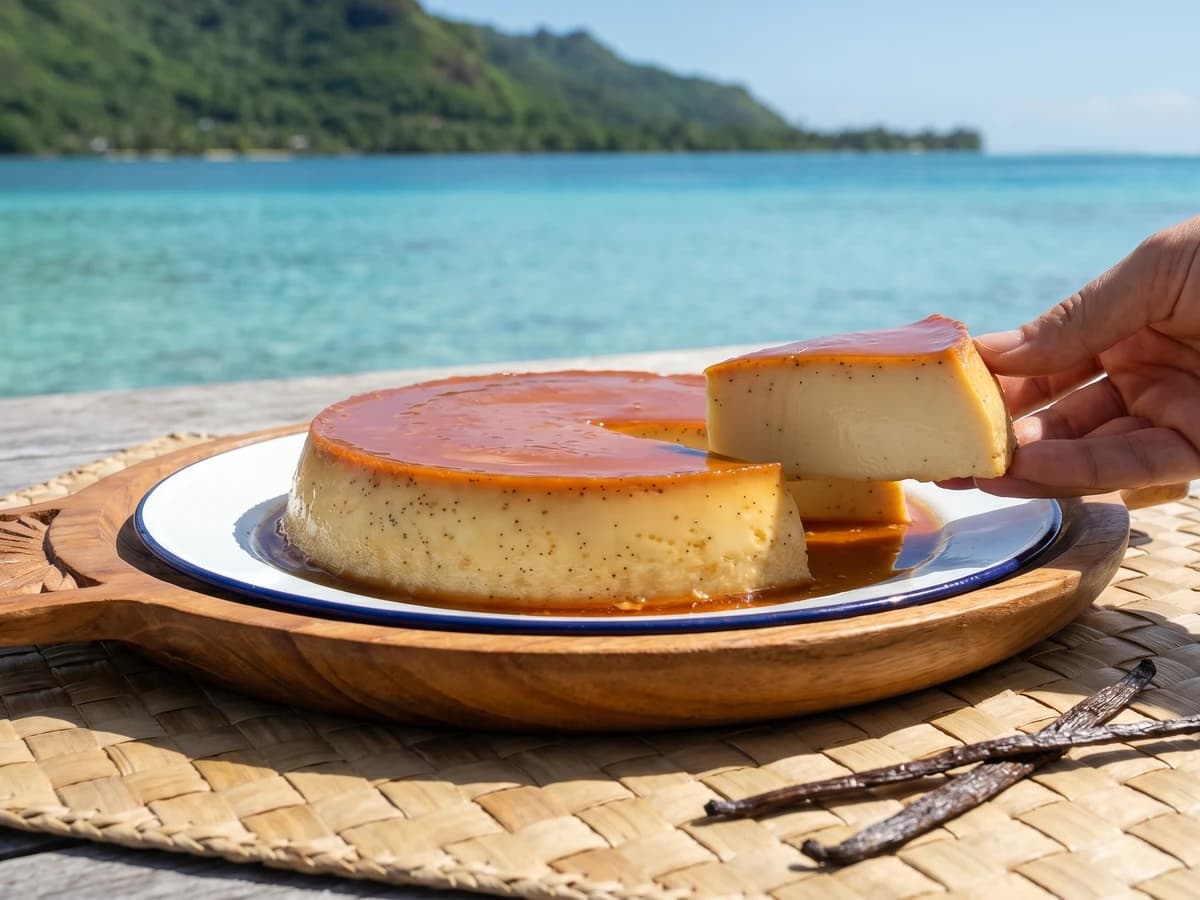
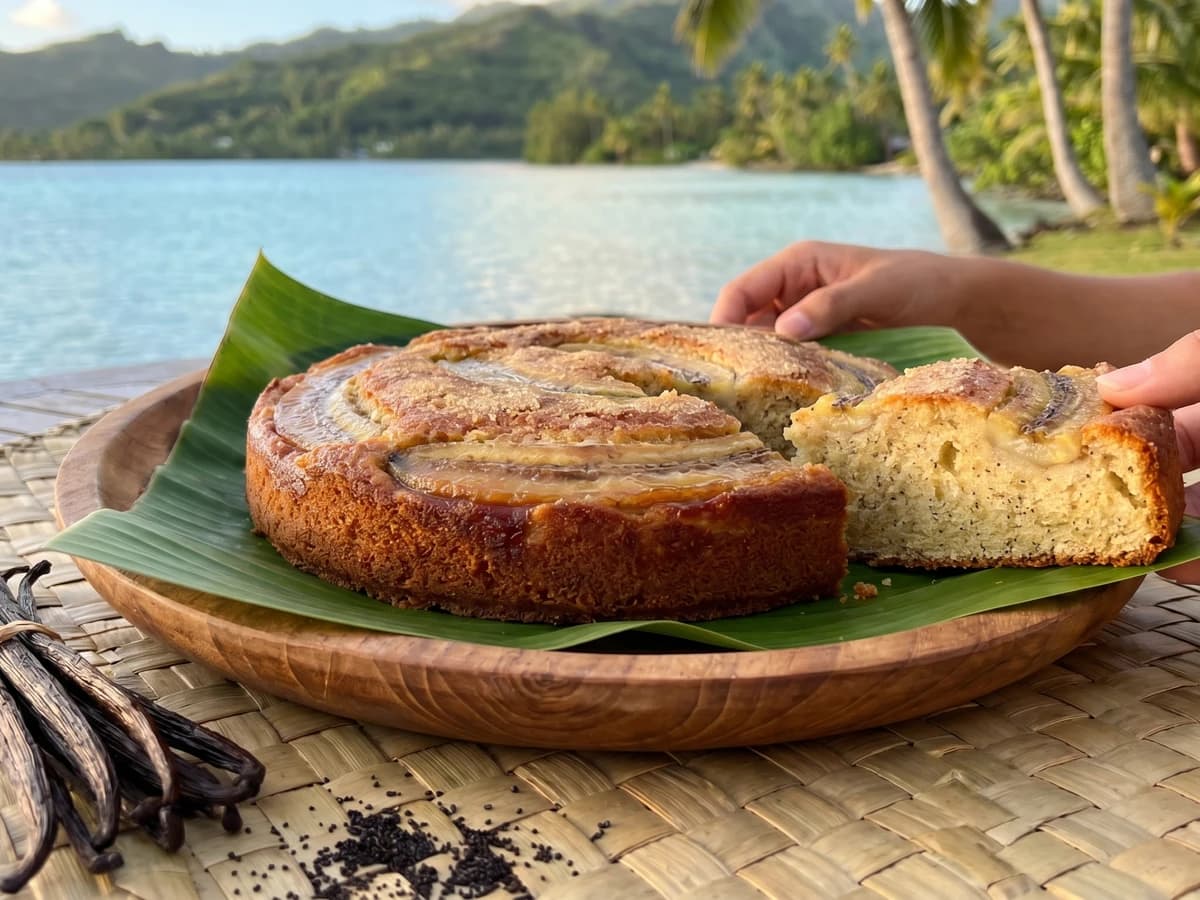
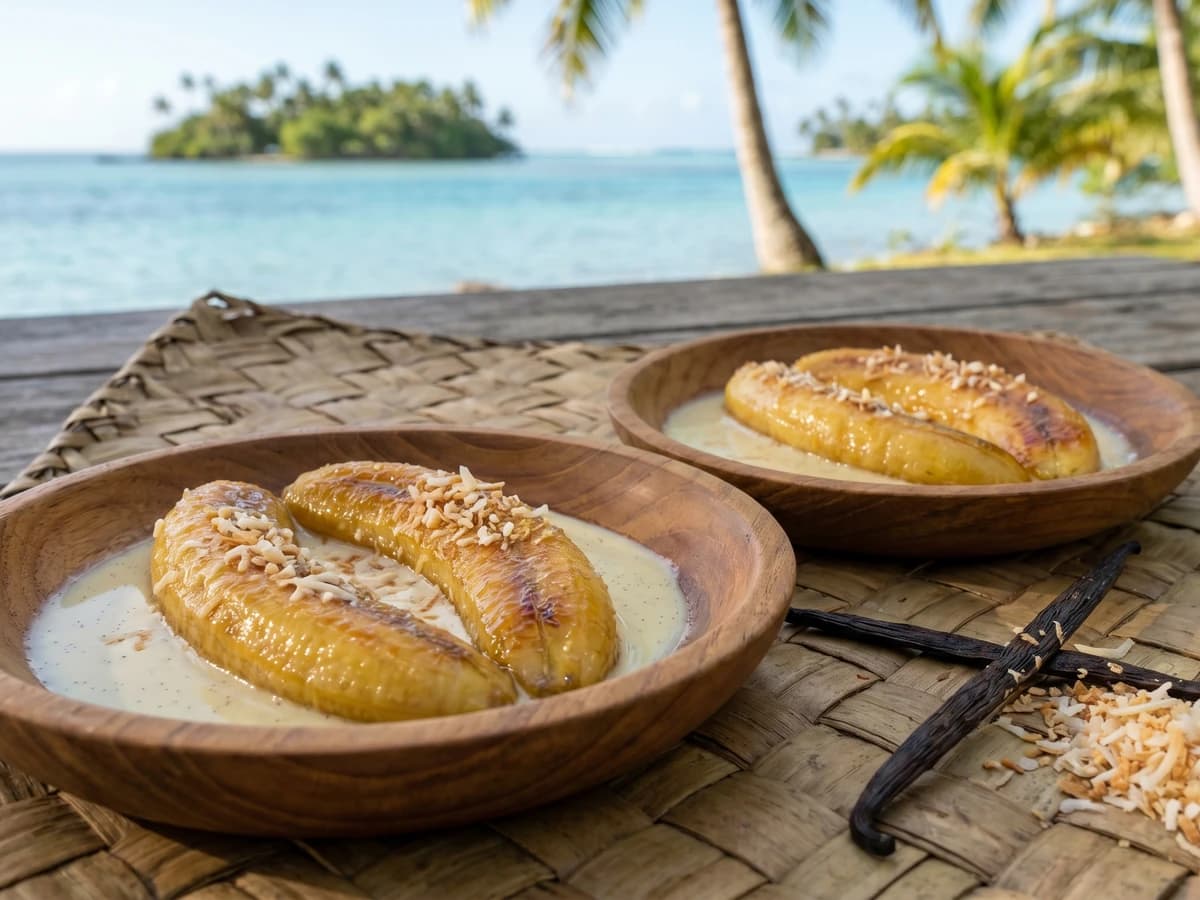
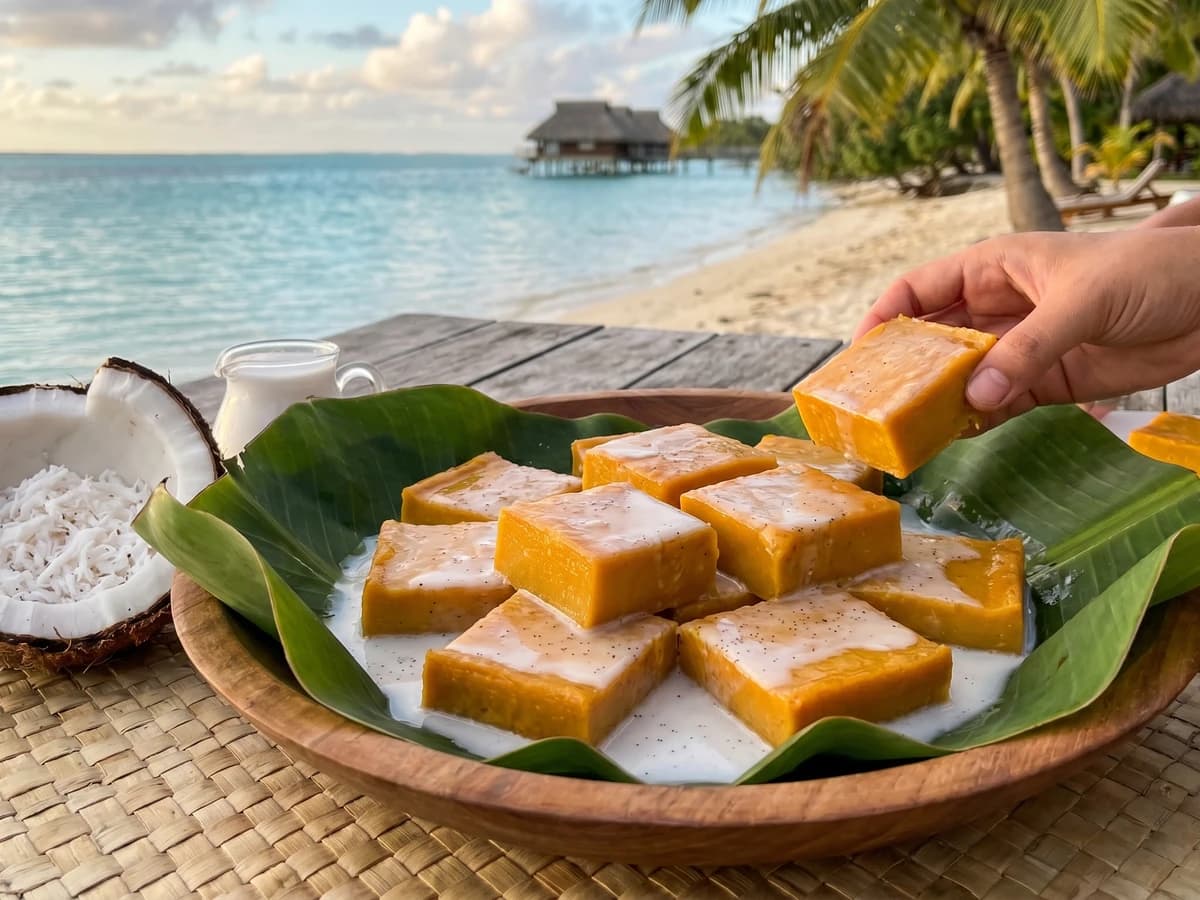
Île Flottante à la Vanille de Tahiti (Floating Meringue with Tahaʻa Vanilla Custard)
Created by
A French dessert resting in a Tahitian bowl: soft meringue floating on Tahaʻa vanilla crème anglaise, with caramel, toasted coconut, and the flower-sweet perfume of the vanilla island.
Desserts
Polynesian, Tahitian
Special Occasion
Dinner Party
Date Night
25 min
Active Time
25 min cook•2 hr 50 min total
Yield6 servings
The canoe brought the deep foods first: taro, breadfruit, coconut, banana, the crops that fed the old people from Sāmoa to Tahiti to Hawaiʻi. Vanilla came much later, so I don't talk about it like Hāloa, our elder brother, or like ʻuru, the breadfruit that carried whole families through hard seasons. But in Tahiti and the Leeward Islands, especially Tahaʻa, the vanilla vine found people who knew how to care for a living thing by hand. Every blossom touched. Every pod watched. That kind of patience belongs at the same table.
This île flottante is French by birth, Tahitian by place and hand when it is scented with vanille de Tahiti, the thick, floral vanilla grown in the fenua, the land, of those Society Islands. It is not an old canoe dish, and no need pretend. The islands eat the present too: baguette beside poisson cru, coffee beside poʻo'e, plate lunch beside poi, custard beside coconut. Keeper, not gatekeeper.
The method is gentle because the dessert is gentle. You poach the meringue until it barely firms, you cook the custard low so the eggs stay smooth, and you let the vanilla speak without drowning it in sugar. The meringue should float like a little motu, an islet, on a yellow sea of cream. Same ocean, different bowl.
Serve it cold or cool, in a carved wooden bowl or plain glasses on a pandanus mat, enough for the table to share. This is special-occasion food, yes, but not precious. If a Tahitian auntie handed it across the table after fish and breadfruit and rice, she'd want you to eat it before it gets shy.
Île flottante came to Tahiti through French colonial foodways, but vanille de Tahiti became its own island story after vanilla was established in French Polynesia in the 19th century, with Tahaʻa in the Society Islands later known widely as the vanilla island. Tahitian vanilla, often Vanilla tahitensis, is famous for a round floral aroma that differs from Bourbon vanilla, and much of its quality comes from hand pollination and slow curing. This dessert sits in the post-contact Tahitian kitchen: not deep food like ʻuru, taro, or the ahimaʻa earth oven, but a real part of how Tahiti's table carries old roots and later arrivals together.
The technique, the tradition, and the story behind every dish.
split and scraped, or use 2 teaspoons Tahitian vanilla extract
large eggs
Quantity
6
separated
granulated sugar
Quantity
3/4 cup
divided
fine sea salt
Quantity
1/4 teaspoon
divided
cream of tartar
Quantity
1/4 teaspoon
granulated sugar
Quantity
1/2 cup
for caramel
water
Quantity
2 tablespoons
for caramel
unsweetened toasted coconut flakes
Quantity
1 tablespoon
toasted macadamia nuts (optional)
Quantity
1 tablespoon
finely chopped
Ingredient
Quantity
whole milk
2 cups
heavy cream
1 cup
Tahitian vanilla bean from Tahaʻasplit and scraped, or use 2 teaspoons Tahitian vanilla extract
1
large eggsseparated
6
granulated sugardivided
3/4 cup
fine sea saltdivided
1/4 teaspoon
cream of tartar
1/4 teaspoon
granulated sugarfor caramel
1/2 cup
waterfor caramel
2 tablespoons
unsweetened toasted coconut flakes
1 tablespoon
toasted macadamia nuts (optional)finely chopped
1 tablespoon
Equipment Needed
•Wide 10 to 12 inch saucepan for poaching meringues
•Instant-read thermometer
•Fine-mesh strainer
•Electric hand mixer or stand mixer
•Small heavy saucepan for caramel
Instructions
1
Scent the milk
Put the milk, cream, vanilla bean seeds, scraped pod, and a small pinch of salt in a wide saucepan. Warm it until the edge trembles and smells floral, then turn off the heat and let the pod steep 15 minutes. Don't boil it hard. Vanilla is patient work, from the flower on Tahaʻa to this pot.
2
Whip the whites
Beat the egg whites with the cream of tartar and another small pinch of salt until they look loose and foamy. Add 1/4 cup of the sugar a spoonful at a time, beating until the meringue stands in glossy soft peaks that bend at the tip. If the peaks look dry and rough, you pushed too far. No blame the eggs.
3
Poach the meringues
Bring the vanilla milk back to a bare simmer, then scoop six oval meringues onto the surface. Poach 2 minutes on one side, turn gently, and poach 2 minutes more, until they feel set but still tender. Lift them to a plate with a slotted spoon. Work in batches if the pan feels crowded.
The milk should barely move. A hard boil breaks the meringue apart and makes it tough.
4
Temper the yolks
Whisk the egg yolks with the remaining 1/2 cup sugar until the color lightens. Slowly pour in a ladle of the warm vanilla milk while whisking, then another. Pour the yolk mixture back into the saucepan. Go slow here. This is the quiet part that keeps the custard smooth.
5
Cook the custard
Cook over low heat, stirring with a spatula, until the crème anglaise lightly coats the back of the spoon, about 175F if you use a thermometer. It should pour like heavy cream and leave a clean line when you swipe your finger through it. Strain into a bowl and chill at least 2 hours.
6
Make the caramel
Put 1/2 cup sugar and 2 tablespoons water in a small saucepan and cook without stirring until the syrup turns deep amber. Swirl the pan if one side darkens first. Spoon thin threads or small pools of caramel onto parchment and let them set crisp.
7
Float and serve
Pour the cold vanilla custard into a shallow bowl or six small cups. Set the poached meringues on top so they float, then finish with caramel, toasted coconut, and macadamia if you're using it. Serve right away while the meringue is soft and the custard shines.
Chef Tips
•Use Tahitian vanilla if you can, especially pods from Tahaʻa. If all you have is good extract, eat what you have. Add it after the custard cooks so the fragrance stays alive.
•This is not an ancestral canoe-crop dessert, and that's all right. Tahiti's table today holds French custard, local vanilla, coconut, ʻuru, fish, rice, and bread side by side. Food keeps living.
•If the custard starts to curdle, pull it off the heat at once and strain it. A blender can smooth a small break, but low heat from the start is better.
Advance Preparation
•Make the crème anglaise up to 24 hours ahead and keep it covered in the refrigerator with the vanilla pod tucked inside.
•Poach the meringues up to 4 hours ahead, cover lightly, and keep chilled. They are best the day they are made.
•Make the caramel shards the morning of serving and keep them dry at room temperature. Humidity softens caramel fast in island air.
Frequently Asked Questions
Nutrition Information
1 serving (about 210g)
Calories
440 calories
Total Fat
23 g
Saturated Fat
13 g
Trans Fat
0 g
Unsaturated Fat
9 g
Cholesterol
240 mg
Sodium
215 mg
Total Carbohydrates
48 g
Dietary Fiber
0 g
Sugars
47 g
Protein
10 g
Where cooking meets culture.
Culinary guides, cultural storytelling, and the editorial depth that makes cooking meaningful.