Chef Freja
Aebleflaesk
The Fyn autumn supper where thick pork belly renders slowly into its own fat, then meets apples and onions that cook down into a deep amber tangle. Sweet, salt, and the oldest pairing in the Danish larder.
A cooking platform built around craft, culture, and the stories behind what we eat.

Created by Chef Freja
Danish elderberry soup simmered with apple, cinnamon, and cloves, crowned with cold whipped cream that melts into the hot broth in streaks of pink. Late autumn's folk remedy against the dark.
Elderberries ripen in Denmark at the end of August, when the hedgerows along the country roads turn purple-black with clusters so heavy the branches bow toward the ditch. This is the last harvest of the warm season. You pick them into buckets, you strip the tiny berries from their stems at the kitchen table, and you put them away for winter. Then you wait. When the first real cold comes, weeks or months later, you make hyldebaersuppe.
This soup is Denmark's folk medicine against the dark. Our grandmothers gave it to us when we came in from the rain with wet hair and the first scratch of a cold in the throat. Whether it actually worked is less important than what it meant. It meant someone was paying attention. It meant the jars in the pantry had a purpose. It meant winter was something you prepared for, not something that happened to you. The joy of waiting, brought to the bowl.
What you're making is a dark inky broth, sweet and tart and spiced with cinnamon and cloves, with soft apple slices suspended in it. At the table you crown it with a cloud of cold whipped cream that melts into the hot soup and turns the surface a streaked pink. The contrast of temperatures is the whole point. Hot and cold in the same spoon, sweet and sharp, the taste of late summer arriving in the middle of winter. Two things matter most, and I'll walk you through both: stripping the berries cleanly from every stem, and letting the cream stay soft enough to meet the soup instead of sitting on top of it. Get those right and the rest takes care of itself.
The elder tree holds an unusual place in Danish folklore. Hyldemor, the Elder Mother, was believed to live inside the trunk itself, and old custom required asking her permission before cutting a branch or picking the berries. Many Danish farmhouses planted an elder beside the door on purpose, trusting it to keep the household safe from harm. Hyldebaersuppe appears in Danish cookbooks from the mid-1800s, though the practice of cooking the berries into a spiced, thickened soup is far older, one of the first medicines a home pantry could provide when the pharmacy was days away and the snow was already on the ground.
Quantity
500g
fresh or frozen, stripped from every last stem
Quantity
1 litre
Quantity
1
Quantity
4
Quantity
2
peeled, cored, and thinly sliced
Quantity
100-150g, to taste
Quantity
1 tablespoon
Quantity
2 tablespoons
Quantity
3 tablespoons
Quantity
200ml
well chilled
Quantity
1 tablespoon
Quantity
to serve
| Ingredient | Quantity |
|---|---|
| elderberriesfresh or frozen, stripped from every last stem | 500g |
| cold water | 1 litre |
| cinnamon stick | 1 |
| whole cloves | 4 |
| tart applespeeled, cored, and thinly sliced | 2 |
| caster sugar (for the soup) | 100-150g, to taste |
| fresh lemon juice | 1 tablespoon |
| potato starch | 2 tablespoons |
| cold water (for the slurry) | 3 tablespoons |
| double creamwell chilled | 200ml |
| caster sugar (for the cream) | 1 tablespoon |
| tvebakker or plain rusks (optional) | to serve |
Work the elderberries off their stems with the tines of a fork, dragging through each cluster until only berries are left in the bowl. Take your time with this. The stems contain compounds that are mildly toxic raw and bitter once cooked, so you want them out completely. Only the berries go in the pot. If you are working with frozen berries from last summer's harvest, strip them while they are still frozen. They snap off the stems more cleanly that way.
Put the berries, the litre of water, the cinnamon stick, and the cloves into a heavy pot. Bring it to a gentle simmer and cook for twenty minutes, stirring now and then. The berries will collapse and bleed their color into the water until the pot turns a dark inky purple, almost black at the edges. The cinnamon and cloves need this time to open up and settle into the liquid. Rush the simmer and the spices stay locked in themselves; give them twenty honest minutes and they unfold.
Set a fine-mesh sieve over a clean pot and pour the contents through, pressing gently on the solids with the back of a ladle to coax out every last drop of purple juice. Don't push too hard. The elderberry seeds are tiny and bitter, and if you crush them into the liquid the soup will taste harsh. Gentle pressure gives you the color and the flavor without the bitterness. Discard the spent berries, the cinnamon stick, and the cloves.
Return the strained liquid to a gentle simmer. Add the sliced apple, 100g of the sugar, and the lemon juice. Cook for about eight minutes, until the apple slices turn translucent at the edges but still hold their shape. You want them soft enough to give way on the spoon, never collapsing into mush. Taste the broth. If it needs more sweetness, add sugar a spoonful at a time until the balance between sweet and tart sits right on your tongue. Elderberries vary in sharpness from one harvest to the next, so the season decides how much sugar the soup needs, not the recipe.
Stir the potato starch and the cold water together in a small cup until smooth. Pour the slurry into the simmering soup in a slow stream while stirring constantly. Within a minute the soup will go glossy and gain a little body, coating the back of the spoon with a soft sheen. This isn't a thick soup, it's a soup with just enough weight to carry the cream without collapsing under it. Let it bubble for thirty seconds more to cook out the raw starch, then take the pot off the heat.
While the soup rests, whip the cold cream with the spoonful of sugar until it holds soft peaks. Not stiff. You want the cream to fall slowly off the spoon, keeping its shape for a moment before settling. Stiff cream sits on the soup like a hat and refuses to meet it. Soft cream melts into the hot surface in streaks of pink, and that meeting is the whole point of the dish.
Ladle the hot soup into deep bowls, making sure every bowl gets its share of apple slices suspended in the dark liquid. Spoon a generous cloud of cold whipped cream into the centre of each bowl. Serve immediately, while the soup is steaming hot and the cream is still cold enough to shock it. Pass the tvebakker alongside for dipping. You'll know when it's right because the first spoonful carries hot, cold, sweet, tart, and spiced all at once, and the table goes quiet for a moment. Tak for mad.
1 serving (about 500g)
Culinary guides, cultural storytelling, and the editorial depth that makes cooking meaningful.
Discover Culinary ExplorerChef Freja
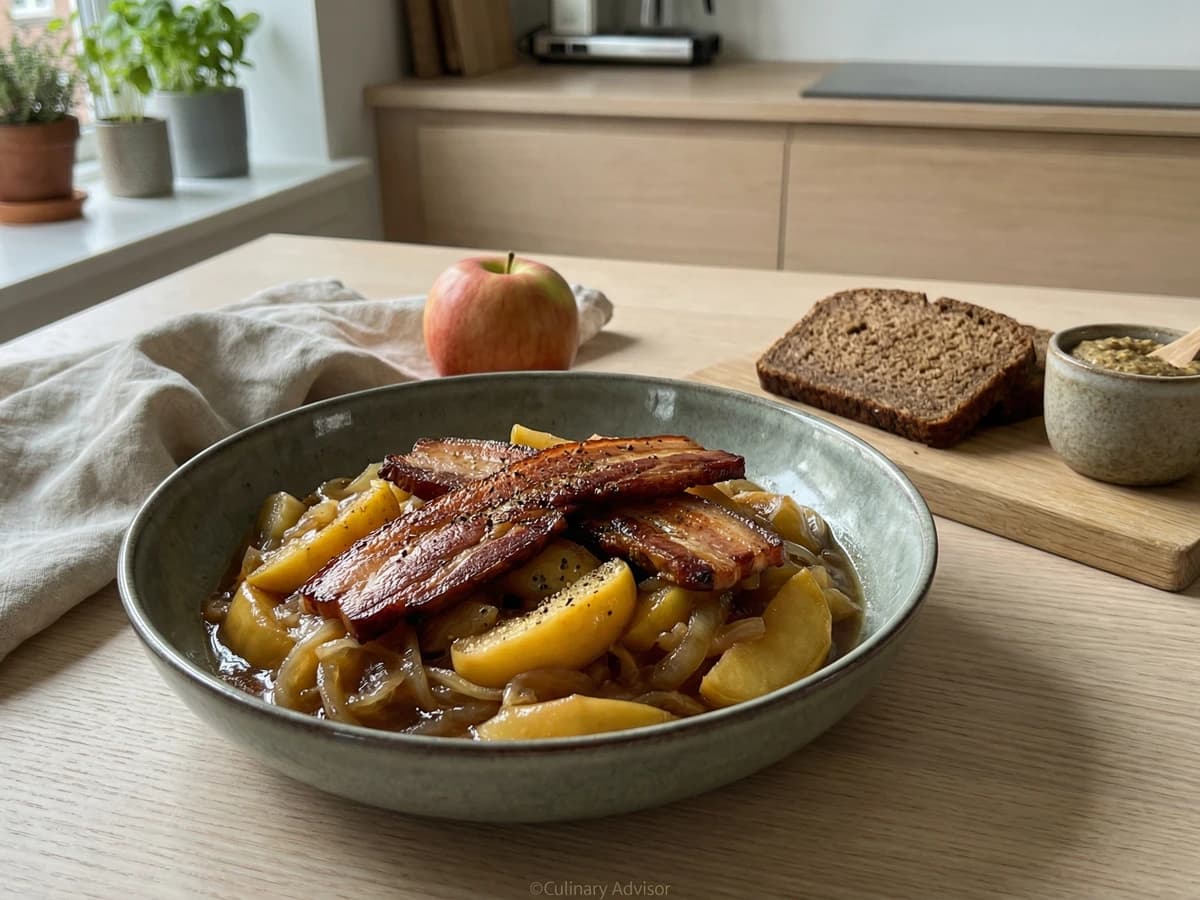
The Fyn autumn supper where thick pork belly renders slowly into its own fat, then meets apples and onions that cook down into a deep amber tangle. Sweet, salt, and the oldest pairing in the Danish larder.

Chef Freja
Warm Danish apple soup for the first cool evenings of autumn. Tart apples simmered with cinnamon and lemon peel, thickened to a soft gloss, and served with cold cream and buttery toasted oats.

Chef Freja
Danish white asparagus velouté with tiny veal meatballs, flour dumplings, and bright green tips scattered on the surface. The Easter soup of Copenhagen, built from five small pans of spring.
Chef Freja
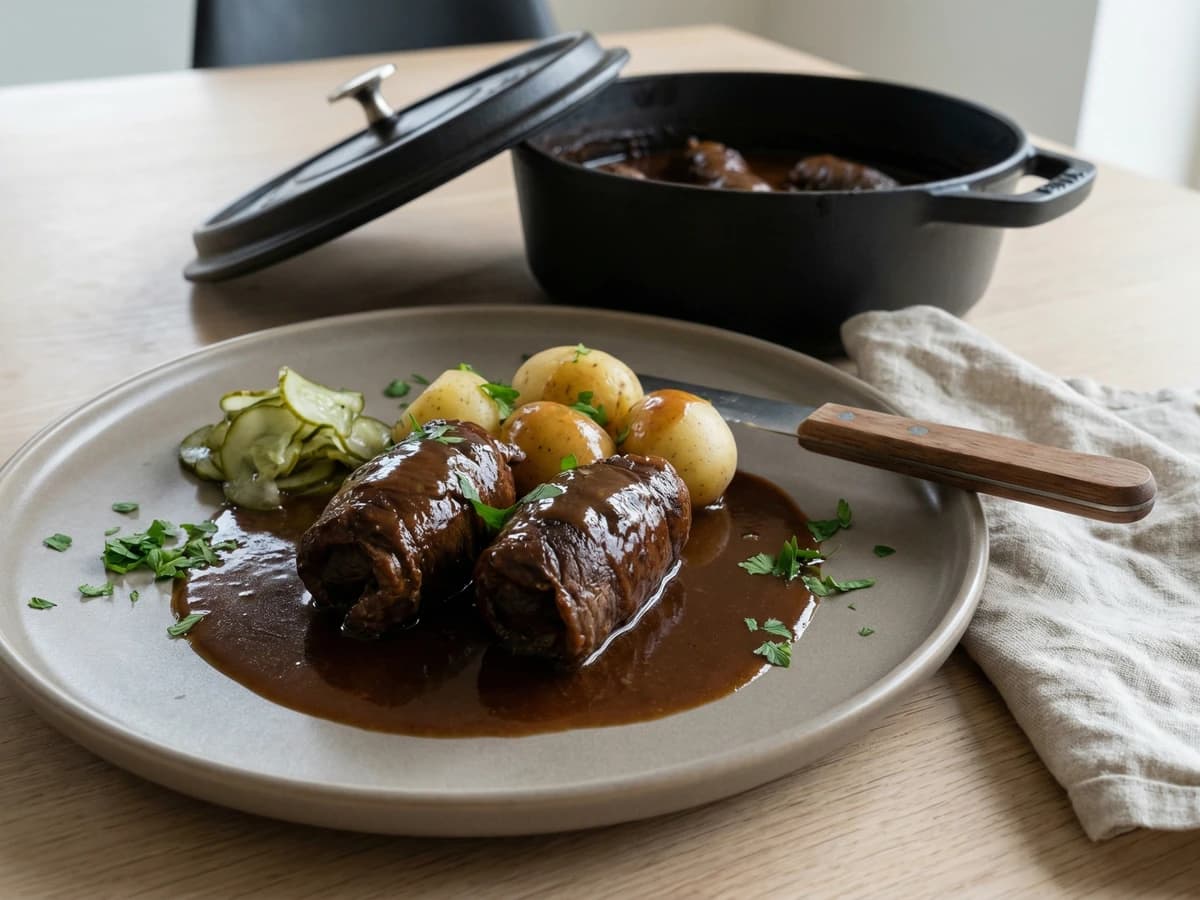
Thin beef slices rolled around bacon and onion, tied with string, and braised slowly in a dark glossy gravy finished with cream and redcurrant jelly. Danish Sunday dinner at its most comforting.