
Chef Freja
Bagt Havorred med Dildsmor og Nye Kartofler
Whole sea trout baked with butter, lemon, and armfuls of dill, served beside the first nye kartofler of the season and a melting slab of dildsmor. The Danish summer table at its most generous.
A cooking platform built around craft, culture, and the stories behind what we eat.
Created by Chef Freja
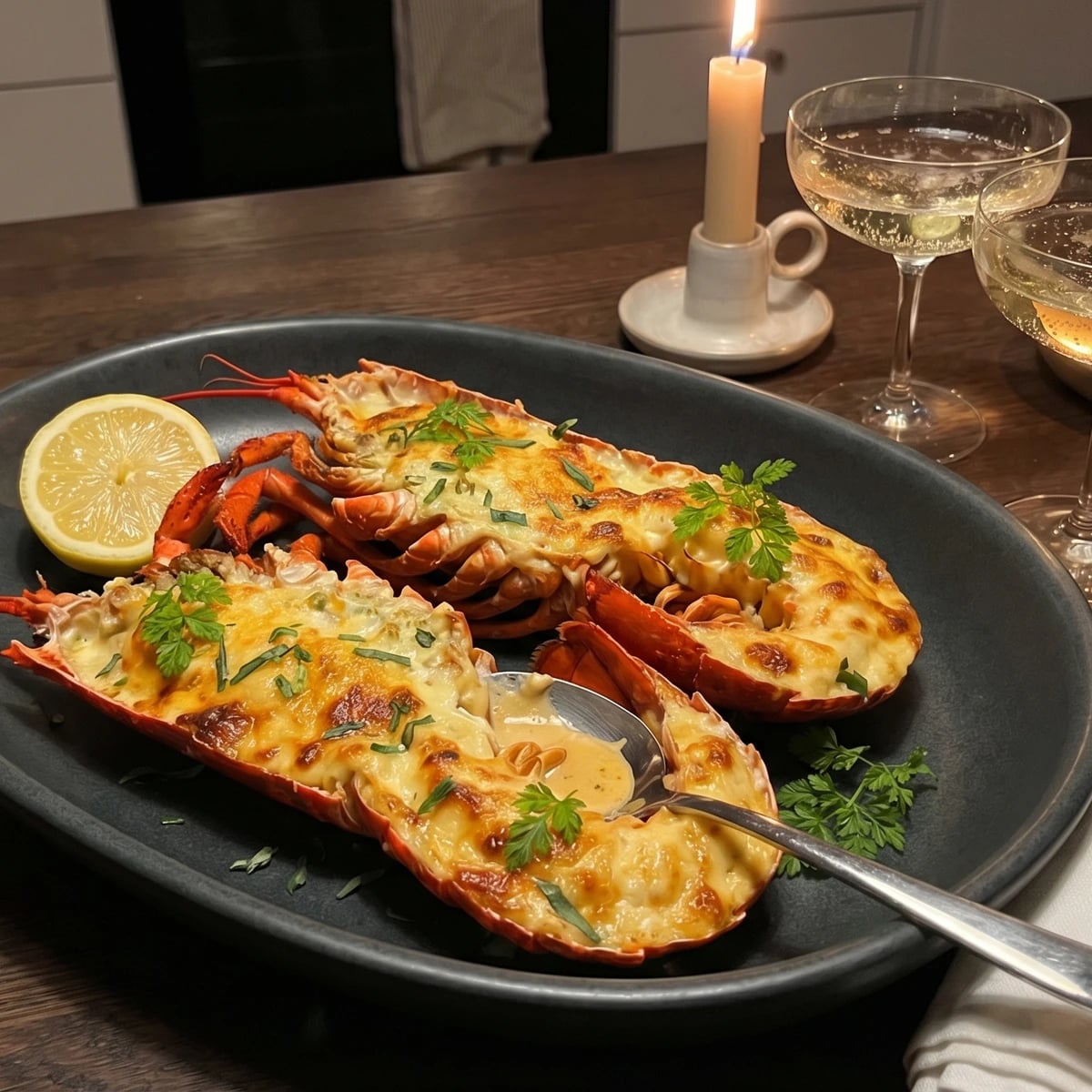
The Danish New Year's celebration lobster. Hummer poached in court bouillon, folded into a cognac cream sauce with Gruyère and tarragon, returned to its shell and broiled golden. The last great dish of the year.
Nytårsaften in Denmark is not about the fireworks. It's about the table. The last dinner of the year is the one you take your time with, the one where the cloth comes out, the candles are lit before anyone sits down, and the food says something about how the year ends and how the next one begins.
Hummer Thermidor is that dinner. Two whole lobsters, poached until the shells go bright red, the sweet meat pulled from the claws and tails, folded into a sauce built from cognac, cream, mustard, and Gruyère, then spooned back into the shells and run under the grill until the top bubbles and turns deep gold. It is not a weeknight dish. It is not trying to be simple. It is the kind of cooking you do once or twice a year, when the occasion deserves your full attention and the people at the table deserve to feel celebrated.
Don't let the steps intimidate you. The technique is methodical, not difficult. Each stage is its own small task, and none of them are complicated once you understand what they're doing and why. Pay attention to two moments in particular: the cognac going into the sauce (it needs to reduce until the raw alcohol is gone and only the warmth remains) and the mustard going in after the sauce comes off the heat (because heat makes mustard bitter, and the whole point is its quiet sharpness against the cream). Get those two things right and the rest follows. You'll know when it's right.
Homard Thermidor was created in Paris in January 1894, named for Victorien Sardou's play 'Thermidor' at the Comédie-Française, though the exact restaurant (Chez Marie or Café de Paris) remains disputed. The dish crossed into Danish celebration cooking in the postwar decades, when ambitious home cooks adopted French techniques for their most important dinners. By the 1960s, hummer Thermidor had become a fixture of the Danish nytårsaften table, a New Year's Eve tradition that persists alongside the older kogt torsk. Danish cooks typically use European lobster (Homarus gammarus) from the cold waters of the Kattegat or the North Sea, prized for a sweetness and firmness that warmer-water species cannot match.
Quantity
2, about 500g each
Quantity
1.5 litres
Quantity
400ml total
250ml for the court bouillon, 150ml for the sauce
Quantity
1
roughly chopped
Quantity
1
quartered
Quantity
1
roughly chopped
Quantity
1
Quantity
6
Quantity
a few
Quantity
1 teaspoon
Quantity
2
finely diced
Quantity
50g, plus 20g for finishing
Quantity
50ml
Quantity
200ml
Quantity
2 teaspoons
Quantity
2
Quantity
80g
finely grated
Quantity
2 sprigs
leaves picked and chopped
Quantity
small bunch
finely chopped
Quantity
half
juiced
Quantity
to taste
Quantity
to taste
| Ingredient | Quantity |
|---|---|
| live European lobsters (hummer) | 2, about 500g each |
| water | 1.5 litres |
| dry white wine250ml for the court bouillon, 150ml for the sauce | 400ml total |
| carrotroughly chopped | 1 |
| onionquartered | 1 |
| celery stalkroughly chopped | 1 |
| bay leaf | 1 |
| whole black peppercorns | 6 |
| parsley stems | a few |
| fine sea salt (court bouillon) | 1 teaspoon |
| shallotsfinely diced | 2 |
| unsalted butter | 50g, plus 20g for finishing |
| cognac | 50ml |
| double cream | 200ml |
| Dijon mustard | 2 teaspoons |
| egg yolks | 2 |
| Gruyèrefinely grated | 80g |
| fresh tarragonleaves picked and chopped | 2 sprigs |
| fresh chervil or flat-leaf parsleyfinely chopped | small bunch |
| lemonjuiced | half |
| fine sea salt | to taste |
| white pepper | to taste |
Bring the water, 250ml of white wine, carrot, onion, celery, bay leaf, peppercorns, parsley stems, and salt together in a pot large enough to hold both lobsters. Let it simmer for fifteen minutes before the lobsters go anywhere near it. This is the court bouillon, the poaching liquid that gives the lobster meat its first layer of flavor. Plain water would cook the meat, but it would not season it. The wine and aromatics do that work.
Bring the court bouillon to a rolling boil. Place the lobsters in head first, which is the quickest and most humane method. Cover the pot and let it return to a boil. From that moment, cook for eight minutes for 500g lobsters. The shells will turn bright orange-red and the antennae will pull away easily if you tug them. Lift the lobsters out with tongs and set them on a tray to cool for five minutes. Reserve 200ml of the court bouillon for the sauce.
When the lobsters are cool enough to handle, lay each one on its back and split it lengthwise down the center with a heavy, sharp knife. Remove and discard the stomach sac (a small gritty pouch near the head) and the intestinal vein that runs down the tail. If you find any green tomalley or red coral, set it aside in a small bowl. Both are intensely flavored and belong in the sauce. Crack the claws with the back of the knife and extract the meat in whole pieces if you can. Pull the tail meat from each half shell. Cut all the lobster meat into generous bite-sized pieces. Keep the four shell halves intact and wipe them clean. These are your serving vessels.
Melt 50g of butter in a heavy saucepan over medium heat. Add the shallots and cook them gently until they are soft and translucent, about three minutes. You do not want color on them. Browned shallots taste sharp and sweet, and that competes with the lobster. Pour in the remaining 150ml of white wine and let it bubble until it has reduced by half. The wine needs to concentrate before the cream goes in, otherwise the sauce tastes thin and boozy.
Pour in the cognac. If you are cooking over a gas flame, it may ignite on its own. If not, tilt the pan slightly to catch the flame, or simply let the alcohol cook off over two minutes. The flambé is not theatre. It burns off the raw alcohol quickly and leaves behind only the warm, rounded depth of the cognac. Once the flames die or the liquid has reduced to a syrupy film, add the 200ml of reserved court bouillon and the double cream. Stir it together and let the sauce simmer gently for eight to ten minutes until it coats the back of a spoon and holds its line when you draw a finger through it. Season with salt, white pepper, and lemon juice. Taste it. The sauce should be rich but not heavy, with a clean finish from the lemon.
Take the saucepan off the heat entirely. This is the step where the sauce becomes Thermidor, and the order matters. Stir in the Dijon mustard now, off the heat, because the volatile compounds in mustard that give it its bite break down and turn bitter when they are cooked. Off the heat, the mustard keeps its warmth and sharpness without becoming acrid. Whisk the two egg yolks in a small bowl. Pour a few spoonfuls of the warm sauce into the yolks, whisking constantly, to temper them. Then pour the yolk mixture back into the saucepan and stir it through. The yolks give the sauce its body and its golden color. If you add them directly to the hot sauce without tempering, they will scramble into threads, and you will have to start again. Stir in half of the grated Gruyère and the chopped tarragon. The cheese melts into the sauce and the tarragon lifts everything with a quiet anise note that is the signature of Thermidor.
Heat the grill (broiler) to high. Arrange the four lobster shell halves on a baking tray. Fold the lobster meat gently into the sauce, coating every piece. Spoon the mixture back into the shells, dividing it evenly and mounding it slightly in the center. Scatter the remaining Gruyère over the top and dot each shell with a small piece of the finishing butter. The butter helps the cheese brown evenly and keeps the surface from drying under the grill.
Place the tray under the grill, about 10cm from the element. Watch it closely. This takes three to five minutes. The cheese should bubble and turn deep gold with darker spots at the edges. The sauce should just begin to blister at the rim of the shell. Pull the tray the moment the color is right. The lobster meat underneath is already cooked. All you are doing here is building the gratin crust that makes the dish. Scatter the chervil or parsley over the top and serve immediately on warm plates.
1 serving (about 330g)
Culinary guides, cultural storytelling, and the editorial depth that makes cooking meaningful.
Discover Culinary Explorer
Chef Freja
Whole sea trout baked with butter, lemon, and armfuls of dill, served beside the first nye kartofler of the season and a melting slab of dildsmor. The Danish summer table at its most generous.

Chef Freja
A side of salmon baked gently in butter and white wine, served warm with a bright dill cream sauce and the season's first nye kartofler. Late spring on a Danish table, cooked with love.

Chef Freja
Limfjord blue mussels steamed in white wine and bathed in a roux-thickened cream sauce heavy with dill and parsley. The pot goes straight to the table, the broth pools at the bottom, and the bread is for soaking up every last drop.

Chef Freja
Limfjord blue mussels steamed open in white wine, butter, and shallots, the broth finished with cream and torn dill, served from the pot with crusty bread for the last spoonful at the bottom of the bowl.