Culinary Explorer

A cooking platform built around craft, culture, and the stories behind what we eat.
Discover Culinary Explorer
Huevos Reales de Sor Juana

Huevos Reales de Sor Juana

Created by

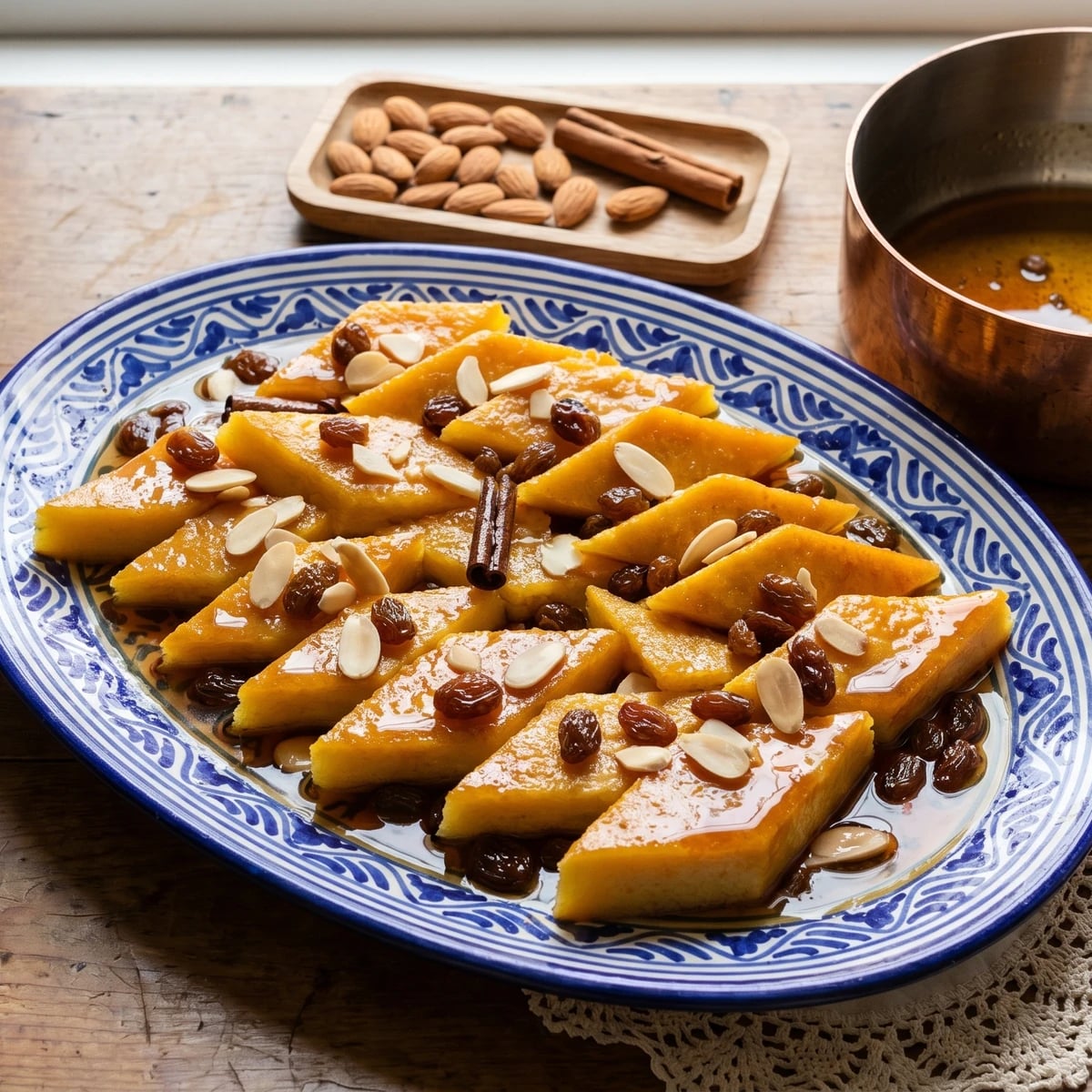
Puebla's criollo-conventual sweet of whipped yemas de huevo baked into a tender sponge, cut into diamonds, and soaked in spiced almíbar with raisins and almendra pelada.

Desserts
Mexican
Holiday
Christmas
Special Occasion
35 min
Active Time
55 min cook1 hr 30 min total
Yield10 to 12 servings

Puebla de los Ángeles, in the old convent kitchens of the Angelópolis, is where this sweet belongs on the Mexican map. Huevos reales are not a breakfast dish. They are a conventual dulce: yemas de huevo beaten until they hold air, baked into a golden sponge, cut into diamonds, and bathed in almíbar scented with canela de Ceylán, raisins, and almendra pelada.

Sor Juana wrote a version in the recipe manuscript associated with the Convento de San Jerónimo, in Mexico City, but Puebla's convent kitchens understood this language perfectly. Santa Clara, Santa Rosa, las Madres Concepcionistas: those women built a whole architecture of sugar, egg yolk, almonds, and patience. The technique is not decorative. The yolks carry the sponge, the syrup carries the perfume, and the almond gives the bite that keeps the sweetness from becoming flat.

Do not bring me boxed cake mix. No me vengas con atajos. You beat the yemas until they thicken and fall in ribbons because that is how the sponge rises without modern tricks. You reduce the almíbar until it coats the spoon because watery syrup makes soggy bread, not huevos reales. This is Puebla's table for Christmas, feast days, and the kind of visit where the talavera platter comes down from the high shelf. Cada estado, su propia cocina.

Huevos reales descend from Iberian convent sweets that used large quantities of yemas de huevo left from clarifying wine, starching linen, and making host wafers with egg whites. In New Spain, the recipe entered convent manuscripts, including the notebook associated with Sor Juana Inés de la Cruz and the Hieronymite Convento de San Jerónimo in the late 17th century. Puebla's convents, especially Santa Clara and Santa Rosa, became famous for adapting these Spanish egg-and-sugar techniques with New Spanish ingredients, talavera service, and a formal dulcería culture that still marks poblano sweets.

The technique, the tradition, and the story behind every dish.

Discover Culinary Explorer

Ingredients

yemas de huevo

Quantity

12 large

at room temperature

whole eggs

Quantity

2 large

at room temperature

fine sea salt

Quantity

1/4 teaspoon

granulated sugar

Quantity

1/2 cup

all-purpose flour

Quantity

1/2 cup

sifted twice

almendra pelada

Quantity

2 tablespoons

finely ground

unsalted butter

Quantity

as needed

for greasing the pan

flour

Quantity

1 tablespoon

for dusting the pan

granulated sugar for the almíbar

Quantity

2 cups

water

Quantity

1 1/2 cups

canela de Ceylán

Quantity

1 stick

whole cloves

Quantity

2

orange peel

Quantity

1 strip

white pith removed

raisins

Quantity

1/3 cup

almendra pelada

Quantity

1/3 cup

sliced or slivered

brandy or Jerez seco (optional)

Quantity

1 tablespoon

Equipment Needed

  • Stand mixer with whisk attachment or a strong hand whisk and patience
  • 8-inch square baking pan
  • Fine-mesh sieve
  • Wide saucepan for the almíbar
  • Puebla talavera serving platter

Instructions

  1. 1

    Prepare the pan

    Heat the oven to 350F. Butter an 8-inch square pan and dust it lightly with flour, knocking out the excess. Line the bottom with parchment if your pan tends to stick. Huevos reales are tender because they are mostly yema, so give yourself help when unmolding. That is not weakness. That is experience.

  2. 2

    Beat the yolks

    Put the yemas de huevo, whole eggs, salt, and 1/2 cup sugar in the bowl of a stand mixer. Beat on high speed for 10 to 12 minutes, until the mixture is thick, pale gold, and falls from the whisk in a ribbon that sits on the surface for a few seconds before disappearing. This is the structure of the cake. There is no baking powder here. The air you beat into the yolks is what lifts it.

    Room-temperature yemas whip higher and smoother. Cold yolks stay heavy. Take them out of the refrigerator at least one hour before you start.
  3. 3

    Fold the flour

    Sift the flour over the yolk mixture in three additions, folding gently with a wide spatula after each one. Add the finely ground almendra pelada with the last addition. Scrape from the bottom and turn the bowl as you fold. Do not stir in circles like you are making pancake batter. You worked to build that air, now don't crush it.

  4. 4

    Bake the sponge

    Pour the batter into the prepared pan and smooth the top with a light hand. Bake for 18 to 22 minutes, until the top is golden, the center springs back when touched, and the edges just begin to pull from the pan. Do not overbake it. A dry sponge drinks syrup badly and breaks into crumbs instead of clean diamonds.

  5. 5

    Cool and cut

    Let the sponge cool in the pan for 10 minutes, then turn it out onto a board and remove the parchment. Cool until just warm. Trim the edges if you want a cleaner presentation, then cut the sponge into diamonds about 2 inches wide. The diamond shape is part of the old convent table. Squares taste the same, yes, but we are not only eating. We are carrying a method.

  6. 6

    Make the almíbar

    Combine 2 cups sugar, water, canela de Ceylán, cloves, and orange peel in a wide saucepan. Bring to a simmer over medium heat, stirring only until the sugar dissolves. Cook 12 to 15 minutes, until the syrup is glossy and coats a spoon lightly. Add the raisins and sliced almendra pelada for the last 3 minutes so they plump and shine. Stir in the brandy or Jerez seco off the heat if using.

  7. 7

    Soak the diamonds

    Arrange the sponge diamonds in a shallow dish in one layer. Pour the hot almíbar over them slowly, making sure each piece is touched. Spoon the raisins and almonds across the top. Let them rest 30 minutes, turning once if needed, until the sponge has absorbed syrup but still holds its shape. Proper huevos reales are tender and saturated, not collapsed.

  8. 8

    Serve on talavera

    Transfer the diamonds to a Puebla talavera platter and spoon a little extra almíbar around them. Serve at room temperature, with the raisins and almendras visible on top. This is a Christmas and feast-day sweet, not a casual cake. Recetas probadas y garantizadas.

Chef Tips

  • Use yemas de huevo from the freshest eggs you can buy. The color matters here. Pale supermarket yolks make a pale sponge. Ask the women at the mercado for eggs with deep orange yemas if you can.
  • Canela de Ceylán is the Mexican kitchen cinnamon. It is softer and more fragrant than the hard cassia sticks sold in many supermarkets. If the stick breaks easily in your hand, you have the right one.
  • Do not substitute corn syrup for the almíbar. The syrup is sugar, water, canela, clove, and patience. Corn syrup gives shine but no soul.
  • Do not use condensed milk here. This is not tres leches and it is not flan. The old recipe is yolk sponge with spiced syrup. Así se hace y punto.
  • If the sponge cracks a little when you cut it, keep going. Once soaked and arranged on talavera with the almendras and raisins, it will look like the convent sweet it is.

Advance Preparation

  • The sponge can be baked one day ahead, wrapped tightly, and held at room temperature. Cut and soak it the day you serve it.
  • The almíbar can be made one day ahead and refrigerated with the canela, cloves, raisins, and almendras inside. Rewarm it gently before soaking the sponge.
  • Finished huevos reales keep covered at room temperature for 6 hours or refrigerated for 2 days. Bring them back to room temperature before serving so the syrup loosens and the aroma returns.

Frequently Asked Questions

Nutrition Information

1 serving (about 110g)

Calories
325 calories
Total Fat
9 g
Saturated Fat
3 g
Trans Fat
0 g
Unsaturated Fat
6 g
Cholesterol
240 mg
Sodium
75 mg
Total Carbohydrates
56 g
Dietary Fiber
1 g
Sugars
49 g
Protein
6 g

Note: Chef personas and recipes are created with AI assistance. Cook with care: follow safe food-handling practices, check doneness with a thermometer when needed, and adapt for allergies and your kitchen.

Where cooking meets culture.

Culinary guides, cultural storytelling, and the editorial depth that makes cooking meaningful.

Discover Culinary Explorer

More from Dulces de Leche, Yemas & Almendras

Browse the full collection