Culinary Explorer

A cooking platform built around craft, culture, and the stories behind what we eat.
Discover Culinary Explorer
Horiatiki (Greek Village Salad)

Horiatiki (Greek Village Salad)

Created by

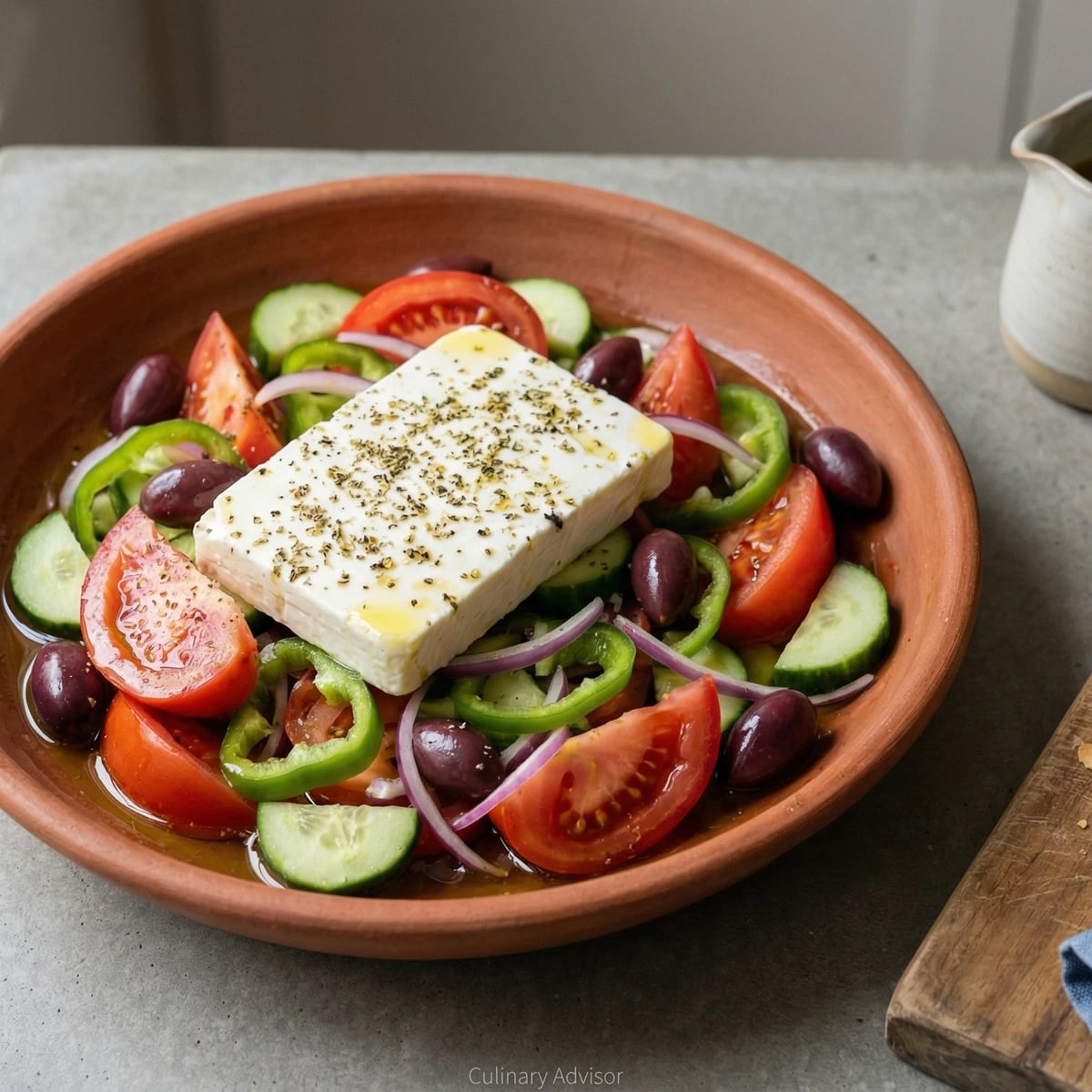
The authentic Greek village salad with chunky summer vegetables, briny Kalamata olives, and a proud slab of feta, dressed simply with the finest olive oil you own. No lettuce required, none wanted.

Salads
Greek
Weeknight
20 min
Active Time
0 min cook20 min total
Yield4 servings

Every summer I think about the salads I ate in the Aegean, served at tavernas where the tomatoes had been picked that morning and the feta came from sheep grazing on the hillside above. Those salads contained nothing that needed to be there and everything that did. No lettuce. No fancy greens. Just the honest produce of a Greek summer, treated with respect.

Americans have been making Greek salad wrong for decades. We dice everything small, crumble the feta, add romaine lettuce and bottled dressing, and wonder why it tastes like a side dish at a chain restaurant. The real thing, horiatiki, translates to 'village salad' for a reason. It's peasant food. Farmers' food. The kind of dish that requires nothing but perfect ingredients and the confidence to leave them alone.

The technique here is restraint. Cut your vegetables large. Let their textures remain distinct. Present the feta as a single proud slab, not scattered crumbs. Dress the salad at the last possible moment so the tomatoes stay firm and the cucumbers stay crisp. This is a salad that must be served immediately, which means your guests should be seated and your bread should be sliced before the dressing hits the vegetables.

The technique, the tradition, and the story behind every dish.

Discover Culinary Explorer

Ingredients

ripe tomatoes

Quantity

4 medium (about 1 1/2 pounds)

cut into irregular wedges

English cucumber

Quantity

1

cut into half-moons

green bell pepper

Quantity

1 medium

seeded and cut into rings

red onion

Quantity

1/2 medium

sliced into thin half-moons

Kalamata olives

Quantity

1 cup

unpitted

Greek feta cheese

Quantity

1 block (8 ounces)

extra-virgin olive oil

Quantity

1/2 cup

red wine vinegar

Quantity

2 tablespoons

dried Greek oregano

Quantity

1 teaspoon, plus more for finishing

fine sea salt

Quantity

1/2 teaspoon

black pepper

Quantity

to taste

freshly cracked

brined capers (optional)

Quantity

1 teaspoon

drained

Equipment Needed

  • Wide shallow serving bowl or platter
  • Glass jar with tight-fitting lid for dressing
  • Sharp chef's knife

Instructions

  1. 1

    Select and prep tomatoes

    Choose tomatoes that smell like tomatoes. Press gently near the stem. They should yield slightly, feeling heavy for their size. Cut them into irregular wedges, not uniform dice. Some pieces should be bite-sized, others require two bites. This variety is honest. It's how a Greek grandmother would cut them, and she knew what she was doing.

    Out-of-season supermarket tomatoes will disappoint you. If good fresh tomatoes aren't available, cherry tomatoes halved often have better flavor than their larger, gassed-for-shipping cousins.
  2. 2

    Prepare remaining vegetables

    Cut the cucumber into half-inch half-moons. Leave the skin on if it's an English cucumber; peel it in stripes if using a waxed standard variety. Slice the bell pepper into rings about a quarter-inch thick. Cut the red onion into paper-thin half-moons and separate the layers. The onion should be assertive but not brutal. Thin slices ensure you taste onion in every bite without it overwhelming the dish.

  3. 3

    Build the emulsified dressing

    Combine the olive oil, red wine vinegar, dried oregano, and salt in a jar with a tight-fitting lid. Shake vigorously for thirty seconds until the mixture turns cloudy and slightly thickened. This emulsification matters. Separated oil and vinegar means some bites taste only of fat, others only of acid. A proper emulsion coats every surface evenly.

    The salt isn't just for seasoning. It acts as an emulsifier, helping oil and vinegar bind together. Add it to the jar, not the salad, for this reason.
  4. 4

    Assemble the salad

    Arrange the tomato wedges on a wide, shallow platter or bowl. Scatter cucumber half-moons over and around them. Distribute the pepper rings and separate the onion into individual crescents, letting them fall where they may. Tuck the olives into the gaps. This is not precise work. The beauty of horiatiki is its casual abundance.

  5. 5

    Crown with feta

    Place the entire block of feta in the center of the salad. Do not crumble it. This is non-negotiable. A proper horiatiki presents the feta as a thick slab, allowing each diner to break off pieces with their fork, mixing creamy cheese with crisp vegetables in proportions they control. Scatter capers over the top if using.

  6. 6

    Dress and finish

    Give the jar another vigorous shake and pour the dressing evenly over the entire salad, making sure some lands on the feta. Finish with another generous pinch of dried oregano rubbed between your palms to release its oils, and several grinds of black pepper. Serve immediately with crusty bread for soaking up the juices that pool at the bottom. Those juices are the cook's reward.

    In Greece, the bread-soaking liquid at the bottom of the bowl has a name: it's called the 'papara,' and fighting over the last of it is a sign of a successful meal.

Chef Tips

  • Buy Greek feta packed in brine, not the pre-crumbled domestic variety. The difference is substantial. Greek feta has a creamy, tangy complexity that American versions simply cannot match. The brine keeps it moist and flavorful.
  • Seek out unpitted Kalamata olives. Pitted olives are convenient but they've lost some of their brine and developed a mealy texture. The pit protects the fruit. Warn your guests, or better yet, teach them to eat olives properly.
  • The quality of your olive oil determines the quality of your salad. This is not the place for neutral cooking oil. Use the best extra-virgin you can afford, something with character and a peppery finish that catches in your throat.
  • Dried Greek oregano differs from Italian or Mexican varieties. It's more pungent, almost mentholated. Look for it at Greek markets or order it online. The difference is worth the effort.
  • A splash of the olive brine in your dressing adds depth without overpowering. Start with half a teaspoon and adjust to taste.

Advance Preparation

  • Vegetables can be cut up to four hours ahead and stored separately in the refrigerator. Do not combine them until ready to serve, as the salt in the tomatoes will draw moisture from everything else.
  • The dressing can be made up to one week ahead and refrigerated. Shake vigorously before each use to re-emulsify.
  • Once assembled and dressed, this salad waits for no one. Serve within ten minutes or the tomatoes will weep and the cucumbers will soften. There are no leftovers worth saving.

Frequently Asked Questions

Nutrition Information

1 serving (about 590g)

Calories
585 calories
Total Fat
53 g
Saturated Fat
14 g
Trans Fat
0 g
Unsaturated Fat
36 g
Cholesterol
58 mg
Sodium
1231 mg
Total Carbohydrates
21 g
Dietary Fiber
5 g
Sugars
12 g
Protein
11 g

Note: Chef personas and recipes are created with AI assistance. Cook with care: follow safe food-handling practices, check doneness with a thermometer when needed, and adapt for allergies and your kitchen.

Where cooking meets culture.

Culinary guides, cultural storytelling, and the editorial depth that makes cooking meaningful.

Discover Culinary Explorer

More from Sensational Salads

Browse the full collection