Chef Dean
Asian Sesame Coleslaw
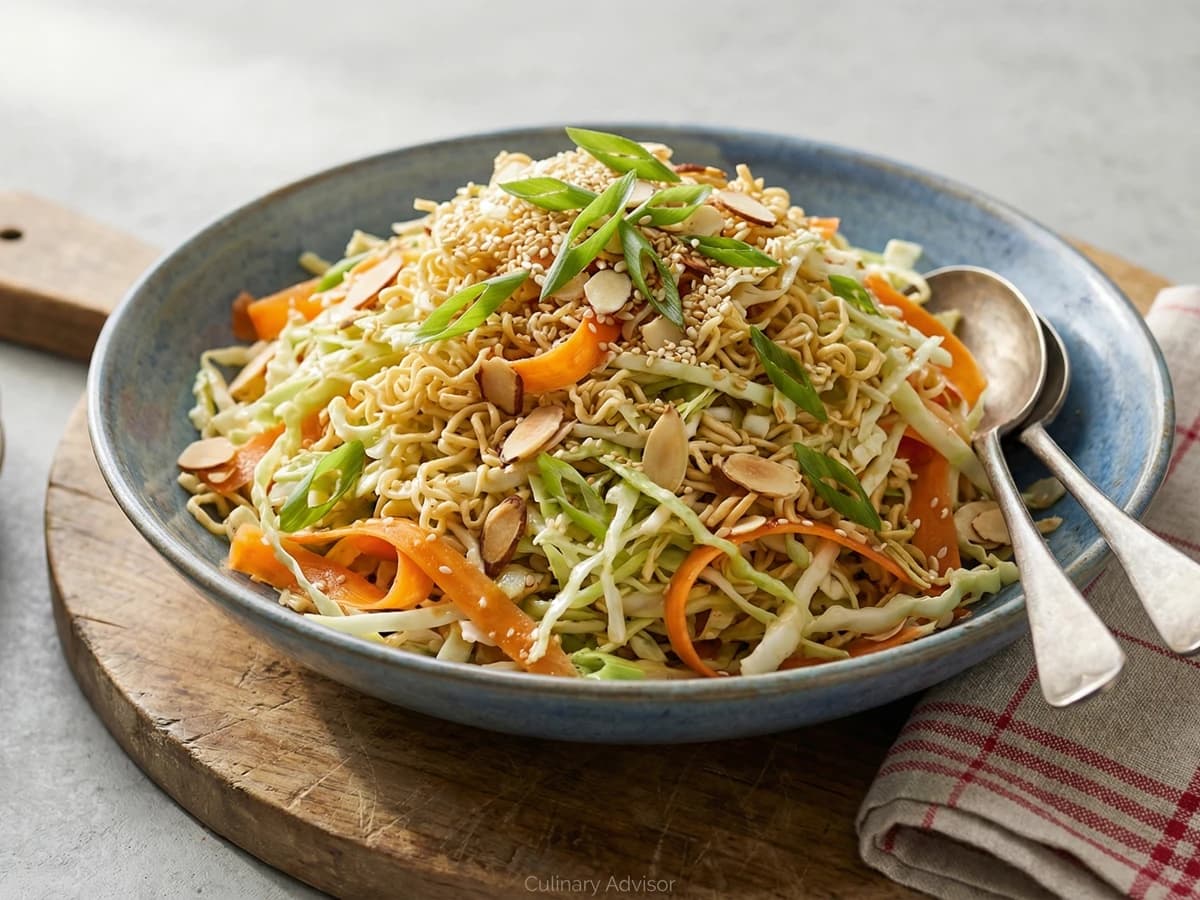
A potluck legend built on crisp cabbage, sweet carrots, and the irresistible shatter of toasted ramen noodles, all lacquered in a sesame-ginger dressing that keeps people coming back for thirds.
A cooking platform built around craft, culture, and the stories behind what we eat.
Created by
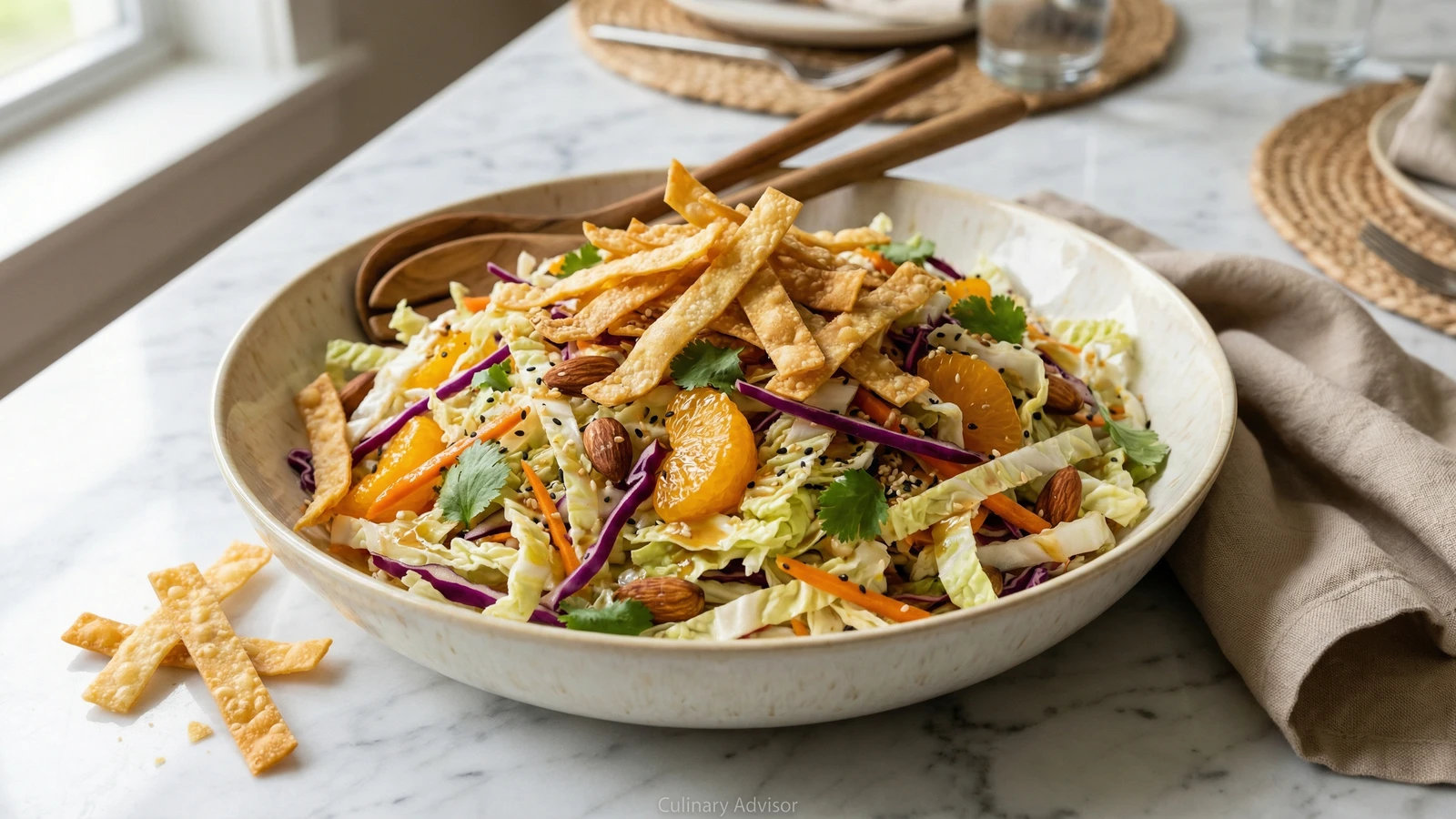
Shatteringly crisp wonton strips crown a tangle of delicate Napa cabbage and vibrant vegetables, all dressed in a sweet-sharp sesame vinaigrette that demands a second helping at every potluck.
This slaw appeared on American restaurant menus in the 1980s, part of the fusion movement that finally acknowledged Asian techniques belonged in mainstream kitchens. It became a potluck staple for good reason: the flavors are universally appealing, it travels well, and it feeds a crowd without requiring a second mortgage.
The genius lives in the textural contrast. You have the tender crunch of Napa cabbage, the snap of raw vegetables, the buttery yield of toasted almonds, and then those crispy wonton strips shattering across the top. Each forkful should deliver all of these sensations. This requires proper timing. Dress the slaw too early and it wilts. Add the wontons too soon and they turn to paste.
The dressing deserves your attention. A proper emulsion transforms this from a collection of vegetables into a unified dish. You'll whisk the oil into the vinegar slowly, watching it thicken and cling. This isn't difficult, but it does require intention. The sesame oil goes in at the end, just enough to perfume without overwhelming. Sesame has a loud voice. Let it sing harmony, not lead.
Quantity
1 medium head (about 2 pounds)
Quantity
4
thinly sliced on the bias
Quantity
1 cup
shredded
Quantity
1 large
peeled and julienned
Quantity
1/2 cup
loosely packed
Quantity
1 can (11 ounces)
well drained
Quantity
1/2 cup
Quantity
12
Quantity
about 2 cups
Quantity
1/4 cup
Quantity
2 tablespoons
Quantity
2 tablespoons
Quantity
1 tablespoon
finely grated
Quantity
2 cloves
minced
Quantity
1/2 teaspoon
Quantity
1/4 teaspoon
Quantity
1/3 cup
Quantity
2 tablespoons
Quantity
1 tablespoon
| Ingredient | Quantity |
|---|---|
| Napa cabbage | 1 medium head (about 2 pounds) |
| green onionsthinly sliced on the bias | 4 |
| red cabbageshredded | 1 cup |
| carrotpeeled and julienned | 1 large |
| fresh cilantro leavesloosely packed | 1/2 cup |
| mandarin orangeswell drained | 1 can (11 ounces) |
| sliced almonds | 1/2 cup |
| wonton wrappers | 12 |
| vegetable oil for frying | about 2 cups |
| rice vinegar | 1/4 cup |
| soy sauce | 2 tablespoons |
| honey | 2 tablespoons |
| fresh gingerfinely grated | 1 tablespoon |
| garlicminced | 2 cloves |
| kosher salt | 1/2 teaspoon |
| white pepper | 1/4 teaspoon |
| vegetable oil | 1/3 cup |
| toasted sesame oil | 2 tablespoons |
| sesame seeds (optional) | 1 tablespoon |
Remove and discard the outer leaves of the Napa cabbage. Quarter it lengthwise, then cut out the dense core from each quarter. Slice the leaves crosswise into ribbons about a quarter-inch wide. The pale, tender inner leaves and the crunchier outer leaves should both be included for textural variety. Transfer to your largest bowl and add the shredded red cabbage. The color contrast is not merely decorative. It signals to your guests that care was taken.
Scatter the sliced green onions, julienned carrot, and cilantro over the cabbage. Toss gently with your hands to distribute the colors throughout. Cover the bowl with a damp towel and refrigerate while you prepare the remaining components. Cold vegetables stay crisp.
Place sliced almonds in a dry skillet over medium-low heat. Shake the pan frequently, watching carefully as they transition from pale to golden. This takes three to four minutes. The moment you smell that rich, nutty fragrance, remove them from the heat immediately. Almonds continue cooking off the heat, and the line between toasted and burned is thin indeed. Transfer to a plate to cool.
Stack the wonton wrappers and cut them into strips about a quarter-inch wide. Separate the strips and let them dry for five minutes while you heat two inches of vegetable oil in a heavy saucepan to 350°F. Fry the strips in three batches, stirring gently with a spider or slotted spoon, until golden and crisp, about forty-five seconds per batch. The sizzling will subside when they're ready. Transfer to paper towels and season immediately with a pinch of salt.
In a medium bowl, whisk together the rice vinegar, soy sauce, honey, grated ginger, minced garlic, salt, and white pepper. Whisk vigorously until the honey dissolves completely and the mixture looks uniform. Taste it. The flavor should be assertively tangy and slightly sweet, with a kick of ginger. This concentrated base will mellow once the oils are added.
Set the bowl on a damp towel to hold it steady. While whisking continuously, add the vegetable oil in a very thin stream, almost drop by drop at first, then in a slow, steady trickle as the emulsion forms. The dressing should thicken visibly and turn slightly opaque. This takes two full minutes of whisking. Don't rush. A broken dressing pools at the bottom of the bowl instead of clinging to your vegetables.
Once the emulsion is stable, whisk in the toasted sesame oil. This goes in last because its flavor is volatile and dissipates with aggressive whisking. You want its perfume to rise from the finished slaw. Taste the dressing and adjust the seasoning. It should be balanced, with no single element dominating.
Remove the vegetables from the refrigerator. Drizzle about three-quarters of the dressing around the edges of the bowl, not directly onto the cabbage. Using your hands or two large spoons, toss the slaw from the bottom up, coating the vegetables evenly. Add more dressing only if needed. The leaves should be glistened, not swimming. Gently fold in the drained mandarin oranges, taking care not to crush them.
Transfer the dressed slaw to your serving bowl. Scatter the toasted almonds and crispy wonton strips generously over the top. Sprinkle with sesame seeds. Serve within fifteen minutes. The wontons will begin softening the moment they touch the dressing, so timing is everything. Bring any reserved wonton strips separately if transporting to a potluck, adding them just before serving.
1 serving (about 290g)
Culinary guides, cultural storytelling, and the editorial depth that makes cooking meaningful.
Discover Culinary ExplorerChef Dean
A potluck legend built on crisp cabbage, sweet carrots, and the irresistible shatter of toasted ramen noodles, all lacquered in a sesame-ginger dressing that keeps people coming back for thirds.

Chef Dean
Silky chilled noodles wrapped in a creamy peanut-sesame dressing so good you'll want to drink it straight, tangled with crisp vegetables and fresh herbs. This is the dish that disappears first at every potluck.
Chef Juliette
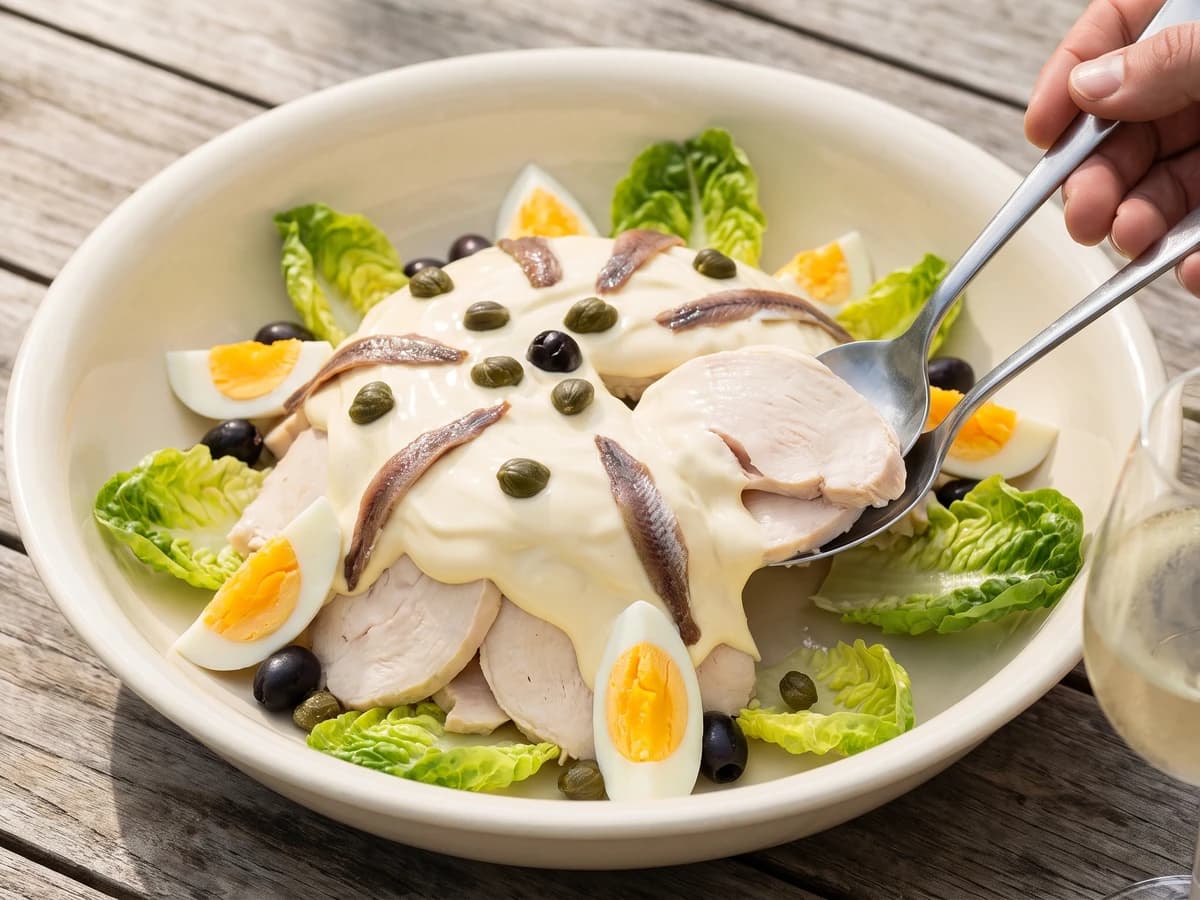
Cold roast chicken, ciseled lettuce, and a shining coat of homemade mayonnaise, arranged with capers, olives, anchovies, eggs, and lettuce hearts, then tossed at the table as the canon intends.

Chef Juliette
Cold roast or poached chicken with fine ribbons of lettuce, dressed at the final moment with oil and vinegar: a composed salad whose freshness depends entirely on timing.