
Chef Ally
Black-Eyed Peas with Greens
Field peas simmered slowly with a smoky ham hock, joined by ribbons of collard greens that melt into the pot liquor, a bowl of Southern tradition that nourishes body and spirit alike.
A cooking platform built around craft, culture, and the stories behind what we eat.
Created by
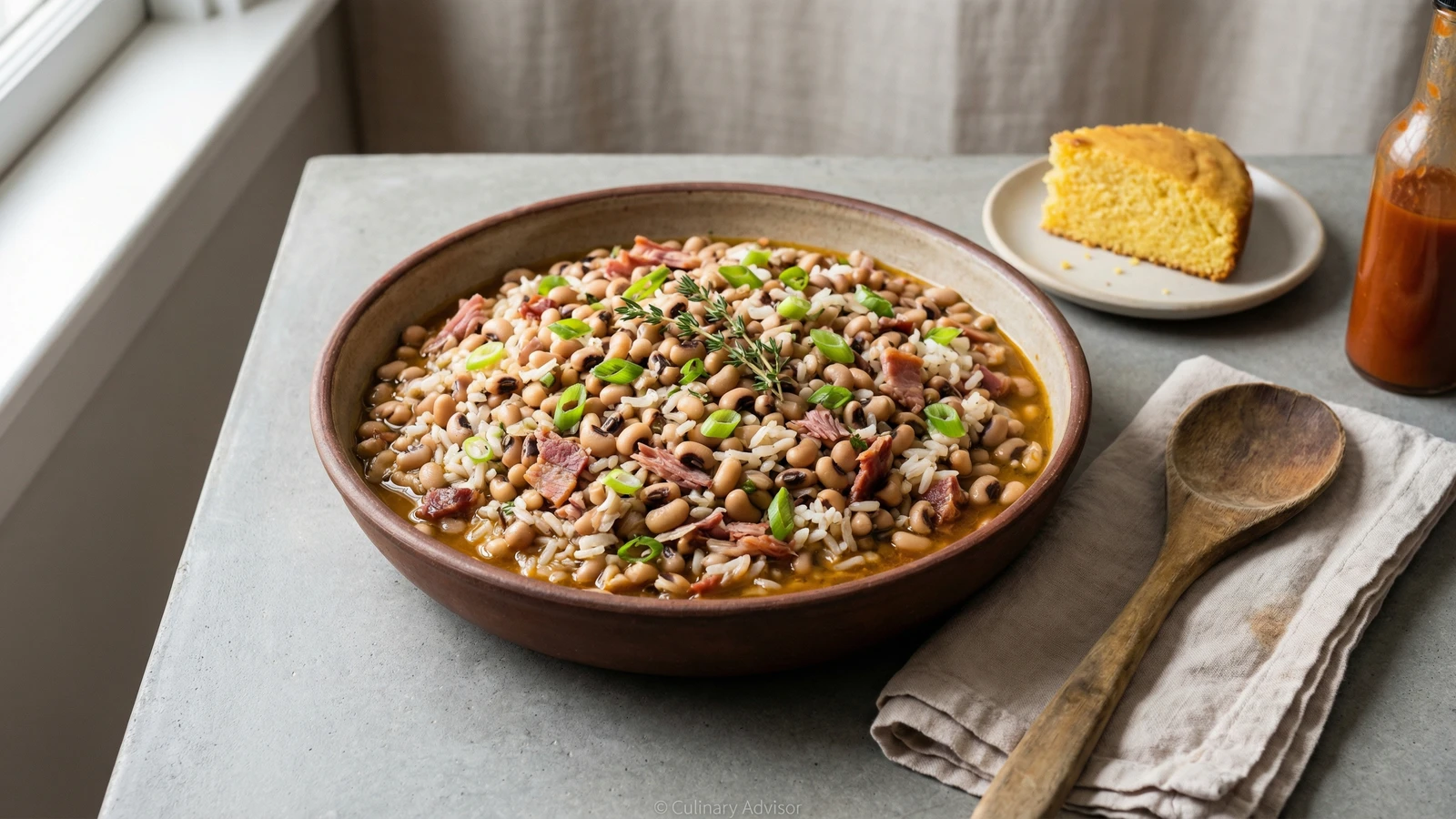
The Lowcountry's gift to American tables: creamy black-eyed peas and fluffy rice simmered with smoky ham hock and bacon, seasoned with the holy trinity, promising good fortune with every forkful.
This dish carries centuries in every bite. Hoppin' John arrived in the Carolina Lowcountry through the hands of enslaved West Africans who brought their knowledge of rice cultivation and bean cookery to American soil. They transformed survival rations into something extraordinary. We honor them every time we make it.
The tradition of eating Hoppin' John on New Year's Day runs deep through the South. Black-eyed peas represent coins, rice symbolizes prosperity, and the greens served alongside promise folding money in the coming year. Superstition or not, I've never met anyone brave enough to skip it on January first.
The technique here is straightforward but rewards patience. Dried peas simmered slowly with a ham hock develop a silky, potlikker-rich broth that the rice absorbs during its final cooking. The bacon fat and holy trinity lay the foundation. Everything builds from there. This isn't a dish you can rush, and it's all the better for it.
I've served this at fancy dinner parties and church potlucks alike. It travels well, holds beautifully on a buffet, and somehow tastes even better the next day. That's the mark of honest food.
Quantity
1 pound
sorted and rinsed
Quantity
6 strips
cut into 1/2-inch pieces
Quantity
1 large
diced
Quantity
3
diced
Quantity
1
diced
Quantity
4 cloves
minced
Quantity
1 (about 1 pound)
Quantity
6 cups
Quantity
2
Quantity
1 teaspoon
Quantity
1/2 teaspoon
Quantity
1 teaspoon, plus more to taste
Quantity
1/2 teaspoon
freshly ground
Quantity
1 1/2 cups
Quantity
3
thinly sliced
Quantity
for serving
Quantity
for serving
| Ingredient | Quantity |
|---|---|
| dried black-eyed peassorted and rinsed | 1 pound |
| thick-cut baconcut into 1/2-inch pieces | 6 strips |
| yellow oniondiced | 1 large |
| celery stalksdiced | 3 |
| green bell pepperdiced | 1 |
| garlicminced | 4 cloves |
| smoked ham hock | 1 (about 1 pound) |
| chicken stock or water | 6 cups |
| bay leaves | 2 |
| fresh thyme leaves | 1 teaspoon |
| cayenne pepper | 1/2 teaspoon |
| kosher salt | 1 teaspoon, plus more to taste |
| black pepperfreshly ground | 1/2 teaspoon |
| long-grain white rice | 1 1/2 cups |
| green onionsthinly sliced | 3 |
| hot sauce (optional) | for serving |
| cornbread (optional) | for serving |
Set a large Dutch oven over medium heat. Add the bacon pieces and cook slowly, stirring occasionally, until the fat renders and the meat crisps at the edges. This takes eight to ten minutes. Don't rush it. That rendered fat is your flavor foundation. The kitchen should smell like a Southern morning.
Add the diced onion, celery, and green pepper to the bacon fat. This is Louisiana's holy trinity, the aromatic backbone of a thousand Southern dishes. Cook, stirring frequently, until the vegetables soften and the onion turns translucent with golden edges, about seven minutes. Add the garlic and cook one minute more until fragrant.
Pour in the sorted black-eyed peas and stir to coat them in the rendered fat. Nestle the ham hock into the center of the pot. Add chicken stock, bay leaves, thyme, cayenne, salt, and pepper. The liquid should cover everything by about an inch. If it doesn't, add more stock or water.
Bring the liquid to a boil, then immediately reduce to a gentle simmer. Cover with a lid slightly ajar to let steam escape. Cook until the peas are tender but hold their shape, about one hour. Stir occasionally to prevent sticking. The liquid will reduce and thicken as the peas release their starch.
Transfer the ham hock to a cutting board. When cool enough to handle, pull the meat from the bone, discarding the skin, fat, and gristle. Shred the meat into bite-sized pieces. A good ham hock yields about one cup of smoky, tender meat. Return the meat to the pot.
Stir in the rice, ensuring it's submerged in the cooking liquid. If the pot looks dry, add half a cup more stock. Cover tightly and reduce heat to low. Cook without lifting the lid for twenty minutes. The rice steams in the flavorful broth, absorbing all that porky, peppery goodness.
Remove from heat and let stand, still covered, for ten minutes. This resting period allows the rice to finish cooking in residual steam and makes the grains easier to separate. Remove the bay leaves. Fluff gently with a fork, folding the peas and rice together without mashing.
Taste and adjust seasoning. The dish often needs more salt and black pepper at this stage. Transfer to a warm serving bowl or serve directly from the pot. Scatter green onions generously over the top. Set out hot sauce and warm cornbread on the side. This is food meant to be shared.
1 serving (about 460g)
Culinary guides, cultural storytelling, and the editorial depth that makes cooking meaningful.
Discover Culinary ExplorerChef Ally
Field peas simmered slowly with a smoky ham hock, joined by ribbons of collard greens that melt into the pot liquor, a bowl of Southern tradition that nourishes body and spirit alike.

Chef Dean
Tender rice and bright broccoli florets bound in a silky from-scratch cheese sauce, crowned with buttery cracker crumbs and baked until golden and bubbling. This is the casserole that disappears first at every church supper.

Chef Dean
Tender sweet potatoes bathed in a butter and brown sugar glaze until deeply caramelized, crowned with pillowy marshmallows toasted to golden perfection. This is the dish that makes Thanksgiving worth the effort.

Chef Dean
Golden, craggy cornmeal fritters with tender onion-flecked centers, fried until they shatter at first bite. The only proper sidekick for a fish fry, a barbecue spread, or a basket of fried catfish.