Chef Jeong-sun
Amjuk (Dried-Grain Weaning Porridge)
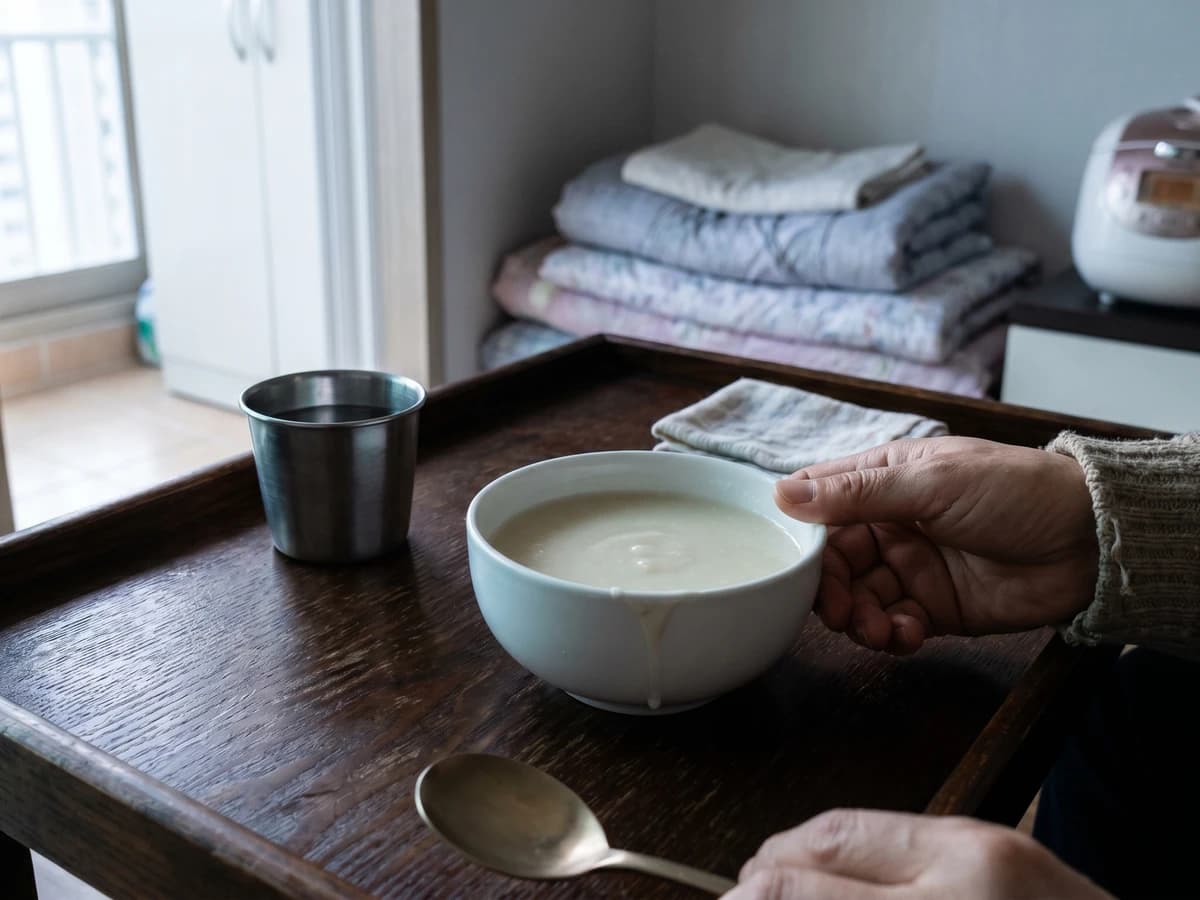
Powdered rice or dried baekseolgi cooked thin in cloudy rice water, an old Korean first-spoon porridge that asks for patience at the sieve and gentleness at the stove.
A cooking platform built around craft, culture, and the stories behind what we eat.

Created by
Walnuts peeled free of bitterness, ground with soaked rice, and simmered into a pale, rich juk for quiet breakfasts, elders, and the days when the body needs gentleness.
Hodu-juk lives or dies before the pot sees the stove, at the moment you decide whether to peel the walnuts. Leave the brown skins on and they will speak louder than the rice, bitter and dusty. Peel them, and the bowl becomes what it should be: pale, rich, quiet, and gentle enough for a morning when the body does not want to argue.
This is juk, the Korean family of rice porridges, and it belongs to the breakfast table, the sickbed tray, the elder's bowl, and the small child who needs something soft but not empty. Don't mistake gentle food for careless food. It asks for soaking, blanching, peeling, grinding, and steady stirring. None of those steps is grand. All of them matter.
Master Seong-nyeo made us peel walnuts until our thumbs were sore, then said nothing until the porridge was wrong. That was her mercy, if you can call it that. Notebook 31 says 150 grams of walnuts to 200 grams of rice, with 5 1/2 cups water. Write it down. Memory is a borrowed bowl.
Korea's best-known walnut growing story belongs to Cheonan: local records and tradition connect the first Gwangdeok walnuts to the Goryeo official Yu Cheong-sin, who is said to have brought walnut seedlings from Yuan China and planted them near Gwangdeoksa in 1290, during King Chungnyeol's reign. Hodu-juk belongs to the older juk family of rice porridges, foods served at breakfast, to elders, to children, and during recovery because rice can be cooked until gentle and nuts add richness without a heavy table. Its dignity is the home bowl, where a costly nut was stretched with rice into something nourishing.
Quantity
1 cup (200g)
rinsed, soaked 1 hour, and drained
Quantity
1 1/2 cups (150g)
halves or pieces
Quantity
6 cups
for blanching the walnuts
Quantity
5 1/2 cups
divided, plus more as needed
Quantity
1/2 teaspoon
Quantity
2 teaspoons
Quantity
1 tablespoon
Quantity
1
pitted and sliced into thin threads
Quantity
to serve
| Ingredient | Quantity |
|---|---|
| short-grain white ricerinsed, soaked 1 hour, and drained | 1 cup (200g) |
| raw unsalted walnuts (hodu)halves or pieces | 1 1/2 cups (150g) |
| boiling waterfor blanching the walnuts | 6 cups |
| waterdivided, plus more as needed | 5 1/2 cups |
| fine sea salt | 1/2 teaspoon |
| sugar (optional) | 2 teaspoons |
| pine nuts (jat) (optional) | 1 tablespoon |
| jujube (daechu) (optional)pitted and sliced into thin threads | 1 |
| dongchimi or mild kimchi (optional) | to serve |
Rinse the rice in several changes of cool water until the water runs mostly clear, then soak it in fresh cool water for 1 hour. Drain it well for 10 minutes before grinding. Soaked rice breaks evenly under the blender blade and cooks into a smooth juk (rice porridge) instead of leaving hard little flecks.
Put the walnuts in a heatproof bowl and pour the boiling water over them. Let them sit 3 minutes, then drain. While they are still warm, rub them in a clean kitchen towel and pick away the brown skins with your fingers or a small knife. Reserve 1 tablespoon of the peeled walnuts and chop them finely for garnish.
Blend the drained rice with 1 cup of the measured water for 20 to 30 seconds, until it looks like fine wet sand, not a paste. Blend the peeled walnuts with 2 cups of the measured water for 60 to 75 seconds, until milky and pale. Strain the walnut milk through a fine sieve, pressing gently, and scrape any fine cream from the underside of the sieve back into the bowl. Rice and walnuts are ground separately because rice needs longer cooking, while walnuts scorch and split if they are pushed too hard.
Put the remaining 2 1/2 cups water in a heavy pot and bring it to a gentle simmer. Whisk in the rice slurry, then lower the heat to medium-low and cook 18 to 22 minutes, stirring often and scraping the bottom of the pot. The raw, chalky smell should disappear, and the porridge should thicken enough that the spoon leaves a soft trail for one breath.
Lower the heat. Stir in the walnut milk in three additions, mixing well after each one so the porridge stays smooth. Cook 8 to 10 minutes more, stirring almost constantly near the end. Do not let it boil hard. Walnut oil is delicate, and rough heat makes the bottom catch before the top looks done. If the porridge turns too thick, stir in warm water 2 tablespoons at a time.
Stir in the salt and, if you want the faintly sweet breakfast version, the sugar. Taste after the salt dissolves. The salt should make the walnut clearer, not salty, and the sugar should barely announce itself. Rest off the heat for 3 minutes, then ladle into bowls. Top with the reserved chopped walnut, pine nuts, and jujube threads if using. Serve with dongchimi or mild kimchi, because a little clean acidity keeps the rich bowl from feeling heavy.
1 serving (about 390g)
Culinary guides, cultural storytelling, and the editorial depth that makes cooking meaningful.
Discover Culinary ExplorerChef Jeong-sun
Powdered rice or dried baekseolgi cooked thin in cloudy rice water, an old Korean first-spoon porridge that asks for patience at the sieve and gentleness at the stove.

Chef Jeong-sun
A soft summer rice porridge of kneaded mallow greens, dried shrimp, and careful doenjang broth, plain enough for breakfast and exact enough to keep the grit and bitterness out.
Chef Jeong-sun
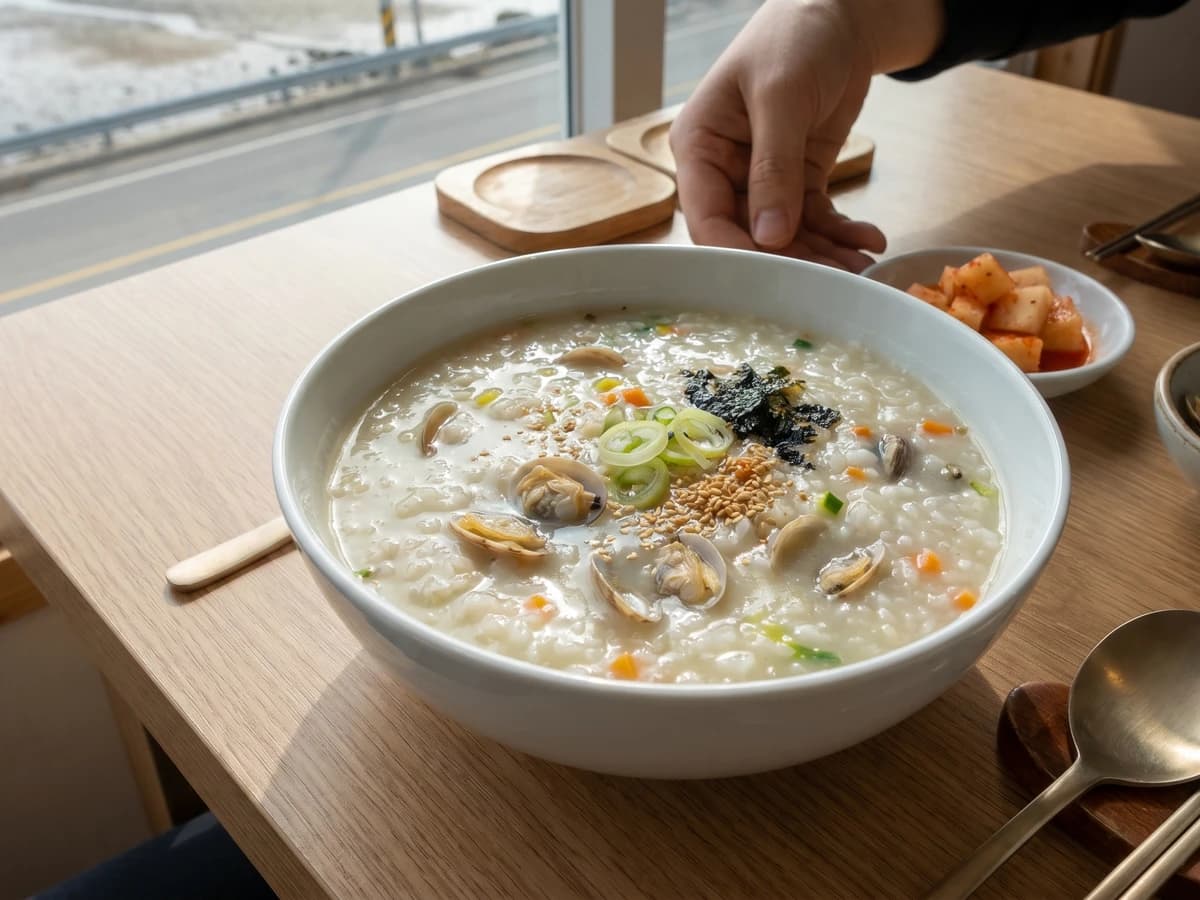
A west-coast clam porridge from Buan's tidal flats: live bajirak opened for their liquor, sesame-slicked rice toasted in the pot, and vegetables cut small enough to comfort without hiding the clams.

Chef Jeong-sun
An autumn juk of boiled chestnuts and soaked short-grain rice, simmered low until smooth and softly sweet, the kind of bowl you set before an elder, a child, or yourself.