Chef Jeong-sun
Amjuk (Dried-Grain Weaning Porridge)
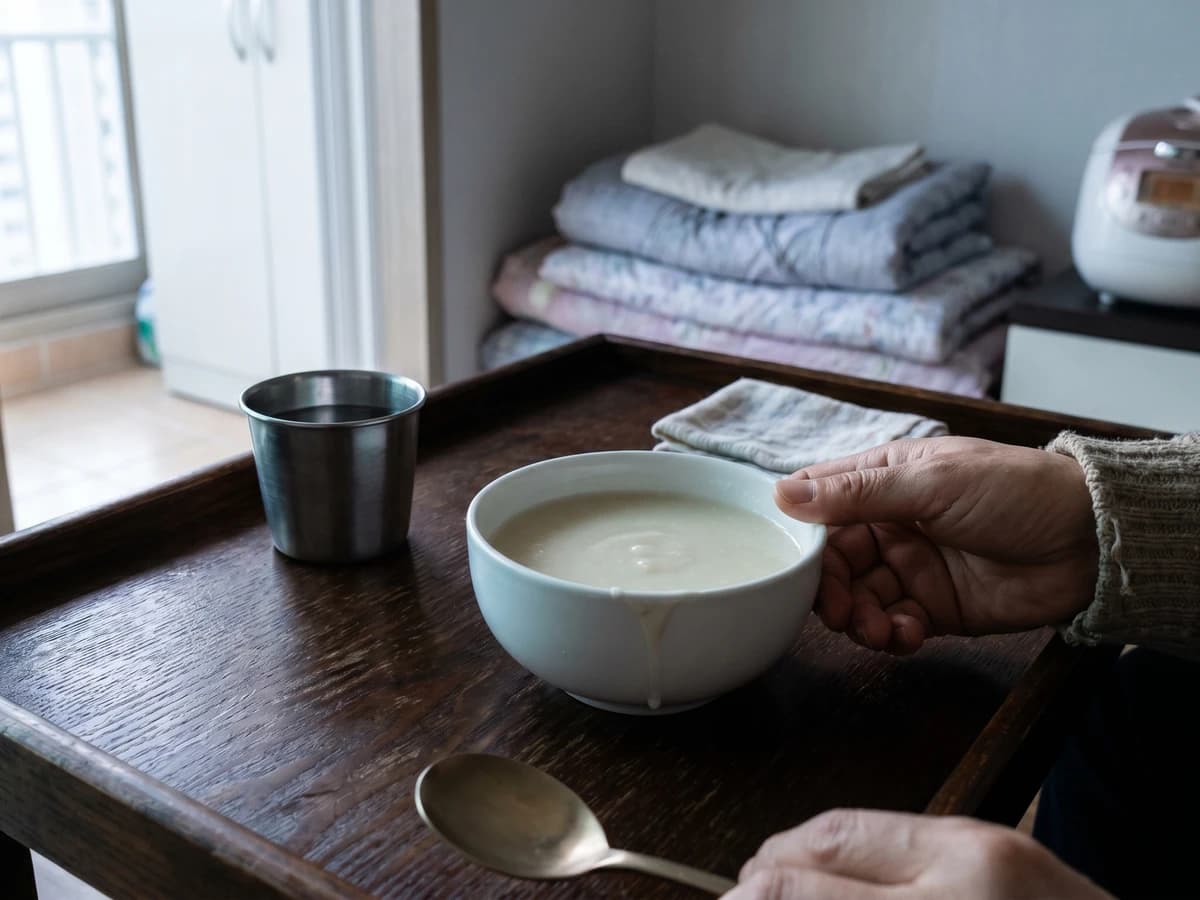
Powdered rice or dried baekseolgi cooked thin in cloudy rice water, an old Korean first-spoon porridge that asks for patience at the sieve and gentleness at the stove.
A cooking platform built around craft, culture, and the stories behind what we eat.

Created by
A soft golden porridge for autumn mornings and tired bodies, made with sweet pumpkin, glutinous rice flour, and small rice dumplings that turn comfort into something measured.
Hobak-juk belongs to autumn, when the market piles up old pumpkins and sweet danhobak (Korean kabocha squash), their skins hard enough to make a young cook lose patience. Cook the month you're standing in. In late autumn this porridge tastes full with very little sugar, because the squash has done its work in the field before it reaches your pot.
People call this simple food, and it is. Simple does not mean careless. The porridge lives or dies by texture: the pumpkin must be cooked until it collapses, the glutinous rice flour must be stirred in as a slurry so it thickens cleanly, and the saealsim (small rice dumplings) must be small enough to cook through before the porridge scorches. A heavy pot and a patient spoon matter more than any decoration.
My teacher Master Seong-nyeo made us taste the pumpkin before adding sugar. If the squash was sweet, she used almost none. If it was watery, she changed the dish instead of bullying it with sweetness. For this pot, start with 1 tablespoon sugar and 1/2 teaspoon salt. Write down what your pumpkin needed. Memory is a borrowed bowl.
Hobak-juk is part of Korea's everyday juk (porridge) tradition, food made for breakfast, for children, for elders, and for anyone whose stomach needs gentleness rather than ceremony. The dish is especially tied to autumn storage pumpkins, including neulgeun hobak (mature pumpkin), which kept well through cold months and could be stretched with rice flour into a filling meal. Versions vary by household: some are plain and smooth, some include pat (adzuki beans), and many are dotted with saealsim, small glutinous rice dumplings whose name means bird eggs.
Quantity
1.2 kg whole, about 900g peeled and seeded
peeled, seeded, and cut into 2-inch pieces
Quantity
5 cups
divided
Quantity
1/2 teaspoon, plus a pinch
divided
Quantity
1 to 3 tablespoons
added after tasting the cooked pumpkin
Quantity
3/4 cup
divided for slurry and saealsim
Quantity
5 to 6 tablespoons
for the saealsim dough
Quantity
1/2 cup
Quantity
1 tablespoon
Quantity
1
seeded and thinly sliced
| Ingredient | Quantity |
|---|---|
| danhobak (Korean kabocha squash) or mature pumpkinpeeled, seeded, and cut into 2-inch pieces | 1.2 kg whole, about 900g peeled and seeded |
| waterdivided | 5 cups |
| fine sea saltdivided | 1/2 teaspoon, plus a pinch |
| sugar or honeyadded after tasting the cooked pumpkin | 1 to 3 tablespoons |
| glutinous rice flour (chapssal-garu)divided for slurry and saealsim | 3/4 cup |
| boiling waterfor the saealsim dough | 5 to 6 tablespoons |
| cooked adzuki beans (pat) (optional) | 1/2 cup |
| pine nuts (jat) (optional) | 1 tablespoon |
| jujube (daechu) (optional)seeded and thinly sliced | 1 |
Wash the squash, split it carefully, scrape out the seeds, and cut away the skin. Cut the flesh into 2-inch pieces so it cooks evenly. If the skin fights you, microwave the whole squash for 3 minutes or roast it cut-side down at 200 C for 20 minutes, just until the skin softens. That is a safe corner to cut. Leaving hard skin in the porridge is not.
Put the squash in a heavy pot with 4 cups water and 1/2 teaspoon salt. Bring to a boil, then lower to a steady simmer and cook 20 to 25 minutes, until a spoon presses through the squash without resistance. The salt goes in now because it wakes up the pumpkin's sweetness before sugar gets anywhere near it.
While the squash cooks, put 1/2 cup glutinous rice flour and a pinch of salt in a bowl. Stir in 5 tablespoons boiling water with chopsticks, then knead by hand when it is cool enough to touch. Add 1 more tablespoon water only if dry crumbs remain. Roll into balls the size of small marbles, about 1 teaspoon each. Bigger ones look generous and cook badly.
When the squash is soft, mash it directly in the pot with a potato masher for a homely texture, or blend it smooth if the table wants it softer. Keep the cooking liquid. That water now holds pumpkin flavor, and throwing it out is throwing out the dish.
Whisk the remaining 1/4 cup glutinous rice flour with 1 cup cold water until no lumps remain. Stir this slurry into the pumpkin over medium-low heat. Keep the spoon moving across the bottom for 8 to 10 minutes, until the porridge turns glossy and thick enough to fall slowly from the spoon. Dry flour dropped straight into the pot makes lumps. Slurry gives you a clean body.
Slide in the saealsim and stir gently so they do not stick to the bottom. Simmer 6 to 8 minutes, until the dumplings float and no raw flour taste remains when you bite one. If using cooked adzuki beans, stir them in during the last 2 minutes so they warm without turning the porridge muddy.
Taste the porridge before adding sugar. Stir in 1 tablespoon sugar or honey first, then add more only if the squash needs help, up to 3 tablespoons total. The finished hobak-juk should be gently sweet, lightly salty, and plainly pumpkin. Ladle into bowls and finish with pine nuts and jujube slivers if using.
1 serving (about 450g)
Culinary guides, cultural storytelling, and the editorial depth that makes cooking meaningful.
Discover Culinary ExplorerChef Jeong-sun
Powdered rice or dried baekseolgi cooked thin in cloudy rice water, an old Korean first-spoon porridge that asks for patience at the sieve and gentleness at the stove.

Chef Jeong-sun
A soft summer rice porridge of kneaded mallow greens, dried shrimp, and careful doenjang broth, plain enough for breakfast and exact enough to keep the grit and bitterness out.
Chef Jeong-sun
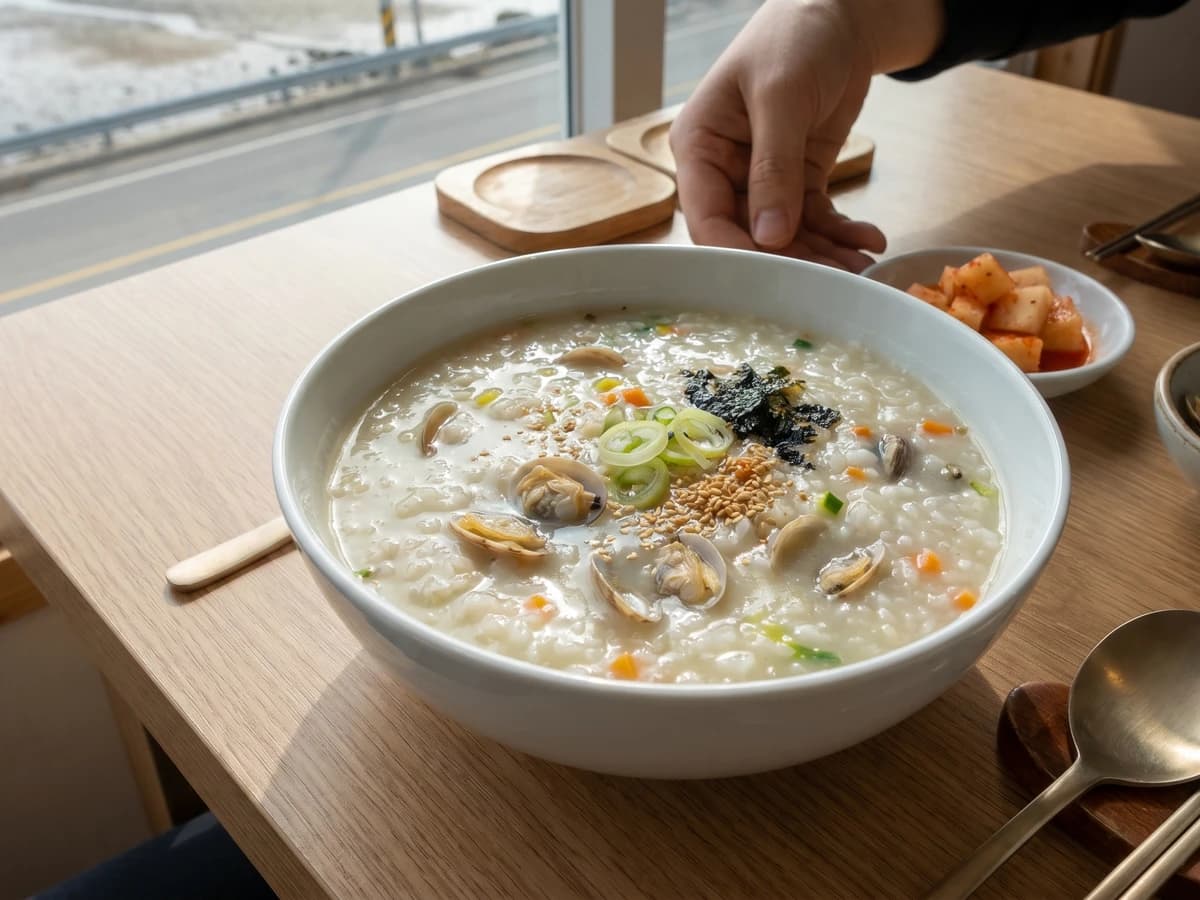
A west-coast clam porridge from Buan's tidal flats: live bajirak opened for their liquor, sesame-slicked rice toasted in the pot, and vegetables cut small enough to comfort without hiding the clams.

Chef Jeong-sun
An autumn juk of boiled chestnuts and soaked short-grain rice, simmered low until smooth and softly sweet, the kind of bowl you set before an elder, a child, or yourself.