
Chef Takumi
Abura Soba (油そば, brothless ramen)
Abura soba is ramen without the hiding place of soup: hot noodles, strong shōyu tare, fragrant oil, and the discipline to mix while every strand is still hot.
A cooking platform built around craft, culture, and the stories behind what we eat.
Created by
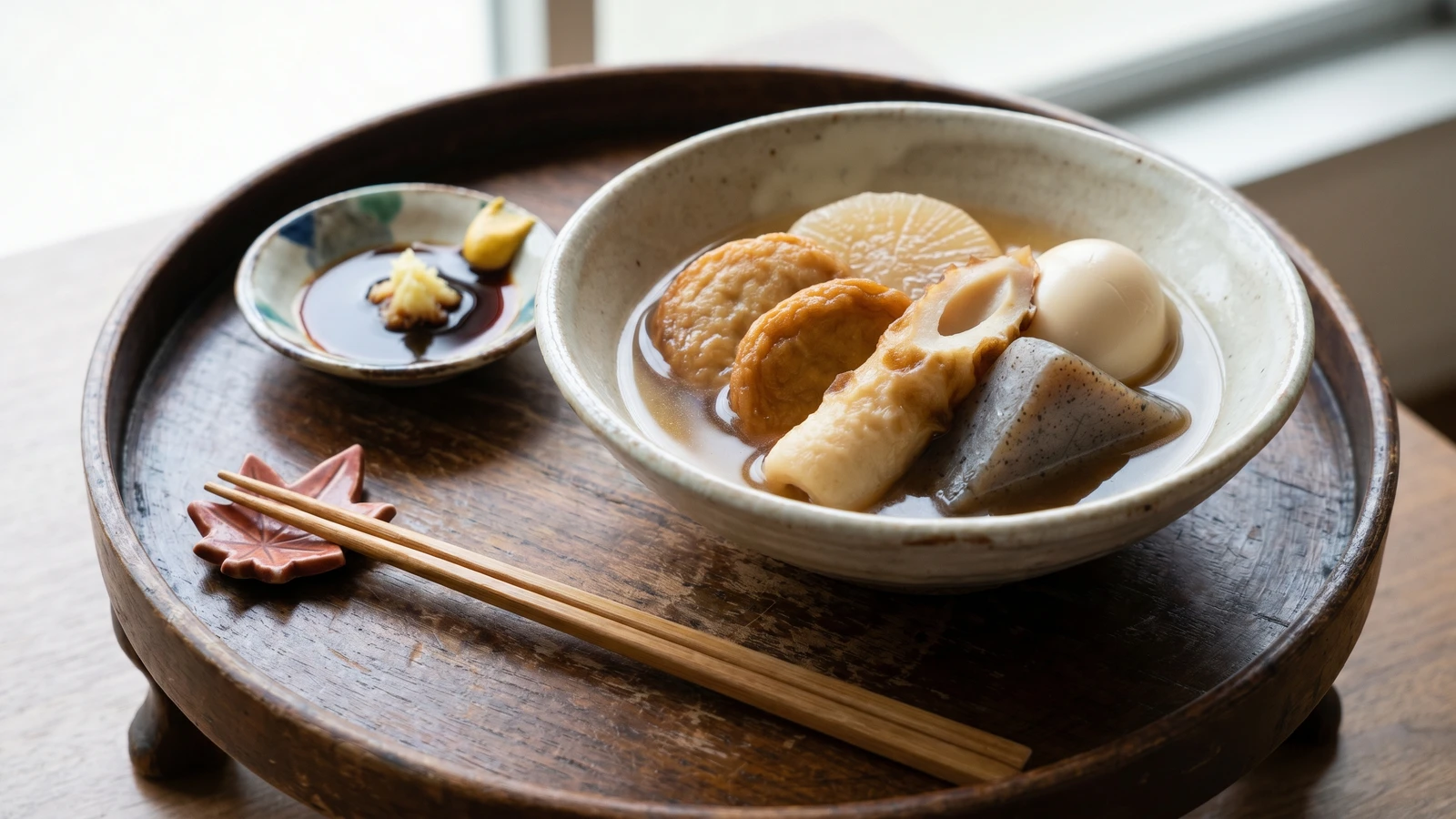
This is ordinary oden made local by one sharp little habit: clear simmered ingredients, lifted from dashi, then touched with grated ginger and soy.
Oden looks like a crowded pot, which makes people nervous. Don't be. The method is quieter than the menu: each ingredient is prepared so it can sit in clear dashi without muddying it, then the pot does the patient work.
Himeji's signature is not a different stew so much as a different way of eating it. Daikon, eggs, konnyaku, and fish cakes simmer gently until they take on the broth, then you spoon over shōga-jōyu, grated ginger mixed with soy sauce. That bite of ginger wakes the soft, pale things in the bowl without hiding them. Nothing heavy. Nothing covered up.
The detail that decides the dish is preparation before the simmer. Parboil the daikon so its sharpness leaves, score the konnyaku so it can drink, rinse the fish cakes to remove excess oil. Do those small things and the broth stays clean. Then leave it alone, as we do with good simmered food. Oden is better after it has had time to listen.
Himeji oden is the local oden of Himeji in Hyōgo Prefecture, defined less by a fixed list of ingredients than by serving the simmered pieces with shōga-jōyu, ginger soy sauce. The habit fits the old Harima region, where soy sauce production has long been strong, especially around nearby Tatsuno, known for usukuchi shōyu. The name Himeji oden was promoted in the 2000s by local groups as a way to identify a custom that had already been common in shops and homes.
Quantity
1 piece (about 10g)
Quantity
25g
Quantity
7 cups
Quantity
1/3 cup
Quantity
3 tablespoons
Quantity
1 tablespoon
Quantity
1 teaspoon
Quantity
1/2 teaspoon
plus more as needed
Quantity
1 medium (about 700g)
peeled and cut into 1-inch rounds
Quantity
4
Quantity
1 block (about 250g)
Quantity
4 pieces
Quantity
4 pieces
Quantity
4 pieces
Quantity
4 small
Quantity
2 tablespoons
finely grated
Quantity
1/4 cup
for shōga-jōyu
Quantity
to serve
| Ingredient | Quantity |
|---|---|
| konbu (dried kelp) | 1 piece (about 10g) |
| katsuobushi (bonito flakes) | 25g |
| cold water | 7 cups |
| usukuchi shōyu (light soy sauce) | 1/3 cup |
| mirin | 3 tablespoons |
| sake | 1 tablespoon |
| sugar | 1 teaspoon |
| sea saltplus more as needed | 1/2 teaspoon |
| daikonpeeled and cut into 1-inch rounds | 1 medium (about 700g) |
| large eggs | 4 |
| konnyaku | 1 block (about 250g) |
| chikuwa | 4 pieces |
| satsuma-age or other fried fish cake | 4 pieces |
| ganmodoki or atsuage | 4 pieces |
| mochi kinchaku (optional) | 4 small |
| fresh gingerfinely grated | 2 tablespoons |
| soy saucefor shōga-jōyu | 1/4 cup |
| Japanese mustard (karashi) (optional) | to serve |
Wipe the konbu with a damp cloth, but don't wash it. Put it in the cold water and bring it up slowly over low heat. Pull the konbu just before the water boils, when small bubbles climb the sides. Boiling kelp makes the stock bitter and slick, and oden needs a clean broth because the ingredients will sit in it for a long time.
Bring the konbu water to a gentle boil, add the katsuobushi all at once, then take the pot off the heat. Let the flakes sink for two or three minutes. Strain through a cloth or fine sieve and let it drip without pressing. Squeezing forces out oily, harsh flavors, and that would cloud the quiet stock you just made.
Peel the daikon and cut it into thick rounds. Shave the sharp edges if you like a neat finish, then score a shallow cross on one face of each round. Simmer in plain water for 15 to 20 minutes, until a skewer enters halfway with little resistance. This removes the raw bite and opens the flesh so the dashi can enter cleanly.
Lower the eggs into simmering water and cook for 9 minutes, then chill in cold water and peel. A firm yolk holds up in the oden pot. Soft eggs are lovely elsewhere, but here they break and roughen the broth.
Cut the konnyaku into triangles or thick rectangles, score both sides lightly in a crosshatch, and rub with a little salt. Rinse, then boil for 3 minutes and drain. The scoring gives the seasoning places to cling, and the quick boil removes the raw mineral smell. Konnyaku is shy about flavor unless you invite it in.
Pour boiling water over the satsuma-age, ganmodoki, atsuage, and any other fried fish cakes, then drain well. This is not fussiness. It removes excess surface oil so the dashi stays clear instead of tasting like the fryer.
Return the strained dashi to a wide pot and add usukuchi shōyu, mirin, sake, sugar, and salt. Taste it before the ingredients go in. It should be savory and a little lighter than soup, because the pot will reduce slightly and the fish cakes will add their own seasoning.
Add the daikon, eggs, and konnyaku first. Bring the broth only to a quiet simmer, never a hard boil, and cook 30 minutes with a wooden drop-lid (otoshibuta), or a circle of parchment with a small hole in the center. The drop-lid keeps everything just under the surface without stirring, so the seasoning moves evenly and the pieces stay whole.
Add the chikuwa, satsuma-age, ganmodoki, atsuage, and mochi kinchaku if using. Simmer gently for another 20 to 30 minutes. These ingredients are already cooked, so they need time to warm through and share flavor with the broth, not punishment.
Turn off the heat and let the oden rest at least 30 minutes, or longer if you have the time. Simmered foods take in seasoning as they cool. Rewarm gently before serving, keeping the broth below a boil so it stays clear.
Stir the freshly grated ginger into the soy sauce just before serving. Fresh ginger matters here. Jarred ginger tastes tired and sweet, and Himeji oden depends on that clean, sharp lift against the mild simmered pieces.
Set a few pieces in each bowl with a little clear broth. Spoon the shōga-jōyu over the pieces, or serve it in a small dish for dipping. Add karashi only if you like. Keep the bowl uncrowded: three or five pieces are enough, with room for the broth to shine.
1 serving (about 850g)
Culinary guides, cultural storytelling, and the editorial depth that makes cooking meaningful.
Discover Culinary ExplorerChef Takumi
Abura soba is ramen without the hiding place of soup: hot noodles, strong shōyu tare, fragrant oil, and the discipline to mix while every strand is still hot.
Chef Takumi
Akadashi asks you to trust the dark miso. Build a clear dashi, loosen the Hatchō mame-miso gently, and the soup turns coffee-dark, savory, and clean.

Chef Takumi
Toast the rice until its skin is firm, then let it meet chicken broth, burdock, maitake, and seri. The pot looks grand, but the work is rice, broth, and patience.
Chef Takumi
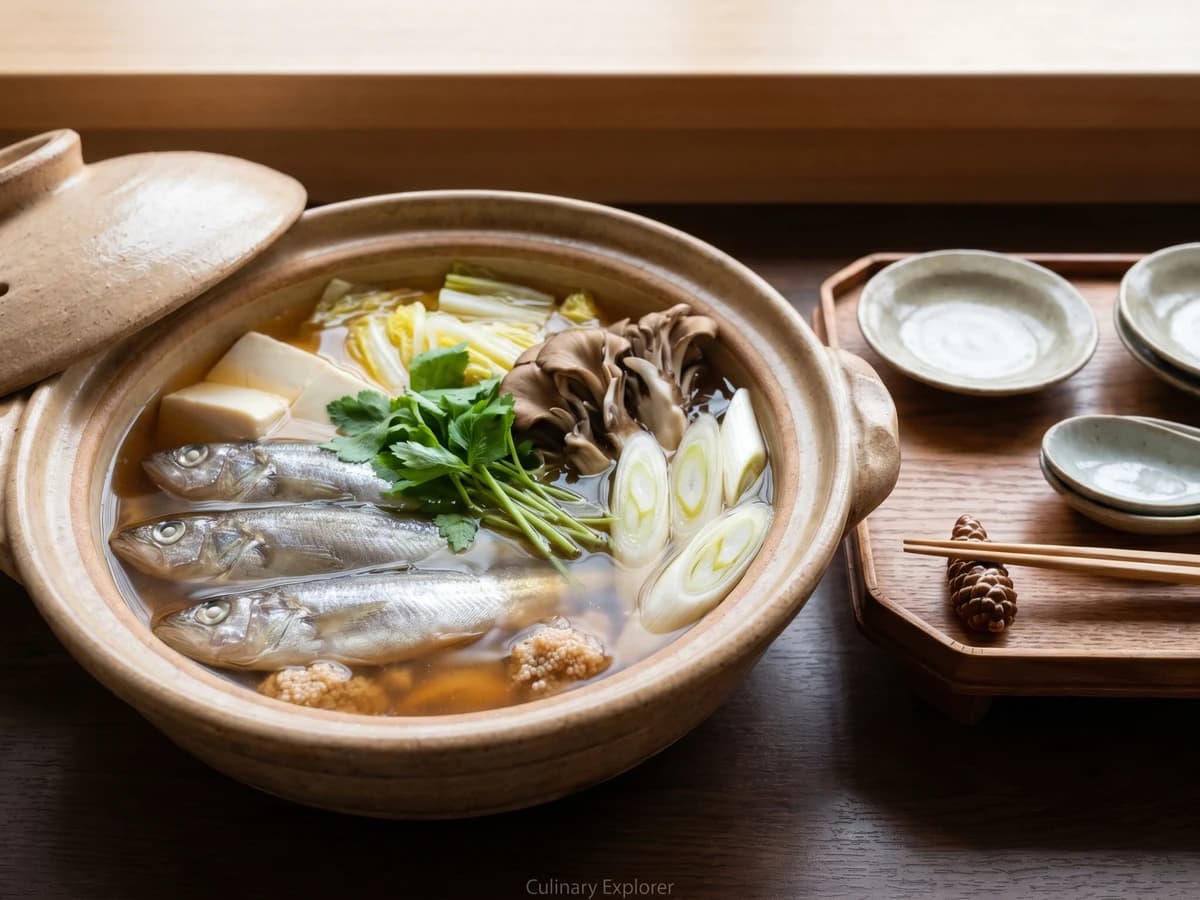
Shottsuru nabe is Akita winter in one pot: clean dashi, hatahata at shun, tofu and napa cabbage carrying a salt-deep broth without anything heavy enough to hide the fish.