
Chef Takumi
Autumn Mushroom Rice (きのこの炊き込みご飯, Kinoko Takikomi Gohan)
Autumn mushrooms do most of the work here. Rinse the rice well, season the liquid before cooking, and let the pot rest so every grain comes out separate and fragrant.
A cooking platform built around craft, culture, and the stories behind what we eat.
Created by
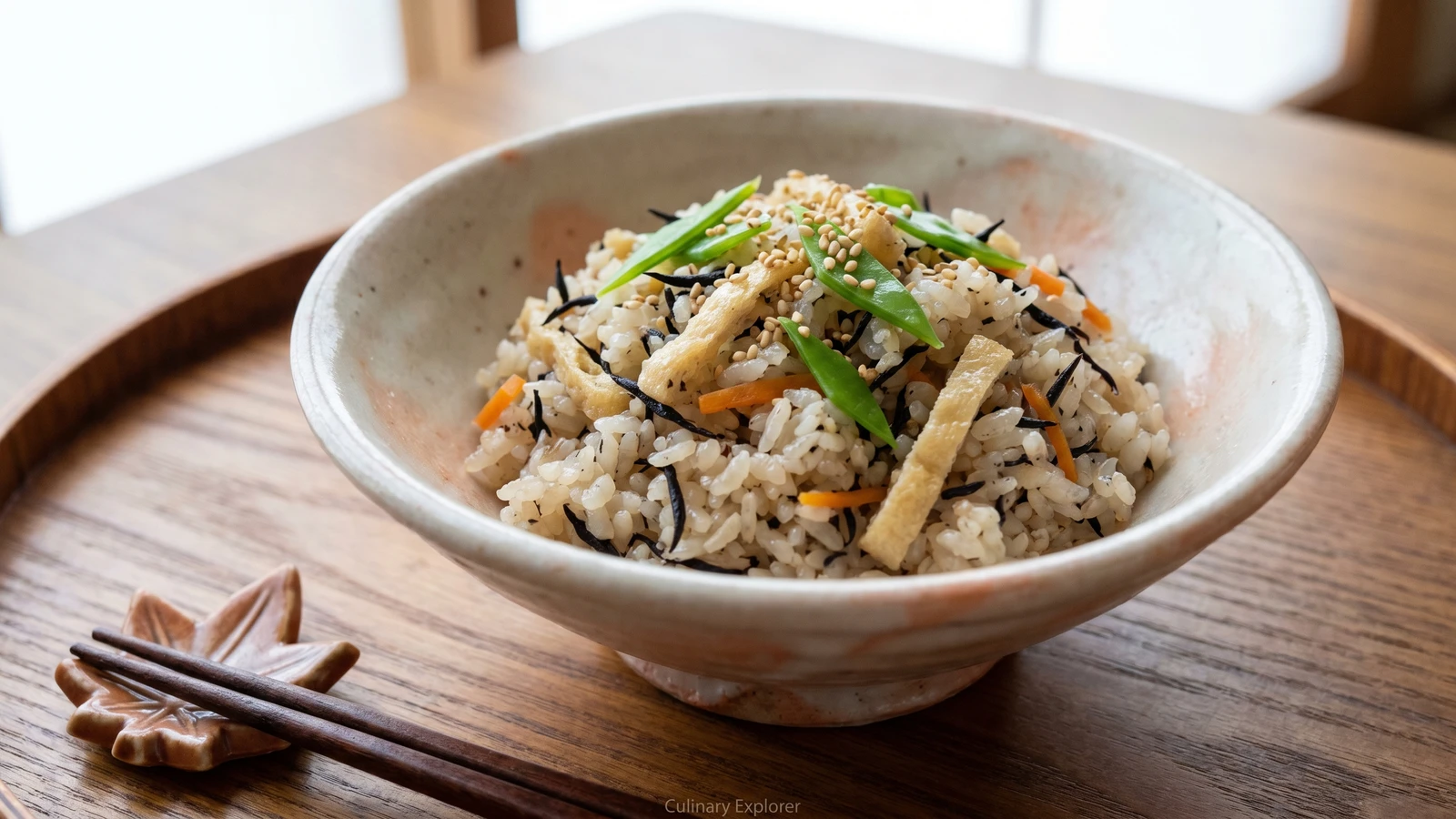
Dried hijiki looks severe in the bowl, but it softens quickly, seasons the rice from within, and turns a weeknight pot of gohan into something coastal and calm.
Hijiki asks for a little trust at the start. Dry, it looks like black tea leaves that have had a hard week. Give it water and time, and it opens into fine seaweed strands with a clean shore smell, ready to season the rice without making a fuss.
This is takikomi gohan, rice cooked with its seasoning and small ingredients in the same pot. The dish is not difficult, only exact in one place: the cooking liquid must be measured after the soy, sake, and mirin go in. Rice does not forgive guesswork kindly. Too much liquid and it slumps; too little and the center stays hard. Measure once, then let the pot do its quiet work.
Lay the hijiki, abura-age, and carrot on top of the rice instead of stirring them through before cooking. That sounds fussy until you know the reason. The rice needs an even bed so water and heat move cleanly through it, while the toppings steam above and give their flavor downward. Fold everything together only after the rice has rested.
A bowl like this sits easily beside miso soup, pickles, and one grilled or simmered dish. It is comfort food with nothing hidden: seaweed, rice, dashi, a little shōyu. The first secret is simply to soak and rinse the hijiki well, then measure the liquid like a serious person. We are not performing surgery. We are cooking rice.
Takikomi gohan is the broad household form of rice cooked together with seasoning and small ingredients; in Kansai, the same family of dishes is often called kayaku gohan, meaning rice with added things. Hijiki is a brown seaweed gathered from rocky shorelines, especially in spring, then boiled and dried before sale, which explains both its black color and the need to soak it back to life. The pairing with abura-age and carrot belongs to everyday sōzai, the small prepared dishes and rice accompaniments that made sea vegetables part of ordinary meals rather than ceremonial cooking.
Quantity
2 rice-cooker cups (about 300g or 360ml)
Quantity
10g
soaked, rinsed, and drained
Quantity
2 cups
for dashi
Quantity
1 piece (about 5g)
Quantity
10g
Quantity
1 sheet (about 30g)
blanched and thinly sliced
Quantity
1/2 small (about 60g)
cut into fine matchsticks
Quantity
2 tablespoons
Quantity
1 tablespoon
Quantity
1 tablespoon
Quantity
1/2 teaspoon
Quantity
4
blanched and thinly sliced
Quantity
1 teaspoon
| Ingredient | Quantity |
|---|---|
| Japanese short-grain white rice | 2 rice-cooker cups (about 300g or 360ml) |
| dried hijikisoaked, rinsed, and drained | 10g |
| cold waterfor dashi | 2 cups |
| konbu (dried kelp) | 1 piece (about 5g) |
| katsuobushi (bonito flakes) | 10g |
| abura-age (fried tofu pouch)blanched and thinly sliced | 1 sheet (about 30g) |
| carrotcut into fine matchsticks | 1/2 small (about 60g) |
| shōyu (Japanese soy sauce) | 2 tablespoons |
| sake | 1 tablespoon |
| mirin | 1 tablespoon |
| sea salt | 1/2 teaspoon |
| snow peas (optional)blanched and thinly sliced | 4 |
| toasted white sesame seeds (optional) | 1 teaspoon |
Put the rice in a bowl, cover it with cool water, and swirl with your hand. Pour off the cloudy water and repeat until the water is nearly clear. Wash it twice, wash it thrice, as the old jingle has it. This clears loose starch from the surface so the finished grains separate instead of clinging. Cover the washed rice with fresh water and soak for 20 minutes, then drain well for 10 minutes.
Rinse the dried hijiki briefly, then soak it in plenty of cool water for 20 to 30 minutes, until the strands swell and loosen. Drain it, rinse again under running water, and squeeze gently. Discard the soaking water. This removes sand, softens the strong sea edge, and keeps the hijiki from staining the rice with harshness.
Wipe the konbu with a damp cloth, but don't wash it. Put it in the 2 cups cold water and warm it slowly over low heat. Pull the konbu out just before the water boils, when small bubbles climb the sides of the pot. Add the katsuobushi all at once, take the pot off the heat, and let the flakes sink for 2 to 3 minutes. Strain through a cloth or fine sieve and let it drip on its own.
Pour boiling water over the abura-age, or simmer it for 30 seconds, then pat it dry and slice it into thin strips. This removes excess surface oil so the dashi stays clean and the tofu pouch drinks seasoning properly. Cut the carrot into fine matchsticks so it cooks in the same time as the rice.
In a measuring cup, combine the shōyu, sake, mirin, and salt. Add enough dashi to make 420ml total liquid, about 1 3/4 cups. If using a rice cooker, put the drained rice in the cooker bowl, add the seasonings first, then add dashi to the 2-cup line. The seasonings count as liquid, and this is the detail that decides the texture.
Put the drained rice in a rice cooker or heavy pot and pour the measured liquid over it. Scatter the hijiki, abura-age, and carrot evenly on top, but don't stir them into the rice. Cook on the regular white-rice setting. For a pot, cover tightly, bring to a boil over medium heat, lower the heat, cook 13 minutes, then turn off the heat without lifting the lid.
Let the rice rest, covered, for 10 to 15 minutes after cooking. This pause lets the moisture settle evenly through the pot. Then fold from the bottom with a rice paddle, lifting rather than mashing, until the hijiki and vegetables run through the rice. Finish with snow pea slivers and sesame if using. Serve in modest bowls while warm, or at room temperature for bento.
1 serving (about 220g)
Culinary guides, cultural storytelling, and the editorial depth that makes cooking meaningful.
Discover Culinary ExplorerChef Takumi
Autumn mushrooms do most of the work here. Rinse the rice well, season the liquid before cooking, and let the pot rest so every grain comes out separate and fragrant.

Chef Takumi
A whole salmon fillet laid on seasoned rice does nearly all the work. Cook it gently, flake it back through, and autumn has found its bowl.

Chef Takumi
Daigakuimo is simple student comfort: sweet potato cut stout, fried until the corners take color, then turned in a soy-sugar syrup that sets shiny instead of sticky.

Chef Takumi
Chawanmushi looks delicate, but the secret is plain: good dashi, strained egg, and quiet heat. Keep the steam soft and the custard sets smooth, tender, and calm.