
Chef Freja
Andelår med Rødkål
Slow-roasted duck legs with crisp, deeply golden skin, served with braised red cabbage and caramelized potatoes. The weeknight Danish duck that proves the best part of the bird is the one that takes its time.
A cooking platform built around craft, culture, and the stories behind what we eat.

Created by Chef Freja
Whole turbot baked with butter and lemon until the flesh lifts from the bone in clean, pearlescent sheets. Sauce hollandaise, steamed spidskaal, nye kartofler. The fish you serve when you want the table to remember.
June light in Denmark lasts until nearly midnight, and the celebrations stretch with it. Confirmations, graduations, midsummer, the long bright evenings when you set the table for more than four and bring out something worthy of the occasion. This is when pighvar comes to the kitchen.
Pighvar (turbot) is the king of the flatfish. Not because it's rare, though it isn't cheap, but because no other fish has that dense, almost meaty sweetness that holds its own against a rich hollandaise. The whole fish, baked slowly in a generous bath of butter and lemon until the flesh lifts from the bone in clean white sheets, is one of the grandest things a Danish home kitchen can produce. And it is, quietly, one of the simplest. The oven does the real work. Your role is to baste, to watch, and to trust the process.
Here is what I want you to know before you begin. The turbot needs nothing more than butter, lemon, and salt. What requires your full attention is the sauce hollandaise, a warm emulsion of egg yolks and clarified butter that will break if you rush it or overheat it. I'll walk you through every moment of that process so you're never guessing. The rest is the quiet backdrop: nye kartofler boiled in salted water with a sprig of dill, spidskaal (pointed cabbage) steamed until just tender and glossed with butter. Together they let the pighvar be what it is. Cooked with love, served with pride, carved at the table in front of your guests. This is how we greet each other when the occasion calls for something that says: this evening matters.
Pighvar has been the most prized flatfish in Northern European waters since the medieval period, when it graced the tables of Danish nobility as a mark of occasion and generosity. The tradition of baking it whole and carving tableside became established in the Danish bourgeois kitchen of the 1800s, as French culinary technique, including hollandaise and other warm butter sauces, entered Scandinavian cooking through the Copenhagen hotel restaurants and the royal court kitchens. To this day, hel ovnbagt pighvar remains the fish Danes turn to when a confirmation, a graduation, or a midsummer gathering deserves something grander than the everyday.
Quantity
1, about 1.5-2 kg
gutted and trimmed by your fishmonger
Quantity
100g, plus extra for the tin
Quantity
1
half sliced into thin rounds, half reserved for juice
Quantity
4-5 sprigs, plus extra to finish
Quantity
to taste
Quantity
freshly ground, to taste
Quantity
3 large
Quantity
200g
clarified
Quantity
juice of half a lemon
Quantity
1 tablespoon
Quantity
800g
scrubbed but not peeled
Quantity
1 sprig
Quantity
1, about 500g
quartered lengthwise and cored
Quantity
20g
Quantity
small bunch
finely snipped, to finish
| Ingredient | Quantity |
|---|---|
| whole turbot (pighvar)gutted and trimmed by your fishmonger | 1, about 1.5-2 kg |
| unsalted butter (for the fish) | 100g, plus extra for the tin |
| lemonhalf sliced into thin rounds, half reserved for juice | 1 |
| fresh dill | 4-5 sprigs, plus extra to finish |
| fine sea salt | to taste |
| white pepper | freshly ground, to taste |
| egg yolks (for the hollandaise) | 3 large |
| unsalted butter (for the hollandaise)clarified | 200g |
| lemon juice (for the hollandaise) | juice of half a lemon |
| cold water (for the hollandaise) | 1 tablespoon |
| new potatoes (nye kartofler)scrubbed but not peeled | 800g |
| fresh dill (for the potatoes) | 1 sprig |
| spidskaal (pointed cabbage)quartered lengthwise and cored | 1, about 500g |
| unsalted butter (for the cabbage) | 20g |
| fresh chivesfinely snipped, to finish | small bunch |
Take the turbot out of the fridge thirty minutes before you plan to cook it. A cold fish in a hot oven cooks unevenly: the edges dry out before the centre is done, and with a fish this good, that's a loss you can't afford. Rinse it under cold running water and pat it very dry with kitchen paper. With a sharp knife, score the dark skin side three or four times on the diagonal, cutting just through the skin but not into the flesh. These cuts let the heat penetrate evenly and stop the skin from buckling as it tightens in the oven. Season both sides generously with fine sea salt and white pepper. Tuck a few lemon slices and a couple of dill sprigs into the cavity. Set the fish aside while you start the potatoes.
Put the scrubbed nye kartofler in a large pot and cover with cold water. Add a generous pinch of salt and the sprig of dill. Starting in cold water matters: it means the potatoes heat through evenly from centre to skin, so you don't end up with a soft exterior around a chalky core. Bring to a gentle simmer and cook for fifteen to twenty minutes, depending on their size, until a knife slides through the centre with no resistance at all. Drain, discard the dill sprig, and cover the pot with alid to keep them warm while the fish finishes.
Heat the oven to 190C (375F). Butter a large oval roasting tin generously. The fish should sit in a slick of melting butter from the very start, so don't be shy. Lay the turbot in the tin, dark side facing up. The dark skin is thicker and tougher than the pale underside, and it acts as a natural shield, protecting the delicate white flesh beneath from the direct heat of the oven. Cut the 100g of butter into small pieces and scatter them across the surface of the fish. Arrange the remaining lemon slices around it in the tin. Place the tin on the middle rack and bake for twenty-five to thirty-five minutes, depending on the thickness of your fish. Every ten minutes, open the oven door and baste the turbot with the butter pooling in the tin. Use a large spoon and work quickly so you don't lose too much heat. The basting does two things: it builds a glossy, golden film on the skin that carries deep butter flavor, and it keeps the surface from drying.
While the fish bakes, clarify the 200g of butter for the hollandaise. Melt it in a small saucepan over low heat without stirring. As it melts, a white foam of milk solids will rise to the surface. Skim this away carefully with a spoon and discard it. What remains is pure, golden butterfat. Pour it slowly into a warm jug, leaving any milky residue behind in the bottom of the pan. You clarify the butter because pure butterfat emulsifies more reliably than whole butter. The water and milk solids in regular butter are what cause hollandaise to split. Remove them, and the sauce becomes far more forgiving. Keep the clarified butter warm but not hot.
Set a heatproof bowl over a saucepan of barely simmering water. The bowl must sit above the water, not in it. This is the single most important thing about hollandaise: indirect, gentle heat. If the bowl touches the water, the yolks scramble. There is no coming back from scrambled yolks. Add the three egg yolks and the tablespoon of cold water to the bowl. The cold water helps stabilize the emulsion from the start. Whisk constantly and vigorously until the yolks thicken, turn pale, and roughly double in volume. This takes two to three minutes. You'll see the whisk leaving trails that hold for a moment before dissolving. That's the moment. Remove the bowl from the heat immediately and begin adding the warm clarified butter in a very thin, steady stream, whisking without stopping. Go slowly at first, just drops, to build the emulsion. Once you see the sauce thickening and becoming glossy, like liquid satin, you can pour a little faster. When all the butter is incorporated, season with the lemon juice, a pinch of fine sea salt, and a few grinds of white pepper. Taste it. The sauce should be rich, silky, and bright with enough lemon to cut the richness of the butter. If it feels too thick, whisk in a few drops of warm water to loosen it. Keep the bowl in a warm spot with a cloth draped over it until you're ready to serve.
While the hollandaise rests, steam the quartered spidskaal. Set a steamer basket over a pot of boiling water, lay the cabbage wedges in a single layer, and cover. Cook for four to five minutes, until the thickest part yields to a knife but still holds its shape and offers a gentle bite when you taste it. Spidskaal cooked beyond this point turns limp and waterlogged, and it loses the fresh, almost sweet quality that makes it the right companion for a rich fish and a butter sauce. Transfer the quarters to a warm dish, dot with the 20g of butter, and season lightly with salt and white pepper. The butter melts on contact and glazes the leaves in a thin, shining coat.
When the turbot is done, take the tin from the oven and let the fish rest for five minutes before you carve. Like meat, fish benefits from a brief rest. The residual heat finishes the cooking gently and evenly, and the flesh relaxes, which makes it easier to lift from the bone in clean portions. Spoon the pan butter over the surface of the fish one last time. The remaining dill sprigs can be tucked around the fish now for the presentation.
Bring the turbot to the table in its roasting tin, or transfer it carefully to a warm oval serving platter using two large fish slices. This is a dish that deserves a moment of arrival. To carve, run a palette knife along the natural line of the backbone from head to tail. Then slide the knife sideways between the flesh and the bone, working outward toward the edge. The flesh should lift away in broad, clean portions. Serve each piece on a warm plate with a generous spoonful of hollandaise pooling beside it, a few nye kartofler, and a wedge of the buttered spidskaal. Scatter the snipped chives over the potatoes and the fish. Squeeze a little fresh lemon juice over everything if you like. Serve immediately, while the hollandaise is still glossy and the butter on the fish still glistens. This is a dish that does not wait, and neither should your guests. Tak for mad.
1 serving (about 480g)
Culinary guides, cultural storytelling, and the editorial depth that makes cooking meaningful.
Discover Culinary ExplorerChef Freja
Slow-roasted duck legs with crisp, deeply golden skin, served with braised red cabbage and caramelized potatoes. The weeknight Danish duck that proves the best part of the bird is the one that takes its time.

Chef Freja
The whole roasted duck of juleaften, stuffed with tart apples and dark prunes, slow-roasted for four patient hours until the skin crackles like something earned and the meat underneath gives way without resistance.
Chef Freja
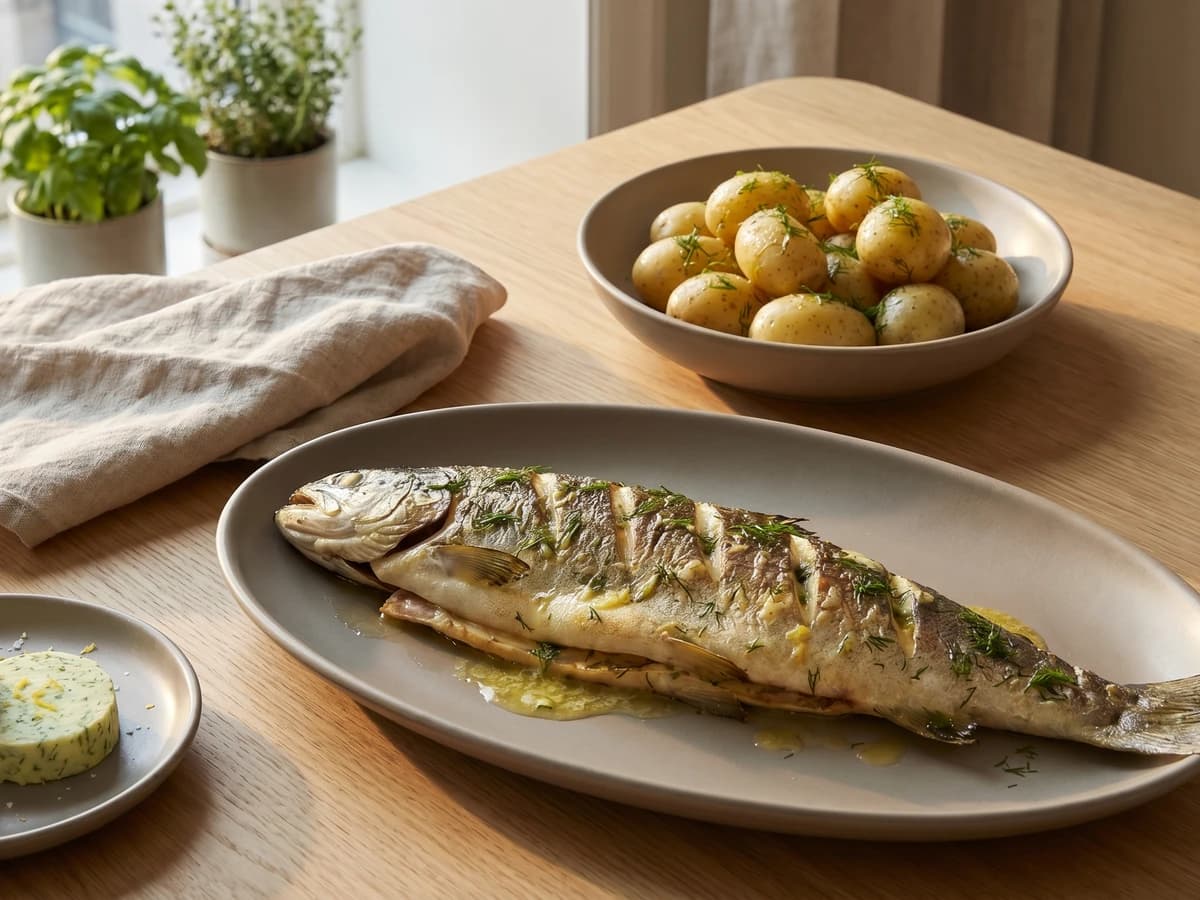
Whole sea trout baked with butter, lemon, and armfuls of dill, served beside the first nye kartofler of the season and a melting slab of dildsmor. The Danish summer table at its most generous.
Chef Freja
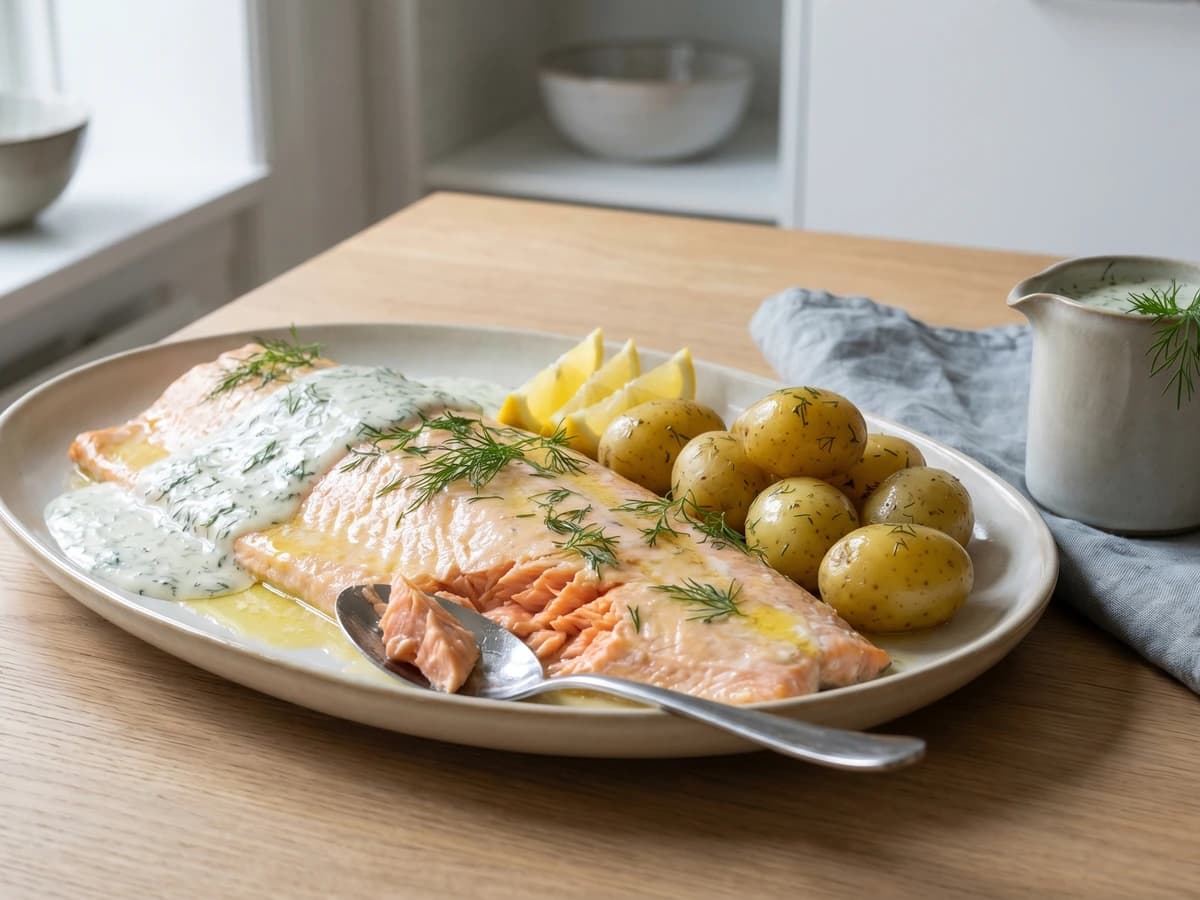
A side of salmon baked gently in butter and white wine, served warm with a bright dill cream sauce and the season's first nye kartofler. Late spring on a Danish table, cooked with love.