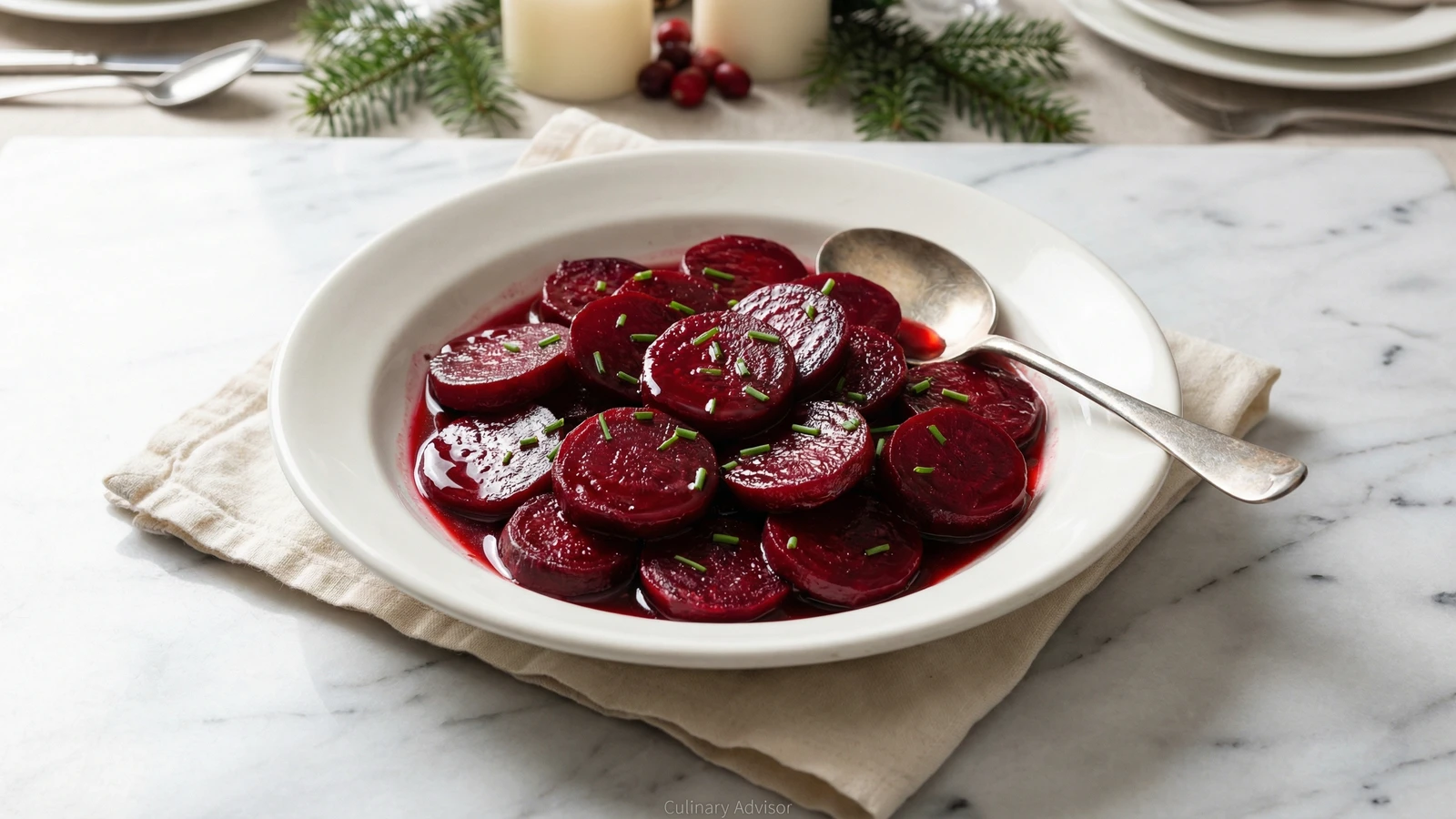
Jewel-toned beets cloaked in a glistening sweet-and-sour glaze, the kind of honest side dish that transforms a weeknight supper into something your grandmother would recognize and approve.
Side Dishes
New England
Holiday
Dinner Party
Thanksgiving
20 min
Active Time
1 hr 15 min cook•1 hr 35 min total
Yield6 servings
The origins of this dish remain disputed. Some claim it honors Harvard University, the sauce matching the school's crimson pride. Others trace it to a tavern called Harwood's in England. I care less about the etymology than the result: tender beets suspended in a glaze that balances sweet against sour with the precision of a tightrope walker.
Harvard Beets appeared in American cookbooks around 1910 and never left. They graced church suppers and holiday tables throughout New England for decades, then quietly retreated as canned vegetables fell from fashion. This is a shame. Done properly, with beets you've roasted yourself and a sauce you've tasted and adjusted, this dish deserves its place at any gathering.
The technique could not be simpler. A slurry of cornstarch, sugar, and vinegar thickens into a glossy sauce that clings to each slice. The butter stirred in at the end rounds the sharp edges and adds body. What emerges is a side dish of surprising elegance from humble roots.
The technique, the tradition, and the story behind every dish.
Preheat your oven to 400°F. Scrub the beets under cold water but do not peel them. Wrap each beet individually in aluminum foil, creating snug packages. Place them on a rimmed baking sheet and roast until a knife slides through the center with no resistance, 45 minutes to 1 hour depending on size. The aroma will fill your kitchen with something earthy and sweet.
Leave an inch of stem attached while roasting. This prevents the beets from bleeding their color into the foil.
2
Cool and peel
Remove beets from the oven and let them rest in their foil until cool enough to handle, about 20 minutes. Open the packets and save any accumulated juices for the sauce. The skins will slip off easily under running water or with a paper towel. Slice beets into 1/4-inch rounds or cut into 1/2-inch cubes, whichever you prefer.
3
Build the sauce base
In a medium saucepan, whisk together the sugar, cornstarch, and salt until no lumps remain. Add the vinegar and the reserved beet liquid, whisking constantly to prevent the cornstarch from clumping. The mixture will look thin and unpromising. Have faith.
If you lack reserved beet liquid, plain water works. The flavor will be slightly less complex but still excellent.
4
Cook until thickened
Set the saucepan over medium heat and cook, stirring constantly with a wooden spoon or heatproof spatula. The sauce will appear unchanged for several minutes, then suddenly transform. You'll see it go from watery to glossy and thick enough to coat the back of your spoon, about 5 minutes. Reduce heat to low once it thickens.
5
Add beets and warm through
Gently fold the sliced beets into the sauce, turning them carefully to coat every surface with that glistening glaze. Let them warm together over low heat for 5 minutes, stirring occasionally. The beets will tint the sauce an even deeper crimson as they mingle.
6
Finish with butter
Remove the pan from heat. Add the butter pieces and stir gently until melted and incorporated. The sauce will take on a silky sheen and lose any harsh edges. Taste and adjust. You may want a pinch more salt or a splash more vinegar to sharpen the balance. Season with black pepper.
The sweet-sour balance is personal. Start with these proportions, then trust your palate. Some prefer more pucker, others more sweetness.
7
Serve
Transfer to a warmed serving dish. Scatter with minced chives if you like, though the dish needs nothing more. Serve immediately alongside roast pork, turkey, or baked ham. These beets also hold beautifully on a buffet, maintaining their glossy coat for an hour or more.
Chef Tips
•Canned beets will work in a pinch and were the standard for decades. Drain them, reserve the liquid for the sauce, and skip straight to step three. The result won't match roasted, but it will still be good and ready in fifteen minutes.
•For a more complex flavor, substitute half the cider vinegar with balsamic or sherry vinegar. The dish becomes less traditional but arguably more interesting.
•Beets stain everything they touch. Wear an apron, work on a cutting board you don't mind tinting pink, and accept that your fingertips will be crimson for a day or two.
•A tablespoon of freshly grated orange zest stirred in with the butter adds brightness without upending the classic profile.
Advance Preparation
•Beets can be roasted up to 4 days ahead and refrigerated. Peel and slice when ready to proceed.
•The complete dish reheats gently over low heat with a splash of water to loosen the sauce. Stir in a pat of fresh butter before serving to restore the gloss.
•For potluck transport, keep the beets warm in a slow cooker set to low. Add a tablespoon of water if the sauce begins to tighten.
Frequently Asked Questions
Nutrition Information
1 serving (about 155g)
Calories
175 calories
Total Fat
6 g
Saturated Fat
4 g
Trans Fat
0 g
Unsaturated Fat
2 g
Cholesterol
17 mg
Sodium
185 mg
Total Carbohydrates
24 g
Dietary Fiber
2 g
Sugars
15 g
Protein
1.5 g
Where cooking meets culture.
Culinary guides, cultural storytelling, and the editorial depth that makes cooking meaningful.