
Chef Lupita
Birria Tacos with Consome
Jalisco's goat birria, born around Cocula and carried into Guadalajara's markets, slow-braised in ancho, guajillo, cascabel, and chile de arbol, then tucked into corn tortillas crisped in its own red fat.
A cooking platform built around craft, culture, and the stories behind what we eat.
Created by
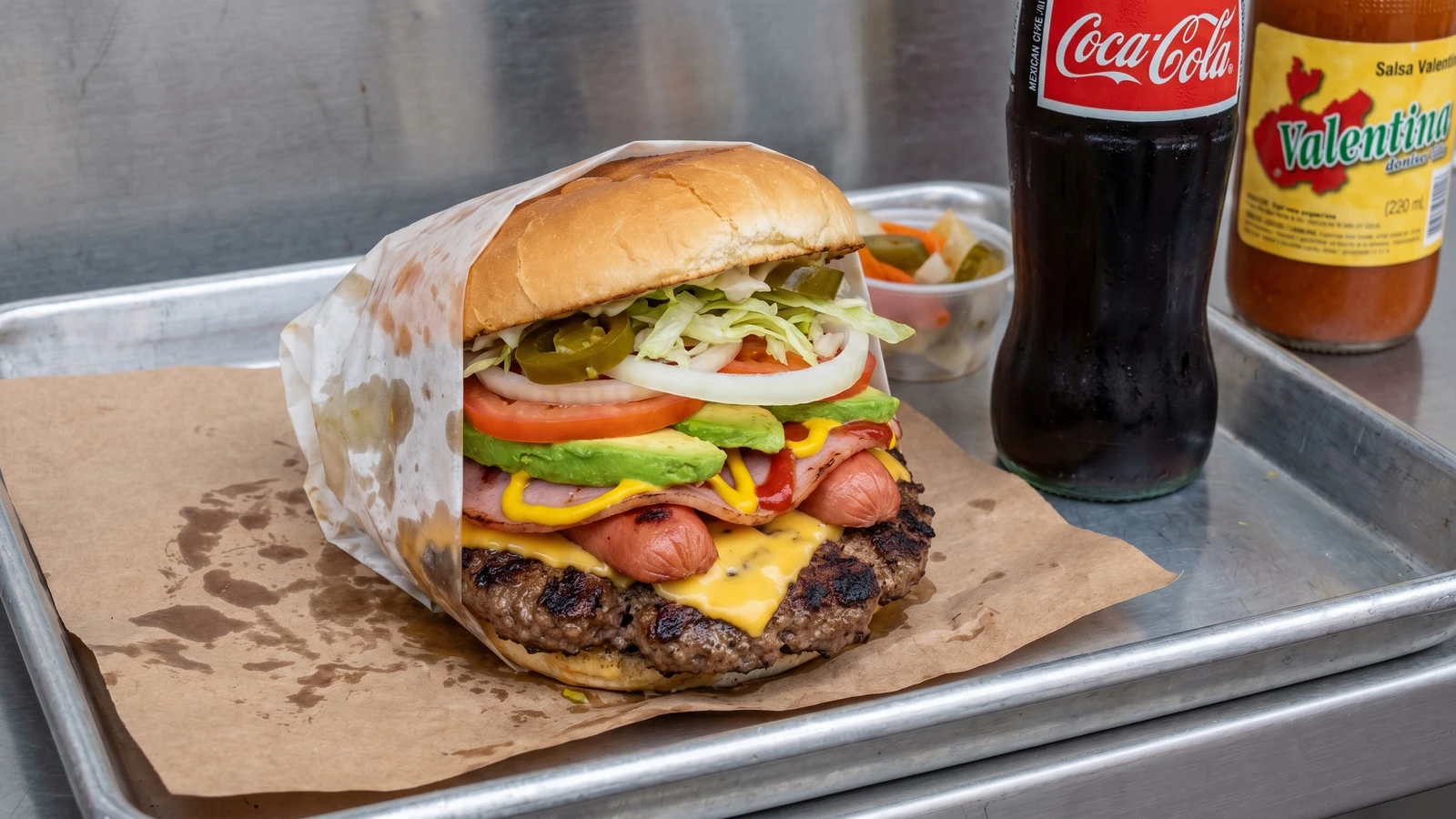
Mexico City's street-cart hamburguesa al carbón, ordered 'especial' with a slice of ham and a split frankfurter laid over the patty. A chilango institution that has nothing to do with American burgers.
This is from Ciudad de México. Not from Texas, not from California, not from any American diner. The hamburguesa al carbón is a chilango invention, a street-cart staple of Cuauhtémoc and Roma and Doctores and the colonias where people work late and eat on the way home. The carrito sets up on the corner around eight in the evening. The plancha is hot. The smell of charcoal carries two blocks.
The hamburguesa especial is the order that distinguishes a hamburguesa al carbón from a burger anywhere else in the world. The patty is grilled over coals, yes. But then it gets a slice of yellow cheese melted on top, a slice of pierna ham charred on the plancha, a frankfurter split lengthwise and grilled cut-side down, slices of avocado, tomato, onion, shredded lettuce, pickled jalapeños, and the holy trinity of mayonnaise, mustard, and ketchup. All of this between a soft white bun. Then it gets wrapped in paper. The wrap is not packaging. The wrap is engineering. Without it, the architecture falls apart in your hands.
This is not Tex-Mex. This is not American food in disguise. This is a Mexico City dish that took the idea of a burger, threw a hot dog on top because why not, added ham because the carrito had ham, finished it with avocado because Mexico has the best avocados in the world, and made something that belongs entirely to the chilangos who eat it. The carbón matters. The yellow cheese matters, and yes, I am defending queso amarillo here because in this specific dish, in this specific city, it is the cheese that belongs. Cada estado, su propia cocina. This one belongs to the capital.
The hamburguesa al carbón emerged in Mexico City in the second half of the 20th century, as American-style hamburgers were absorbed and transformed by the city's prolific street-food culture into something unrecognizable to their northern cousins. The 'especial' format, with ham and a split frankfurter layered over the patty, was popularized by the carritos and corner stands that proliferated in colonias like Roma, Condesa, Doctores, and Cuauhtémoc from the 1970s onward, where vendors competed by stacking ingredients higher and more inventively. Hamburguesas El Cuadrilátero in Colonia San Rafael, founded in 1988 by a former lucha libre fan, became one of the most recognized standard-bearers of the style, with burgers named after wrestlers and portions sized for the appetite of a chilango leaving work at midnight.
Quantity
1 1/2 pounds
80/20 fat ratio
Quantity
1 teaspoon
Quantity
1/2 teaspoon
Quantity
4
telera-style or pan de hamburguesa
Quantity
4 slices
Quantity
4 slices
Quantity
2
split lengthwise
Quantity
1 large
sliced
Quantity
1 large
sliced into thin rounds
Quantity
1/2 small
sliced into thin rings
Quantity
4 large leaves
shredded
Quantity
4
sliced
Quantity
for spreading
Quantity
for spreading
Quantity
for spreading
Quantity
2 tablespoons
softened
Quantity
for the grill
Quantity
for serving
| Ingredient | Quantity |
|---|---|
| ground beef chuck80/20 fat ratio | 1 1/2 pounds |
| kosher salt | 1 teaspoon |
| freshly ground black pepper | 1/2 teaspoon |
| soft white burger bunstelera-style or pan de hamburguesa | 4 |
| Mexican-style sandwich ham (pierna or jamón de pavo) | 4 slices |
| American-style yellow cheese (queso amarillo) | 4 slices |
| beef frankfurterssplit lengthwise | 2 |
| ripe Hass avocadosliced | 1 large |
| ripe tomatosliced into thin rounds | 1 large |
| white onionsliced into thin rings | 1/2 small |
| romaine or iceberg lettuceshredded | 4 large leaves |
| pickled chiles jalapeños en escabechesliced | 4 |
| mayonnaise | for spreading |
| yellow mustard | for spreading |
| ketchup | for spreading |
| unsalted buttersoftened | 2 tablespoons |
| vegetable oil | for the grill |
| salsa valentina or salsa búfalo (optional) | for serving |
Divide the ground chuck into four equal portions. Form each into a loose patty about an inch wider than the bun and a half inch thick. The patty shrinks on the grill, so make it bigger than you think. Press a shallow thumbprint in the center of each so it cooks flat instead of doming up. Season both sides with salt and pepper just before they hit the heat. No me vengas con atajos: do not work the meat past what is needed to hold it together. Overworked meat turns dense and sad.
Light a charcoal grill and let the coals burn down to a steady orange glow with a fine ash on top. That is the al carbón part. If you are working indoors, heat a heavy cast iron comal or skillet over medium-high. Brush the grate or comal lightly with vegetable oil. The smoke from the charcoal is the soul of this burger. The carritos parked on the corner in Colonia Roma or Doctores cook with the lid off, on a flat plancha over coals, and the smell carries down the block. That is what you are after.
Slice the buns open and spread the cut sides with the softened butter. Have the ham, cheese, hot dog halves, avocado, tomato, onion, lettuce, and pickled chiles laid out within arm's reach. Once you start cooking, this dish moves fast. The hamburguesa al carbón is built hot off the grill, in sequence, the way the man at the cart builds it: patty first, then the layers stacked while everything is still warm enough to melt into one thing.
Lay the patties on the hot grate. Do not press them. Pressing squeezes the juice into the coals and leaves you with a hockey puck. Cook four to five minutes on the first side, until a dark crust forms and the edges turn brown. Flip once. Lay a slice of yellow cheese on each patty. Cook another three to four minutes, until the cheese melts and the patty is just past medium. Total cook time around eight minutes for a half-inch patty.
Push the patties to a cooler edge of the grill. Lay the ham slices and the split frankfurters cut-side down on the hot section. The ham takes about a minute per side, just enough to char the edges and pick up the smoke. The hot dogs take two to three minutes, until the cut side is dark and the casing snaps. This is the especial. Without the ham and the hot dog, you have a regular hamburguesa. With them, you have what people line up for at Hamburguesas El Cuadrilátero or any decent corner cart in Cuauhtémoc.
Place the buttered buns cut-side down on the grill for about 30 seconds. They should turn golden with grill marks. Watch them. Buns burn the second you look away. Pull them off as soon as the butter darkens and the bread turns crisp at the surface but still gives in the middle.
Spread the bottom bun with mayonnaise, mustard, and a stripe of ketchup. Lay down the shredded lettuce, then the tomato, then the onion rings. Set the patty with its melted cheese on top. Cover the patty with a slice of grilled ham. Lay the split frankfurter, cut side down, across the ham. Add avocado slices and the pickled jalapeños. Spread the top bun with more mayonnaise if you want it, close the burger, and press it gently with your palm so the layers settle into each other. Así se hace y punto.
Wrap the bottom half in a square of waxed paper or aluminum foil the way the carritos do. That wrap is not packaging, it is structural. It holds the layers together while you eat. Serve with salsa valentina or búfalo on the side and a cold Coca-Cola or a Boing de mango. Eat standing up if you want the full experience.
1 serving (about 450g)
Culinary guides, cultural storytelling, and the editorial depth that makes cooking meaningful.
Discover Culinary ExplorerChef Lupita
Jalisco's goat birria, born around Cocula and carried into Guadalajara's markets, slow-braised in ancho, guajillo, cascabel, and chile de arbol, then tucked into corn tortillas crisped in its own red fat.

Chef Lupita
Sonora's working morning burrito: chicharrón de cáscara stewed in chile colorado with diced potato, rolled tight in a paper-thin tortilla sobaquera and eaten standing up at the carreta.

Chef Lupita
Mocorito's pork chilorio, shredded and confited in lard with chile ancho and pasilla, rolled into a thin handmade flour tortilla. The burrito Sinaloa sends out into the world.

Chef Lupita
Sonora's morning burrito of mashed pinto frijoles puercos and melted queso asadero, wrapped in a paper-thin sobaquera and seared on the comal until the cheese pulls in long strings.