Chef Thomas
All-Butter Shortbread Fingers
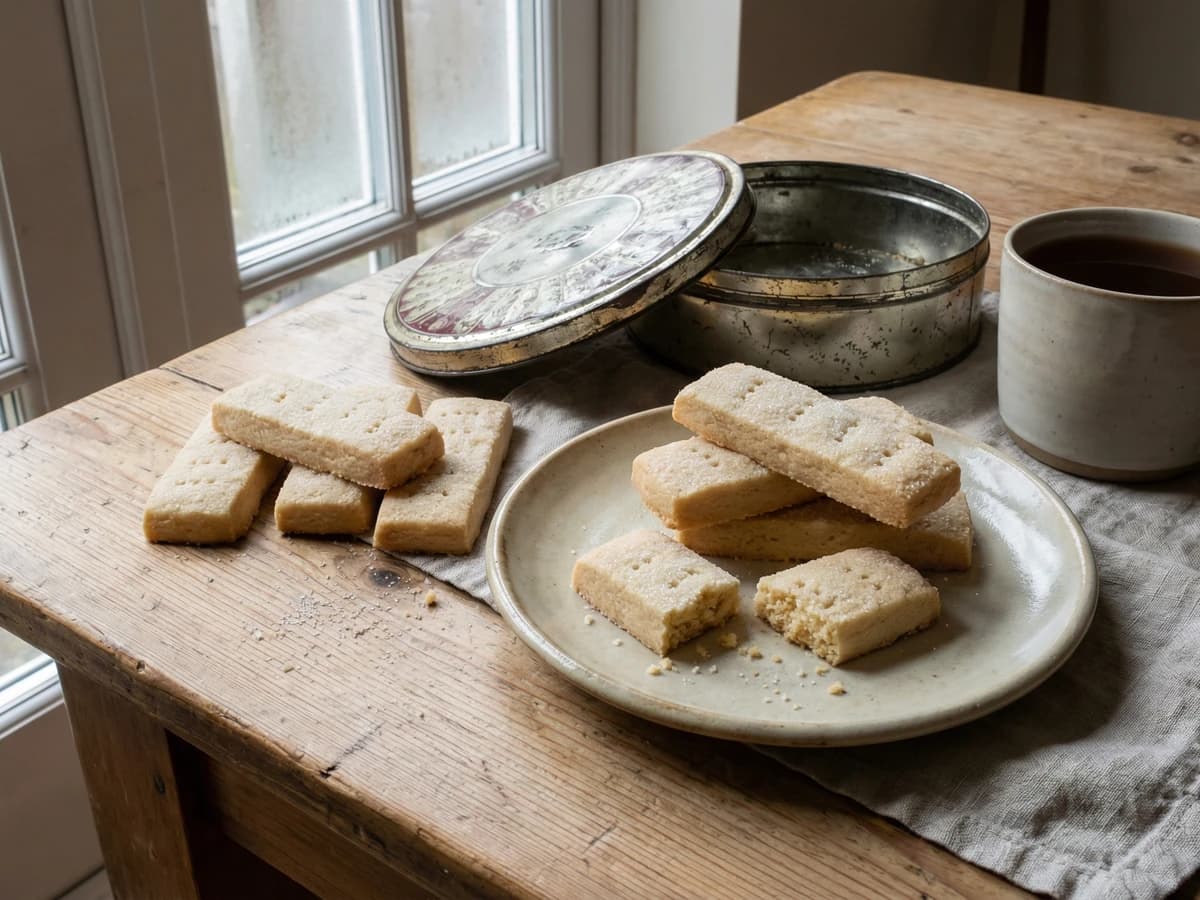
The plainest biscuit in the tin and the hardest one to stop eating, three ingredients and a slow oven turning good butter into something quietly perfect with a cup of tea.
A cooking platform built around craft, culture, and the stories behind what we eat.
Created by Chef Thomas
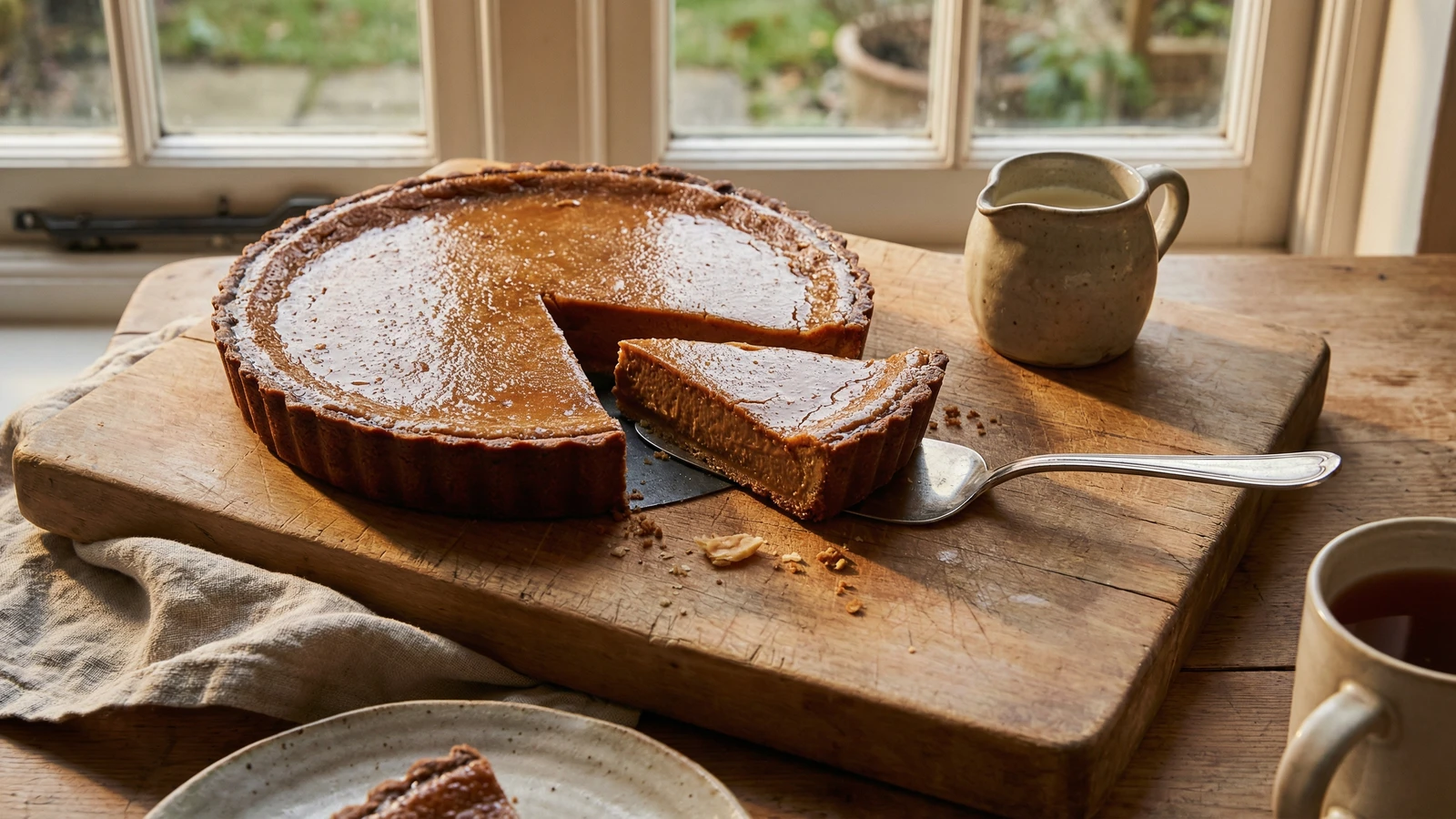
A pudding from a tin and a bag of sugar, whipped into something close to a miracle. Two ingredients, ten minutes in the oven, and a slice that tastes like every school dinner you wish you'd paid more attention to.
Gypsy tart belongs to a particular kind of weather and a particular kind of mood. The afternoon has gone dark by four. The kettle is on for the second time. There's nothing fresh worth eating, the garden has given up for the year, and the last apples have started to wrinkle in the bowl. This is when you reach for a tin of evaporated milk and a bag of dark muscovado, and you make something out of nothing.
It's a Kentish thing. Generations of school children grew up on it, and ask any of them and they'll tell you exactly what slice they remember and which dinner lady served it. I don't have that memory myself, but I've inherited the recipe through enough cooks who do, and the wonder of it never quite wears off. Two ingredients in the filling. Two. Whipped together until they turn from a brown puddle into a glossy, mousse-like cloud the colour of wet bark, then poured into a pastry case and baked for the time it takes to make a cup of tea. That's it. That's the whole thing.
The trick, the only trick, is that the evaporated milk has to be properly cold. Stick the tin at the back of the fridge the day before. A warm tin will not thicken, no matter how long you whip it. A cold one will go from thin to billowy in under ten minutes and you'll feel like you've pulled off something close to magic. A recipe is a conversation, not a contract, but on this one point I'd lean in close and say it twice. Cold tin. Always.
I wrote it down in the notebook the first time I made it. "Gypsy tart. November. Almost nothing in it. Quietly extraordinary." That note still feels right.
Quantity
200g
plus extra for dusting
Quantity
100g
cubed
Quantity
1 tablespoon
Quantity
pinch
Quantity
1
Quantity
2-3 tablespoons
Quantity
410g tin
well chilled, at least 24 hours in the fridge
Quantity
340g
Quantity
pinch
for the filling
| Ingredient | Quantity |
|---|---|
| plain flourplus extra for dusting | 200g |
| cold unsalted buttercubed | 100g |
| icing sugar | 1 tablespoon |
| fine sea salt | pinch |
| large egg yolk | 1 |
| cold water | 2-3 tablespoons |
| evaporated milkwell chilled, at least 24 hours in the fridge | 410g tin |
| dark muscovado sugar | 340g |
| fine sea saltfor the filling | pinch |
Tip the flour, icing sugar and salt into a bowl. Add the cold butter and rub it in with your fingertips until the mixture looks like coarse breadcrumbs. Lift the flour as you go to keep it cool. Stir in the egg yolk and just enough cold water to bring the dough together. Press it into a flat disc, wrap it, and chill for at least thirty minutes. Cold pastry rolls better and shrinks less.
Roll the chilled dough out on a lightly floured surface to about the thickness of a pound coin. Lift it carefully into a 23cm loose-bottomed tart tin, pressing it into the corners without stretching. Trim the edges, leaving a small overhang to allow for shrinkage. Prick the base all over with a fork and chill again for fifteen minutes while the oven heats.
Heat the oven to 190C/170C fan. Line the chilled pastry with baking parchment and fill with baking beans or dried pulses. Bake for fifteen minutes, then lift out the parchment and beans and bake for another five to eight minutes, until the base looks dry and pale gold. Trim the overhang flush with the rim while it's still warm. Turn the oven down to 200C/180C fan.
This is the whole trick of the thing, and it depends entirely on the evaporated milk being properly cold. Tip the chilled evaporated milk into a large bowl with the muscovado sugar and a pinch of salt. Whisk on high speed for ten to twelve minutes. Don't be tempted to stop early. The mixture goes from a thin brown puddle to something thick, glossy, and the colour of wet earth, holding soft ribbons when you lift the whisk. It should look like a mousse. If it still looks like a milkshake, keep going.
Pour the whipped filling into the blind-baked pastry case. It will rise almost to the rim, glossy and bronze. Slide it carefully into the hot oven and bake for ten minutes only. The top should look set and slightly tacky, like the skin on a good caramel. It will still wobble in the middle when you nudge the tin. That's right. It firms as it cools.
Let the tart cool in the tin on a rack until it reaches room temperature. The filling will continue to set as it cools, going from a wobble to a sliceable, sticky cloud with a thin caramel skin on top. Don't try to cut it warm. Patience now, reward later. Serve in modest slices. It's richer than it looks.
1 serving (about 125g)
Culinary guides, cultural storytelling, and the editorial depth that makes cooking meaningful.
Discover Culinary ExplorerChef Thomas
The plainest biscuit in the tin and the hardest one to stop eating, three ingredients and a slow oven turning good butter into something quietly perfect with a cup of tea.
Chef Thomas
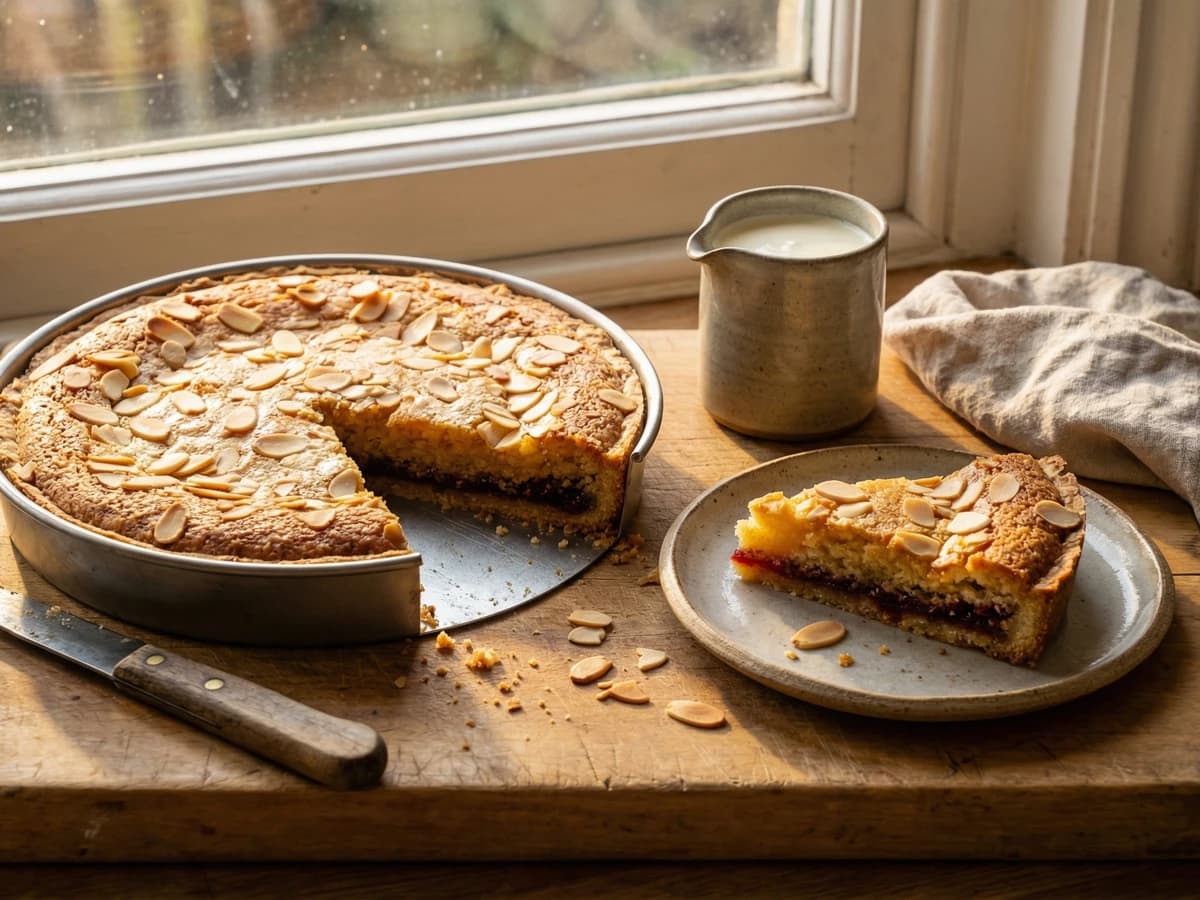
A proper Bakewell tart with buttery shortcrust, a thick layer of raspberry jam, and almond frangipane baked golden under a scattering of flaked almonds. No icing. No nonsense.
Chef Thomas
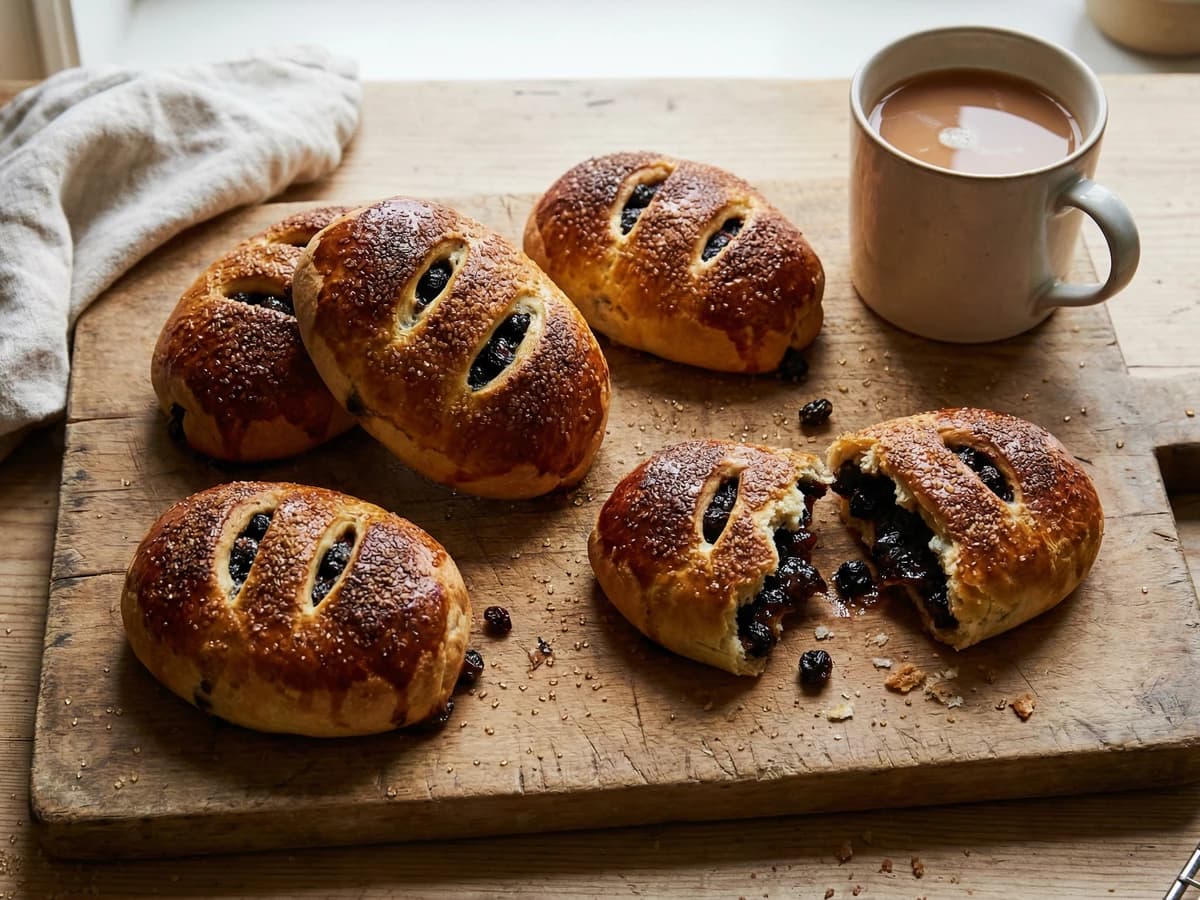
Oval pastries filled with rum-soaked currants and spice, baked until the tops crackle with sugar. The kind of thing to make on a wet Sunday afternoon when you want the kitchen to smell of something.
Chef Thomas
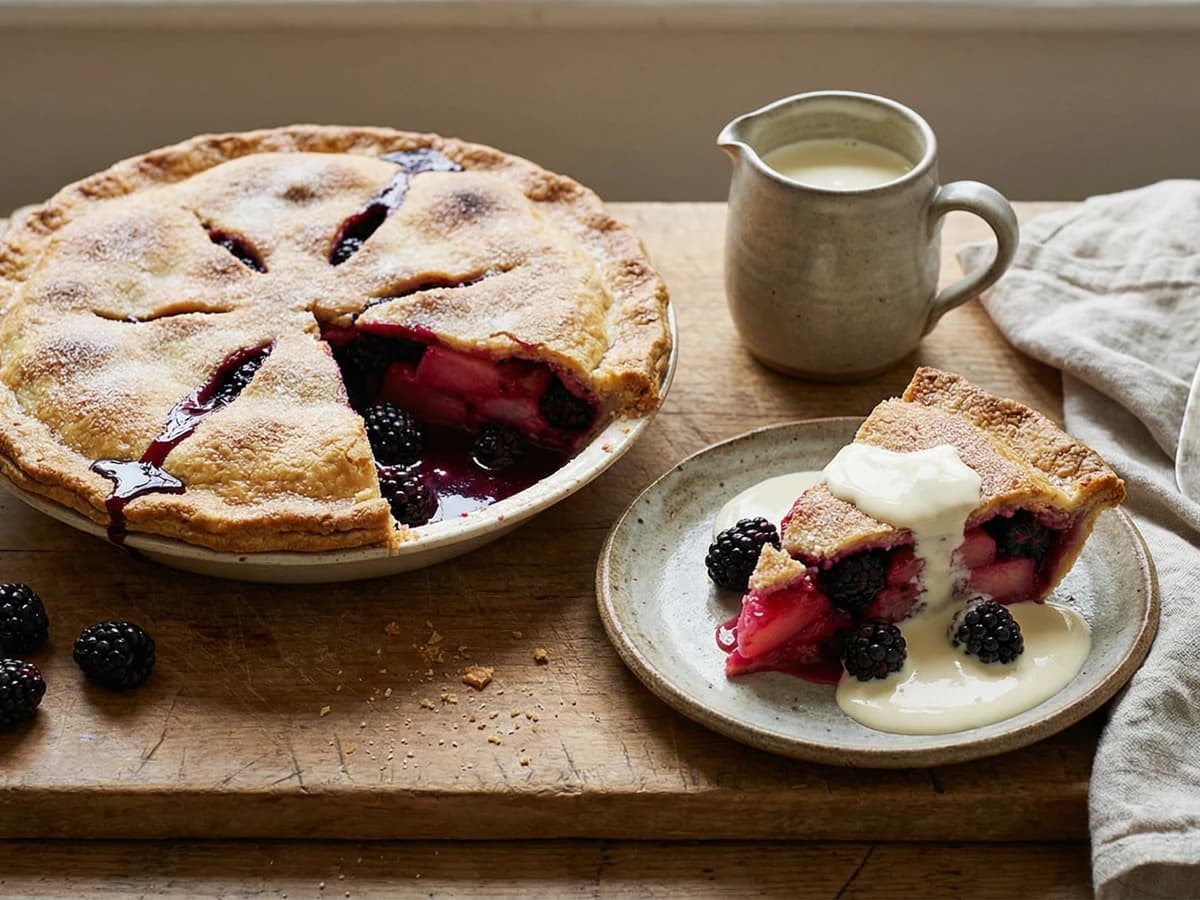
A proper hedgerow pie of Bramley apples and blackberries under a sugar-crusted pastry lid, the kind of pudding that turns a Sunday in September into something you'll remember.