Chef Jeong-sun
Amjuk (Dried-Grain Weaning Porridge)
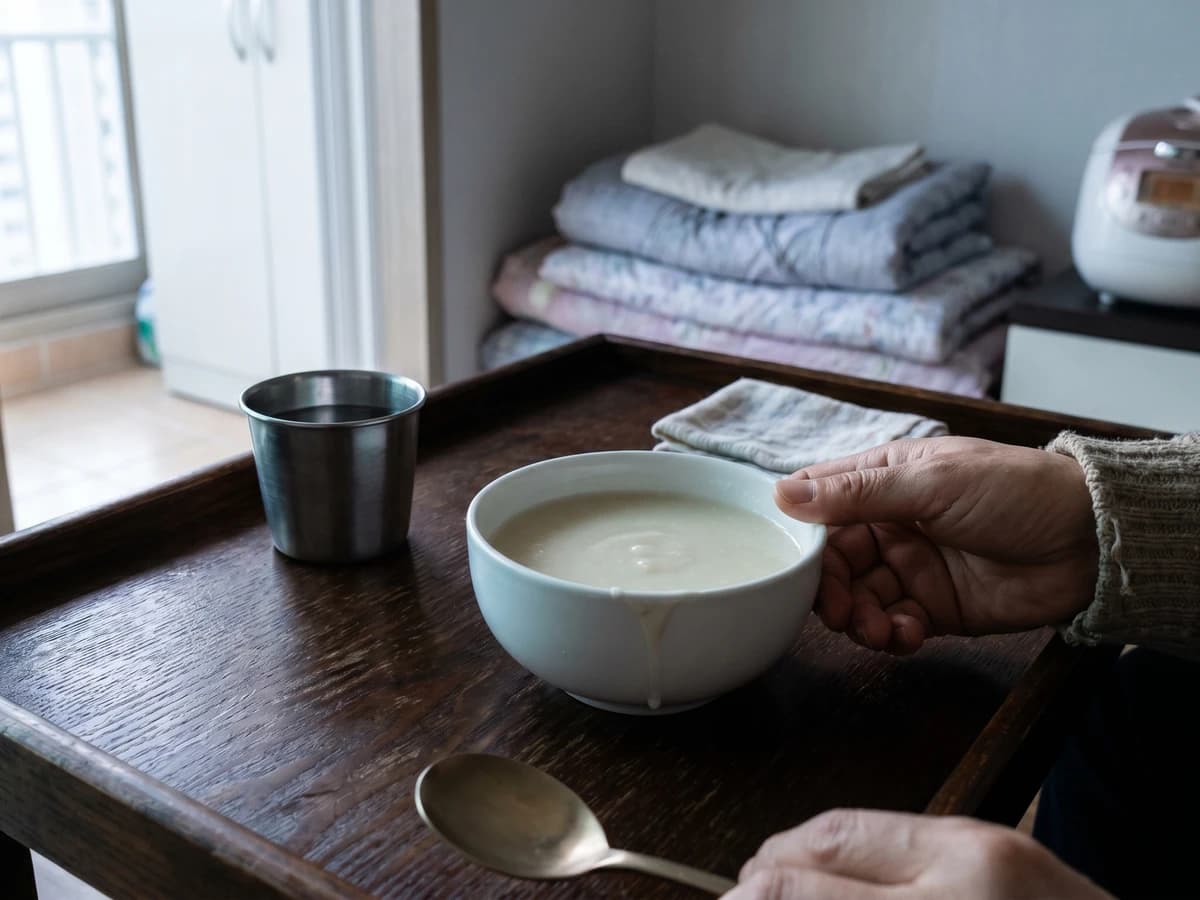
Powdered rice or dried baekseolgi cooked thin in cloudy rice water, an old Korean first-spoon porridge that asks for patience at the sieve and gentleness at the stove.
A cooking platform built around craft, culture, and the stories behind what we eat.

Created by
A quiet winter porridge of short-grain rice and clean coastal oysters, simmered slowly until thick, then salted with restraint so the oyster still tastes like the sea.
Cook the month you're standing in. Gul-juk belongs to cold weather, when oysters from the southern coast come into the market fat, clean-smelling, and heavy with their own brine. In my mother's kitchen this was not a show dish. It was breakfast after a hard night, a soft bowl for someone tired, or the first thing made when the body needed kindness and not much chewing.
The dish lives or dies by timing. Rice can take the long simmer. Oysters cannot. Slide them in at the end, just until their edges curl and the porridge turns faintly grey-sweet from their liquor. Cook them longer and they shrink into little buttons, and then the bowl has lost its reason.
Season with salt, not soy sauce. Soy darkens the porridge and pushes its own flavor forward, while salt lets the oyster stay clear. Measure it first, then taste. 손맛 is real, the hand-taste your grandmother trusted, and I still measure it so it can be handed on.
Juk, Korean rice porridge, has long been part of both home cooking and restorative food, made plain for weak stomachs or enriched with seasonal ingredients such as abalone, pumpkin, pine nuts, or oysters. Gul-juk is tied especially to Korea's cold-season oyster harvest, with major oyster beds along the south coast around Tongyeong, Geoje, and nearby waters. It is an ordinary coastal bowl, not a palace dish, and its value is in the fresh oyster and the restraint of the cook.
Quantity
1 cup
rinsed until the water runs mostly clear
Quantity
5 cups
Quantity
1 piece, about 3 inches square
Quantity
6
heads and guts removed
Quantity
250g
with 2 tablespoons clean oyster liquor if available
Quantity
1 teaspoon
for washing oysters
Quantity
1 tablespoon
Quantity
1/3 cup
cut into tiny 1/4-inch dice
Quantity
1 small clove
finely grated
Quantity
3/4 teaspoon, plus more only if needed
Quantity
1
very thinly sliced
Quantity
1 teaspoon
Quantity
a small pinch
| Ingredient | Quantity |
|---|---|
| short-grain white ricerinsed until the water runs mostly clear | 1 cup |
| water | 5 cups |
| dried kelp (dasima) | 1 piece, about 3 inches square |
| large dried anchovies (myeolchi)heads and guts removed | 6 |
| fresh shucked oysterswith 2 tablespoons clean oyster liquor if available | 250g |
| coarse sea saltfor washing oysters | 1 teaspoon |
| toasted sesame oil | 1 tablespoon |
| Korean radishcut into tiny 1/4-inch dice | 1/3 cup |
| garlicfinely grated | 1 small clove |
| fine sea salt | 3/4 teaspoon, plus more only if needed |
| scallionvery thinly sliced | 1 |
| toasted sesame seeds | 1 teaspoon |
| freshly ground black pepper (optional) | a small pinch |
Rinse the rice in several changes of water until the water is only lightly cloudy, then soak it in fresh water for 30 minutes. Drain it well. Soaking lets the grains soften evenly, so the porridge becomes creamy without the outside breaking before the center cooks.
Put 5 cups water, the kelp, and the cleaned anchovies in a small pot. Bring just to a simmer over medium heat, then pull out the kelp right away so it does not turn slick or bitter. Simmer the anchovies 8 more minutes, strain, and keep the broth warm.
Put the oysters in a bowl with 1 teaspoon coarse sea salt and enough cold water to cover. Swirl gently with your fingers for 20 seconds, then lift the oysters out into a strainer. Do not pour the dirty water over them. Rinse once more in cold water and drain well. If the oyster liquor smells clean and sweet, save 2 tablespoons; if it smells muddy, leave it out.
Set a heavy pot over medium-low heat and add the sesame oil. Add the drained rice and the diced radish, then stir for 3 minutes, until the grains look glossy at the edges. This light toasting keeps the porridge nutty and prevents the rice from turning pasty too soon.
Add 4 cups of the warm broth and the grated garlic. Bring to a gentle simmer, then lower the heat and cook 25 to 30 minutes, stirring often with a wooden spoon so the rice does not catch on the bottom. Add the remaining 1 cup broth a little at a time as the porridge thickens. The grains should be swollen and soft, with the porridge moving slowly from the spoon.
Stir in 3/4 teaspoon fine sea salt and taste the porridge before the oysters go in. It should taste slightly under-seasoned, because the oysters and their liquor will bring their own salinity. Do not use soy sauce here. It muddies the color and makes the oyster taste less like itself.
Add the oysters and the reserved 2 tablespoons oyster liquor, if using. Stir gently and simmer 2 to 3 minutes, only until the oysters plump and their edges curl. Turn off the heat at once. This is the whole discipline of gul-juk: the rice gets patience, the oysters get restraint.
Ladle the porridge into warm bowls. Scatter sliced scallion and toasted sesame seeds over the top, with a small pinch of black pepper if you like it. Serve immediately, while the rice is soft and the oysters are still tender, with baechu-kimchi or a small plate of seasoned greens beside it.
1 serving (about 500g)
Culinary guides, cultural storytelling, and the editorial depth that makes cooking meaningful.
Discover Culinary ExplorerChef Jeong-sun
Powdered rice or dried baekseolgi cooked thin in cloudy rice water, an old Korean first-spoon porridge that asks for patience at the sieve and gentleness at the stove.

Chef Jeong-sun
A soft summer rice porridge of kneaded mallow greens, dried shrimp, and careful doenjang broth, plain enough for breakfast and exact enough to keep the grit and bitterness out.
Chef Jeong-sun
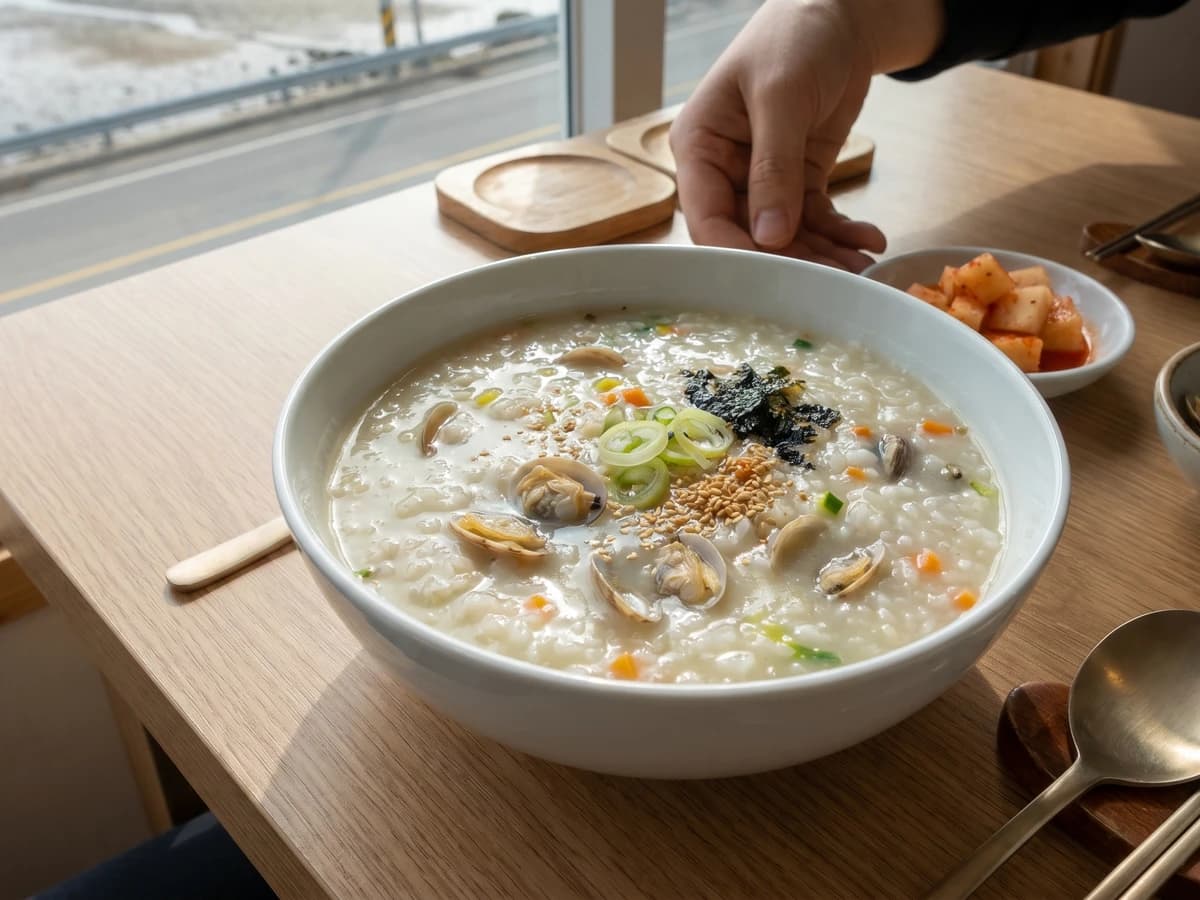
A west-coast clam porridge from Buan's tidal flats: live bajirak opened for their liquor, sesame-slicked rice toasted in the pot, and vegetables cut small enough to comfort without hiding the clams.

Chef Jeong-sun
An autumn juk of boiled chestnuts and soaked short-grain rice, simmered low until smooth and softly sweet, the kind of bowl you set before an elder, a child, or yourself.