Chef Freja
Aebleflaesk
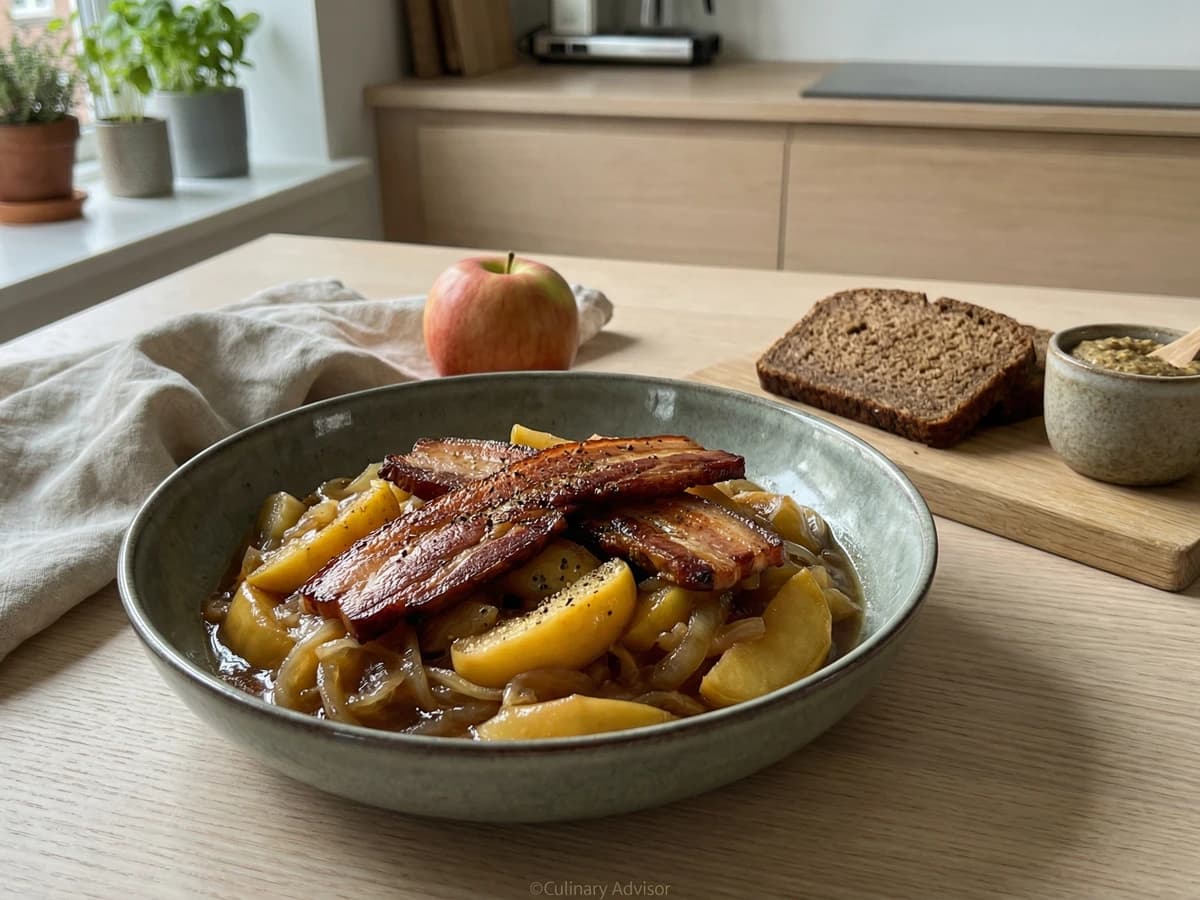
The Fyn autumn supper where thick pork belly renders slowly into its own fat, then meets apples and onions that cook down into a deep amber tangle. Sweet, salt, and the oldest pairing in the Danish larder.
A cooking platform built around craft, culture, and the stories behind what we eat.

Created by Chef Freja
Jutland's creamed kale soup, the bowl that belongs to the first hard frost when the cold turns the kale sweet and the wind off the North Sea makes the stove the warmest room in the house.
The first hard frost comes to Jutland in November, and the kale in the garden changes overnight. Not visibly. The leaves stay dark and curly and stubborn, but taste one before the frost and taste one after, and you'll understand. The cold turns the starch to sugar. The kale becomes sweeter, softer in character, ready for the pot. This is when gronkaalssuppe belongs.
This is farmhouse food from Denmark's west coast, the kind of soup that came out of kitchens where the wind off the North Sea rattled the windows and the stove was the warmest thing in the house. You blanch the kale, chop it fine, and simmer it slowly with good stock and cream until everything thickens into something dark green and rich enough to carry you through an afternoon outside. It isn't delicate and it isn't pretty. It's exactly what winter asks for.
What I want you to notice is the blanching. Don't skip it and don't rush it. The kale needs a hard plunge into well-salted boiling water, then a cold shock, before it ever meets the cream. That's what sets the color and takes the raw edge off the leaves. Miss this step and the soup goes dull and bitter. Get it right and the color stays alive and the flavor goes sweet and mineral. You'll know when it's right.
Gronkål has grown in Danish gardens since the Middle Ages, long before the cabbage and potato that would later crowd the winter kitchen. In Jutland's heath country, where the poor sandy soil defeated more demanding crops, kale survived and even thrived, becoming the defining winter green of the region. Gronkaalssuppe appears in Danish farmhouse cookery from at least the 1800s, often cooked in the same pot that had earlier produced a ham or smoked pork stock, a quiet thrift that Jutland kitchens turned into tradition and that still gives the soup its smoky backbone today.
Quantity
500g
tough stems removed
Quantity
50g
Quantity
1 small
finely diced
Quantity
2 tablespoons
Quantity
1 litre
Quantity
300ml
Quantity
to taste
Quantity
freshly ground, to taste
Quantity
a small grating
Quantity
2
halved, to serve
Quantity
150g
cut into small cubes
Quantity
thick slices, to serve
| Ingredient | Quantity |
|---|---|
| curly kaletough stems removed | 500g |
| unsalted butter | 50g |
| onionfinely diced | 1 small |
| plain flour | 2 tablespoons |
| ham, pork, or chicken stock | 1 litre |
| heavy cream | 300ml |
| fine sea salt | to taste |
| black pepper | freshly ground, to taste |
| fresh nutmeg | a small grating |
| hard-boiled eggshalved, to serve | 2 |
| smoked pork belly or thick-cut baconcut into small cubes | 150g |
| dark rugbrod | thick slices, to serve |
Bring a large pot of well-salted water to a rolling boil. Strip the kale leaves from their tough central stems and tear them into rough pieces. Plunge the leaves into the boiling water and cook them hard for two minutes, pushing them down with a spoon so everything is submerged. Lift them out into a bowl of iced water and leave them there for a minute to stop the cooking. This is the step that sets the color and takes the raw edge off the leaves. Skip it and the soup goes dull and bitter. Do it and the green stays alive.
Drain the blanched kale and squeeze out as much water as you can with your hands. It will come out as a dense green ball. Place it on a board and chop it very fine, almost to a rough paste. The texture of the finished soup depends on this. Large pieces stay stringy in the bowl. Finely chopped kale melts into the cream and gives the soup its body.
While the kale drains, put the pork cubes in a cold dry frying pan and set it over a medium heat. Starting cold lets the fat render out slowly, and you'll end up with crisp golden cubes swimming in their own rendered fat instead of dry burnt edges. Cook until the pork is deeply colored and the fat has run. Lift the cubes out onto kitchen paper and set them aside. Keep the rendered fat if you like and add a spoonful to the soup at the end.
Melt the butter in a heavy pot over a gentle heat. Add the diced onion and a small pinch of salt and sweat it slowly until translucent, about five minutes. You don't want color here, just softness. Scatter in the flour and stir it through the butter and onions to make a pale roux. Cook this for a full minute, stirring constantly. The raw flour taste needs to cook out, or it will haunt the finished soup.
Pour in the stock a ladleful at a time, whisking after each addition to keep the roux smooth. Once everything is incorporated, bring the soup to a gentle simmer. It should start to thicken slightly and coat the back of a spoon. A good stock matters here more than almost anything else. A ham or pork stock gives the soup the smoky backbone it wants, but a well-made chicken stock will carry it too.
Stir the chopped kale into the simmering stock. Let it cook gently for ten minutes, stirring now and then. The kale will loosen into the liquid and the whole pot will turn a deep, forest green. This is the moment Jutland farmhouses smelled of on winter afternoons when the wind came in off the North Sea and the kitchen was the warmest room in the house.
Pour in the cream and stir it through. Let the soup come back to a bare simmer and cook for another five minutes until it thickens into something rich enough to hold a spoon upright for a moment before releasing it. Season with salt, black pepper, and a small grating of nutmeg. Taste it. Adjust. The soup should be deep and rounded, never sharp. The cream is what carries the kale from farmhouse green to something that tastes cooked with love.
Ladle the soup into deep bowls. Place half a hard-boiled egg in the centre of each, yolk side up. Scatter the crisp pork cubes over the top. Grind a little more black pepper across the surface and serve at once with thick slices of dark rugbrod alongside. Eat it slowly. This is winter food, and winter food is meant to be sat with. Tak for mad.
1 serving (about 590g)
Culinary guides, cultural storytelling, and the editorial depth that makes cooking meaningful.
Discover Culinary ExplorerChef Freja
The Fyn autumn supper where thick pork belly renders slowly into its own fat, then meets apples and onions that cook down into a deep amber tangle. Sweet, salt, and the oldest pairing in the Danish larder.

Chef Freja
Warm Danish apple soup for the first cool evenings of autumn. Tart apples simmered with cinnamon and lemon peel, thickened to a soft gloss, and served with cold cream and buttery toasted oats.

Chef Freja
Danish white asparagus velouté with tiny veal meatballs, flour dumplings, and bright green tips scattered on the surface. The Easter soup of Copenhagen, built from five small pans of spring.
Chef Freja
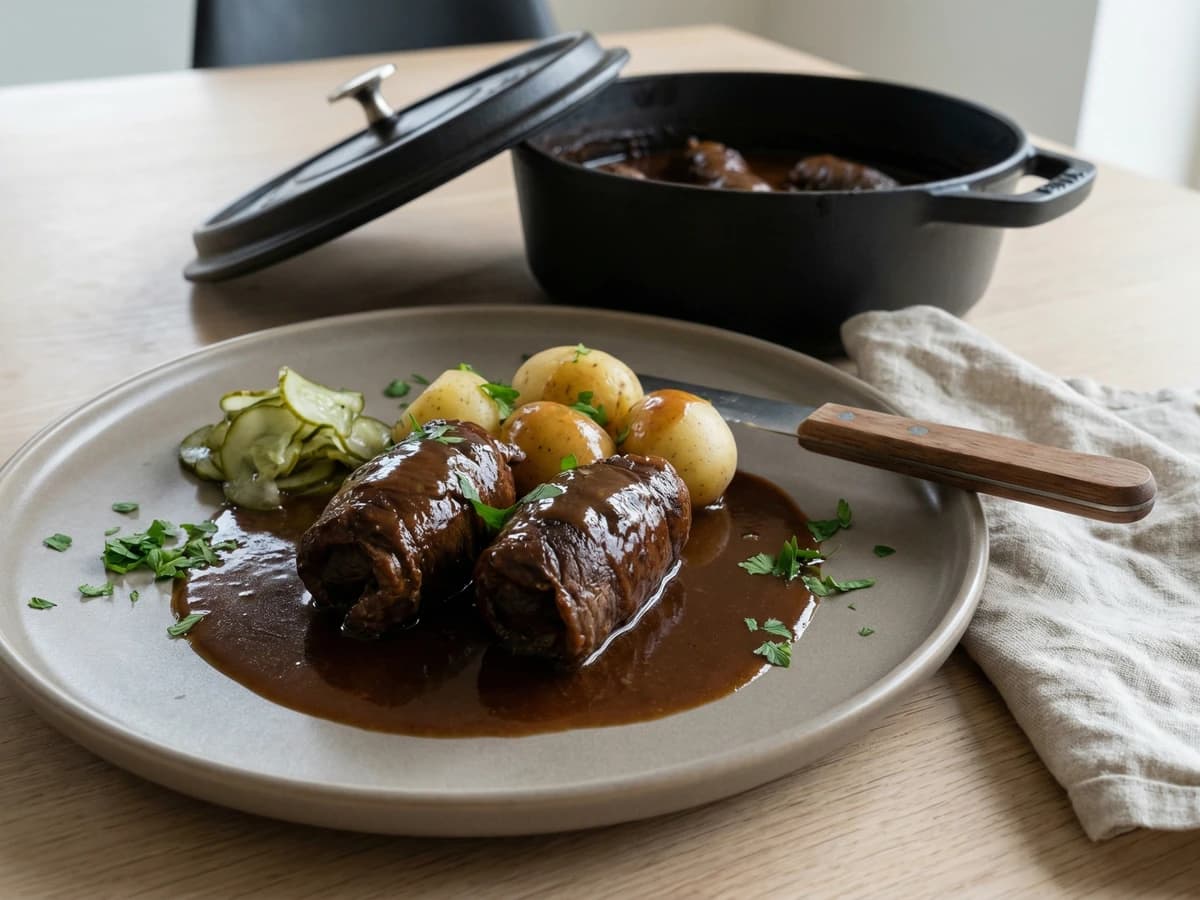
Thin beef slices rolled around bacon and onion, tied with string, and braised slowly in a dark glossy gravy finished with cream and redcurrant jelly. Danish Sunday dinner at its most comforting.