
Chef Freja
Andelår med Rødkål
Slow-roasted duck legs with crisp, deeply golden skin, served with braised red cabbage and caramelized potatoes. The weeknight Danish duck that proves the best part of the bird is the one that takes its time.
A cooking platform built around craft, culture, and the stories behind what we eat.

Created by Chef Freja
Marbled pork neck chops grilled over charcoal until the fat renders and the edges char, served with buttered new potatoes and dill. The weeknight dinner that means summer has arrived in Denmark.
June in Denmark is a dare. The sun stays up past ten, the air smells like cut grass and warm stone, and every garden, balcony, and patch of shared courtyard becomes a kitchen. This is when the grill comes out. Not the elaborate setup you might imagine, just a simple charcoal grill, a bag of briquettes, and nakkekoteletter.
Pork neck chops are the weeknight grill cut in Denmark. They're thick, marbled with fat that renders slowly over the coals, and almost impossible to ruin if you understand one thing: the fat is not a problem, it's the whole point. That white marbling melts as the chop cooks, basting the meat from the inside, keeping it juicy even if you leave it on the grill a minute too long. This is a forgiving cut, and it rewards you for trusting it.
The preparation is simple. A quick marinade of rapeseed oil, garlic, and coarse salt, then heat. What matters is the grill itself: hot enough to sear the surface and render the fat, not so hot that the outside chars before the inside is done. I'll walk you through exactly how to read the heat and when to turn. You'll know when it's right. The smell alone will tell you.
Denmark has been one of Europe's leading pork producers since the cooperative movement of the late 1800s transformed Danish agriculture from grain export to livestock, and pork became the foundation protein of the home kitchen. The nakkekotelet, cut from the well-marbled collar of the pig, emerged as the preferred grilling cut precisely because its fat content made it forgiving over open flame. Charcoal grilling became widespread in Denmark during the 1960s and 1970s, but the Danes made it their own: cold kartoffelsalat on the table, remoulade within reach, and the long light of midsummer as the only clock.
Quantity
4, about 250g each
about 2cm thick
Quantity
3 tablespoons
Quantity
3 cloves
finely grated
Quantity
1 teaspoon
Quantity
1 tablespoon
Quantity
1 teaspoon
freshly ground
Quantity
800g
scrubbed
Quantity
30g
Quantity
small bunch
roughly chopped
Quantity
to finish
| Ingredient | Quantity |
|---|---|
| pork neck chops (nakkekoteletter)about 2cm thick | 4, about 250g each |
| rapeseed oil | 3 tablespoons |
| garlicfinely grated | 3 cloves |
| smoked paprika | 1 teaspoon |
| coarse sea salt | 1 tablespoon |
| black pepperfreshly ground | 1 teaspoon |
| small new potatoesscrubbed | 800g |
| unsalted butter | 30g |
| fresh dillroughly chopped | small bunch |
| flaky sea salt | to finish |
Mix the rapeseed oil, grated garlic, smoked paprika, coarse salt, and black pepper in a shallow dish. Lay the pork neck chops in the mixture and turn them until they're coated on all sides. Cover and leave at room temperature for one hour, or in the fridge for up to four hours if you're planning ahead. The salt draws moisture to the surface and the meat gradually reabsorbs it, seasoning the chop all the way through. Fifteen minutes of marinating is better than none, but an hour is where the difference really tells.
Light the charcoal and let it burn until the briquettes are covered in a layer of white ash. This takes about twenty-five minutes and there is no shortcut. Spread the coals so you have a hot zone and a cooler zone. The hot side sears the meat and renders the fat. The cooler side is your safety zone when the dripping fat causes flare-ups. Hold your hand ten centimetres above the grate on the hot side. If you have to pull it away after three seconds, the heat is right.
While the coals are catching, put the new potatoes in a pot of well-salted cold water. Bring to a boil and cook until a knife slides through without any resistance, about fifteen to eighteen minutes depending on size. Start them in cold water, not boiling. Cold water lets them heat evenly from the outside in. If you drop them into boiling water the surface turns to mush before the centre is done. Drain, return to the warm pot, add the butter and most of the chopped dill, and toss gently. The butter melts into the hot potatoes and the dill perfumes everything. Cover and set aside while you grill.
Lay the chops on the hot side of the grill. Don't touch them for four minutes. The fat will begin to render, the surface will sear, and you'll hear the steady hiss that tells you the heat is doing its work. After four minutes, flip once. Give them another four minutes on the second side. If the dripping fat causes flare-ups, slide the chops to the cooler side until the flames settle, then move them back. The total cooking time is eight to ten minutes for chops that are two centimetres thick. The surface should be deep golden-brown with charred edges where the fat met the flame.
Move the chops to a warm plate and cover loosely with foil. Let them rest for five minutes. This is not optional. Resting lets the muscle fibers relax and the juices redistribute through the meat instead of pooling on the plate the moment you cut in. If you skip this step you lose what you spent the whole cook building. Five minutes. The chops will stay hot.
Bring the chops and the pot of buttered potatoes to the table together. Scatter the remaining dill over the potatoes and finish the chops with a pinch of flaky sea salt. That's the whole meal. If you have remoulade in the fridge, put it on the table. A bowl of agurkesalat, the quick Danish cucumber salad dressed in sweet vinegar, is the classic alongside. But the chops and the potatoes are enough on their own. The season decides, and in June, the season says keep it simple. Tak for mad.
1 serving (about 395g)
Culinary guides, cultural storytelling, and the editorial depth that makes cooking meaningful.
Discover Culinary ExplorerChef Freja
Slow-roasted duck legs with crisp, deeply golden skin, served with braised red cabbage and caramelized potatoes. The weeknight Danish duck that proves the best part of the bird is the one that takes its time.

Chef Freja
The whole roasted duck of juleaften, stuffed with tart apples and dark prunes, slow-roasted for four patient hours until the skin crackles like something earned and the meat underneath gives way without resistance.
Chef Freja
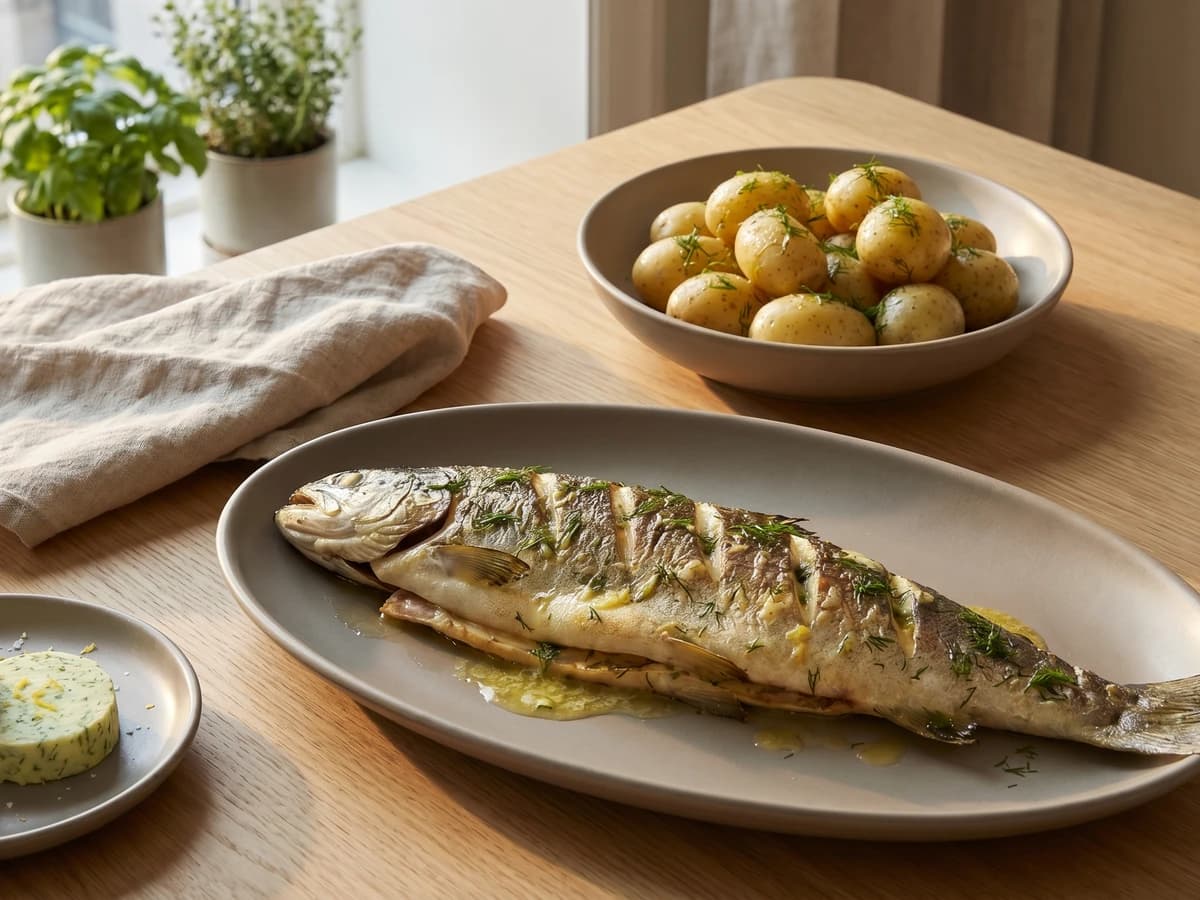
Whole sea trout baked with butter, lemon, and armfuls of dill, served beside the first nye kartofler of the season and a melting slab of dildsmor. The Danish summer table at its most generous.
Chef Freja
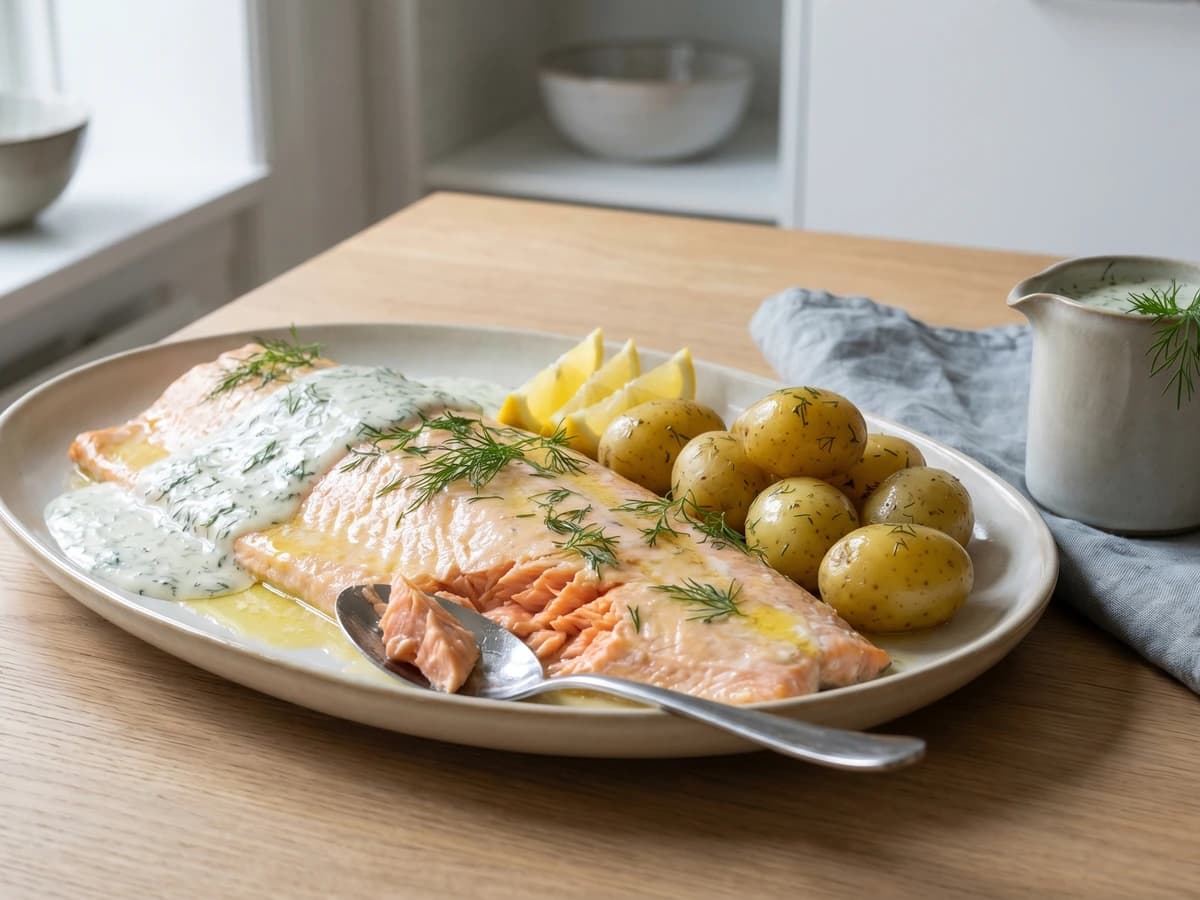
A side of salmon baked gently in butter and white wine, served warm with a bright dill cream sauce and the season's first nye kartofler. Late spring on a Danish table, cooked with love.