
Chef Dean
Brown Butter Sage Sauce
Golden butter cooked until it smells of hazelnuts and autumn, studded with shatteringly crisp sage leaves and brightened with lemon. Five ingredients, ten minutes, infinite applications.
A cooking platform built around craft, culture, and the stories behind what we eat.
Created by
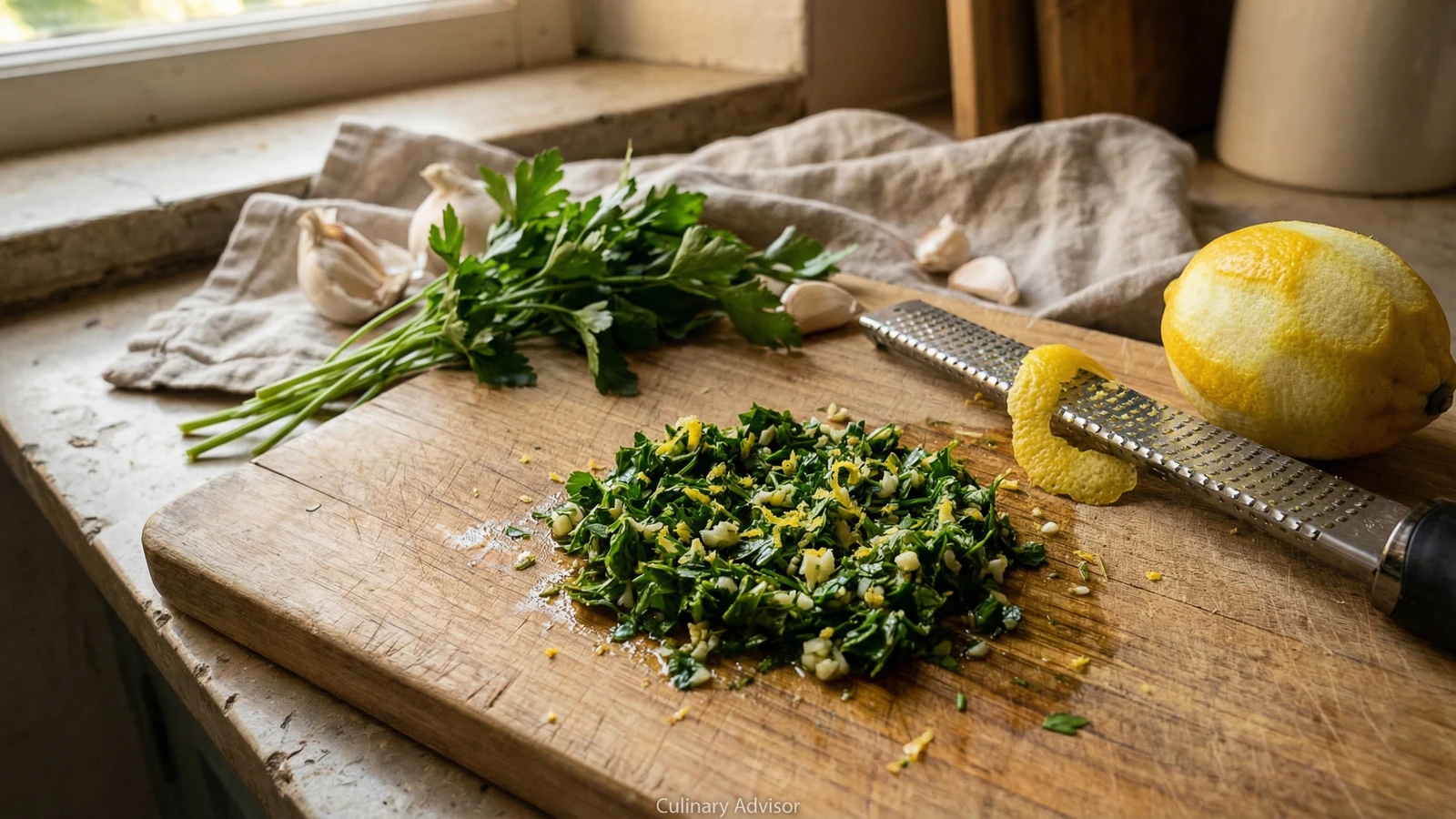
Three ingredients that prove restraint is a form of respect: bright lemon zest, pungent raw garlic, and fresh parsley chopped together to scatter over anything that needs waking up.
Gremolata is not a recipe so much as a principle. Three ingredients. No cooking. Almost nothing done to them. And yet this rough green scatter transforms a braised shank or a bowl of white beans into something that feels complete.
The Milanese invented it to cut through the richness of osso buco, that long-simmered veal shank swimming in its own gelatin. The acidity of lemon, the bite of raw garlic, the clean green note of parsley: together they lift the heavy and make it bright. This is what condiments should do.
Perfect ripeness matters here more than anywhere, because there is nowhere for tired ingredients to hide. Your parsley should smell like a garden. Your lemon should feel heavy with juice and release its oils the moment you touch the zest. Your garlic should be firm and white, not sprouting or soft. When the ingredients are right, the gremolata needs nothing else.
Quantity
1 cup
packed
Quantity
2 medium
Quantity
from 1 large lemon
unwaxed if possible
Quantity
pinch
| Ingredient | Quantity |
|---|---|
| fresh flat-leaf parsley leavespacked | 1 cup |
| garlic cloves | 2 medium |
| lemon zestunwaxed if possible | from 1 large lemon |
| fine sea salt | pinch |
Start with parsley that looks alive. The leaves should be deep green and perky, not wilted or yellowing at the edges. Flat-leaf parsley has more flavor than curly, and its tender leaves chop into a finer texture. Wash and dry the leaves thoroughly. Water dilutes the oils you are after.
Use a microplane to remove only the yellow outer layer of the lemon, avoiding the bitter white pith beneath. The zest should be fine and fluffy, releasing its perfume as you work. If your lemon is waxed, scrub it under warm water first. One large lemon yields about a tablespoon of zest.
Peel the garlic and mince it as finely as you can manage. Raw garlic is assertive, and large pieces will dominate. You want its presence felt but not shouted. A paste would be too aggressive; small bits that melt into the parsley are right.
Gather the dry parsley leaves and chop them finely with a sharp knife. Rock the blade through the pile several times until the texture is uniform but not pulverized. The leaves should still have definition, not be reduced to mush.
Toss the chopped parsley, lemon zest, and minced garlic together on your cutting board. Add a small pinch of sea salt. Run your knife through the mixture a few more times to marry the ingredients. The gremolata should be fragrant and slightly moist from the lemon oils. Taste it. Adjust the garlic or zest if needed. Use immediately, while everything is still alive.
1 serving (about 18g)
Culinary guides, cultural storytelling, and the editorial depth that makes cooking meaningful.
Discover Culinary ExplorerChef Dean
Golden butter cooked until it smells of hazelnuts and autumn, studded with shatteringly crisp sage leaves and brightened with lemon. Five ingredients, ten minutes, infinite applications.

Chef Dean
The fiery, oil-packed vegetable relish that defines Chicago's Italian beef sandwich, loaded with sport peppers, crisp celery, and cauliflower in a garlicky, oregano-laced bath of pure heat.

Chef Dean
A perfectly balanced Italian dressing where sweet aged balsamic and fruity olive oil unite through the magic of mustard emulsion, ready to transform any salad, grilled vegetable, or chunk of crusty bread into something worth savoring.

Chef Ally
A vibrant, bracing sauce of hand-chopped parsley, capers, and anchovy bound with good olive oil. The kind of preparation that proves perfect ingredients need almost nothing done to them.