Chef Thomas
Anchovy Sauce
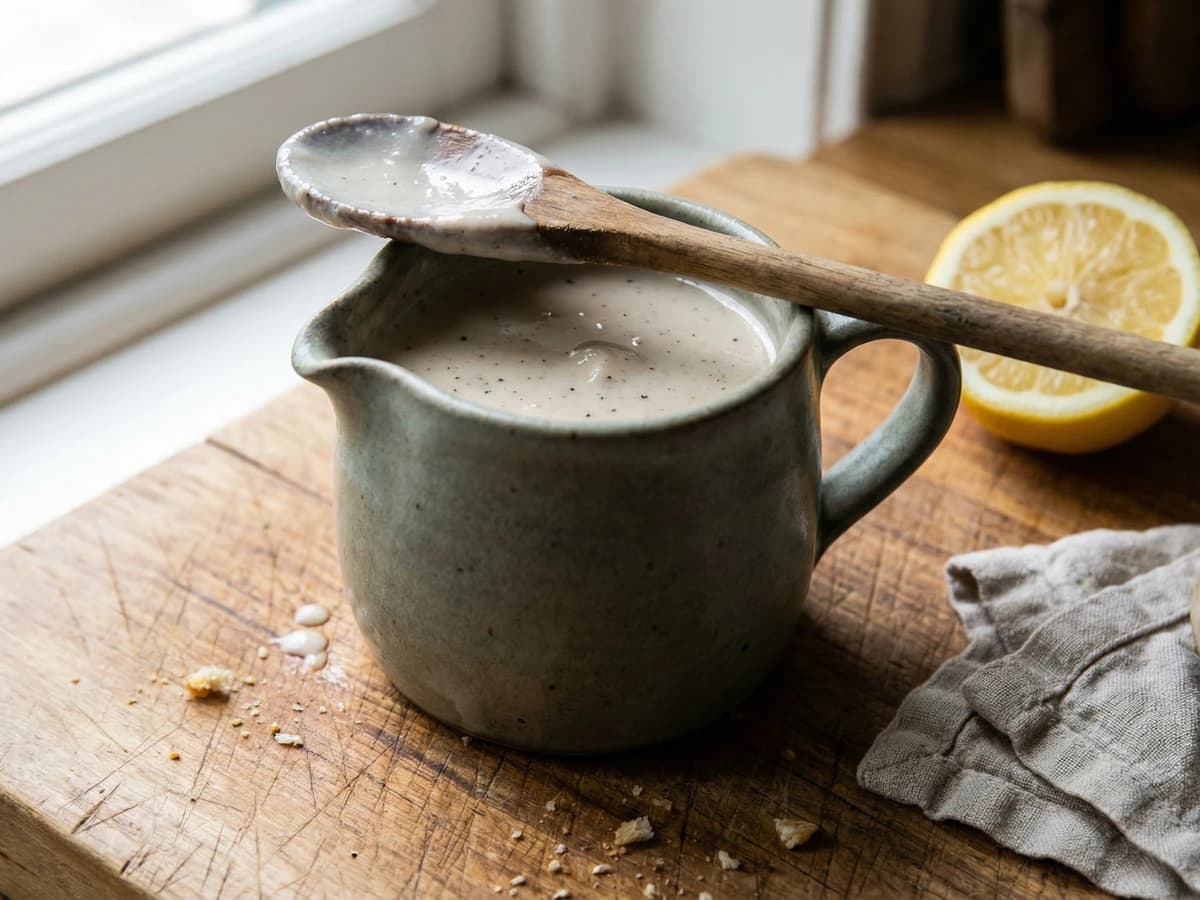
A proper white sauce sharpened with pounded anchovy, the old Georgian trick for waking up a piece of poached fish or a slice of roast lamb on a Sunday in spring.
A cooking platform built around craft, culture, and the stories behind what we eat.

Created by Chef Thomas
A dark, spiced chutney for the end of the tomato season, when the vines have given up and the green fruit needs somewhere useful to go.
Every year it's the same. The first proper cold snap arrives in October, the tomato plants slump in the garden, and there's a bowlful of stubbornly green fruit sitting on the kitchen counter that was never going to ripen. You can leave them on a sunny windowsill and hope, but most of them won't get there. So you make chutney.
This is one of the few recipes in the notebook that I make almost exactly the same way every year. Green tomatoes, onions, apples, sultanas, vinegar, sugar, a handful of warm spices. The pan goes on after lunch and the kitchen smells of vinegar for the first hour, which is unpleasant in a way you have to trust. By the second hour, it has turned into something altogether different: dark and glossy and faintly Christmassy, smelling of spice and fruit and the kind of patience that makes winter eating possible.
The hardest part is leaving it alone. A freshly made chutney is harsh and one-noted. Give it a month in the cupboard, longer if you can stand it, and the flavours soften and marry into something quietly splendid. It will sit on a piece of strong cheddar like it was born for the job. It will make a cold ham sandwich into something worth sitting down for. It will be there at Christmas when you need it.
We're only making chutney. But chutney made now is a small letter to your future self, posted into a jar and read again in January when the garden has nothing to offer and the days are short. There are few better feelings than reaching into the cupboard for something you made months ago and finding it ready.
Quantity
1.5kg
roughly chopped
Quantity
500g
peeled and chopped
Quantity
300g
peeled, cored and chopped
Quantity
200g
Quantity
400g
Quantity
500ml
Quantity
2 tablespoons
Quantity
1 tablespoon
Quantity
1 tablespoon
lightly crushed
Quantity
1 teaspoon
Quantity
1 teaspoon
Quantity
1/2 teaspoon
Quantity
4 cloves
finely chopped
Quantity
thumb-sized piece
grated
| Ingredient | Quantity |
|---|---|
| green tomatoesroughly chopped | 1.5kg |
| onionspeeled and chopped | 500g |
| cooking applespeeled, cored and chopped | 300g |
| sultanas | 200g |
| soft light brown sugar | 400g |
| malt vinegar | 500ml |
| fine sea salt | 2 tablespoons |
| yellow mustard seeds | 1 tablespoon |
| coriander seedslightly crushed | 1 tablespoon |
| ground allspice | 1 teaspoon |
| ground ginger | 1 teaspoon |
| chilli flakes | 1/2 teaspoon |
| garlicfinely chopped | 4 cloves |
| fresh gingergrated | thumb-sized piece |
Tip the chopped green tomatoes into a large bowl and scatter the salt over them. Toss gently with your hands. Cover with a tea towel and leave them on the counter for a couple of hours, or overnight if it suits you. The salt draws out the bitter water that green tomatoes hold onto, and you'll see a surprising amount of liquid pool in the bottom of the bowl. That liquid is the harshness leaving. You don't want it.
Tip the tomatoes into a colander and give them a brief rinse under cold water. Press gently with your hands to squeeze out the excess. They don't need to be bone dry, just relieved of the worst of the salty liquid.
Find your largest, heaviest pan. A preserving pan if you have one, otherwise a stockpot will do. Tip in the drained tomatoes, the chopped onions, the apples, the sultanas, the sugar, and the vinegar. Add the mustard seeds, coriander, allspice, ground ginger, chilli flakes, garlic, and grated ginger. Stir it through. It will look like an unpromising mess at this stage. Trust the process.
Set the pan over a medium heat and bring everything slowly up to a gentle simmer, stirring now and then so the sugar dissolves and nothing catches on the bottom. The kitchen will start to smell sharp and vinegary at first, almost aggressive. That's normal. It mellows.
Lower the heat and let the chutney bubble away gently, uncovered, for about two hours. Stir it every fifteen minutes or so, more often as it thickens. You're looking for it to go from pale and watery to dark, glossy, and jammy. The colour shifts slowly: green, then khaki, then a deep, rich brown like wet bark. The smell shifts too. It stops smelling of vinegar and starts smelling of spice and fruit and something faintly Christmas.
Take it off the heat. Let it cool for a minute, then taste it carefully on a clean spoon. It should be sweet, sharp, spiced, and savoury all at once, with no single note shouting over the others. If it tastes too sharp, a little more sugar. If it tastes flat, a pinch more salt. Trust your tongue. A chutney should make you want a piece of cheese and a bit of bread immediately.
While the chutney is still warm, spoon it into clean, sterilised jars, pressing down gently to remove any air pockets. Seal with vinegar-proof lids. Label them with the date. Then put them somewhere cool and dark and forget about them for at least a month. Six weeks is better. The chutney needs that time to settle into itself.
1 serving (about 15g)
Culinary guides, cultural storytelling, and the editorial depth that makes cooking meaningful.
Discover Culinary ExplorerChef Thomas
A proper white sauce sharpened with pounded anchovy, the old Georgian trick for waking up a piece of poached fish or a slice of roast lamb on a Sunday in spring.

Chef Thomas
A spiced autumn chutney made from a glut of apples and a quiet afternoon, simmered down until the kitchen smells of October and the jars line up on the counter like a small, useful insurance policy.
Chef Thomas
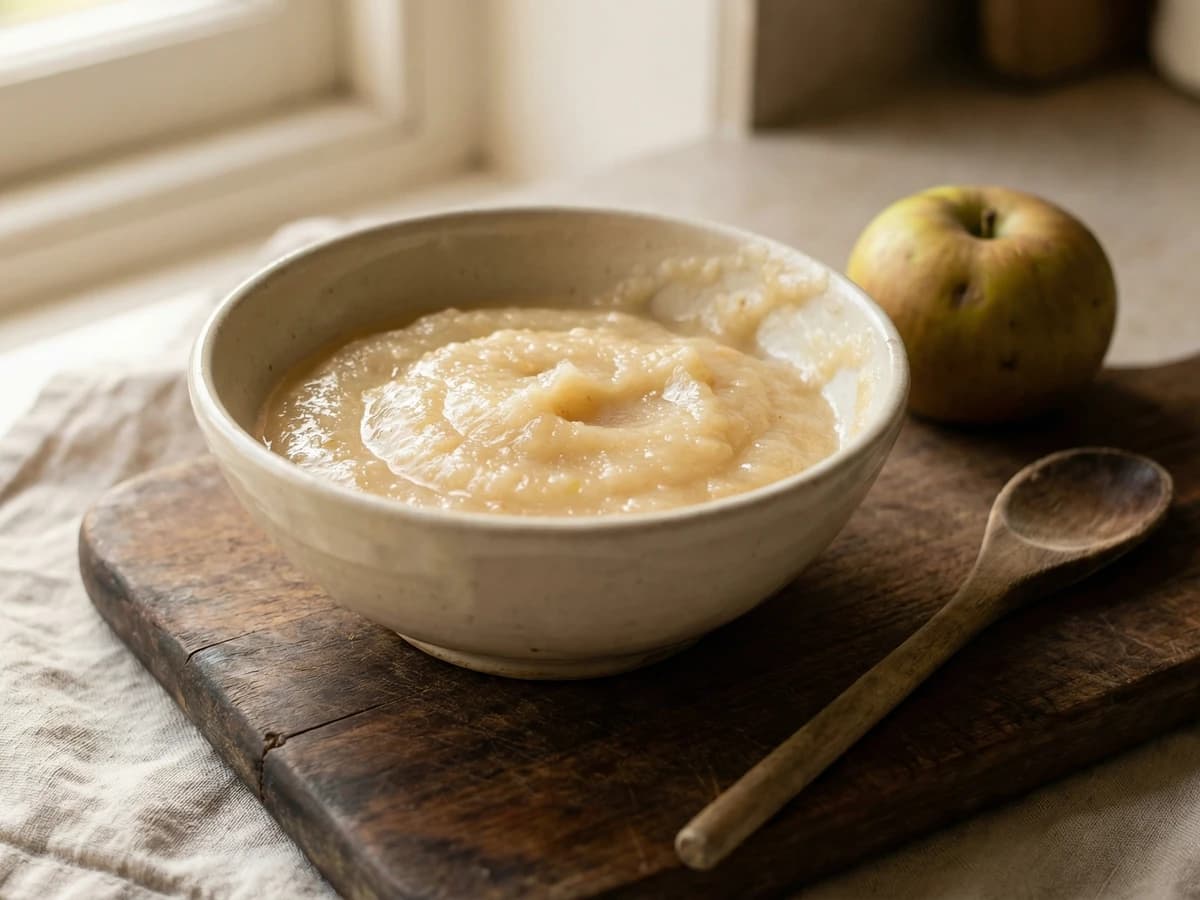
A bowl of sharp, fluffy Bramley apple sauce, made in the time it takes to carve the pork, the kind of small condiment that quietly makes the whole meal make sense.
Chef Thomas
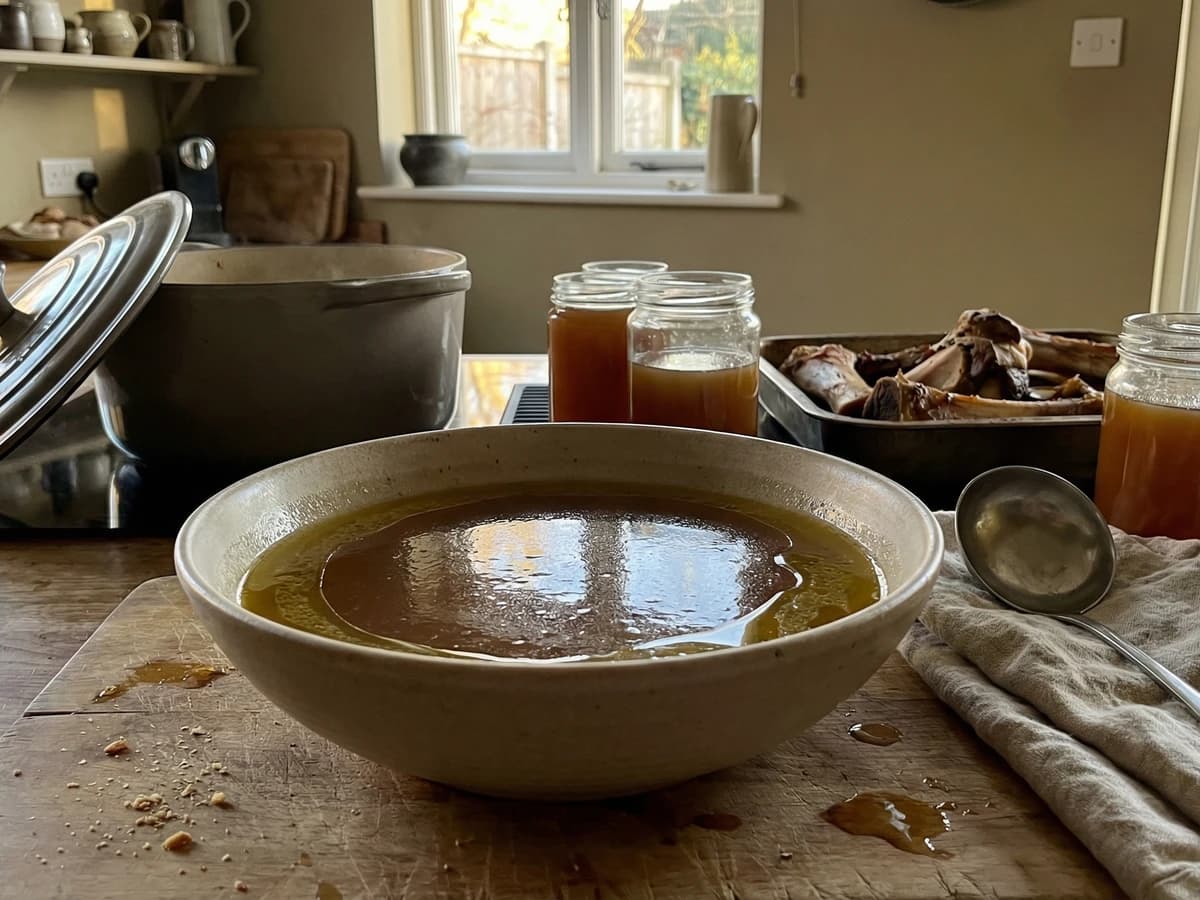
Beef bones roasted until dark, then coaxed for a long afternoon into a deep amber stock, the foundation of every good gravy, every braise, every bowl of winter soup worth the trouble.