
Chef Dimitra
Aegean Island Chtapodi me Kritharaki (Χταπόδι με Κριθαράκι)
Aegean island octopus, tomato, red wine, and toasted kritharaki share one pot, so the pasta drinks the briny sauce and stays glossy instead of turning heavy.
A cooking platform built around craft, culture, and the stories behind what we eat.
Created by
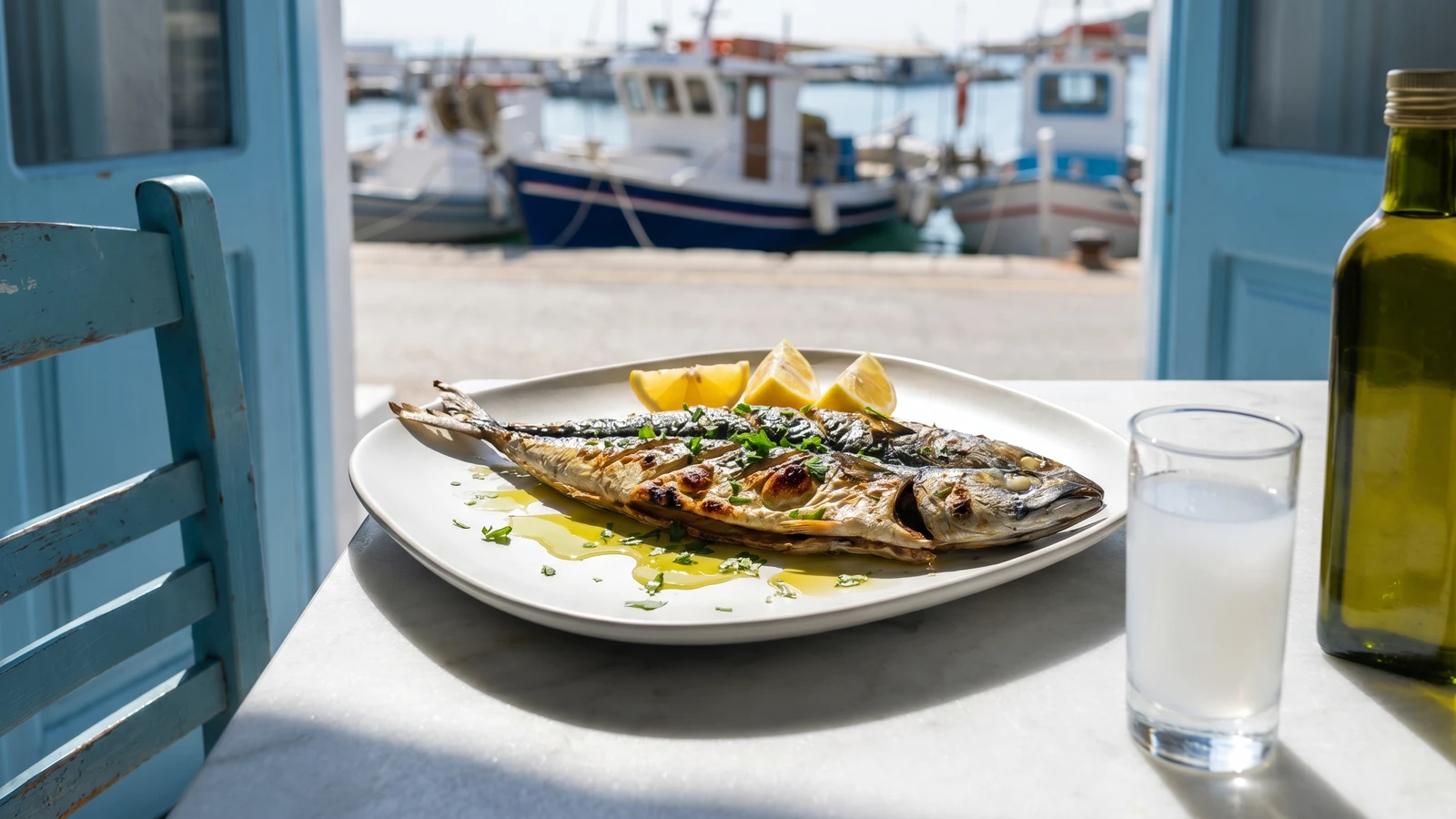
Skopelos gouna is mackerel split flat, salted, dried in the island wind, then grilled so the flesh turns smoky, dense, and bright under lemon oil.
Gouna Skopelou is the Sporades island way with mackerel: split open, salted, dried by sun and salt wind, then grilled hard enough to catch at the edges. It isn't simply grilled fish. The drying is the dish, because it tightens the flesh and concentrates the oil until the mackerel tastes sweeter, deeper, and more itself.
The one thing to get right is the surface of the fish before it meets the fire. It must be dry and slightly tacky, not wet. Wet mackerel steams against the grill and breaks. Dried mackerel browns fast, holds together, and gives you that firm bite Skopelos keeps for summer tables and ouzo plates by the harbor.
I give you the island method, with a careful refrigerator-drying option for kitchens without clean sun and moving air. I don't call that old. I call it honest. The region is the dish's surname, and Skopelos made this from the fish it had, the wind it trusted, and the need to keep a good catch a little longer.
Gouna belongs to the old Aegean practice of preserving oily fish by splitting, salting, and drying them before grilling. On Skopelos and the wider Sporades, mackerel, called kolios, was a natural choice because its rich flesh could take salt and sun without becoming dry and mean. The method reflects island thrift as much as taste: a good catch could be held for the next meal without losing its character.
Quantity
4 fish, about 300g each
scaled and gutted
Quantity
28g
Quantity
1 teaspoon
Quantity
60ml
Quantity
45ml
Quantity
1
cut into wedges
Quantity
1 tablespoon
chopped
| Ingredient | Quantity |
|---|---|
| whole fresh mackerel (kolios)scaled and gutted | 4 fish, about 300g each |
| fine sea salt | 28g |
| dried Greek oregano | 1 teaspoon |
| extra virgin Koroneiki olive oil | 60ml |
| fresh lemon juice | 45ml |
| lemoncut into wedges | 1 |
| flat-leaf parsley (optional)chopped | 1 tablespoon |
Rinse the mackerel quickly and pat them very dry. Lay each fish belly-down and cut along the back, following the backbone from head to tail, then open it like a book without separating the two sides. Remove the backbone and small ribs with the tip of the knife or tweezers. The fish should lie flat, skin-side down, with the two fillets still joined.
Sprinkle the cut flesh evenly with the sea salt and oregano, using a little more salt on the thicker shoulder end. Set the fish on a rack, flesh-side up, for 30 minutes. The surface will turn glossy and begin to firm. That first salting is what lets the fish dry cleanly instead of just sitting wet in the sun.
Pat away any beads of moisture. Dry the fish flesh-side up in direct sun and moving air for 6 to 8 hours, covered with fine food-safe mesh against insects, until the surface is tacky, the edges feel firmer, and the flesh has darkened slightly. If the day is humid or you cannot protect the fish properly, dry it uncovered on a rack in the refrigerator for 18 to 24 hours instead. That is the cautious home-kitchen route, not the old island wind, but it respects the dish.
Heat a charcoal grill or ridged grill pan until properly hot. Brush the fish lightly with olive oil, especially the flesh side. Keep the rest of the oil for finishing. The fire should mark the fish quickly, not stew it.
Grill the mackerel flesh-side down first for 3 to 4 minutes, until the surface is browned and lightly charred at the ridges. Turn carefully and grill the skin side for another 3 to 4 minutes, until the skin blisters and the flesh flakes in thick, dense pieces. Do not chase softness here. Gouna is meant to be concentrated, a little chewy at the edges, and rich with oil.
Whisk the remaining olive oil with the lemon juice and spoon it over the hot grilled fish. Scatter parsley only if you want it, and serve at once with lemon wedges. A plate of gouna wants bread, olives, and something cold in the glass. Λίγα και καλά.
1 serving (about 215g)
Culinary guides, cultural storytelling, and the editorial depth that makes cooking meaningful.
Discover Culinary ExplorerChef Dimitra
Aegean island octopus, tomato, red wine, and toasted kritharaki share one pot, so the pasta drinks the briny sauce and stays glossy instead of turning heavy.

Chef Dimitra
Aegean coast psari plaki is the quiet whole-fish bake: onions and tomato softened first, fish laid on top, and olive oil doing its slow work until the bones release cleanly.

Chef Dimitra
Astakomakaronada is the Aegean islands' celebration pasta: spiny lobster, tomato, olive oil, and long noodles cooked in the shell broth, never drowned in cream or cheese.

Chef Dimitra
Aegean Easter goat on the spit, lean and full-flavored, turned slowly over charcoal and basted with lemon, oregano, garlic, and good olive oil.