
Chef Takumi
Autumn Mushroom Rice (きのこの炊き込みご飯, Kinoko Takikomi Gohan)
Autumn mushrooms do most of the work here. Rinse the rice well, season the liquid before cooking, and let the pot rest so every grain comes out separate and fragrant.
A cooking platform built around craft, culture, and the stories behind what we eat.
Created by
Plain steamed rice is the foundation, not the afterthought. Wash it clean, soak it patiently, cook it covered, and the grains turn glossy, tender, and quietly sweet.
Plain rice looks too simple to need a recipe. That is exactly why it needs one. Gohan sits at the center of a Japanese meal, receiving the soup, the pickles, the grilled fish, and the small dish of the season. If the rice is careless, the whole table feels careless.
The first secret is not heat. It is water. Wash the rice until the water runs almost clear, then soak it before cooking. Washing removes loose starch that would make the grains pasty. Soaking lets water reach the center, so the rice cooks through evenly and finishes glossy rather than chalky. The method is modest, but it has reasons under every motion.
Use Japanese short-grain rice if you want honmono. Long-grain rice can be good food, but it won't make this dish. We want grains that cling gently, not a loose scatter, because gohan is meant to be lifted with chopsticks and eaten beside other dishes. Leave it plain. Nothing hidden. Good rice has its own quiet sweetness, and once you taste that, you stop treating it as filler.
Wet-rice agriculture spread into Japan during the Yayoi period, beginning around the first millennium BCE, and it reshaped settlement, storage, taxation, and the daily meal. By the Edo period, rice was not only food but also a measure of wealth, with a domain's value counted in koku, the amount of rice said to feed one person for a year. The word gohan means both cooked rice and meal, a small linguistic proof of how central it became.
Quantity
2 cups
Quantity
2 cups
plus more for rinsing
| Ingredient | Quantity |
|---|---|
| Japanese short-grain white rice | 2 cups |
| waterplus more for rinsing | 2 cups |
Measure the rice level, not heaped, into a bowl. Use Japanese short-grain rice, not long-grain rice. Its starch is what gives gohan the gentle cling we want, each grain separate enough to see but tender enough to hold together.
Cover the rice with cold water, stir once with your hand, and pour the cloudy water away quickly. Add fresh water and wash the grains with a light rubbing motion, turning them against each other without crushing them. Repeat until the water runs almost clear, usually three or four changes. You're washing away loose surface starch and bran dust, which would make the finished rice gummy and dull. Almost clear is enough. Rice is not laundry, though it sometimes suffers from our enthusiasm.
Drain the washed rice well, then put it in the rice cooker bowl or a heavy pot with 2 cups fresh water. Let it soak for 30 minutes. Soaking lets water reach the center of each grain before heat begins, so the rice cooks evenly instead of turning soft outside and chalky within.
For a rice cooker, close the lid and start the regular white-rice setting. For a pot, cover tightly, bring to a boil over medium heat, then lower the heat to the gentlest flame and cook 12 minutes without lifting the lid. The sealed pot traps the water the rice needs. Peek too often and you let the cooking water escape as vapor, then blame the rice for your curiosity.
Turn off the heat and let the rice rest, covered, for 10 minutes. This pause finishes the cooking and lets moisture settle evenly through the grains. Fluff with a shamoji, a flat rice paddle, using cutting and folding motions rather than stirring hard. You want to release extra moisture and separate the grains without mashing them.
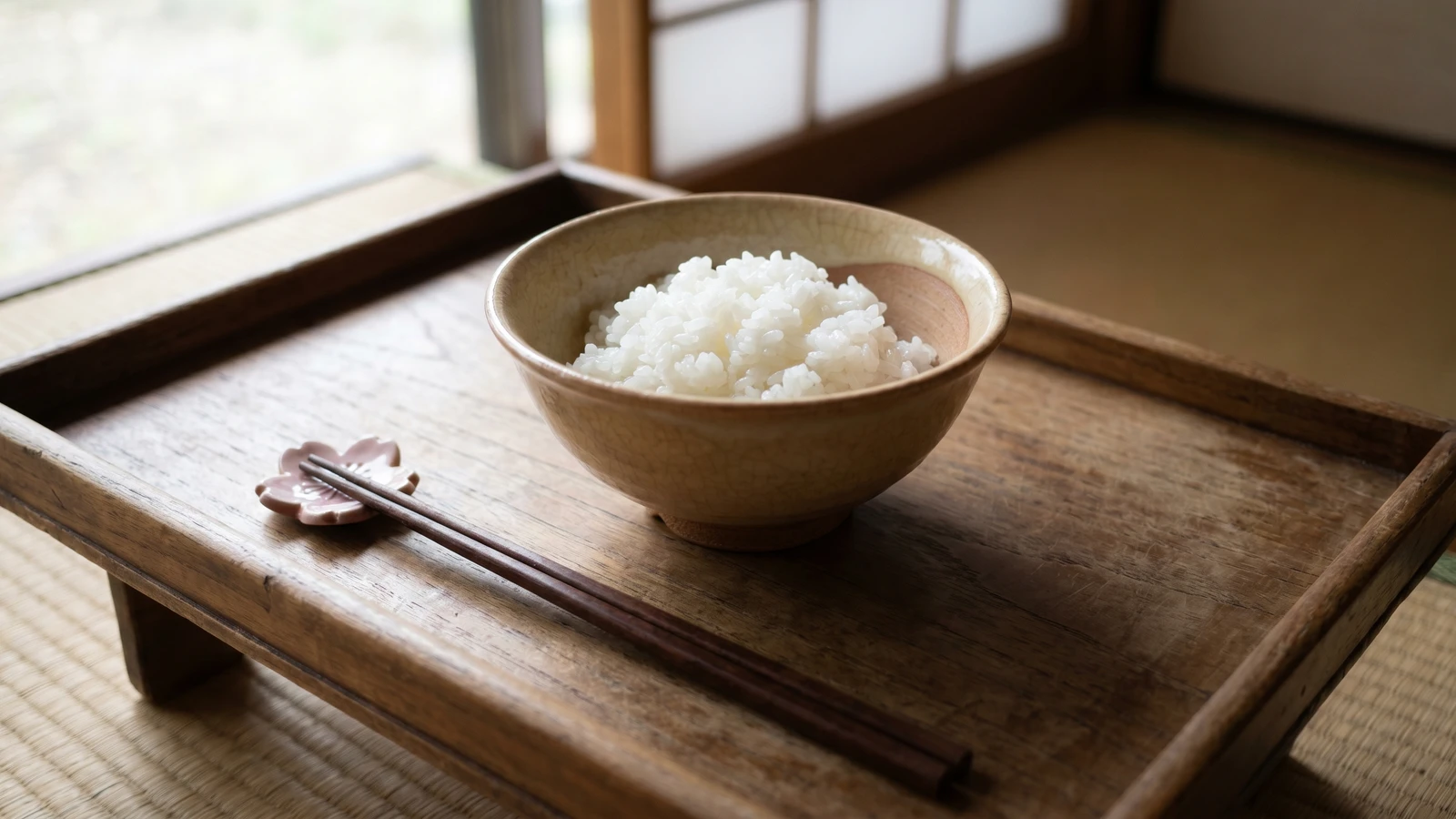
Serve the rice in small bowls, mounded gently and never packed down. Gohan should look glossy, white, and calm, with a faint sweetness when you taste it. This is the quiet center of the meal, the thing that receives the soup, the grilled fish, the pickles, and the season beside it.
1 serving (about 210g)
Culinary guides, cultural storytelling, and the editorial depth that makes cooking meaningful.
Discover Culinary ExplorerChef Takumi
Autumn mushrooms do most of the work here. Rinse the rice well, season the liquid before cooking, and let the pot rest so every grain comes out separate and fragrant.

Chef Takumi
A whole salmon fillet laid on seasoned rice does nearly all the work. Cook it gently, flake it back through, and autumn has found its bowl.

Chef Takumi
Daigakuimo is simple student comfort: sweet potato cut stout, fried until the corners take color, then turned in a soy-sugar syrup that sets shiny instead of sticky.

Chef Takumi
Chawanmushi looks delicate, but the secret is plain: good dashi, strained egg, and quiet heat. Keep the steam soft and the custard sets smooth, tender, and calm.