
Chef Jeong-sun
Agwi-jjim (Braised Monkfish with Bean Sprouts)
Firm monkfish buried under crisp soybean sprouts, minari, and a red gochugaru sauce thickened at the end; Masan's market dish asks for heat, timing, and a steady hand.
A cooking platform built around craft, culture, and the stories behind what we eat.
Created by
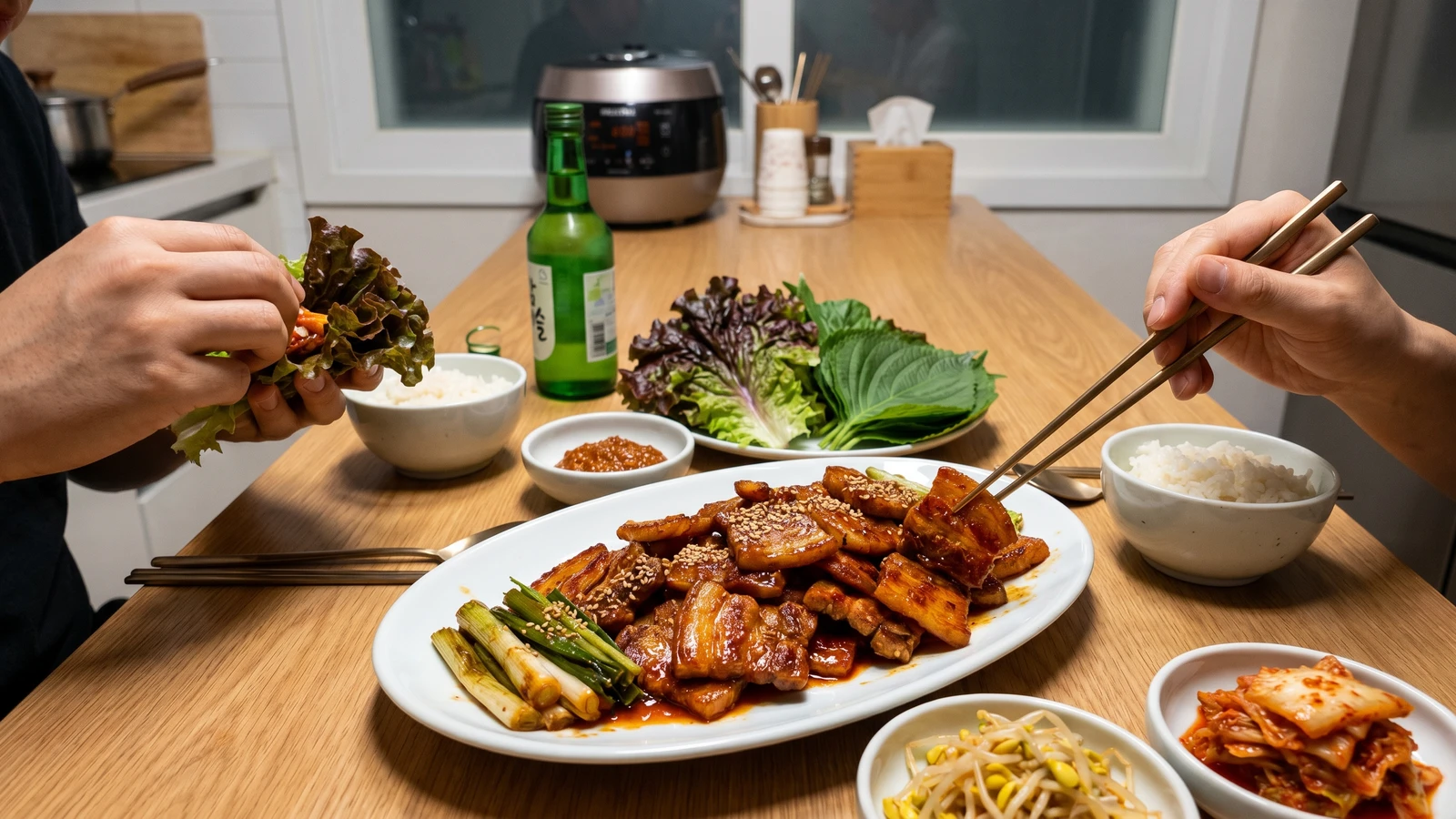
Fatty pork belly cut thick enough to bite, seared until the edges catch, then glazed with gochujang, garlic, and a restrained sweetness for lettuce wraps on a weeknight table.
Gochujang-samgyeopsal lives or dies by heat control. People blame the paste when this dish burns, but the paste only did what sugar and chili do in a hot pan. Render the pork first. Add the red sauce after the fat has started to clear and the edges have color. That is the difference between lacquer and soot.
This is weeknight food, not a ceremony. A pan on the stove, a plate of lettuce, sliced garlic, ssamjang if you want it, rice close by. Pork belly brings enough richness of its own, so the gochujang should season it, not bury it. Let it taste like itself: pork first, then chili, garlic, sesame, and only a little sweetness behind them.
Notebook 41 says 700 grams of pork belly needs 3 tablespoons of gochujang, not five. I wrote that after a student made a pan so red nobody could taste the meat. 손맛 is real. I still measure it, so it can be handed on. Tonight this dish asks you for two things: cut evenly, and do not walk away from the pan.
Samgyeopsal became a common restaurant and home grilling cut in South Korea in the late twentieth century, especially as pork belly grew cheaper and tabletop grills became part of everyday drinking and dinner culture. Gochujang-seasoned pork sits beside dishes such as jeyuk-bokkeum and dwaeji bulgogi, modern home and restaurant preparations shaped by Korea's chili paste pantry rather than by old court cooking. The red version is not ancient, but it is thoroughly Korean in its balance of fermented paste, pork fat, lettuce wraps, garlic, and rice.
Quantity
700g
skin removed, sliced 1/4 inch thick
Quantity
1/2 medium
sliced 1/2 inch thick
Quantity
3
cut into 2-inch lengths
Quantity
1 tablespoon
Quantity
3 tablespoons
Quantity
1 tablespoon
preferably coarse
Quantity
1 1/2 tablespoons
Quantity
1 tablespoon
Quantity
1 tablespoon maesil-cheong or 2 teaspoons sugar
Quantity
1 tablespoon
Quantity
4 cloves
minced
Quantity
1 teaspoon
grated
Quantity
1 teaspoon
Quantity
1/4 teaspoon
freshly ground
Quantity
1 teaspoon
for finishing
Quantity
12 to 16
washed and dried
Quantity
to serve
| Ingredient | Quantity |
|---|---|
| pork belly (samgyeopsal)skin removed, sliced 1/4 inch thick | 700g |
| onionsliced 1/2 inch thick | 1/2 medium |
| scallionscut into 2-inch lengths | 3 |
| neutral oil (optional) | 1 tablespoon |
| gochujang (Korean red chili paste) | 3 tablespoons |
| gochugaru (Korean chili flakes)preferably coarse | 1 tablespoon |
| soy sauce | 1 1/2 tablespoons |
| mirin or rice wine | 1 tablespoon |
| maesil-cheong (green plum syrup) or sugar | 1 tablespoon maesil-cheong or 2 teaspoons sugar |
| rice syrup or corn syrup | 1 tablespoon |
| garlicminced | 4 cloves |
| fresh gingergrated | 1 teaspoon |
| toasted sesame oil | 1 teaspoon |
| black pepperfreshly ground | 1/4 teaspoon |
| toasted sesame seedsfor finishing | 1 teaspoon |
| lettuce or perilla leaves (optional)washed and dried | 12 to 16 |
| raw garlic, green chili, ssamjang, and cooked rice (optional) | to serve |
Cut the pork belly crosswise into pieces about 2 inches long. Keep the slices close to 1/4 inch thick: thinner slices dry before they brown, and thick slabs leave too much fat unrendered in a home pan. Pat the pork dry. Wet pork steams first, and this dish needs the fat to catch at the edges.
In a bowl, stir together the gochujang, gochugaru, soy sauce, mirin, maesil-cheong or sugar, rice syrup, garlic, ginger, sesame oil, and black pepper. The sauce should be thick enough to drag a spoon through. Do not add extra gochujang just because the color looks modest. In the pan it darkens, and too much paste turns the pork muddy and salty.
Set a wide skillet over medium-high heat. Add the oil only if your pork belly is unusually lean. Lay the pork in a single layer and cook 4 to 5 minutes, turning once or twice, until the fat begins to run clear and the edges take color. Work in two batches if the pan is crowded. Crowding makes liquid, and liquid gives you boiled pork in red sauce.
Pour off all but 2 tablespoons of the rendered fat, then return all the pork to the pan. Add the onion and cook 2 minutes, tossing often, until the onion softens at the edges but still has bite. The onion goes in before the sauce because it needs direct heat to sweeten.
Lower the heat to medium. Add the sauce and toss hard for 2 to 3 minutes, scraping the pan so the paste coats the pork instead of sticking in one place. The sauce should turn glossy and cling to each piece. If it tightens too fast, add 1 tablespoon water, no more. You are glazing pork, not making stew.
Add the scallions and cook 30 to 45 seconds, just until they bend and brighten. Taste one piece. If it needs salt, add 1/2 teaspoon soy sauce around the edge of the pan and toss once. Finish with toasted sesame seeds. Serve at once with lettuce or perilla leaves, rice, sliced garlic, green chili, and ssamjang.
1 serving (about 410g)
Culinary guides, cultural storytelling, and the editorial depth that makes cooking meaningful.
Discover Culinary ExplorerChef Jeong-sun
Firm monkfish buried under crisp soybean sprouts, minari, and a red gochugaru sauce thickened at the end; Masan's market dish asks for heat, timing, and a steady hand.

Chef Jeong-sun
A quick Korean rice bowl built on contrast: warm rice, cold popping flying-fish roe, chopped vegetables, gim, sesame oil, and the crisp rice bottom a hot stone bowl gives you.
Chef Jeong-sun
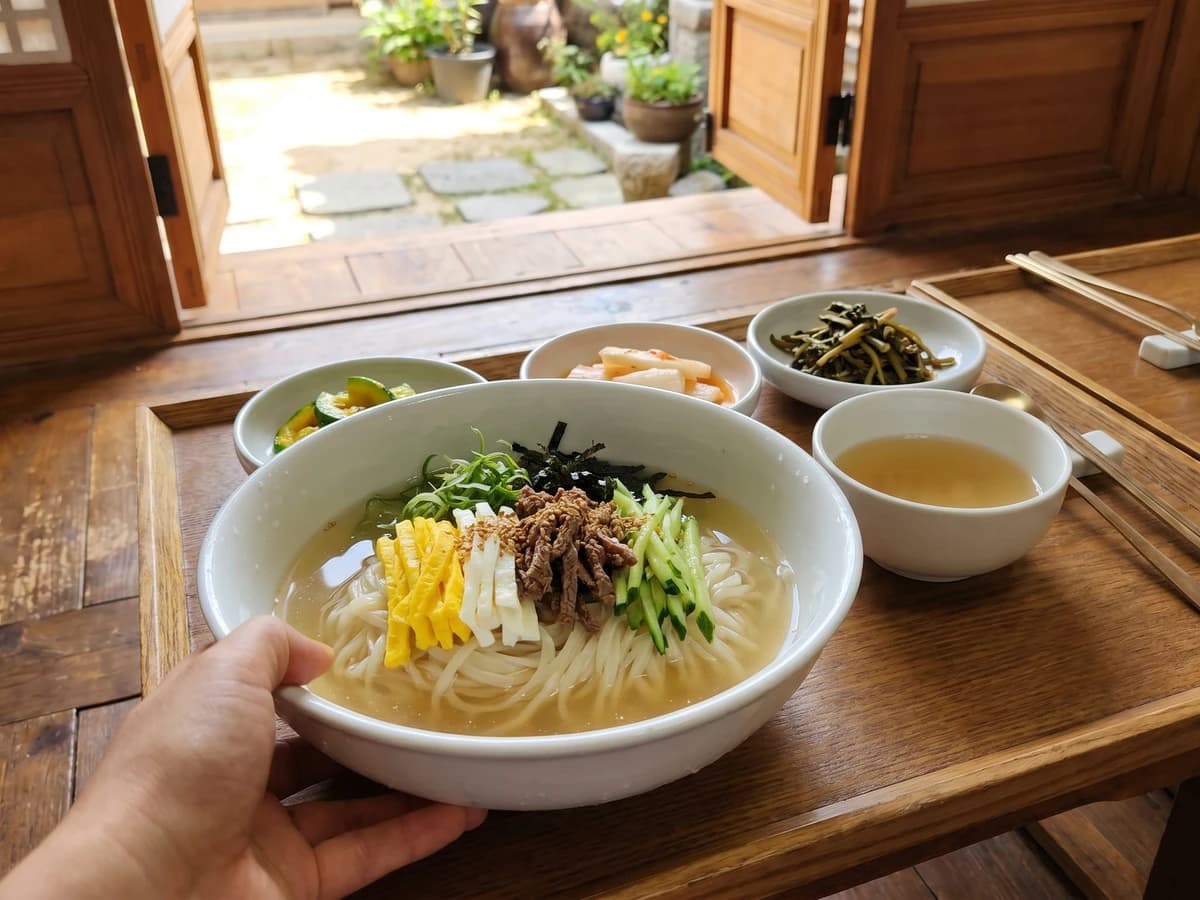
Andong's guest noodles, wheat and roasted soybean flour rolled thin, boiled and rinsed cold, then set in a clear chilled anchovy broth with careful strips of beef, egg, and cucumber.

Chef Jeong-sun
Andong's ritual-table rice served on an ordinary day: separate soy-sesame namul, warm rice, and clear radish soup, mixed without gochujang so every vegetable keeps its own voice.