Chef Zohra
Boushnikha
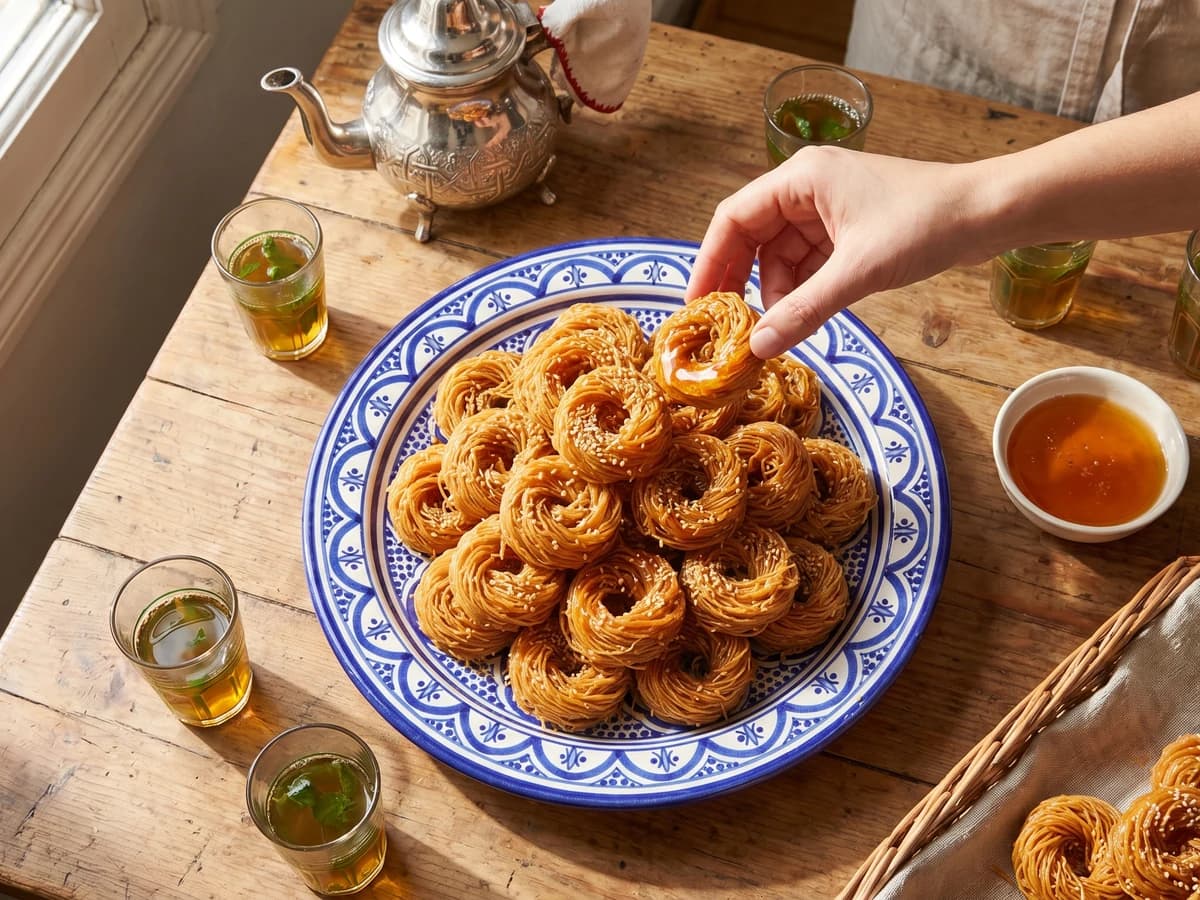
A Ramadan sweet lighter than chebakia: fine milk dough drawn into threads, fried until crisp, then bathed in orange-blossom honey and shared from a generous plate.
A cooking platform built around craft, culture, and the stories behind what we eat.
Created by
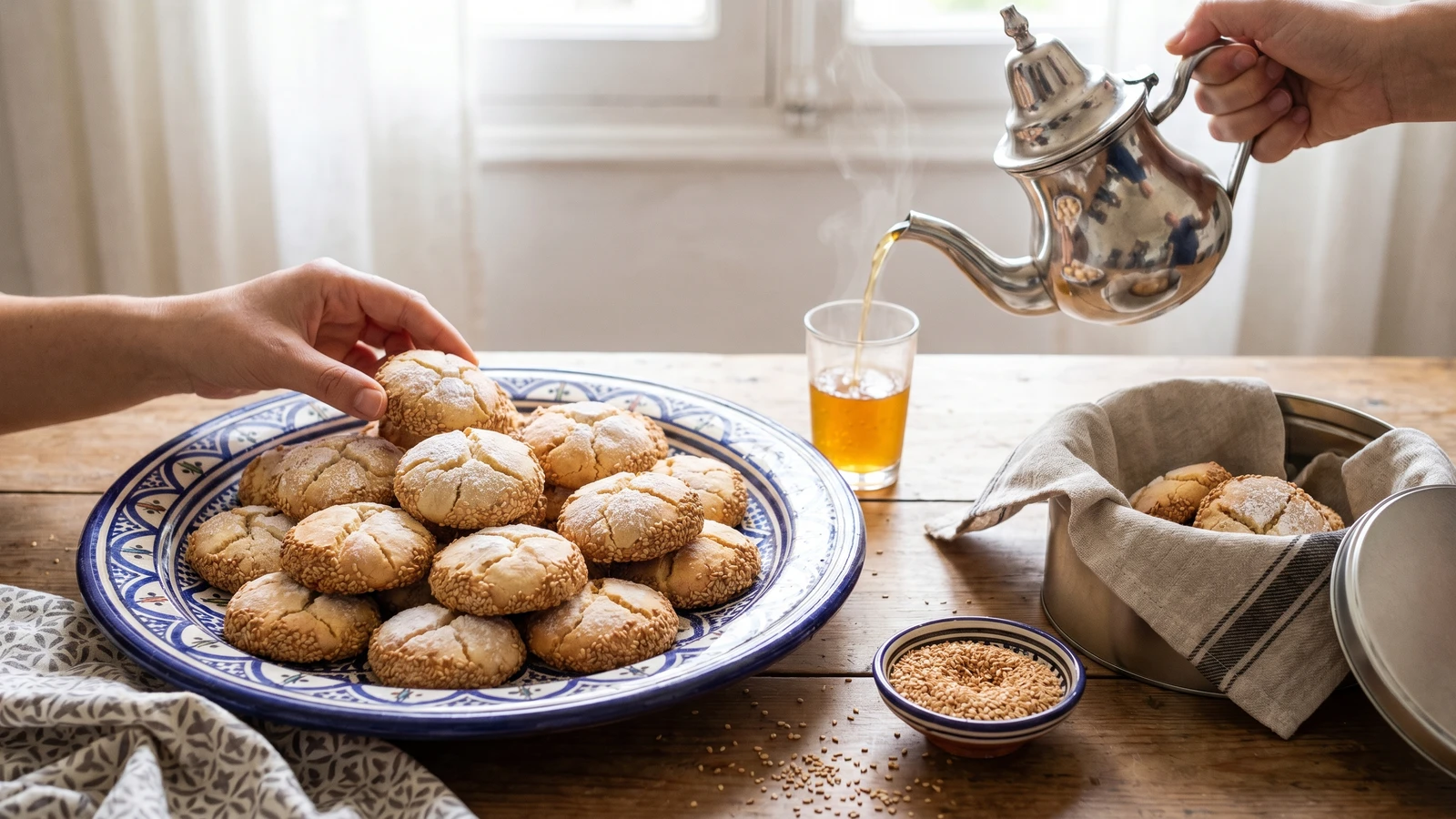
Sesame ghriba from the Fez medina table: toasted zanjlan ground warm, worked with butter, oil, and orange blossom water until each cookie cracks softly at the top.
The sesame tells you when it's ready. At first it sits pale and quiet in the pan, then one seed pops, then another, and suddenly the whole kitchen smells nutty and warm, like a stall in the medina when the trays have just come from the oven.
For ghriba zanjlan, don't hurry that first gesture. Toast the sesame gently, then grind most of it while it's still warm, because the oil in the seed wakes up and gives the cookie its deep crumb. Leave some seeds whole for the outside. That contrast, the tender middle and the little sesame bite at the edge, is why this small cake belongs with mint tea and a room that keeps filling.
These are celebration cookies, yes, but they are also budget-wise, make-ahead sweets. You don't need expensive almonds here. You need good sesame, a steady hand, and patience enough to let the dough rest before shaping. La balance est dans les yeux, the scale is in the eyes: the dough should feel soft and oily, not wet, able to hold a ball without cracking in your palm.
Bake them until the tops split and the bottoms turn light gold. Not dark. A ghriba should give under the teeth, then crumble. Put them on a shared plate, pour tea, and leave one more glass ready. Une table, c'est une porte qu'on laisse ouverte.
Ghriba belongs to the broad family of Maghrebi crumbly cookies, with Moroccan versions shaped by city pastry traditions in Fez, Rabat, Tetouan, and Marrakech from at least the early modern period. Sesame traveled deeply through Moroccan cooking by way of Saharan and Mediterranean trade routes, and Fez vendors made zanjlan, sesame, into an economical cookie with the perfume of a feast. The exact dating of ghriba zanjlan is not fixed in written sources, but its place in tea tables, Eid trays, and medina bakeries is living evidence of a city pastry culture carried by hands more than books.
Quantity
300g
Quantity
180g, plus 1 to 2 tbsp if needed
Quantity
140g
sifted
Quantity
1 tsp
Quantity
1/2 tsp
Quantity
1/4 tsp
Quantity
1 large
Quantity
80ml
Quantity
60g
melted and cooled
Quantity
1 tbsp
Quantity
1 tsp vanilla sugar or 1/2 tsp extract
Quantity
2 tbsp
for rolling
| Ingredient | Quantity |
|---|---|
| hulled sesame seeds | 300g |
| all-purpose flour | 180g, plus 1 to 2 tbsp if needed |
| icing sugarsifted | 140g |
| baking powder | 1 tsp |
| ground cinnamon | 1/2 tsp |
| sea salt | 1/4 tsp |
| egg | 1 large |
| neutral oil | 80ml |
| unsalted buttermelted and cooled | 60g |
| orange blossom water | 1 tbsp |
| vanilla sugar or vanilla extract (optional) | 1 tsp vanilla sugar or 1/2 tsp extract |
| icing sugarfor rolling | 2 tbsp |
Set a wide dry pan over medium-low heat and toast the sesame, stirring often, until it smells nutty and turns pale gold. Do not let it brown hard, or the cookies will taste bitter. Spread it on a tray for 5 minutes, then keep aside 4 tablespoons whole for rolling.
Grind the remaining warm sesame in a food processor or spice mill until it looks like damp sand with a few fine crumbs, not a paste. This is the step that decides the cookie: warm sesame releases its oil, and that oil gives ghriba zanjlan its tender, nutty crumb.
In a bowl, whisk the flour, sifted icing sugar, baking powder, cinnamon, and salt. Add the ground sesame, egg, oil, melted butter, orange blossom water, and vanilla if using. Work it by hand until the dough comes together soft and slightly oily. If it smears like paste, add flour 1 tablespoon at a time. If it breaks dry in your palm, add a small spoon of oil.
Cover the dough and rest it for 30 minutes. Heat the oven to 180°C. Roll walnut-size balls, about 24g each, then roll them first in the reserved whole sesame and then lightly in icing sugar. Set them on a lined tray with space between them and press each one very gently, just enough to steady it.
Bake for 12 to 15 minutes, until the tops split and the bottoms are light gold. The cookies will still feel tender when lifted, so leave them on the tray for 10 minutes before moving them. That rest finishes the set without drying the crumb.
Cool completely before storing. Serve on a shared plate with mint tea or coffee, and don't stack them while warm or the cracked tops will soften. They are better after a few hours, when the sesame and orange blossom have settled into each other.
1 serving (about 28g)
Culinary guides, cultural storytelling, and the editorial depth that makes cooking meaningful.
Discover Culinary ExplorerChef Zohra
A Ramadan sweet lighter than chebakia: fine milk dough drawn into threads, fried until crisp, then bathed in orange-blossom honey and shared from a generous plate.

Chef Zohra
Tissue-thin warqa folded into small triangles around orange-blossom almond paste, fried until gold, then dipped warm into honey. This is the sweet Fassi briouat that makes tea feel like a feast.
Chef Zohra
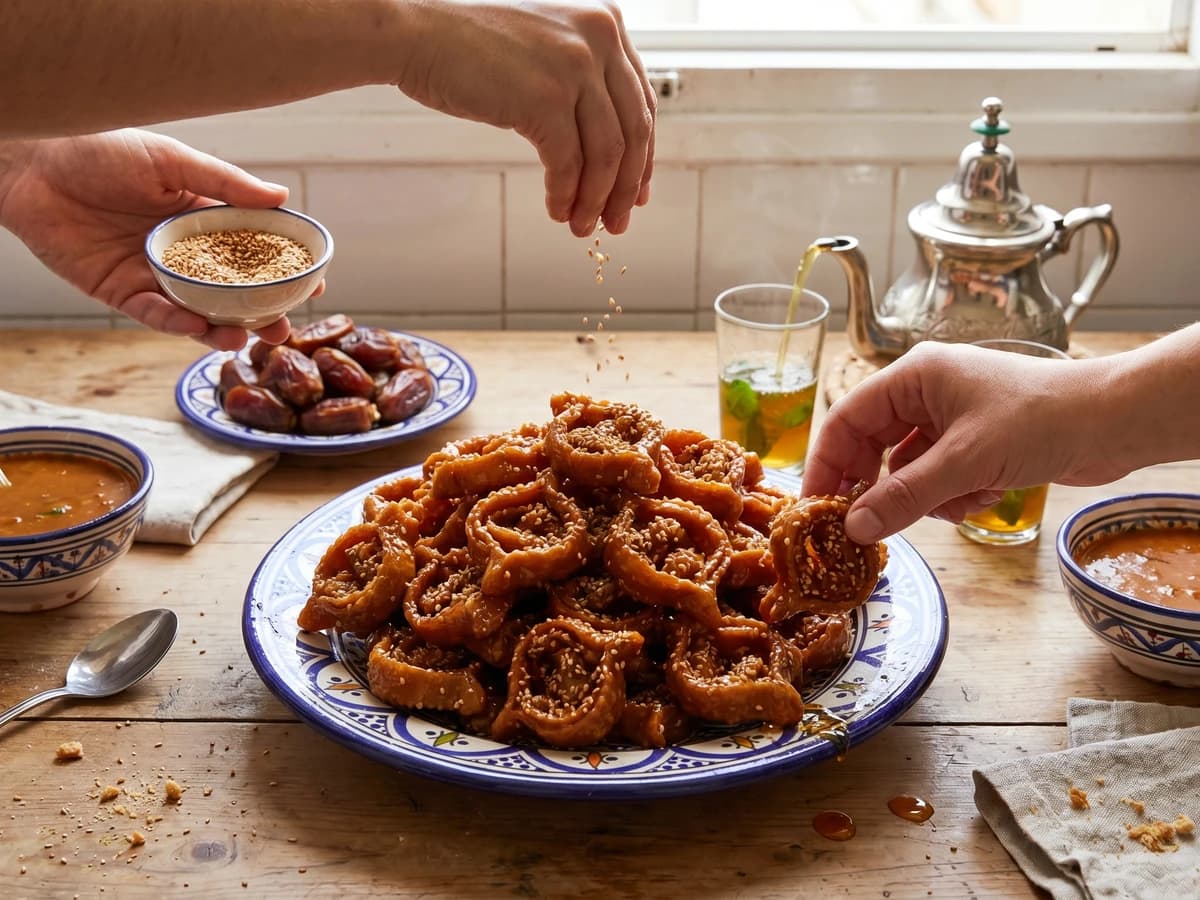
The flower of the Ramadan table: dough scented with toasted sesame, anise, saffron, and orange blossom water, fried crisp, then soaked in warm honey beside harira.

Chef Zohra
Slim warqa cigars filled with orange-blossom almond paste, fried until crisp under the teeth, then soaked in warm honey for the festive table.