Chef Joost
Aardappelgratin
A French name, a Dutch potato, and a Sunday table: aardappelgratin is what happens when a frugal kitchen borrows richness and behaves as if it had always belonged.
A cooking platform built around craft, culture, and the stories behind what we eat.
Created by
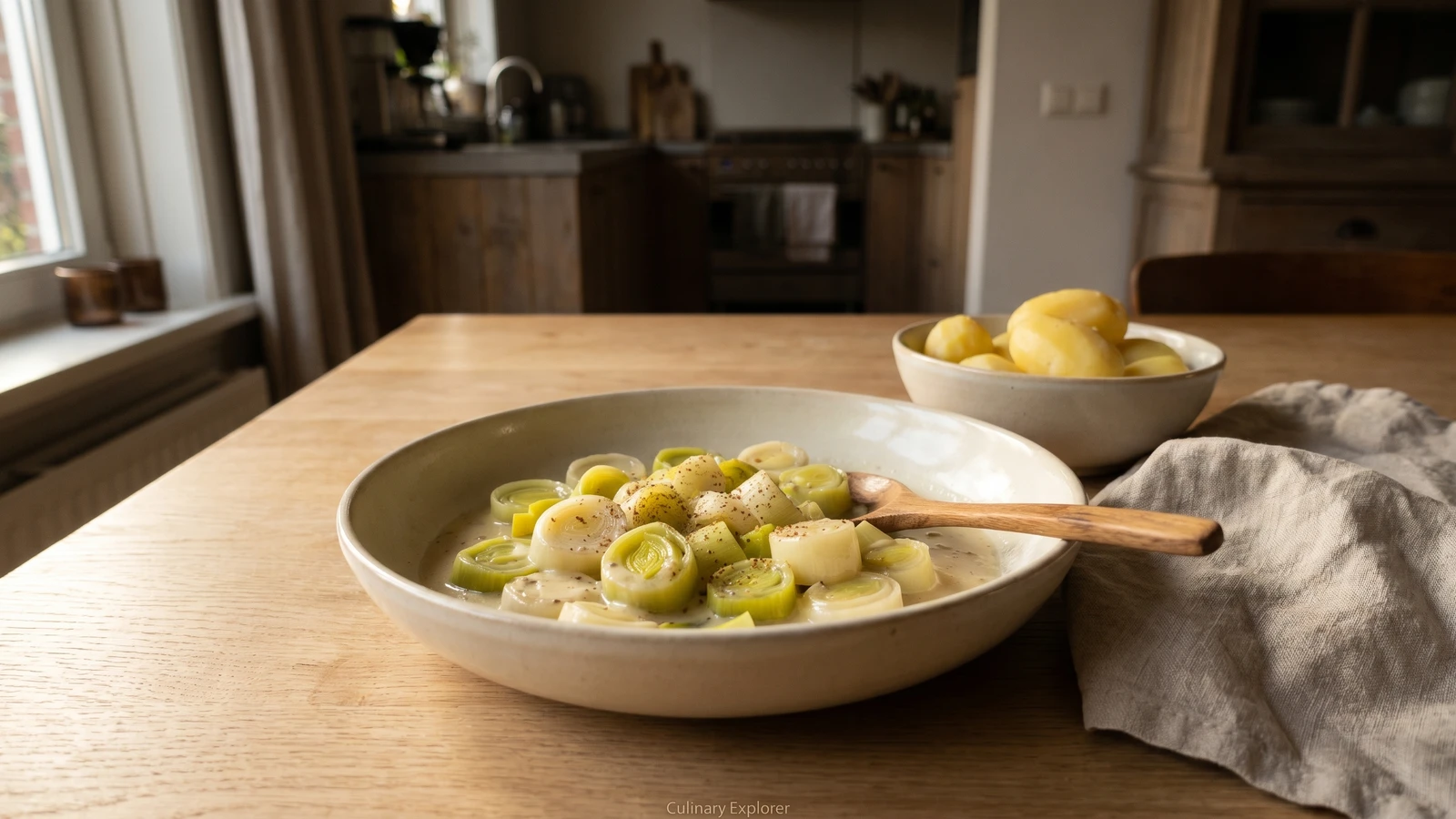
Leeks, butter, cream, and a little nutmeg: the quiet winter side dish that proves Dutch thrift was never the enemy of pleasure.
In my grandmother's second notebook, the humble vegetables always had the shortest instructions. Prei stoven, braise the leeks. Butter. Nutmeg. A spoon of cream if the cow had been generous. That was all she wrote, because every Dutch cook of her generation knew the rest by smell, by patience, and by the soft sound a lid makes when it settles over a pan.
But let me tell you a secret: the plainest dishes are often the ones with the strictest manners. Gestoofd comes from stoven, to cook gently under cover, not to boil, not to brown, not to bully. Leeks are built in layers, and those layers hold grit from the field as faithfully as a book holds notes in the margin. Clean them well, cut them evenly, then let butter and their own moisture do the work.
The little rasp of nutmeg is not decoration. It is the old Dutch spice cupboard speaking, the same everyday VOC inheritance that turns up in hachee, bitterballen, and cauliflower with white sauce. Hou het altijd simpel, always keep it simple: a covered pan, low heat, and enough restraint to stop when the leeks are tender but still themselves.
Leeks were a practical winter crop in Dutch kitchen gardens because they could stand cold weather and supply green flavour when much else had vanished from the beds. Braised vegetable dishes, often finished with butter, milk, cream, or a light binding sauce, appear throughout nineteenth and twentieth century Dutch household cookbooks as weekday side dishes rather than festive centrepieces. The pinch of nutmeg reflects a specifically Dutch habit: spices from global trade became ordinary pantry seasoning, used as much with cabbage, beans, and leeks as with sweets.
Quantity
4
white and pale green parts only, cleaned and sliced
Quantity
30g
Quantity
1/2 teaspoon, plus more to taste
Quantity
80ml
Quantity
80ml
Quantity
1/8 teaspoon
Quantity
to taste
freshly ground
Quantity
1 teaspoon
| Ingredient | Quantity |
|---|---|
| large leekswhite and pale green parts only, cleaned and sliced | 4 |
| unsalted butter | 30g |
| fine sea salt | 1/2 teaspoon, plus more to taste |
| water or light vegetable stock | 80ml |
| heavy cream | 80ml |
| freshly grated nutmeg | 1/8 teaspoon |
| white pepperfreshly ground | to taste |
| lemon juice (optional) | 1 teaspoon |
Trim away the dark green tops and root ends, then slice the white and pale green parts into 2cm rounds. Put them in a large bowl of cold water and swish them with your fingers so the grit falls away. Lift the leeks out of the water rather than pouring them through it; the sand is sitting at the bottom, waiting for the careless cook.
Melt the butter in a wide saute pan over medium-low heat. Add the drained leeks and the salt, then turn them gently until every piece has a shine of butter. You are not looking for colour here. Browned leek is lovely in another dish, but gestoofde prei wants softness, not swagger.
Add the water or light stock, cover the pan, and lower the heat. Let the leeks cook for 15 to 18 minutes, stirring once or twice, until they are tender enough to yield to a spoon but not collapsing into paste. If the pan dries before they soften, add a tablespoon of water and carry on quietly.
Remove the lid, stir in the cream, nutmeg, and white pepper, and simmer uncovered for 4 to 6 minutes until the cream lightly coats the leeks. Taste for salt. Add the lemon juice only if the cream tastes too heavy; it should brighten the pan, not announce itself.
Spoon the leeks into a shallow bowl and serve them warm beside boiled potatoes, fish, roast chicken, or a plain omelette. The sauce should sit around the leeks in a thin glossy coat, not flood the plate. This is a side dish, but a good side dish has its dignity.
1 serving (about 155g)
Culinary guides, cultural storytelling, and the editorial depth that makes cooking meaningful.
Discover Culinary ExplorerChef Joost
A French name, a Dutch potato, and a Sunday table: aardappelgratin is what happens when a frugal kitchen borrows richness and behaves as if it had always belonged.
Chef Joost
Aardappelpuree is the quiet heart of the Dutch AVG'tje: floury potatoes, warm milk, butter, nutmeg, and a small kuiltje, little well, built for the jus.

Chef Joost
Flower cabbage under old Gouda sauce: the quiet Dutch side dish that turns one boiled vegetable into the reason everyone reaches for the spoon twice.

Chef Joost
White beans peeking through green snijbonen give this old Dutch side its nursery-table joke: bare little children in the grass, sweet garden thrift with butter, nutmeg, and no apology.