Chef Joost
Aardappelgratin
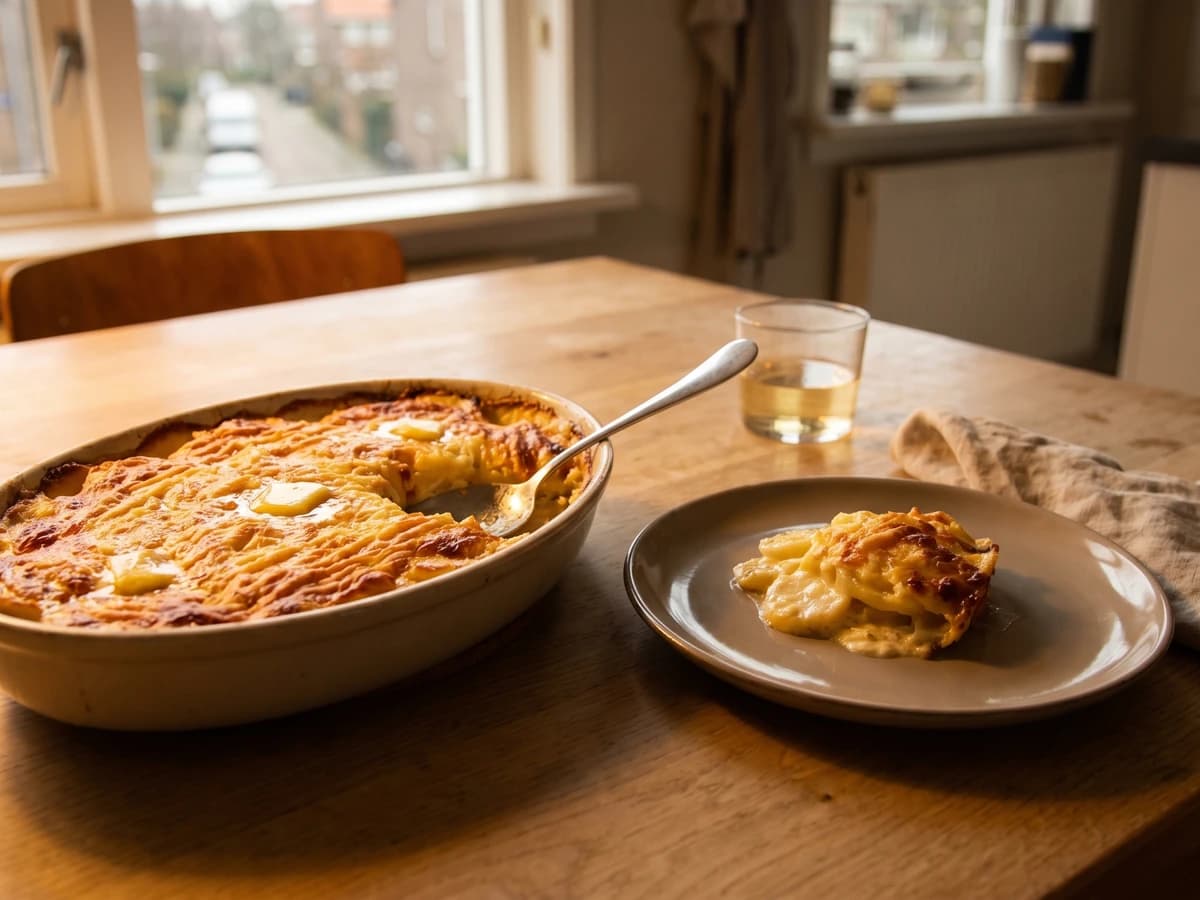
A French name, a Dutch potato, and a Sunday table: aardappelgratin is what happens when a frugal kitchen borrows richness and behaves as if it had always belonged.
A cooking platform built around craft, culture, and the stories behind what we eat.
Created by
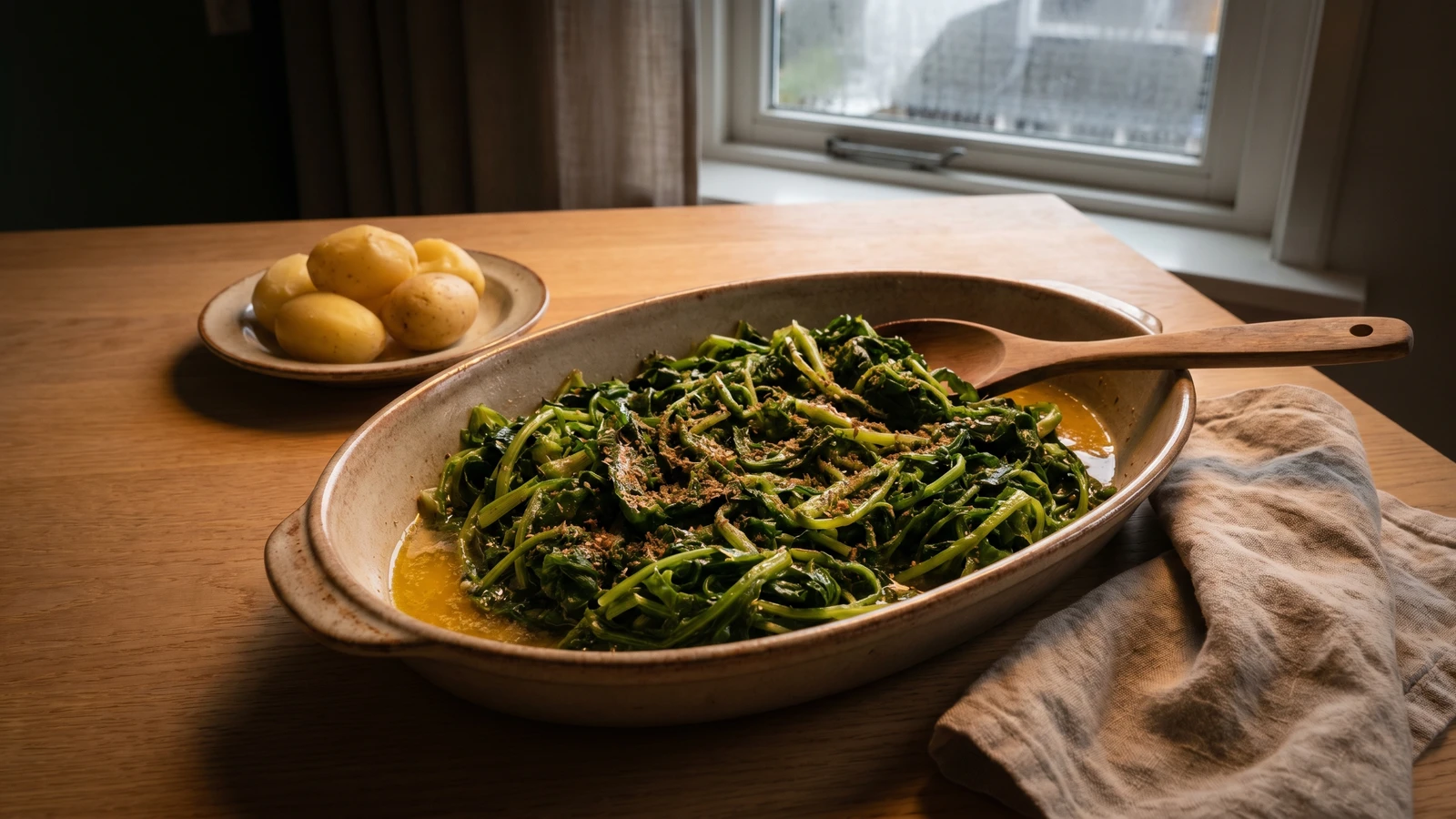
Not every Dutch green wants to be mashed into potatoes: gestoofde andijvie is curly endive made silky in butter, bitter enough to keep dinner honest, gentle enough for a Tuesday.
In my grandmother's second notebook, the grand dishes often get less space than the vegetables. A few words, a knob of butter, a scratch of nutmeg, and there it is: andijvie for the table, not mashed through potatoes, not dressed up for company, simply stewed until the leaf gives in and turns glossy. These are the recipes people forget to write down because everyone knows them. Then one day nobody does.
The world meets andijvie most often as andijviestamppot, raw ribbons cut through hot potatoes, and assumes the green has only one appointment. But let me tell you a secret: gestoofde andijvie is the quieter cousin and sometimes the better teacher. The name already tells you the method, not a grand ancestry: gestoofd means stewed, held gently in its own moisture. Andijvie is curly endive, a chicory-family green with a careful bitterness, one of those vegetables that proves Dutch cooking was never afraid of plain tastes. Plain, here, means honest. It does not mean dull.
The season belongs to the cooler edges of the year and to market gardeners who know that a head with crisp leaves and a pale heart can feed a family cheaply. Wash it well, because the ribs hold grit. Cook it in a wide pan, because wet leaves need room before they collapse. Finish with butter and nutmeg, because history and cookery, they cannot be separated, and the Dutch cupboard has been grating nutmeg over vegetables since spice cargo became household habit.
Hou het altijd simpel, always keep it simple. This dish wants boiled potatoes, a meatball if the week has been kind, and a little pan gravy finding its way into the greens. I prefer to keep it a bit more relaxed, in the Dutch way: bring the pan to the table, let the butter shine, and don't apologize for a side dish doing quiet work.
Andijvie, the Dutch name for curly or broad-leaved endive, was a familiar market-garden vegetable in the Netherlands by the nineteenth century, suited to cool weather and cheap enough for everyday household cooking. Gestoofde vegetables, stewed with a little fat and often finished with nutmeg, were part of the older Dutch aardappelen-groente-vlees pattern, potatoes, vegetable, meat, that shaped weekday dinners through the twentieth century. The surprise is that cooked andijvie is not a failed stamppot; it is a separate vegetable dish from the same frugal table, overshadowed only because raw andijviestamppot became the better-known story.
Quantity
1 large head, about 700g before trimming
washed well and sliced into 2 cm ribbons
Quantity
50g
divided
Quantity
1 small
finely chopped
Quantity
1/2 teaspoon, plus more to taste
Quantity
2 to 3 tablespoons
Quantity
1/8 teaspoon, plus more to taste
Quantity
to taste
freshly ground
| Ingredient | Quantity |
|---|---|
| curly endive (andijvie)washed well and sliced into 2 cm ribbons | 1 large head, about 700g before trimming |
| unsalted butterdivided | 50g |
| onionfinely chopped | 1 small |
| fine salt | 1/2 teaspoon, plus more to taste |
| water or potato cooking water | 2 to 3 tablespoons |
| freshly grated nutmeg | 1/8 teaspoon, plus more to taste |
| white or black pepperfreshly ground | to taste |
Separate the leaves from the core and drop them into a sink or deep bowl of cold water. Swish them hard, then lift the leaves out into a colander instead of pouring the water away through them; the sand should stay behind, not be reintroduced with ceremony. Shake off the leaves, but leave them damp. That clinging water is the little broth this dish needs.
Trim away the tough base, then stack the leaves and slice them crosswise into ribbons about 2 cm wide. Keep the pale ribs. They soften in the pan and give the dish its body, the quiet sweetness under the green bitterness.
Melt 35g of the butter in a wide pan with a lid over medium-low heat. Add the onion and salt, and cook for about 5 minutes until the onion turns translucent but not brown. Brown onion tastes too loud beside this green; you want sweetness, not a speech.
Add the sliced andijvie by handfuls, turning with tongs or a wooden spoon as each addition collapses. Add 2 tablespoons water or potato cooking water if the pan looks dry. There should be a shallow gleam at the bottom, not soup.
Cover the pan, lower the heat, and cook for 8 to 10 minutes, stirring once or twice, until the ribs are tender and the leaves have slumped into glossy ribbons. Do not chase a fierce boil. Hard cooking drives the bitterness forward; gentle stewing lets it settle.
Uncover the pan and cook for 2 to 3 minutes more, just until excess liquid reduces to a spoonful. Stir in the remaining butter, the nutmeg, and pepper. Taste for salt. The andijvie should be soft and glossy, with a little buttery pan juice clinging to it. Serve at once.
1 serving (about 140g)
Culinary guides, cultural storytelling, and the editorial depth that makes cooking meaningful.
Discover Culinary ExplorerChef Joost
A French name, a Dutch potato, and a Sunday table: aardappelgratin is what happens when a frugal kitchen borrows richness and behaves as if it had always belonged.
Chef Joost
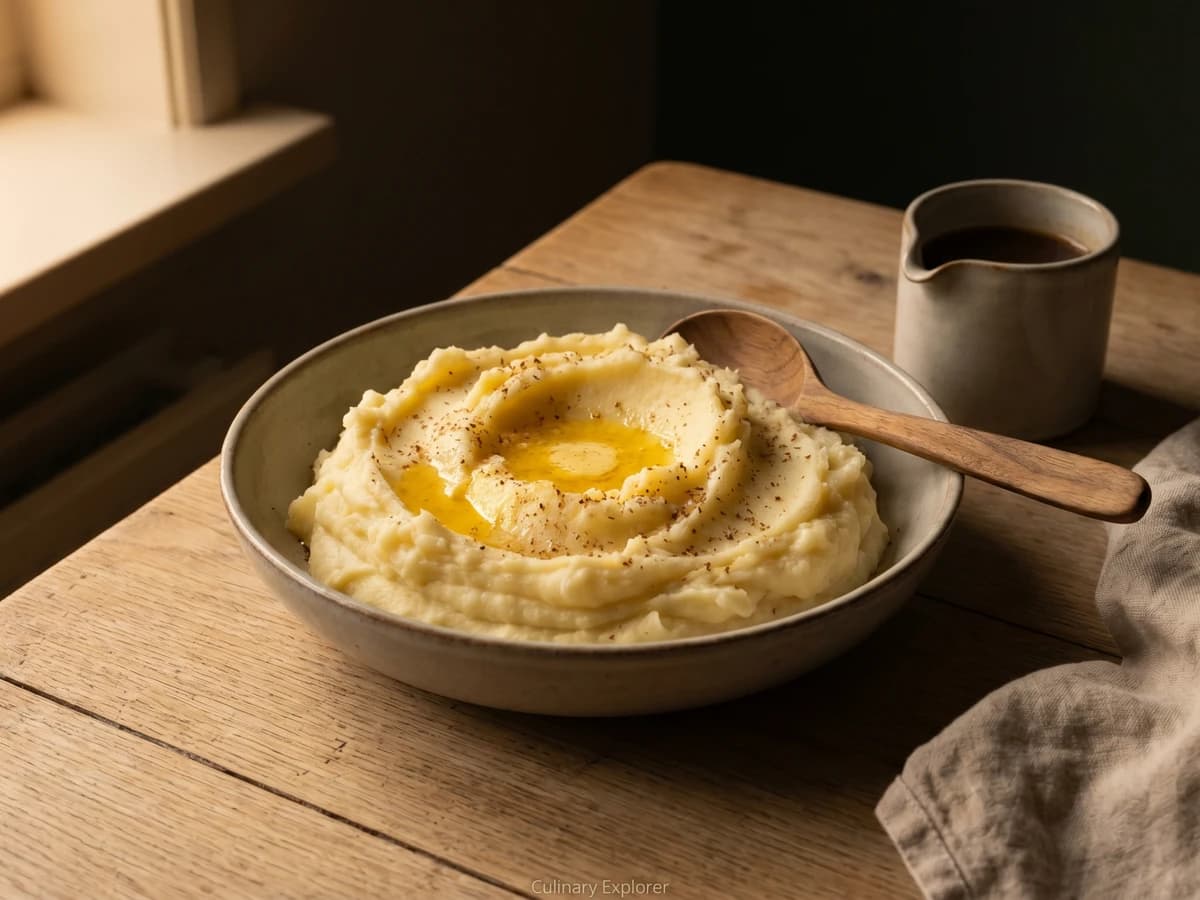
Aardappelpuree is the quiet heart of the Dutch AVG'tje: floury potatoes, warm milk, butter, nutmeg, and a small kuiltje, little well, built for the jus.

Chef Joost
Flower cabbage under old Gouda sauce: the quiet Dutch side dish that turns one boiled vegetable into the reason everyone reaches for the spoon twice.

Chef Joost
White beans peeking through green snijbonen give this old Dutch side its nursery-table joke: bare little children in the grass, sweet garden thrift with butter, nutmeg, and no apology.