Chef Joost
Aardappelgratin
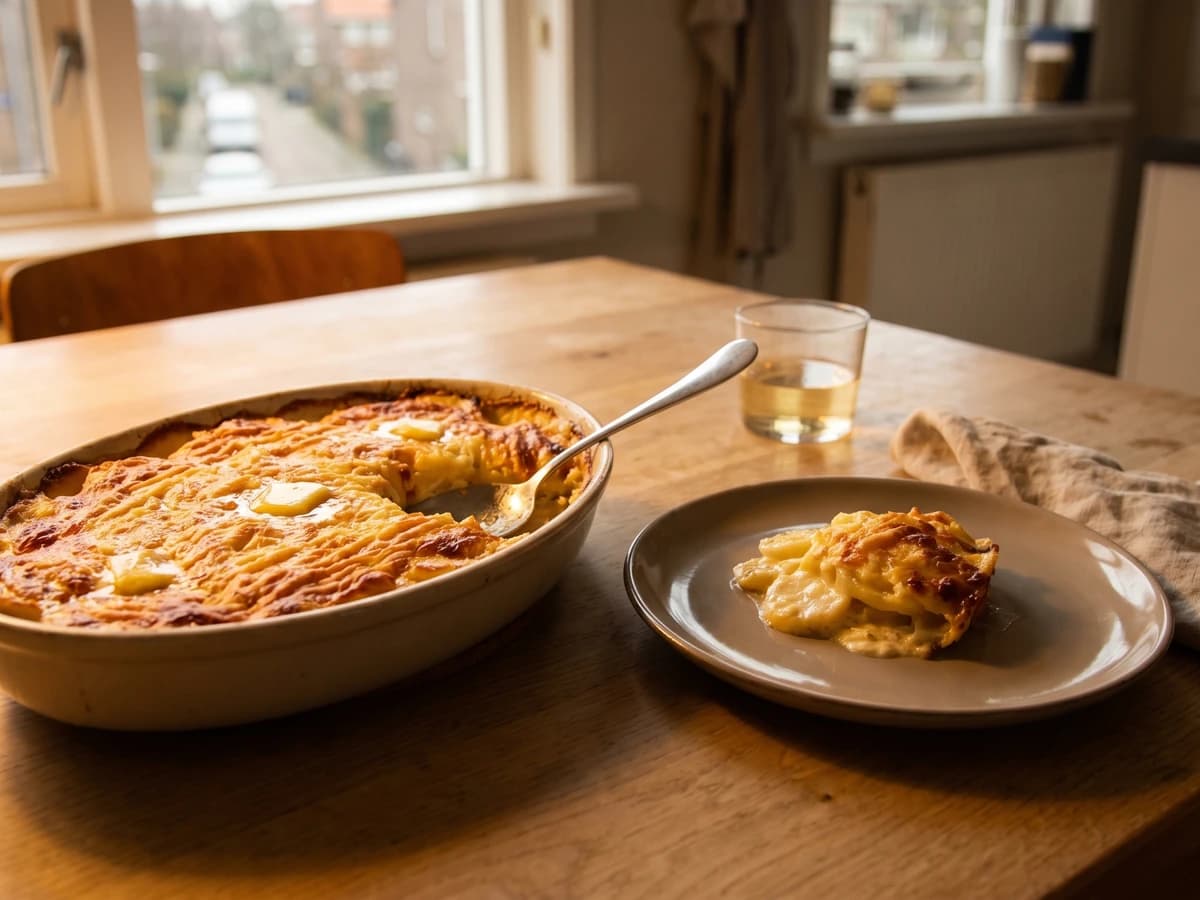
A French name, a Dutch potato, and a Sunday table: aardappelgratin is what happens when a frugal kitchen borrows richness and behaves as if it had always belonged.
A cooking platform built around craft, culture, and the stories behind what we eat.
Created by
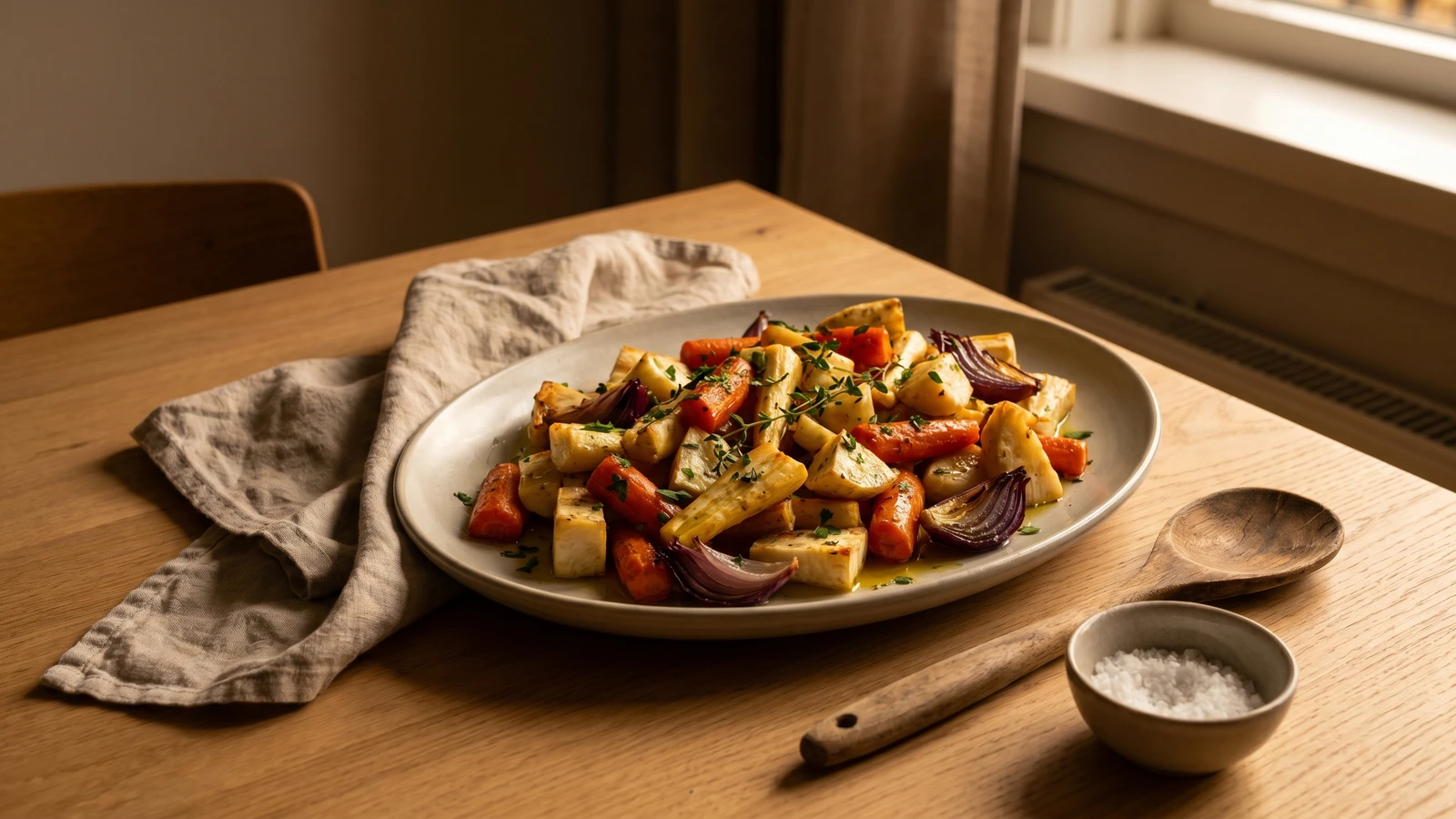
Winter roots are the quiet Dutch pantry at its best: carrot, parsnip, celeriac, and knolraap roasted until their edges darken and their old sweetness remembers itself.
In my grandmother's second notebook, the winter pages are not glamorous. Potatoes. Carrots. Onions. Knolraap, turnip, written in the firm hand of a woman who knew what a cellar had to do by February. The old Dutch kitchen never trusted abundance to last, so it learned the sweetness hidden in roots and bulbs, the kind that waits underground while the weather behaves badly above it.
But let me tell you a secret: this dish is not ancient in its method, only in its ingredients. Dutch cooks boiled and mashed these vegetables for generations because fuel was dear and ovens were not casual Tuesday equipment. The modern baking tray is the luxury here, not the vegetables. Roasting lets the sugars come forward and lets the edges catch, which is exactly what boiling politely refuses to do.
The name doesn't need excavating. Geroosterde wintergroenten means roasted winter vegetables, and for once the Dutch plainness is doing honest work. Cut everything to the same stubborn size, give it oil, salt, thyme, and a little nutmeg if you want the old spice cupboard to nod from the shelf. Hou het altijd simpel, always keep it simple. A hot oven, one tray, and patience enough to turn the roots once. That's the whole education.
Before the potato became dominant in Dutch kitchens in the eighteenth and nineteenth centuries, roots such as parsnip, carrot, turnip, and celeriac were essential winter foods because they stored well through the cold months. Knolraap, the turnip, appears throughout older Dutch household cooking but nearly vanished from everyday use as potatoes and later supermarket habits narrowed the winter vegetable drawer. Roasting these roots together is a modern weeknight method applied to an older Dutch larder: frugal ingredients, made generous by heat and time.
Quantity
300g
peeled and cut into 3cm pieces
Quantity
300g
peeled and cut into 3cm pieces
Quantity
250g
peeled and cut into 3cm cubes
Quantity
250g
peeled and cut into 3cm cubes
Quantity
2
cut into wedges
Quantity
3 tablespoons
Quantity
1 tablespoon
Quantity
1 teaspoon
Quantity
1/2 teaspoon
Quantity
1/4 teaspoon
Quantity
4 sprigs
Quantity
1 tablespoon
Quantity
1 tablespoon
chopped
| Ingredient | Quantity |
|---|---|
| carrotspeeled and cut into 3cm pieces | 300g |
| parsnipspeeled and cut into 3cm pieces | 300g |
| celeriacpeeled and cut into 3cm cubes | 250g |
| knolraap or turnippeeled and cut into 3cm cubes | 250g |
| red onionscut into wedges | 2 |
| rapeseed oil or mild olive oil | 3 tablespoons |
| apple syrup or honey | 1 tablespoon |
| fine sea salt | 1 teaspoon |
| freshly ground black pepper | 1/2 teaspoon |
| freshly grated nutmeg | 1/4 teaspoon |
| thyme | 4 sprigs |
| apple cider vinegar | 1 tablespoon |
| flat-leaf parsley (optional)chopped | 1 tablespoon |
Heat the oven to 220C. Put a large rimmed baking tray in the oven while it heats. A hot tray gives the vegetables their first proper sizzle, and that first contact matters; otherwise they lounge in their own moisture before they begin to roast.
Cut the carrots, parsnips, celeriac, and knolraap into pieces of roughly the same size, about 3cm. This is not for neatness. It is fairness. A small parsnip burns while a large celeriac cube is still thinking about supper.
Toss the cut vegetables and onion wedges with the oil, apple syrup or honey, salt, pepper, nutmeg, and thyme. The nutmeg should be a whisper, not a sermon; Dutch spice is often like that, present enough to change the room and modest enough not to announce itself.
Carefully tip everything onto the hot tray and spread it in a single layer. Roast for 25 minutes without fussing. The vegetables need contact with the metal and enough space around them; crowd the tray and you have made boiled vegetables in disguise.
Turn the vegetables with a spatula, scraping up any browned edges, then roast for another 12 to 15 minutes. They are ready when the carrot bends under the fork, the celeriac is creamy inside, and the parsnip edges have gone deep gold with a few darker freckles.
Splash the hot vegetables with the apple cider vinegar and toss once more. Taste before you serve; roots are sweet, and the vinegar wakes them up. Scatter with parsley if you like, then bring the tray or a warm dish straight to the table.
1 serving (about 275g)
Culinary guides, cultural storytelling, and the editorial depth that makes cooking meaningful.
Discover Culinary ExplorerChef Joost
A French name, a Dutch potato, and a Sunday table: aardappelgratin is what happens when a frugal kitchen borrows richness and behaves as if it had always belonged.
Chef Joost
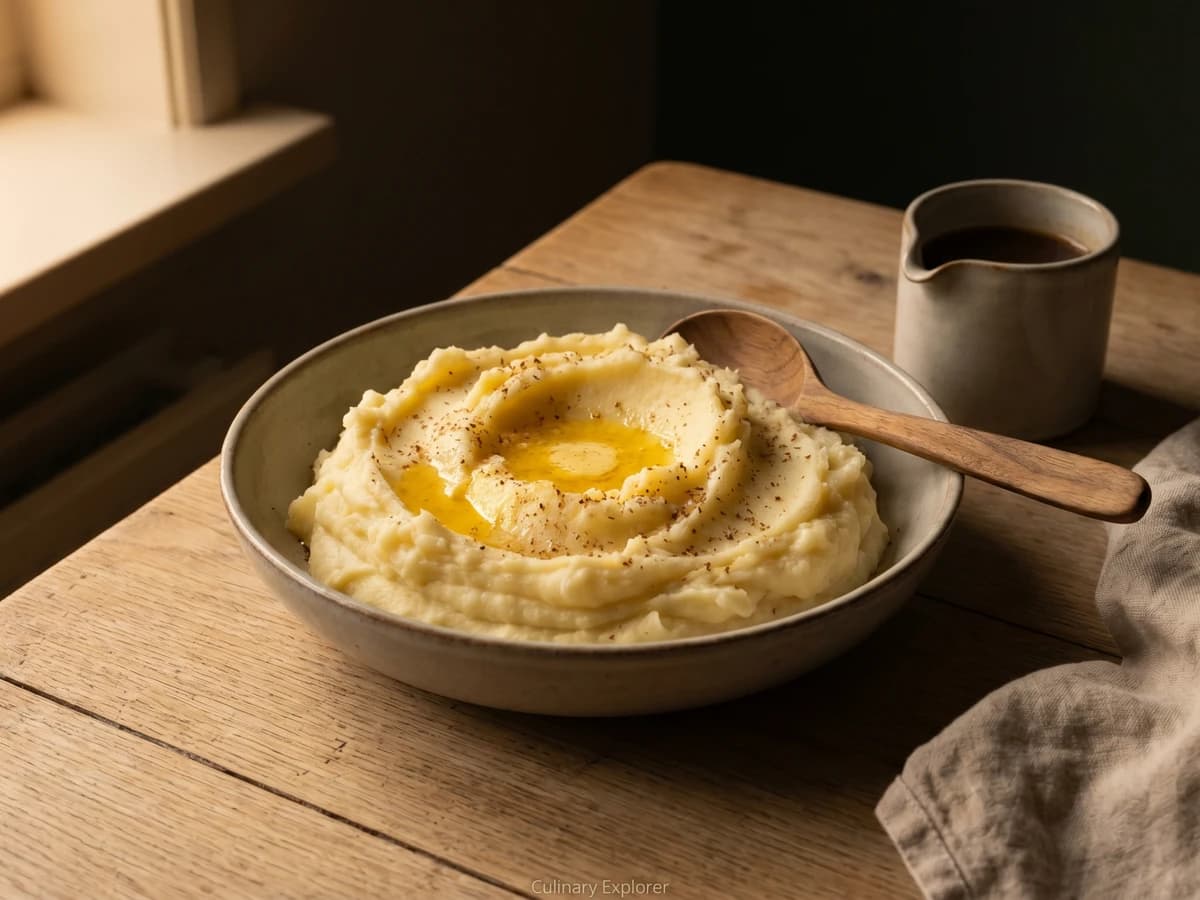
Aardappelpuree is the quiet heart of the Dutch AVG'tje: floury potatoes, warm milk, butter, nutmeg, and a small kuiltje, little well, built for the jus.

Chef Joost
Flower cabbage under old Gouda sauce: the quiet Dutch side dish that turns one boiled vegetable into the reason everyone reaches for the spoon twice.

Chef Joost
White beans peeking through green snijbonen give this old Dutch side its nursery-table joke: bare little children in the grass, sweet garden thrift with butter, nutmeg, and no apology.