
Chef Margarida
Aletria
The Christmas twin of arroz doce, where angel hair pasta meets warm milk, golden egg yolks, and cinnamon. Convent sweetness born from surplus yolks, humble magic from grandmother's kitchen.
A cooking platform built around craft, culture, and the stories behind what we eat.
Created by
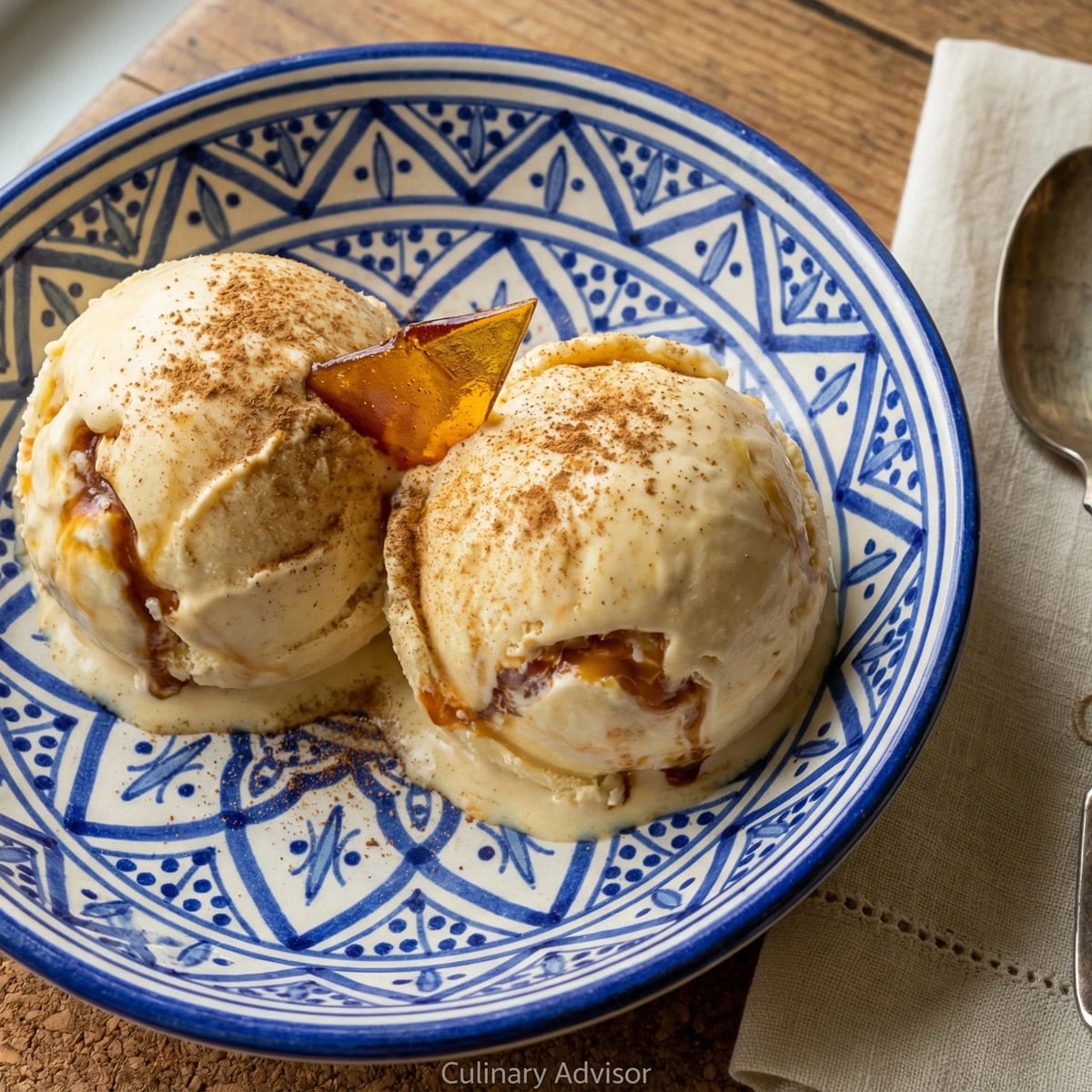
The soul of a pastel de nata, frozen. Rich egg custard, ribbons of dark caramel, whispers of cinnamon. This is what happens when convent traditions meet the next generation's kitchen.
Imade this gelado the first time after a summer afternoon at the monastery in Belém, standing in line with tourists, eating pastéis de nata still warm from the oven. I thought: what if we could capture this in something cold? Something for August in Lisbon when the heat presses down and all you want is sweetness and relief.
The egg yolks are everything. This is where Portuguese desserts live. The convents had surplus yolks because the nuns used egg whites to starch their habits. Surplus became tradition. Tradition became genius. Ovos moles, pastéis de nata, toucinho do céu. All born from what others would have thrown away.
Avó Leonor never made gelado. She didn't have the equipment, and frankly, she didn't see the point when there was arroz doce to be made. But she would understand this. The custard base is the same patience she taught me: tempering eggs slowly, never rushing, watching for the moment when the mixture coats the spoon and holds. The caramel ribbons are the burnt tops we fight over. The cinnamon is the dust she shook over everything.
This gelado tastes like memory. Like standing in Belém with powdered sugar on your fingers. Like being told that the best things in Portuguese cooking come from making something from almost nothing.
Pastéis de nata originated in the Jerónimos Monastery in Belém before the 1820s, where Hieronymite monks created the recipe using surplus egg yolks from the convent laundry. When the monastery closed in 1834, the recipe was sold to a nearby sugar refinery, which opened the famous Pastéis de Belém shop that still operates today. This gelado honors that egg-yolk tradition in frozen form.
Quantity
500ml
Quantity
250ml
Quantity
1
Quantity
1 strip (about 5cm)
Quantity
6 large
Quantity
150g, divided
Quantity
1 teaspoon
Quantity
pinch
Quantity
50g
Quantity
2 tablespoons
Quantity
for serving
| Ingredient | Quantity |
|---|---|
| whole milk | 500ml |
| heavy cream (natas) | 250ml |
| cinnamon stick | 1 |
| lemon zest | 1 strip (about 5cm) |
| egg yolks | 6 large |
| sugar | 150g, divided |
| vanilla extract | 1 teaspoon |
| fine sea salt | pinch |
| sugar for caramel | 50g |
| water | 2 tablespoons |
| ground cinnamon | for serving |
Combine the milk, cream, cinnamon stick, and lemon zest in a heavy saucepan. Heat over medium until it just begins to steam and small bubbles form at the edges. Remove from heat, cover, and let steep for 30 minutes. This is where the soul of the nata enters. The cinnamon and lemon are subtle, background notes, but they're what makes this taste like Portugal instead of plain vanilla.
In a large bowl, whisk the egg yolks with 150g sugar until pale and thick, about 2 minutes. The mixture should fall in ribbons when you lift the whisk. Slowly pour the warm (not hot) infused milk into the yolks, whisking constantly. Go slowly at first, just a thin stream, to temper the eggs without scrambling them.
Return the mixture to the saucepan over medium-low heat. Stir constantly with a wooden spoon, reaching into the corners and across the bottom where it wants to catch. Cook until the custard thickens enough to coat the back of the spoon and holds a line when you draw your finger through it, about 8 to 10 minutes. It should register 82°C if you have a thermometer. The moment it's ready, remove from heat.
Strain the custard through a fine-mesh sieve into a clean bowl, pressing gently to extract every bit. Discard the cinnamon stick and lemon zest. Stir in the vanilla and salt. Press plastic wrap directly onto the surface to prevent a skin from forming. Refrigerate until completely cold, at least 4 hours or overnight. The colder the base, the better it churns.
While the custard chills, make the caramel. Combine 50g sugar and water in a small saucepan. Cook over medium-high heat without stirring, swirling the pan occasionally, until it turns deep amber, about 5 minutes. Watch it carefully in the last minute. The color you want is like strong tea, almost burnt but not quite. Pour onto a silicone mat or parchment paper and let it harden completely. Once cool, break into shards and crush roughly with a rolling pin.
Pour the chilled custard into your ice cream maker and churn according to the manufacturer's instructions, usually 25 to 30 minutes. The gelado is ready when it holds soft peaks and looks like thick whipped cream. In the last minute of churning, add most of the crushed caramel, letting it ripple through.
Transfer to a freezer-safe container, folding in any remaining caramel pieces. Press plastic wrap onto the surface and freeze until firm, at least 2 hours. Before serving, let it sit at room temperature for 5 minutes to soften slightly. Scoop into bowls and dust with cinnamon. Close your eyes. You're in Belém.
1 serving (about 130g)
Culinary guides, cultural storytelling, and the editorial depth that makes cooking meaningful.
Discover Culinary Explorer
Chef Margarida
The Christmas twin of arroz doce, where angel hair pasta meets warm milk, golden egg yolks, and cinnamon. Convent sweetness born from surplus yolks, humble magic from grandmother's kitchen.

Chef Margarida
The rice pudding that appears on every Portuguese celebration table, golden with egg yolks from the convent tradition, crowned with cinnamon art that tells you someone cared enough to make it beautiful.

Chef Margarida
The cake that defines Portuguese childhood. Layers of Maria biscuits soaked in coffee, bound with golden egg yolk cream, chilled until it becomes something magical. Every birthday, every Sunday, every grandmother's kitchen.

Chef Margarida
The dark, dense Christmas cake of Madeira, perfumed with cinnamon and cloves, sweetened with sugarcane molasses, and packed with walnuts. Break it by hand. Never cut it. This is how it's been done for six centuries.