Chef Klaus
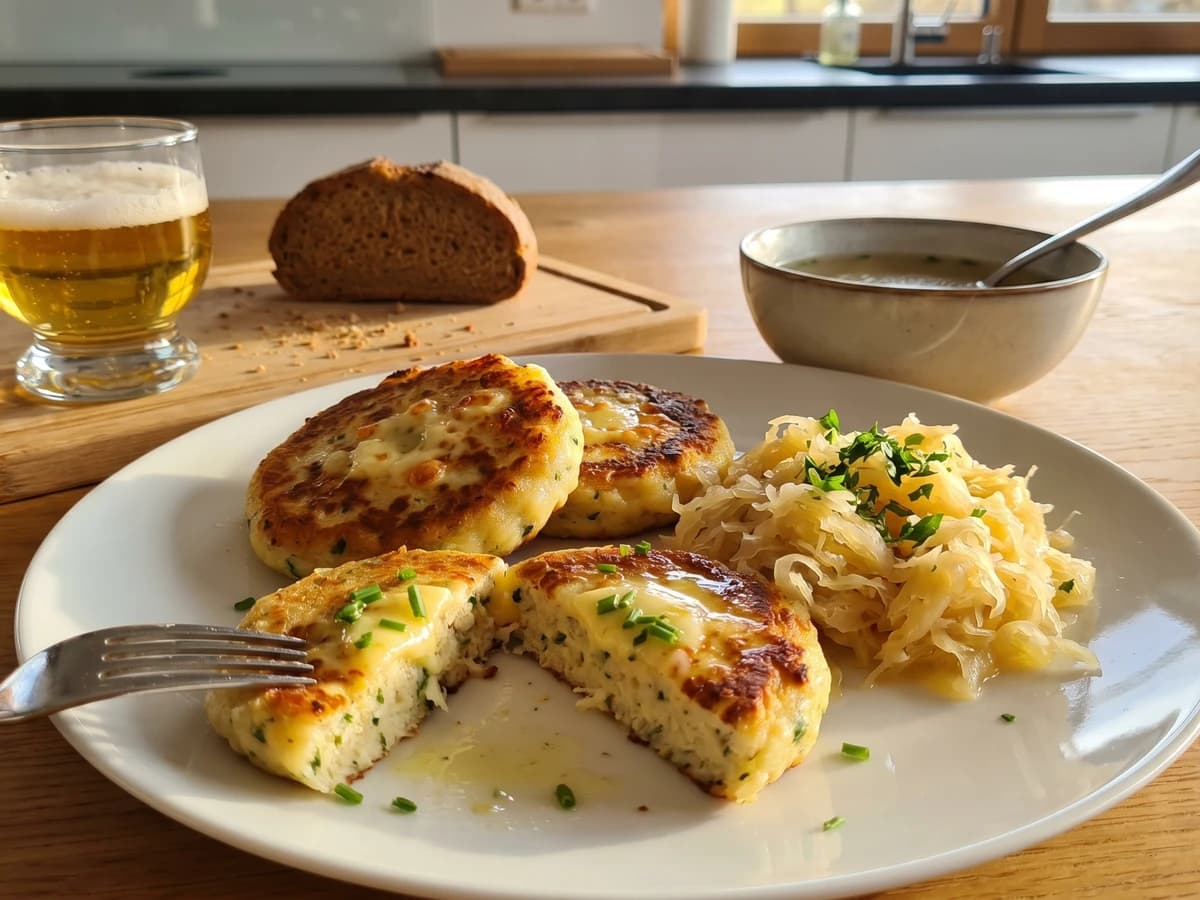
Allgäuer Kaspressknödel
Pressed bread dumplings from the Alpine south, fried until the cheese catches at the edges and the middle stays soft enough for broth, kraut, or a weekday plate.
A cooking platform built around craft, culture, and the stories behind what we eat.

Created by
Saarland's Geheirade marries tender flour dumplings to floury potatoes in one pot, then sends them out under Speckrahmsoße, a pale bacon-cream sauce built for weeknights and appetite.
Geheirade belongs to the Saarland table, especially the old mining and smallholder kitchens where potatoes, flour, eggs, and a little smoked Speck had to feed a room. It isn't feast-day food. It's cold-month Hausmannskost, plain home cooking, and it works because the larder does the work: stored potatoes, flour in the bin, cured pork in the pan. Weggeworfen wird nichts, nothing gets thrown away, even the potato water helps loosen the sauce.
Every neighbour has an opinion. Saarland says Geheirade or Verheiratete, the married couple, potatoes and Mehlknepp, flour dumplings, in one bowl under Speckrahmsoße, bacon cream sauce. In the Palatinate and Hunsrück, the same family of dishes may keep the dumplings firmer, sour the dairy more sharply, or set apple sauce beside the plate. Im Norden anders, im Süden anders, different in the north, different in the south; here in the southwest the argument is in the pot.
The technique that decides it is timing. Start the potatoes first, then drop the rested flour batter when the potatoes are half tender, and keep the water trembling, not raging. A hard boil tears the Mehlknepp and turns the water pasty; water below a simmer soaks them heavy before the middle cooks. Do it right and the potatoes break at the edges, the dumplings stay soft, and the pale Speck sauce clings. Nicht aus dem Glas. There is no jar for this, only a spoon and attention.
Geheirade, also called Verheiratete, is recorded across Saarland, the Palatinate, and the Hunsrück as a miners' and smallholder dish, built from potatoes, flour, eggs, and cured pork rather than market meat. Potatoes spread through the German lands in the 18th century, helped by state pressure such as Frederick II of Prussia's potato orders in the 1750s, and by the 19th-century Saar coal districts they were the everyday starch that filled a worker cheaply. The regional dispute is in the finish: Saarland leans toward Speckrahmsoße, bacon cream sauce, while neighbouring Palatinate versions often bring sour cream, onions, or apple sauce to the table.
Quantity
800g
peeled and cut into 3cm chunks
Quantity
300g
Quantity
3
Quantity
150ml
Quantity
75ml
Quantity
2 teaspoons, plus more for the pot
Quantity
1 pinch
Quantity
150g
diced small
Quantity
1
finely diced
Quantity
200ml
Quantity
100g
Quantity
150ml
reserved from the pot
Quantity
to taste
Quantity
2 tablespoons
snipped
Quantity
to serve
| Ingredient | Quantity |
|---|---|
| floury potatoes (mehligkochend)peeled and cut into 3cm chunks | 800g |
| plain flour | 300g |
| large eggs | 3 |
| whole milk | 150ml |
| cold water or sparkling mineral water | 75ml |
| fine salt | 2 teaspoons, plus more for the pot |
| freshly grated nutmeg | 1 pinch |
| smoked streaky bacon or Bauchspeckdiced small | 150g |
| medium onionfinely diced | 1 |
| cream | 200ml |
| Schmand or sour cream | 100g |
| starchy potato cooking waterreserved from the pot | 150ml |
| freshly ground black pepper | to taste |
| chivessnipped | 2 tablespoons |
| unsweetened apple sauce (optional) | to serve |
Stir the flour, 1 teaspoon of the salt, and the nutmeg in a bowl. Beat the eggs with the milk and water, then work the liquid into the flour with a wooden spoon until you have a thick, sticky batter that falls from the spoon in a slow lump, not a pour. Let it rest 15 minutes because the flour needs time to drink the liquid; skip that and the dumplings cook tough outside while the middle still tastes raw.
Put the potatoes in a wide pot and cover them with cold water by about 3cm. Salt the water well and bring it to a steady simmer, then cook 8 to 10 minutes, until the edges soften but a knife still meets a firm center. Starting cold lets the potato warm evenly; dropping floury potatoes into hard boiling water roughs the outside before the middle is ready for the dumplings.
While the potatoes begin, put the Speck in a heavy skillet over medium-low heat and let the fat render until the edges brown, 6 to 8 minutes. Don't rush it. High heat burns the lean meat before the fat has done its work, and then the cream carries that bitterness. Add the onion and cook until soft and translucent, then ladle 150ml of the cloudy potato water into the pan and scrape up the browned bits. Add the cream and simmer gently for 3 to 4 minutes. Pull the pan off the heat and stir in the Schmand or sour cream; hard boiling sour dairy splits it, and this sauce should be pale and glossy.
When the potatoes are half tender, dip a tablespoon into the hot potato water and drop walnut-sized spoonfuls of batter into the pot. Keep the water trembling, not raging. Runter mit der Temperatur. A hard boil tears the Mehlknepp and clouds the pot with paste; water below a simmer makes them heavy before the center cooks. Cook 10 to 12 minutes, nudging once underneath so they don't stick, until the dumplings float and a cut one shows no wet flour in the middle.
Drain the potatoes and dumplings, saving a cup of the cooking water. Return them to the warm pot for one minute so surface water dries; wet starch thins the sauce and makes it slide off. Fold in the Speckrahmsoße gently, loosening with a spoon or two of cooking water if it sits too thick. Taste before salting because Speck decides the salt more than you do. Finish with black pepper and chives. Serve with apple sauce on the side if your table likes the sweet cut against the bacon. Schön ist, was schmeckt.
1 serving (about 550g)
Culinary guides, cultural storytelling, and the editorial depth that makes cooking meaningful.
Discover Culinary ExplorerChef Klaus
Pressed bread dumplings from the Alpine south, fried until the cheese catches at the edges and the middle stays soft enough for broth, kraut, or a weekday plate.

Chef Klaus
The Bavarian potato salad that works because warm waxy slices drink hot broth first, then oil last, until the bowl turns glossy without mayonnaise.

Chef Klaus
White cabbage shaved thin, wilted with hot caraway vinegar, and finished with crisp Speck fat: the Bavarian salad that belongs beside bread, sausages, and roast pork.

Chef Klaus
The south's sweet-sour white cabbage, cooked from fresh Kraut rather than sauerkraut, soft enough for roast pork and sharp enough to wake the plate.