
Chef Joost
Aardappelschotel met Gehakt
A plain name for a quietly clever dish: fresh mince, sweet fried onion, nutmeg, and mashed potato baked until the top goes golden and the table goes silent.
A cooking platform built around craft, culture, and the stories behind what we eat.
Created by
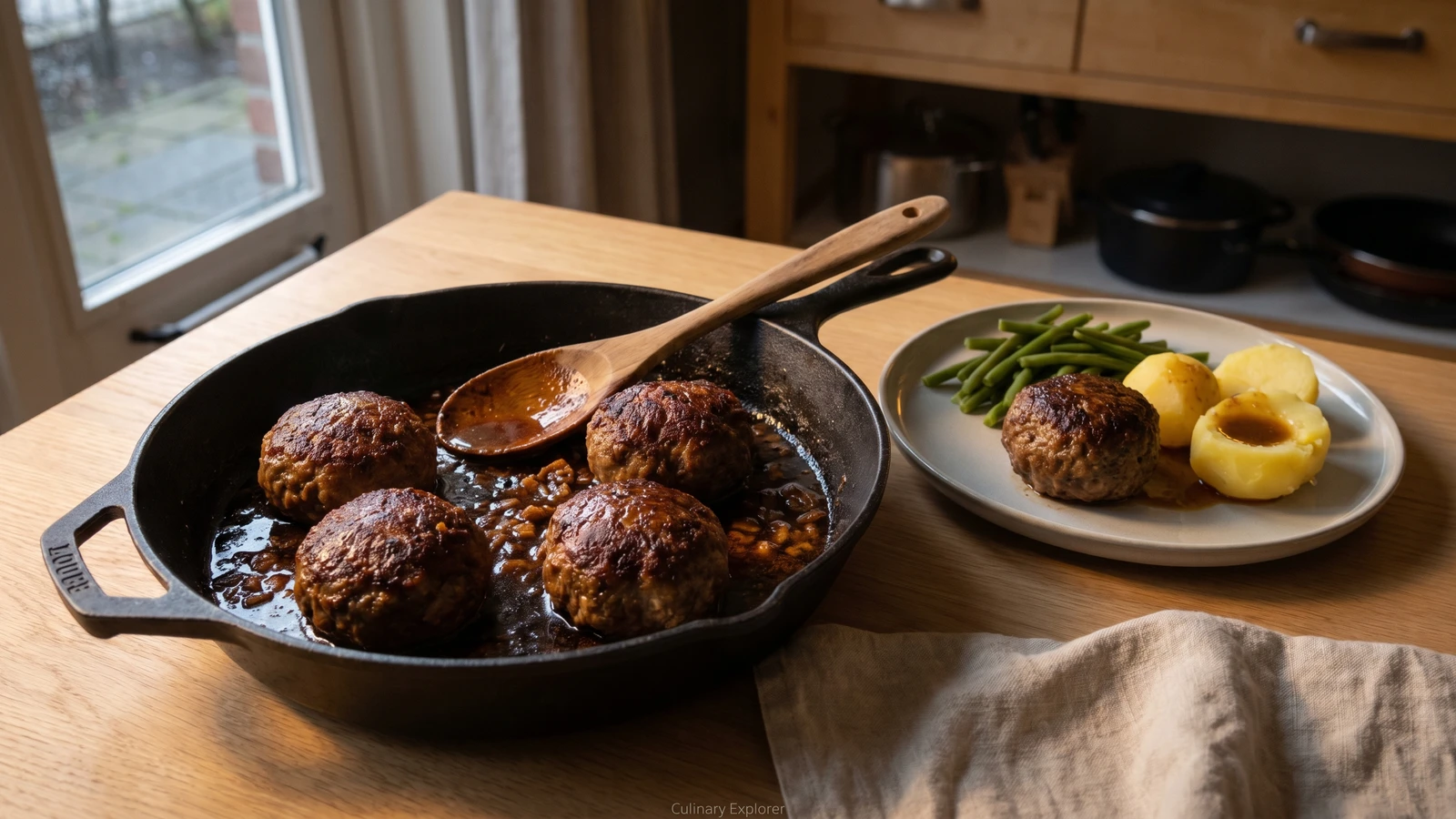
The Dutch warm meal turns on this: a fist-sized gehaktbal, browned properly, then left to give itself to the pan until potatoes have something worth catching.
In my grandmother's second notebook, the page for gehaktballen is nearly useless as a recipe and perfect as a family document. Meat, egg, crumbs, nutmeg, salt, it says, as if quantities were a modern weakness. Then one underlined instruction: goed bruin bakken, brown them well. That was the whole sermon.
The name already tells you the humility of the thing. Gehakt means minced, from hakken, to chop, and a bal is only a ball. No poetry hiding there. But let me tell you a secret: the poetry is in the jus, the Dutch word we borrowed from French for juice, because what sits in the pan after browning is not sauce in the grand manner. It is meat, butter, patience, and water admitting what they can become together.
This is the cornerstone of the Dutch warme maaltijd, the warm meal: potatoes, vegetables, meat, and enough gravy to make the plate speak. Use half pork and half beef if you can, because the pork brings tenderness and the beef brings depth. Brown the balls harder than feels polite, then braise them gently. Hou het altijd simpel. The dark bits on the bottom of the pan are not mess; they are the dish remembering itself.
Gehaktballen belong to the twentieth-century Dutch home table, especially the aardappelen-groente-vlees pattern: potatoes, vegetables, and meat served as the main warm meal of the day. Minced meat became a practical household ingredient as butchers and hand-cranked meat grinders made trimmings economical, and the half-om-half mixture of pork and beef remains the standard Dutch butcher's blend. The jus is equally central: in Dutch home cooking it is not a separate sauce but the pan's browned butter, meat juices, and added water reduced into the gravy that ties potatoes, vegetables, and meat together.
Quantity
300g
Quantity
300g
Quantity
1
very finely grated or minced
Quantity
1
Quantity
60g
Quantity
3 tablespoons
Quantity
2 teaspoons
Quantity
1 teaspoon
Quantity
1/2 teaspoon
Quantity
1/2 teaspoon
Quantity
1/4 teaspoon
Quantity
50g
Quantity
1 tablespoon
Quantity
250ml
Quantity
1 teaspoon
| Ingredient | Quantity |
|---|---|
| ground beef | 300g |
| ground pork | 300g |
| small onionvery finely grated or minced | 1 |
| egg | 1 |
| fine dry breadcrumbs (paneermeel) | 60g |
| milk | 3 tablespoons |
| Dutch mustard | 2 teaspoons |
| fine salt | 1 teaspoon |
| freshly ground black pepper | 1/2 teaspoon |
| freshly grated nutmeg | 1/2 teaspoon |
| ground mace (optional) | 1/4 teaspoon |
| butter | 50g |
| neutral oil | 1 tablespoon |
| hot beef stock or hot water | 250ml |
| Worcestershire sauce or Maggi seasoning (optional) | 1 teaspoon |
Stir the breadcrumbs and milk together in a large bowl and leave them for five minutes. This little paste is what keeps the gehaktbal tender; dry crumbs steal moisture from the meat, soaked crumbs give it back.
Add the beef, pork, grated onion, egg, mustard, salt, pepper, nutmeg, and mace if using. Mix with your hands until the mixture is even and just tacky, but stop before it turns pasty. A gehaktbal should hold together in the pan, not bounce like a rubber ball.
Divide the mixture into four large balls, each about the size of a small fist. Wet your hands lightly and roll them smooth, pressing out obvious cracks. Big is the Dutch habit here; small meatballs belong to soup and borrel snacks, not this plate.
Melt the butter with the oil in a heavy braadpan or deep frying pan over medium-high heat. When the butter foams and begins to smell nutty, add the meatballs and brown them on all sides, turning carefully, about ten minutes total. Let the crust go deep brown. Pale meatballs make pale jus, and pale jus has little to say.
Lower the heat to medium and pour in the hot stock or water, scraping the browned bits from the bottom with a wooden spoon. Add the Worcestershire sauce or Maggi if using. The liquid will look thin and unpromising at first. Good. Jus begins as an apology and ends as the reason you boiled potatoes.
Cover the pan with the lid slightly ajar and let the meatballs simmer gently for 20 to 25 minutes, turning them once or twice. The jus should darken, reduce, and gloss the spoon. If it reduces too quickly, add a splash of hot water; if it stays watery, uncover the pan for the last five minutes.
Lift the pan off the heat and let the meatballs rest in the jus for five minutes. Serve with boiled potatoes or stamppot and a green vegetable, spooning the dark gravy into the kuiltje, the little hollow you make in the potatoes for obvious reasons.
1 serving (about 260g)
Culinary guides, cultural storytelling, and the editorial depth that makes cooking meaningful.
Discover Culinary ExplorerChef Joost
A plain name for a quietly clever dish: fresh mince, sweet fried onion, nutmeg, and mashed potato baked until the top goes golden and the table goes silent.

Chef Joost
Ajam Besengek is the golden chicken stew of the Indo-Dutch table: coconut milk, turmeric, and candlenut cooked down until the sauce clings to the meat like memory.

Chef Joost
The old Dutch spelling says ajam, the city says Batavia, and the pot says exactly what the rijsttafel always was: memory, trade, and dinner in one dish.

Chef Joost
The name means simply fried chicken, but the Dutch spelling carries a whole Indies kitchen: turmeric, coriander, garlic, and a golden crust that remembers the boemboe.