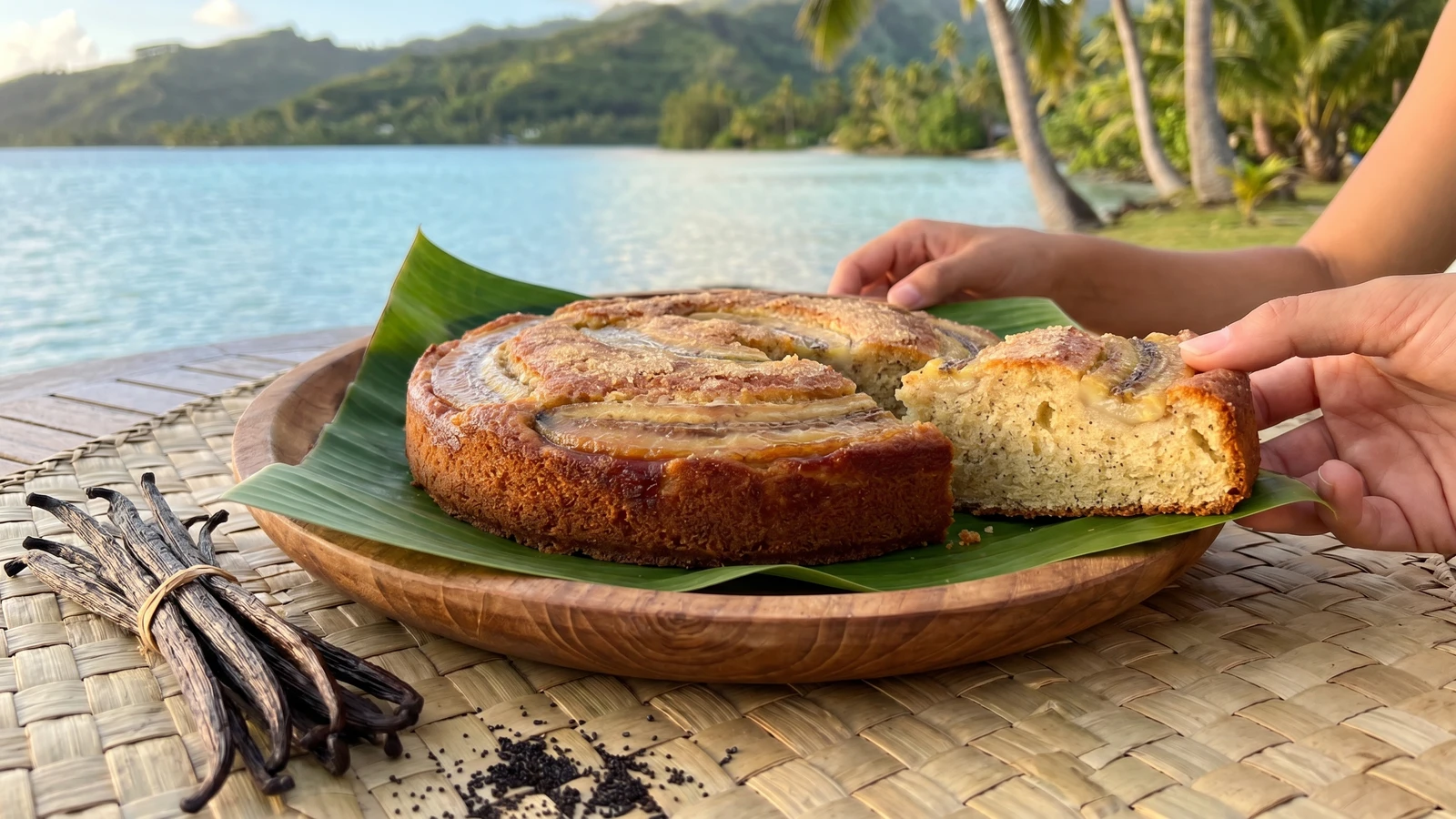
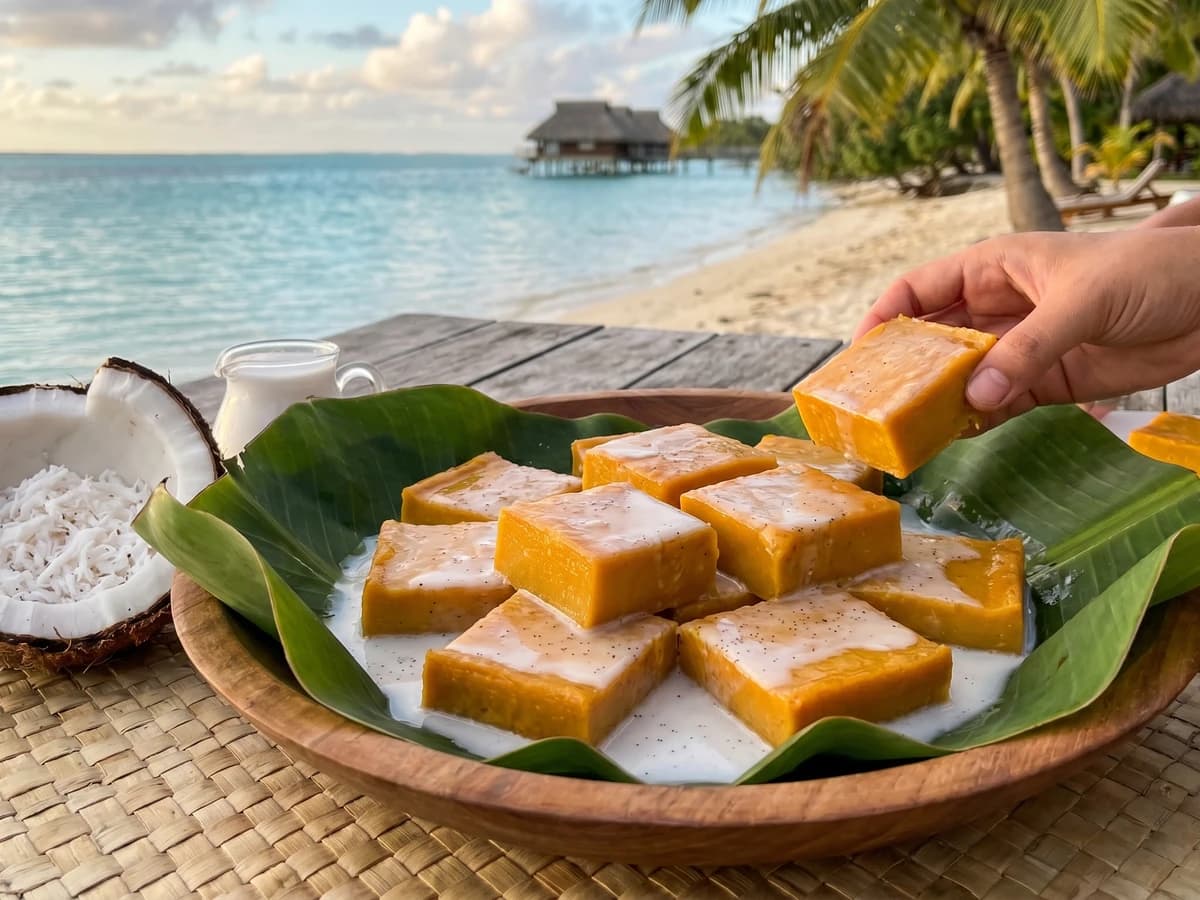
Gâteau Banane à la Vanille de Tahaʻa (Tahitian Banana Vanilla Cake)
Created by
Ripe bananas folded into a tender butter crumb with a split bean of floral Tahaʻa vanilla, the kind of Tahitian goûter cake that waits on the table for birthdays and afternoon coffee.
Desserts
Polynesian, Tahitian
Comfort Food
Celebration
Birthday
25 min
Active Time
45 min cook•1 hr 10 min total
Yield8 servings
Kinship doesn't only live in the old stone and the taro patch. Sometimes it sits in a butter cake on a Tahaʻa table, cut after the coffee, smelling of a vanilla bean somebody in the family cured slow in the shade. This is Tahitian, from Tahaʻa in the Îles Sous-le-Vent, the Leeward Islands of French Polynesia, where vanilla is work: orchid flowers pollinated by hand, pods watched until they go dark, soft, and fragrant.
The banana has older feet than the cake. That fruit rode the canoe routes with the people, and its cousins show up all around the Triangle: Cook Islands poke, a soft banana pudding with coconut; Sāmoan faʻalifu faʻi, bananas softened in coconut cream; Hawaiʻi's maiʻa baked into everyday banana bread now. Same canoe plant, different hands. This gâteau came later, with flour, butter, ovens, and French words, but Tahitian families made it their own because living food takes history and feeds the people in front of it.
So don't make it precious. Use the ripest bananas on the counter, the ones nobody wants to look at but everybody wants to eat once they hit the batter. Rub the Tahaʻa vanilla into the sugar so the whole crumb carries that flowered scent. Bake it until the top goes golden and the middle gives back under your finger. Deep food is not fancy. Everyday food is not lesser. Both can carry love when the hand is right.
Bananas were among the canoe crops Polynesian voyagers carried and selected island by island long before Europeans reached Tahiti in 1767. Vanilla is newer: Vanilla tahitensis descends from New World vanilla introduced to French Polynesia in the 19th century, and hand-pollination, made famous by Edmond Albius on Réunion in 1841, made cultivation possible far from the orchid's native pollinators. Tahaʻa, just north of Raʻiātea in the Society Islands, became the best-known home of that cured vanilla, so this cake sits honestly on both sides of the table: old canoe fruit, French pantry cake, and a Tahitian hand making them family.
The technique, the tradition, and the story behind every dish.
split and scraped, or 2 teaspoons Tahitian vanilla extract
light brown sugar
Quantity
3/4 cup
very ripe bananas
Quantity
3
mashed, about 1 1/2 cups
large eggs
Quantity
2
room temperature
coconut milk or whole milk
Quantity
1/2 cup
room temperature
baking powder
Quantity
2 teaspoons
fine sea salt
Quantity
1/2 teaspoon
firm-ripe banana (optional)
Quantity
1 small
split lengthwise for the top
raw sugar (optional)
Quantity
1 tablespoon
for the top
thick coconut cream or plain yogurt (optional)
Quantity
for serving
Ingredient
Quantity
unsalted buttermelted and cooled, plus more for the pan
1/2 cup
all-purpose flourplus more for the pan
1 3/4 cups
vanilla bean from Tahaʻasplit and scraped, or 2 teaspoons Tahitian vanilla extract
1 bean
light brown sugar
3/4 cup
very ripe bananasmashed, about 1 1/2 cups
3
large eggsroom temperature
2
coconut milk or whole milkroom temperature
1/2 cup
baking powder
2 teaspoons
fine sea salt
1/2 teaspoon
firm-ripe banana (optional)split lengthwise for the top
1 small
raw sugar (optional)for the top
1 tablespoon
thick coconut cream or plain yogurt (optional)
for serving
Equipment Needed
•9-inch round springform pan or 9-inch cake pan
•Parchment round
•Flexible spatula
•Wire cooling rack
Instructions
1
Prepare the pan
Heat the oven to 350F with a rack in the middle. Butter a 9-inch round cake pan or springform pan, line the bottom with parchment, dust the sides lightly with flour, and tap out the extra. This cake is humble, but a pan that lets go clean is mercy.
2
Perfume the sugar
Scrape the Tahaʻa vanilla seeds into the brown sugar and rub them through with your fingertips until the sugar smells floral and looks speckled. If you're using vanilla extract, hold it for the wet batter. The sugar carries the bean through the crumb better than dropping it in one wet corner.
Tahaʻa vanilla should feel a little oily and bend without snapping. Dry, brittle pods gave up too much already.
3
Mash the bananas
Mash the very ripe bananas with a fork until mostly smooth, leaving a few soft pieces. You want about 1 1/2 cups. If they don't smell sweet before you peel them, give them another day. Eat what you have, but let the fruit speak when it's ready.
4
Whisk the wet
Whisk the melted butter into the vanilla sugar until glossy, then beat in the eggs one at a time. Whisk in the coconut milk or whole milk, and the vanilla extract if you're using it, then fold in the mashed banana. The batter should look loose, speckled, and fragrant.
5
Fold the dry
Whisk the flour, baking powder, and salt together in a separate bowl, then fold them into the banana mixture with a spatula. Stop when the last dry streak disappears. Small lumps are fine. Work it hard and the cake gets tough, and no blame the banana for that.
6
Top and bake
Scrape the batter into the pan and smooth the top. Lay the split banana on top if using, cut side up, and scatter the raw sugar over it. Bake 40 to 48 minutes, until the top is deep golden, the edges pull lightly from the pan, the center springs back, and a skewer comes out with moist crumbs instead of wet batter.
7
Cool and share
Rest the cake in the pan for 20 minutes, then loosen the sides and move it to a rack. Serve it warm or at room temperature, plain or with a spoon of thick coconut cream. Cut generous pieces. A birthday cake, an afternoon goûter, one more cousin at the table, same hand feeding everybody.
Chef Tips
•Use bananas that look almost too far gone: freckled black, soft, and sweet-smelling, but not fermented. That tired fruit is the one that gives the cake its softness. We no throw out good food.
•If you have a real Tahaʻa vanilla bean, let it lead. If you only have good Tahitian vanilla extract, use it and keep cooking. Eat what you have, name what you're reaching for, and don't make shame the seasoning.
•Coconut milk gives the crumb a little island softness, whole milk gives it a cleaner butter taste. Both belong in a home kitchen. Keeper, not gatekeeper.
•This is not ahimaʻa, the Tahitian earth oven, and it isn't ceremony. It's a living Tahitian dessert from the post-contact table, tied back to older canoe fruit. That matters too.
Advance Preparation
•Rub the vanilla seeds into the brown sugar up to 2 days ahead and store it airtight with the scraped pod tucked inside.
•Ripen bananas in a paper bag for 1 to 2 days if they are still firm. Don't chill them before baking; cold bananas dull the batter.
•The cake can be baked 1 day ahead and kept covered at room temperature. Warm slices gently or serve them as they are, with coconut cream on the side.
Frequently Asked Questions
Nutrition Information
1 serving (about 130g)
Calories
390 calories
Total Fat
16 g
Saturated Fat
11 g
Trans Fat
0 g
Unsaturated Fat
5 g
Cholesterol
75 mg
Sodium
295 mg
Total Carbohydrates
56 g
Dietary Fiber
2 g
Sugars
28 g
Protein
6 g
Where cooking meets culture.
Culinary guides, cultural storytelling, and the editorial depth that makes cooking meaningful.