Culinary Explorer

A cooking platform built around craft, culture, and the stories behind what we eat.
Discover Culinary Explorer
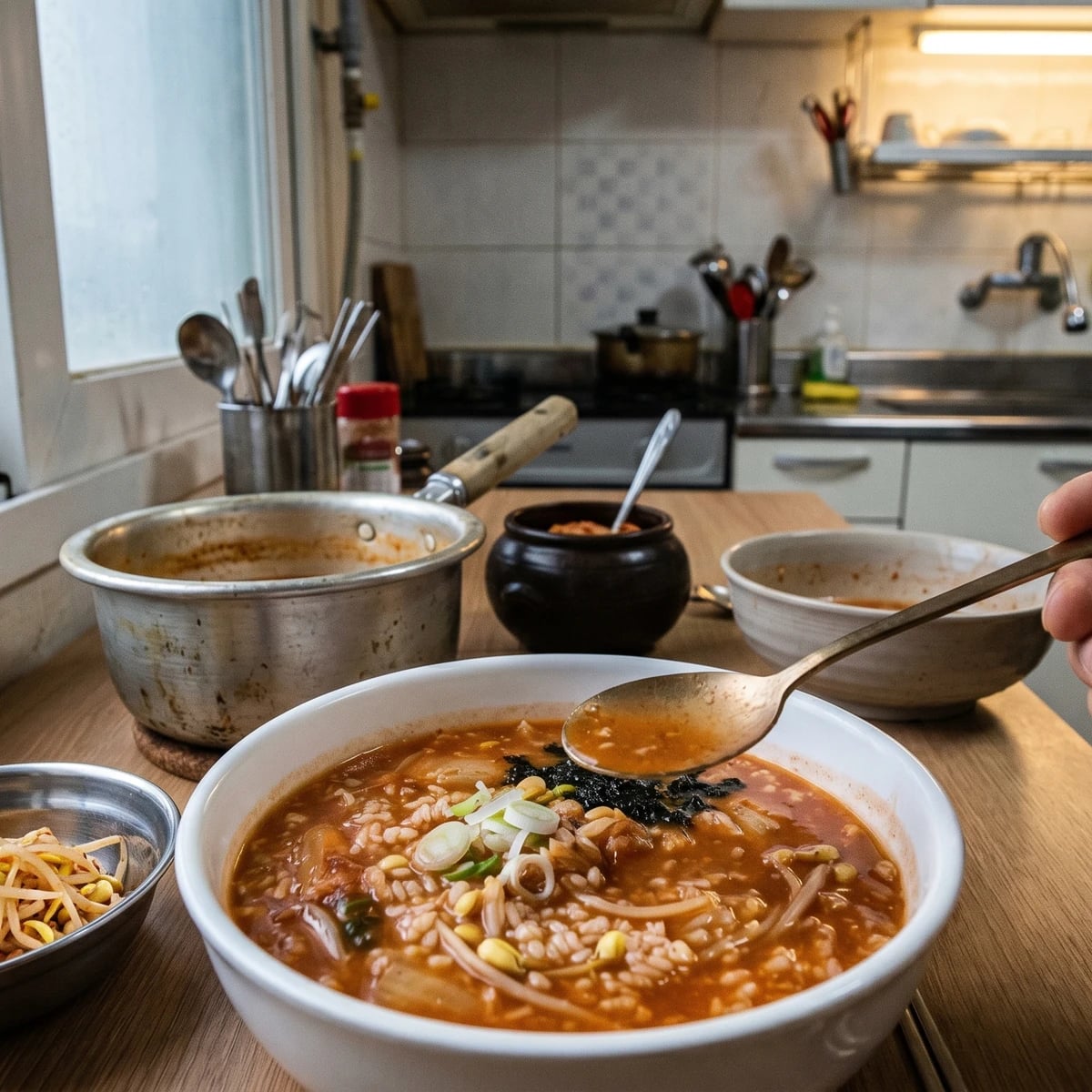
Gangjuk (Gyeongsang Kimchi Bean-Sprout Porridge)

Gangjuk (Gyeongsang Kimchi Bean-Sprout Porridge)

Created by

Cold rice, kimchi, and soybean sprouts simmered in clean anchovy broth until soft but not muddy, the Gyeongsang breakfast pot that makes a little rice feed the whole table.

Breakfast & Brunch
Korean
Comfort Food
Budget Friendly
15 min
Active Time
30 min cook45 min total
Yield3 to 4 servings

Gangjuk is not the polished juk sold in a white bowl to someone feeling delicate. This is a Gyeongsang pot with work clothes on: sour kimchi, yesterday's rice, soybean sprouts, and anchovy broth, all asked to become breakfast before the day starts making demands. It belongs to kitchens that don't waste rice. That is not poverty of imagination. That is knowing how to feed people.

The dish lives or dies by timing. If the rice goes in too early and is beaten to paste, you lose the grain. If the soybean sprouts cook too long, they lose their clean snap and give the pot a tired smell. Simmer the kimchi first so its raw edge softens into the broth, then add the rice, then the sprouts last. Each ingredient should still be able to introduce itself.

Notebook 32 says two cups of cold cooked rice to five cups broth. More rice makes a heavy pot, less makes soup pretending to be porridge. 손맛 is real; I measure it anyway. Taste at the end because kimchi never salts the same way twice, then write down the brand or batch of kimchi you used. Memory is a borrowed bowl.

Gangjuk, also called gaengsigi or gaengsigi-juk in parts of Gyeongsang, is a regional home dish built from leftover cooked rice, kimchi, soybean sprouts, and anchovy broth. Local food records connect it to inland Gyeongsang thrift kitchens, especially the habit of stretching a small amount of bap into a hot morning meal after kimjang kimchi had turned sour. It has no court pedigree and needs none; its history is the ordinary household record of not wasting rice.

The technique, the tradition, and the story behind every dish.

Discover Culinary Explorer

Ingredients

water

Quantity

5 cups

dried kelp (dasima)

Quantity

1 piece, about 3 by 4 inches

large dried anchovies (myeolchi)

Quantity

10

heads and guts removed

well-fermented napa cabbage kimchi

Quantity

2 cups

chopped into 1-inch pieces

kimchi brine

Quantity

1/4 cup

cold cooked short-grain rice

Quantity

2 cups

loosened with your fingers

soybean sprouts (kongnamul)

Quantity

180g

rinsed

onion

Quantity

1/2 small

thinly sliced

garlic

Quantity

2 cloves

minced

soup soy sauce (guk-ganjang)

Quantity

1 tablespoon

gochugaru (Korean chili flakes) (optional)

Quantity

1 teaspoon

fine sea salt

Quantity

1/4 teaspoon, plus more only if needed

scallions

Quantity

2

thinly sliced

toasted sesame oil (optional)

Quantity

1 teaspoon

roasted gim (optional)

Quantity

1 sheet

crushed

Equipment Needed

  • 3-quart heavy pot or small soup pot
  • Slotted spoon or small strainer
  • Wooden spoon
  • Measuring cups and spoons

Instructions

  1. 1

    Make the broth

    Put the water, kelp, and cleaned anchovies in a 3-quart pot. Bring it just to a simmer over medium heat, then pull the kelp out right away. Kelp gives depth quickly, but if it stays through a boil it turns the broth slick and bitter. Simmer the anchovies 10 minutes more, then remove them.

  2. 2

    Soften the kimchi

    Add the chopped kimchi, kimchi brine, onion, garlic, and gochugaru if using. Simmer 8 minutes, uncovered, until the kimchi bends softly and the broth turns a clear rusty red. This step matters because sour kimchi needs time to give its flavor to the broth before the rice thickens everything.

  3. 3

    Add the rice

    Stir in the cold cooked rice, breaking up any clumps against the side of the pot. Simmer 10 to 12 minutes, stirring every few minutes so the grains swell without catching on the bottom. Do not beat the rice to paste. Gangjuk should be soft and loose, with grains still visible.

  4. 4

    Cook the sprouts

    Add the soybean sprouts and keep the pot uncovered. Simmer 6 minutes, pressing the sprouts down once or twice so they cook evenly. With soybean sprouts, choose one way and stay with it: lid on the whole time or lid off the whole time. Here we use lid off because the porridge needs stirring, and the sprouts keep their clean bite.

  5. 5

    Season and rest

    Stir in the soup soy sauce and 1/4 teaspoon salt, then taste before adding anything else. Kimchi brine can be sharp one month and gentle the next, so the final salt must answer the pot in front of you. If the porridge is thicker than you like, add 1/2 cup water and simmer 2 minutes. Turn off the heat and let it rest 3 minutes so the rice settles.

  6. 6

    Finish the bowls

    Ladle the gangjuk into bowls and scatter scallion over the top. Add a few drops of sesame oil only if your kimchi is very sharp; it rounds the edge, but too much makes the whole bowl taste of sesame. Crush gim over each bowl if you want the breakfast-table version many homes use. Serve hot with a spoon, not chopsticks. This is a dish for leaning over the bowl.

Chef Tips

  • Use sour kimchi. Fresh kimchi tastes raw and separate here. If your kimchi is young, add 2 teaspoons rice vinegar with the brine and simmer it the full 8 minutes before the rice goes in.
  • Cold rice is the right rice. Fresh hot rice dissolves too fast and makes the pot gluey. If you must use fresh rice, spread it on a plate for 20 minutes first so the grains firm up.
  • Do not fix bland gangjuk with gochujang. It sweetens and muddies the broth. Use kimchi brine, soup soy sauce, and a measured pinch of salt, then stop while the cabbage and sprouts still taste like themselves.
  • A mushroom-kelp broth can replace the anchovy broth for a meatless table. Use 3 dried shiitakes with the kelp, simmer 15 minutes, and slice the mushrooms back into the pot. The flavor becomes earthier, but the dish remains honest.

Advance Preparation

  • The anchovy-kelp broth can be made up to 3 days ahead and refrigerated. This turns gangjuk into a 20-minute breakfast pot.
  • Chop the kimchi and measure the brine the night before. Keep them together in a covered container so the morning work is only simmering.
  • Leftovers keep 2 days refrigerated. The rice will thicken as it sits, so loosen each serving with 1/4 to 1/2 cup water and reheat until bubbling at the edge. The sprouts will soften, but the bowl will still feed you.

Frequently Asked Questions

Nutrition Information

1 serving (about 490g)

Calories
220 calories
Total Fat
5 g
Saturated Fat
1 g
Trans Fat
0 g
Unsaturated Fat
4 g
Cholesterol
5 mg
Sodium
1150 mg
Total Carbohydrates
35 g
Dietary Fiber
3 g
Sugars
5 g
Protein
10 g

Note: Chef personas and recipes are created with AI assistance. Cook with care: follow safe food-handling practices, check doneness with a thermometer when needed, and adapt for allergies and your kitchen.

Where cooking meets culture.

Culinary guides, cultural storytelling, and the editorial depth that makes cooking meaningful.

Discover Culinary Explorer

More from Juk: The Porridge Table

Browse the full collection