
Chef Juliana
Açaí com Camarão do Pará
You think açaí belongs with banana and granola because that's the version that traveled. In Pará, thick unsweetened açaí sits beside shrimp, rice, and farinha. Anota aí: same fruit, different meal.
A cooking platform built around craft, culture, and the stories behind what we eat.
Created by
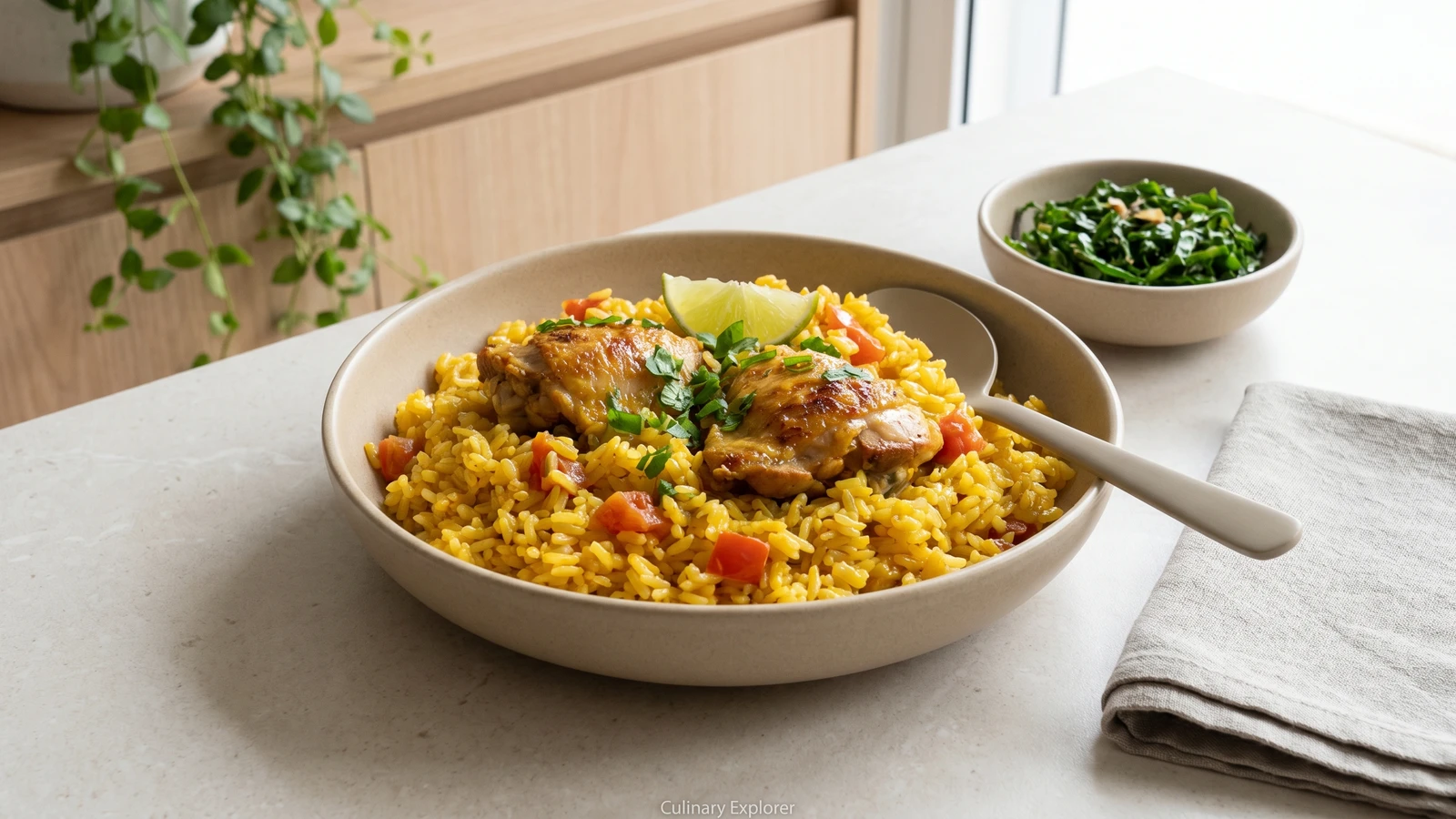
You brown the chicken until the pan turns gold, cook the rice in that caldo, and finish with cheiro-verde. One pot, real food, and dinner solved without a packet in sight.
You know that little voice that looks at a pot with chicken and rice and says, isso não é pra mim? Good. Bring it here. A gente is going to answer it with an onion, a pan, and a method. Cozinhar não é dom, é um aprendizado. I learned late, with a cheap notebook open beside the stove and plenty of onions punished for my ignorance.
This is the kind of dish that proves why the everyday Brazilian plate works. Rice carries the meal, chicken gives it body, and the something green arrives at the end as cheiro-verde or couve on the side. Add a spoon of feijão if that's how your house eats, and you have the pê-efe logic sitting right there, not as a theory, as dinner.
The trick is not mystery, it's sequence. Dry the chicken so it browns. Brown it in batches so it doesn't steam itself grey. Build a real refogado in the golden fat left behind, then let the rice toast for a minute before the caldo goes in. The rice drinks the chicken flavor as it cooks, which is why galinhada tastes like more than chicken next to rice.
Anota aí: no seasoning packet. Açafrão-da-terra gives color, onion and garlic give foundation, tomato gives moisture, and time in the pot does the rest. That's comida de verdade, desgourmetizada, and yes, you can make it tonight.
Galinhada is cooked through Brazil's interior, with Goiás and Minas Gerais both carrying strong traditions of chicken cooked with rice in one pot. In Minas, the farm-table version usually leans on chicken pieces, rice, a refogado, açafrão-da-terra for yellow color, and cheiro-verde at the end, with pequi appearing in some regional versions more strongly associated with the Cerrado. It is a practical dish from household and rural cooking: one pot stretches the chicken, feeds many people, and turns the rice into the carrier of the whole meal.
Quantity
1.2 kg
cut into serving pieces
Quantity
1 1/2 teaspoons, divided, plus more to taste
Quantity
1/2 teaspoon
Quantity
2 tablespoons
Quantity
3 tablespoons
Quantity
1 large
finely chopped
Quantity
4 cloves
minced
Quantity
1 small
finely chopped
Quantity
2 medium
chopped
Quantity
1 teaspoon
Quantity
2 cups
rinsed and drained
Quantity
4 cups
Quantity
1
Quantity
1 cup
fresh or frozen
Quantity
1/2 cup
chopped
Quantity
to serve
| Ingredient | Quantity |
|---|---|
| bone-in chicken thighs and drumstickscut into serving pieces | 1.2 kg |
| salt | 1 1/2 teaspoons, divided, plus more to taste |
| black pepper | 1/2 teaspoon |
| lime juice or vinegar | 2 tablespoons |
| oil or chicken fat | 3 tablespoons |
| onionfinely chopped | 1 large |
| garlicminced | 4 cloves |
| green bell pepper (optional)finely chopped | 1 small |
| tomatoeschopped | 2 medium |
| açafrão-da-terra, ground turmeric | 1 teaspoon |
| long-grain white ricerinsed and drained | 2 cups |
| hot water or unsalted chicken broth | 4 cups |
| bay leaf | 1 |
| green peas (optional)fresh or frozen | 1 cup |
| cheiro-verde, parsley and scallionschopped | 1/2 cup |
| lime wedges (optional) | to serve |
Pat the chicken dry with paper towels, then season it with 1 teaspoon of the salt, the black pepper, and the lime juice or vinegar. Let it sit while you chop the onion, garlic, tomatoes, and cheiro-verde. Dry chicken browns; wet chicken spits, sticks, and stews before it has a chance to take color.
Heat the oil in a heavy 4-liter pot over medium-high heat. Add the chicken skin-side down in one layer, leaving space between pieces, and brown for 4 to 5 minutes per side until the surface is deep golden and the bottom of the pot has brown bits stuck to it. Work in two batches if you need to. Crowd the pan and the chicken releases water, the heat drops, and you get grey meat in a puddle. Nobody came here for that.
Lower the heat to medium and add the onion to the same pot. Stir and scrape the golden bits from the bottom until the onion softens and turns see-through, about 5 minutes. Add the bell pepper, if using, and cook until it loses its raw smell, about 2 minutes. Those browned bits are not dirt, they're flavor, and the onion helps lift them into the base.
Add the garlic and açafrão-da-terra and stir for 1 minute, just until the garlic smells good and the oil turns yellow. Do not wander off. Garlic burns fast, and burnt garlic is bitter enough to boss the whole pot around. The açafrão-da-terra blooms in the fat, so the color spreads through the rice instead of sitting in dull little spots.
Add the chopped tomatoes and the remaining 1/2 teaspoon salt. Cook, stirring, until the tomatoes slump, release their juice, and start looking like a rough sauce, about 4 minutes. This little sauce gives the rice moisture and acidity, so the pot tastes lively instead of flat.
Add the rinsed and drained rice to the refogado and stir for 1 to 2 minutes, until every grain is glossy and yellow. This is the same thinking as arroz soltinho: coat the grains before the liquid goes in, and they cook more evenly. Wet rice dumped straight into liquid clumps, and then you stand there poking it like the pot insulted you.
Return the chicken and any juices to the pot. Add the hot water or broth and the bay leaf, then stir once, gently, to settle everything. Bring it to a lively simmer, then lower the heat, cover, and cook for 18 minutes. Use hot liquid so the pot doesn't lose its heat; cold liquid makes the rice sit around before cooking, and that is how grains get heavy.
Turn off the heat and leave the pot covered for 10 minutes. Don't lift the lid to inspect your feelings. The rice finishes in its own heat, the grains firm up, and the chicken juices settle back where they belong. Skip the rest and the bottom is wet while the top is tense. A pot needs a minute, like the rest of us.
Open the pot, remove the bay leaf, and scatter in the peas, if using, while the rice is still hot. Fluff gently with a fork, lifting from the edges toward the center so you don't mash the grains. Finish with cheiro-verde and taste for salt. The rice should be yellow, glossy, and moist, with separate grains and chicken tucked through the pot.
Serve a generous spoonful with the chicken on top, a little couve or salad beside it, and feijão if your table wants the full pê-efe. A squeeze of lime wakes up the chicken, especially if the tomatoes were shy. That's dinner solved: rice, chicken, green, and no industrial shortcut pretending it cooked for you.
1 serving (about 390g)
Culinary guides, cultural storytelling, and the editorial depth that makes cooking meaningful.
Discover Culinary ExplorerChef Juliana
You think açaí belongs with banana and granola because that's the version that traveled. In Pará, thick unsweetened açaí sits beside shrimp, rice, and farinha. Anota aí: same fruit, different meal.

Chef Juliana
You think savory açaí is not for you. I understand. Then you taste the cold, dark bowl beside hot fried fish, rice, greens, and farinha, and dinner gets very quiet.

Chef Juliana
You think salted beef and rice sound like trouble. Anota aí: soak the charque, brown it properly, build the refogado, and this one pot resolves dinner.

Chef Juliana
You think a Maranhão green rice belongs to somebody else's clever hands. It doesn't. Wilt the vinagreira, build the refogado, fold it through arroz soltinho, and dinner gets bright, coastal, and yours.