
Chef Jeong-sun
Aehobak-guk (애호박국, Korean Zucchini Soup)
A clean summer soup of Korean zucchini and salted shrimp, built on quick anchovy-kelp broth and finished before the half-moons lose their shape on a weeknight table.
A cooking platform built around craft, culture, and the stories behind what we eat.

Created by
A summer bowl for the nights when the rice is hot but the table needs cooling: steamed eggplant strips, chilled fast, floating in a sharp soy-vinegar broth.
Eggplant belongs to the hot months, when the market tables are stacked with slim purple gaji and no one wants a heavy soup. Cook the month you're standing in. This cold soup is not a restaurant bowl trying to impress you; it is a home answer to summer rice, soft steamed eggplant in a broth sharp enough to wake the mouth.
The dish lives or dies in two places. Steam the eggplant only until it slumps, then cool it fast so it stays silky instead of collapsing into water. Season the torn strips first, in their own bowl, before they meet the broth. If you pour plain broth over plain eggplant, the soup tastes thin and the eggplant tastes lonely. My teacher would have looked at that bowl once and pushed the soy sauce toward me without speaking.
Tonight this asks for care, not difficulty. Ten minutes of steaming, a few measured spoons of soy and vinegar, and enough patience to chill the broth hard. Let the eggplant taste like itself, soft and clean, with sesame in the background and vinegar carrying the heat out of the room.
Naengguk means cold soup, and Korean home cooking has long kept summer versions made from cucumber, seaweed, and vegetables in chilled, seasoned broth; late-Joseon household writing uses names such as changuk for related cold soups. Eggplant has been grown and cooked in Korea for centuries, most often steamed and seasoned as gaji-namul; gaji-naengguk keeps that namul method and loosens it into broth. The modern bowl with ice belongs to the refrigerator age, when a cold soup could be made on a weeknight without relying on well water or stored winter ice.
Quantity
3 slender, about 450g total
stems trimmed
Quantity
1/2, about 100g
seeded if watery and cut into matchsticks
Quantity
1, plus 1 tablespoon
finely chopped, with extra thinly sliced for garnish
Quantity
1
thinly sliced
Quantity
1 tablespoon
for seasoning the eggplant
Quantity
1 teaspoon
Quantity
1 teaspoon
for seasoning the eggplant
Quantity
1 teaspoon
Quantity
1 teaspoon, plus more
lightly crushed, with extra for garnish
Quantity
1 small clove
minced to a paste
Quantity
1/2 teaspoon
Quantity
2 1/2 cups
Quantity
2 tablespoons
for the broth
Quantity
1 tablespoon
for the broth
Quantity
2 teaspoons
Quantity
1/2 teaspoon
Quantity
1 cup
| Ingredient | Quantity |
|---|---|
| Korean or Japanese eggplantsstems trimmed | 3 slender, about 450g total |
| English cucumberseeded if watery and cut into matchsticks | 1/2, about 100g |
| scallionfinely chopped, with extra thinly sliced for garnish | 1, plus 1 tablespoon |
| small red chili (optional)thinly sliced | 1 |
| soup soy sauce (guk-ganjang)for seasoning the eggplant | 1 tablespoon |
| regular soy sauce | 1 teaspoon |
| rice vinegarfor seasoning the eggplant | 1 teaspoon |
| toasted sesame oil | 1 teaspoon |
| toasted sesame seedslightly crushed, with extra for garnish | 1 teaspoon, plus more |
| garlicminced to a paste | 1 small clove |
| gochugaru (Korean chili flakes) (optional) | 1/2 teaspoon |
| very cold water or chilled anchovy-kelp broth | 2 1/2 cups |
| rice vinegarfor the broth | 2 tablespoons |
| soup soy sauce (guk-ganjang)for the broth | 1 tablespoon |
| sugar | 2 teaspoons |
| fine sea salt | 1/2 teaspoon |
| ice cubes | 1 cup |
Stir together the cold water or chilled anchovy-kelp broth, 2 tablespoons rice vinegar, 1 tablespoon soup soy sauce, sugar, and salt until the sugar dissolves. Refrigerate it for at least 1 hour, or put it in the freezer for 20 minutes while you prepare the eggplant. Before the ice goes in, the broth should taste one shade sharper and saltier than you want the finished soup, because cold and ice soften seasoning.
Cut the eggplants crosswise into 3-inch lengths, then halve any thick pieces lengthwise so they cook evenly. Set them in a steamer basket over boiling water, cover, and steam 6 to 8 minutes, until the flesh yields when pinched and the skin is still purple. Stop there. Boiled or oversteamed eggplant turns wet and tired, and no broth can repair it.
Spread the hot eggplant on a shallow tray so it cools quickly. When you can handle it, tear it with your fingers into strips about 1/2 inch wide, following the grain. Do not rinse it. If the strips are dripping, press them once between your palms, gently, but do not wring out all their softness.
In a mixing bowl, combine 1 tablespoon soup soy sauce, regular soy sauce, 1 teaspoon rice vinegar, sesame oil, crushed sesame seeds, garlic, chopped scallion, and gochugaru if using. Add the torn eggplant and mix lightly by hand so the seasoning reaches the folds. Seasoning the eggplant before the broth matters: the strips drink the soy and sesame while they are still tender, instead of floating bland in a cold bowl.
Cover the seasoned eggplant and chill it for 15 to 20 minutes. Add the cucumber only just before serving so it stays crisp. This short rest is enough; leave it overnight in the broth and the eggplant gives up too much water.
Divide the seasoned eggplant among four chilled bowls and scatter the cucumber over it. Pour in the cold broth, add the ice cubes, and finish with sliced scallion, sesame seeds, and red chili if you are using it. Serve at once, with rice. The broth should be tangy and clean, the eggplant soft, and the sesame quiet in the background.
1 serving (about 310g)
Culinary guides, cultural storytelling, and the editorial depth that makes cooking meaningful.
Discover Culinary ExplorerChef Jeong-sun
A clean summer soup of Korean zucchini and salted shrimp, built on quick anchovy-kelp broth and finished before the half-moons lose their shape on a weeknight table.
Chef Jeong-sun
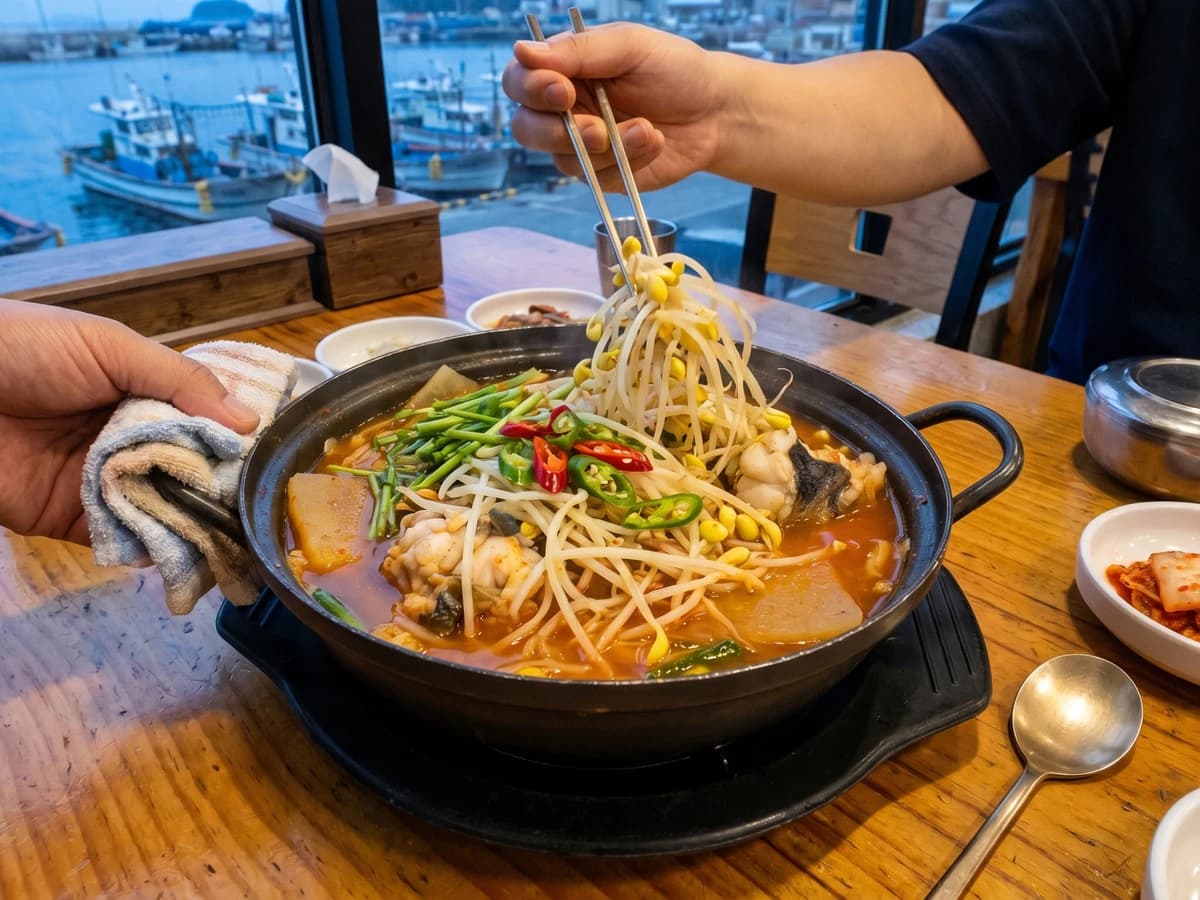
A Masan coast monkfish stew with firm white meat, gelatin at the bones, soybean sprouts for crunch, and a red broth seasoned to carry the fish, not bury it.

Chef Jeong-sun
A weeknight fish roe stew with radish and crown daisy in a clean spicy broth, where the whole success depends on adding the roe late enough that it sets tender, not chalky.

Chef Jeong-sun
Late-summer mallow leaves rubbed with salt until the bitter green water runs off, then simmered in a clean doenjang broth with dried shrimp, the quiet soup a Korean weeknight deserves.