
Chef Fai
Dry Egg Noodles (Ba Mee Haeng)
The four pillars live at the bottom of the bowl before the noodles ever touch it: nam pla for salt, sugar for sweet, vinegar for sour, chili for heat. Every noodle cart in Bangkok runs on this principle.
A cooking platform built around craft, culture, and the stories behind what we eat.
Created by
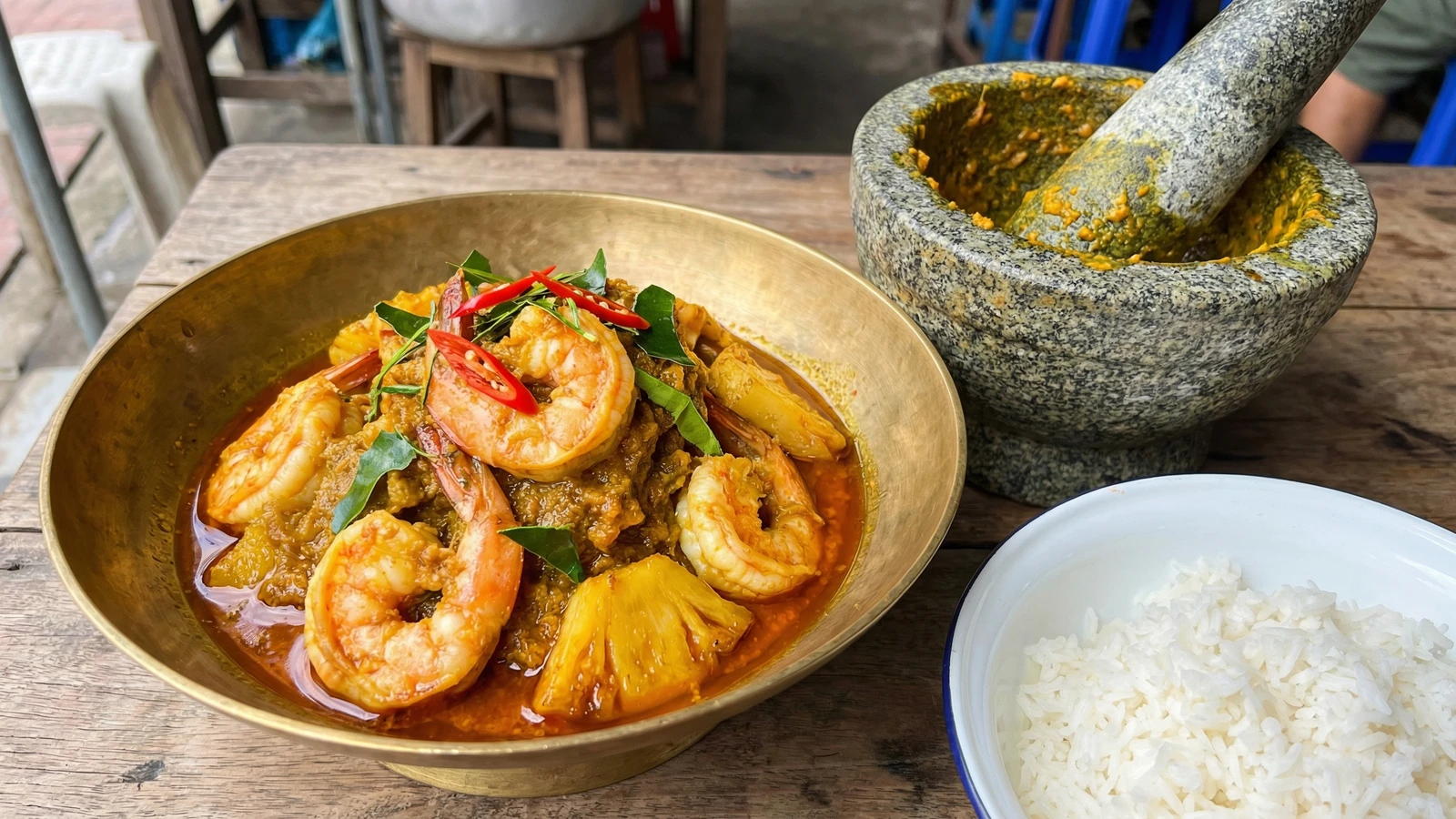
The khua technique is the Southern kreung tam pushed to its limit: paste dry-fried in thick coconut cream until the fat breaks and the oil pools golden. Then the shrimp. Then silence at the table.
The khua technique is what separates Southern Thai curries from the rest of the country. Central Thai curries simmer. Southern Thai curries fry.
Gaeng khua starts with the kreung tam, and this one is unmistakably Southern. Fresh turmeric (khamin) turns the paste golden before it touches the pan. Dried long chilies (prik haeng) go in by the fistful. Kapi (shrimp paste) is heavy, almost aggressive. This isn't the polite, balanced paste of a Central Thai green curry. This is the Andaman coast talking. The Gulf of Thailand talking. Fishing villages where shrimp comes off the boat still twitching and the paste has been pounded since before dawn.
Here's the principle Ajarn always drilled into me: the kreung tam is everything, but technique determines what the kreung tam becomes. The same paste cooked in thin coconut milk gives you a soup. That paste dry-fried in the thick head of coconut cream (hua kati), the fat cracking and separating until the oil pools on the surface and the paste darkens and concentrates, that gives you gaeng khua. The technique is the transformation. You cook the paste until it stops smelling raw and starts smelling roasted. Until the coconut fat has rendered out completely and you see orange-gold oil sitting on top. That moment is the dish. Everything after is assembly.
Pineapple goes in because the South leans sour and spicy, not sweet. The fruit isn't there for sweetness. It's there for tartness, for acid cutting through that wall of coconut fat and shrimp paste. Fish sauce for salt. A whisper of palm sugar, barely there. Chili heat built into the paste itself. The four pillars hold, but the South turns the dial hard toward sour and spice. That's regional identity expressed through the same governing system.
Gaeng khua is a curry technique native to Southern Thailand's coastal provinces, particularly Nakhon Si Thammarat, Surat Thani, and Songkhla. The word 'khua' (คั่ว) means to dry-fry or roast, describing the method of cooking paste in thick coconut cream until the fat separates, a technique that concentrates flavor in the humid, coconut-rich South. Pairing shrimp with pineapple in gaeng khua reflects the Southern pantry: seafood pulled fresh from the Gulf and tropical fruit from the surrounding orchards, assembled in a curry style that predates refrigeration, where the aggressive paste and fat-rendering technique served as preservation.
Quantity
400g
shell-on, head-on preferred, deveined
Quantity
400ml
first pressing, the dense top layer
Quantity
150g
cut into thin wedges
Quantity
2 tablespoons
Quantity
1 teaspoon
Quantity
3
torn
Quantity
10
seeded and soaked 15 minutes
Quantity
5
fresh
Quantity
1 tablespoon
Quantity
7
sliced
Quantity
5 cloves
Quantity
2-inch piece
sliced
Quantity
2-inch piece
sliced thin
Quantity
2 stalks
tender inner part only, sliced thin
Quantity
1 teaspoon
Quantity
zest of 1 fruit
finely sliced
Quantity
1 teaspoon
| Ingredient | Quantity |
|---|---|
| large shrimp (goong)shell-on, head-on preferred, deveined | 400g |
| thick coconut cream (hua kati)first pressing, the dense top layer | 400ml |
| fresh pineapple (sapparot)cut into thin wedges | 150g |
| fish sauce (nam pla) | 2 tablespoons |
| palm sugar (nam tan pip) | 1 teaspoon |
| kaffir lime leaves (bai makrut)torn | 3 |
| dried long red chilies (prik haeng)seeded and soaked 15 minutes | 10 |
| bird's eye chilies (prik khi nu)fresh | 5 |
| shrimp paste (kapi) | 1 tablespoon |
| shallots (hom daeng)sliced | 7 |
| garlic (kratiam) | 5 cloves |
| fresh turmeric (khamin)sliced | 2-inch piece |
| galangal (kha)sliced thin | 2-inch piece |
| lemongrass (takhrai)tender inner part only, sliced thin | 2 stalks |
| white peppercorns (prik thai khao) | 1 teaspoon |
| kaffir lime zest (phiu makrut)finely sliced | zest of 1 fruit |
| sea salt | 1 teaspoon |
Remove the seeds from the dried long red chilies (prik haeng) and soak them in warm water for 15 minutes until they're pliable. Squeeze out the excess water. Seeding them controls heat without removing flavor. The dried chili is there for body, color, and a slow, building burn. The bird's eye chilies handle the sharp, immediate kick. Two kinds of heat, two jobs.
Start with the hard, dry ingredients in the granite mortar. Pound the white peppercorns and sea salt to a powder. Add the soaked dried chilies and fresh bird's eye chilies. Pound to a rough paste. Then the lemongrass, galangal, and kaffir lime zest, pounding each addition until it's broken down before adding the next. The turmeric goes in next. Watch your mortar turn gold. That stain doesn't come out, and that's fine. Every Southern Thai krok is permanently golden. Now the shallots and garlic. Pound until the paste is thick and cohesive, no chunks, just a rough, fragrant mass. Finally, the kapi (shrimp paste). Pound it in until fully integrated. The paste should smell intense: briny, earthy, with turmeric hitting your nose first and the chili building underneath.
Peel the shrimp, leaving the tails on if you want the presentation. Devein them. If you have head-on shrimp, set the heads aside. You can press them into the mortar with the paste for a few strokes to work their fat and flavor into the kreung tam. Southern cooks waste nothing from the sea. Pat the shrimp dry. Wet shrimp will cool your pan and ruin the khua technique.
This is the step that defines gaeng khua. Pour the thick coconut cream (hua kati) into a wok or heavy pan over medium heat. No oil. The coconut cream is the fat. Stir gently as it heats. Within 3 to 5 minutes, you'll see the cream start to separate: the white solids will begin to look grainy and translucent oil will pool around the edges. Keep going. The oil should be clearly visible, sitting on top of the coconut solids. The surface will look broken, almost curdled. That's correct. That's what 'cracking' means. If it still looks like a smooth white sauce, you haven't gone far enough.
Add the kreung tam to the cracked coconut cream. This is where khua happens. Stir the paste constantly into the separated fat. The paste will absorb the oil and start to fry. You'll hear it sizzle. The color will deepen from bright gold to a richer, darker amber. The raw, sharp smell of turmeric and shrimp paste will transform into something roasted, nutty, and deeply fragrant. Keep stirring. This takes 5 to 8 minutes. Don't rush it. You're looking for the oil to separate again on the surface, now tinted orange-gold by the paste. When the oil pools around the edges of the paste and the kitchen smells like a Southern Thai market stall, you're there.
Add the shrimp to the pan and toss them into the paste. Fold, don't stir wildly. You want the paste to coat every surface of every shrimp. Cook for 2 minutes, until the shrimp just begin to curl and turn pink. Add the pineapple wedges and the torn kaffir lime leaves. Toss gently. The pineapple will release a little juice into the curry. That's good. That's the sour pillar arriving. Cook for another minute, just enough for the fruit to warm through and soften slightly at the edges. The pineapple should hold its shape.
Add the fish sauce and the small amount of palm sugar. Toss once. Taste. The curry should be: rich and coconut-forward first, then the burn from the paste building, then sour from the pineapple cutting through the fat, then salt from the nam pla anchoring everything. The sugar is barely noticeable. It's there to round the edges, not to sweeten. If it tastes sweet, you've added too much. This is Southern food. It doesn't hold back on heat and it doesn't lean into sweetness. Adjust. Plate immediately. This curry is thick, clinging to the shrimp like a glaze. There should be no pool of liquid on the plate. That's the khua technique working.
1 serving (about 200g)
Culinary guides, cultural storytelling, and the editorial depth that makes cooking meaningful.
Discover Culinary ExplorerChef Fai
The four pillars live at the bottom of the bowl before the noodles ever touch it: nam pla for salt, sugar for sweet, vinegar for sour, chili for heat. Every noodle cart in Bangkok runs on this principle.

Chef Fai
The kreung tam fried in cracked coconut cream until the oil bleeds red. That's the technique. Concentrated, semi-dry, spooned thick over crispy fish. This is what happens when the four pillars meet restraint.

Chef Fai
Isan foraging in a bowl: wild taro stems stripped of their sting, simmered in padaek broth with a pounded chili paste and yanang leaf extract. The land feeds you if you know the rules.

Chef Fai
Lanna's kreung tam breaks from Central Thai rules: ginger over galangal, cumin and coriander from Burmese spice routes, tamarind for sour instead of lime. The North has its own system, and this curry is its crown.