
Chef Freja
Andelår med Rødkål
Slow-roasted duck legs with crisp, deeply golden skin, served with braised red cabbage and caramelized potatoes. The weeknight Danish duck that proves the best part of the bird is the one that takes its time.
A cooking platform built around craft, culture, and the stories behind what we eat.

Created by Chef Freja
The pan-fried pork-and-veal patties that define the Danish weeknight table. Sparkling water in the mix, butter and oil in the pan, a golden crust that cracks when you cut through to the tender center.
Every country has a dish that means Tuesday night. In Denmark, it's frikadeller. Not because they're special occasion food, but because they're the opposite: the meal that shows up when nobody is trying to impress anyone and the kitchen still smells like home.
Frikadeller are pan-fried patties of pork and veal, shaped by hand into thick ovals and cooked in butter and oil until the outside goes deep golden brown and the inside stays soft. The technique issimple. The details are what matter. You grate the onion instead of chopping it, so it melts into the mixture and disappears. You add sparkling water, not still, because the carbonation creates air pockets that survive the frying and give the finished frikadelle a lightness that the ingredients alone don't explain. You fry in butter and oil together, because butter alone burns and oil alone has no soul.
I want you to pay attention to the shape. Frikadeller are not round meatballs. They're oval and slightly flattened, which gives you more surface against the pan, which means more crust, which is where all the best flavor lives. Get the shape right and the rest follows. You'll know when they're done because the crust releases from the pan on its own. If it sticks, it's not ready. Trust the pan. Trust yourself. This is a dish that rewards patience and honest ingredients, and by the time you sit down you'll understand why it has outlasted every food trend Denmark has ever had.
Frikadeller appear in Danish cookbooks as early as the 1700s, though the word itself traveled from the French fricadelle through German kitchens before settling into Danish. By the nineteenth century, they had become the defining weeknight dinner of the Danish household, a position they haven't surrendered since. The addition of sparkling water to the mixture, a technique most Danish cooks learn from watching a mother or grandmother rather than from any written recipe, creates the distinctively light texture that separates Danish frikadeller from their German or Swedish cousins.
Quantity
300g
Quantity
200g
Quantity
1 small
finely grated
Quantity
1 large
Quantity
4 tablespoons
Quantity
150ml
Quantity
1 teaspoon
Quantity
freshly ground, to taste
Quantity
40g
Quantity
2 tablespoons
Quantity
to serve
Quantity
to serve
| Ingredient | Quantity |
|---|---|
| ground pork | 300g |
| ground veal | 200g |
| onionfinely grated | 1 small |
| egg | 1 large |
| plain flour | 4 tablespoons |
| cold sparkling water | 150ml |
| fine sea salt | 1 teaspoon |
| black pepper | freshly ground, to taste |
| unsalted butter | 40g |
| neutral oil | 2 tablespoons |
| new potatoes (optional) | to serve |
| pickled red cabbage (optional) | to serve |
Combine the pork and veal in a large bowl with the grated onion, egg, flour, salt, and a good grinding of black pepper. Stir it together with a fork or wooden spoon, working in one direction. This matters. Mixing in one direction develops the protein strands that hold the frikadeller together. If you stir randomly, the mixture stays loose and falls apart in the pan.
Pour the cold sparkling water into the mixture in a steady stream, stirring as you go. The mixture will look too wet. That's correct. The water needs to be sparkling and it needs to be cold. The bubbles create tiny air pockets inside the meat that survive the frying, and the result is a frikadelle that's light and tender instead of dense and heavy. Still water doesn't do this. Let the mixture rest for ten minutes so the flour absorbs the liquid and the whole thing firms up slightly.
Wet your hands with cold water. Take a generous spoonful of the mixture, about the size of a small egg, and shape it between your palms into an oval patty, slightly flattened. Not a round ball. Frikadeller are oval and flat, like a thick patty. This gives you more surface area in the pan, which means more crust, and the crust is where the flavor concentrates. Set each one on a damp plate as you go. You should get about sixteen.
Set a large heavy frying pan over medium heat. Add the butter and oil together and let the butter melt and foam. Butter alone burns before the centers cook through. Oil alone tastes like nothing. Together they give you the golden crust and the nutty richness that makes frikadeller taste the way they should. Wait until the foam subsides and the butter smells warm and faintly of hazelnuts. That's the moment.
Lay the frikadeller into the pan, leaving space between each one so they fry rather than steam. Don't crowd the pan. Work in two batches if you need to. Let them cook undisturbed for four to five minutes. Don't move them, don't press them, don't peek underneath every thirty seconds. The crust forms when the meat is left alone against the hot fat. When the edges start to turn golden and opaque about a third of the way up, it's time to turn.
Flip each frikadelle carefully with a spatula. The underside should be a deep, even golden brown. Cook the second side for another four to five minutes. Lower the heat slightly if the butter is darkening too fast. When they're done, the outside is richly browned and firm to the touch, and the inside is cooked through but still juicy. Cut one open to check if you're unsure. There's no shame in checking. The center should be cooked with no pink remaining, but still moist, not grey and dry.
Transfer the frikadeller to a warm plate and let them rest for two or three minutes. This lets the juices redistribute so they don't run out the moment you cut in. Serve with boiled new potatoes, pickled red cabbage, and a spoonful of remoulade or brun sovs if you have it. This is Tuesday night in Denmark. This is how we greet each other at the table after a long day. Tak for mad.
1 serving (about 155g)
Culinary guides, cultural storytelling, and the editorial depth that makes cooking meaningful.
Discover Culinary ExplorerChef Freja
Slow-roasted duck legs with crisp, deeply golden skin, served with braised red cabbage and caramelized potatoes. The weeknight Danish duck that proves the best part of the bird is the one that takes its time.

Chef Freja
The whole roasted duck of juleaften, stuffed with tart apples and dark prunes, slow-roasted for four patient hours until the skin crackles like something earned and the meat underneath gives way without resistance.
Chef Freja
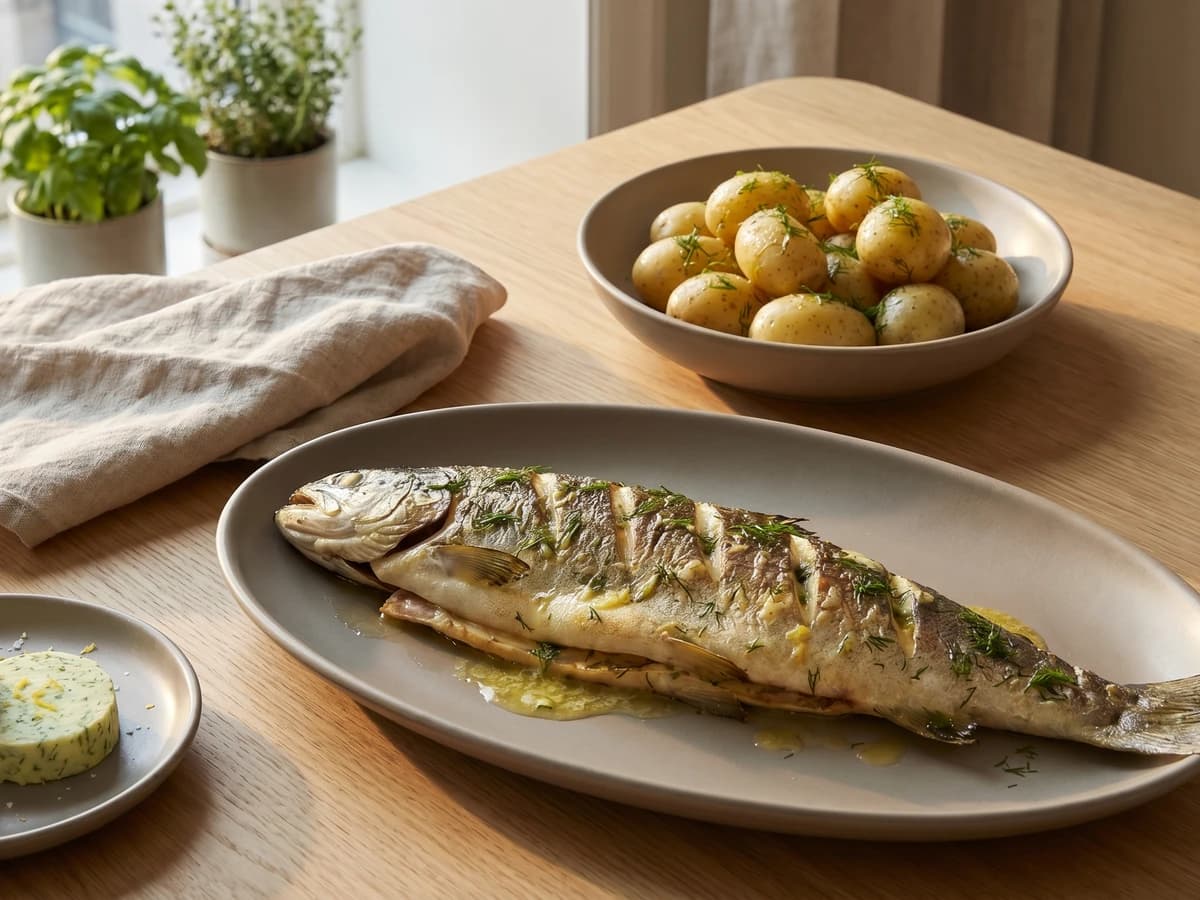
Whole sea trout baked with butter, lemon, and armfuls of dill, served beside the first nye kartofler of the season and a melting slab of dildsmor. The Danish summer table at its most generous.
Chef Freja
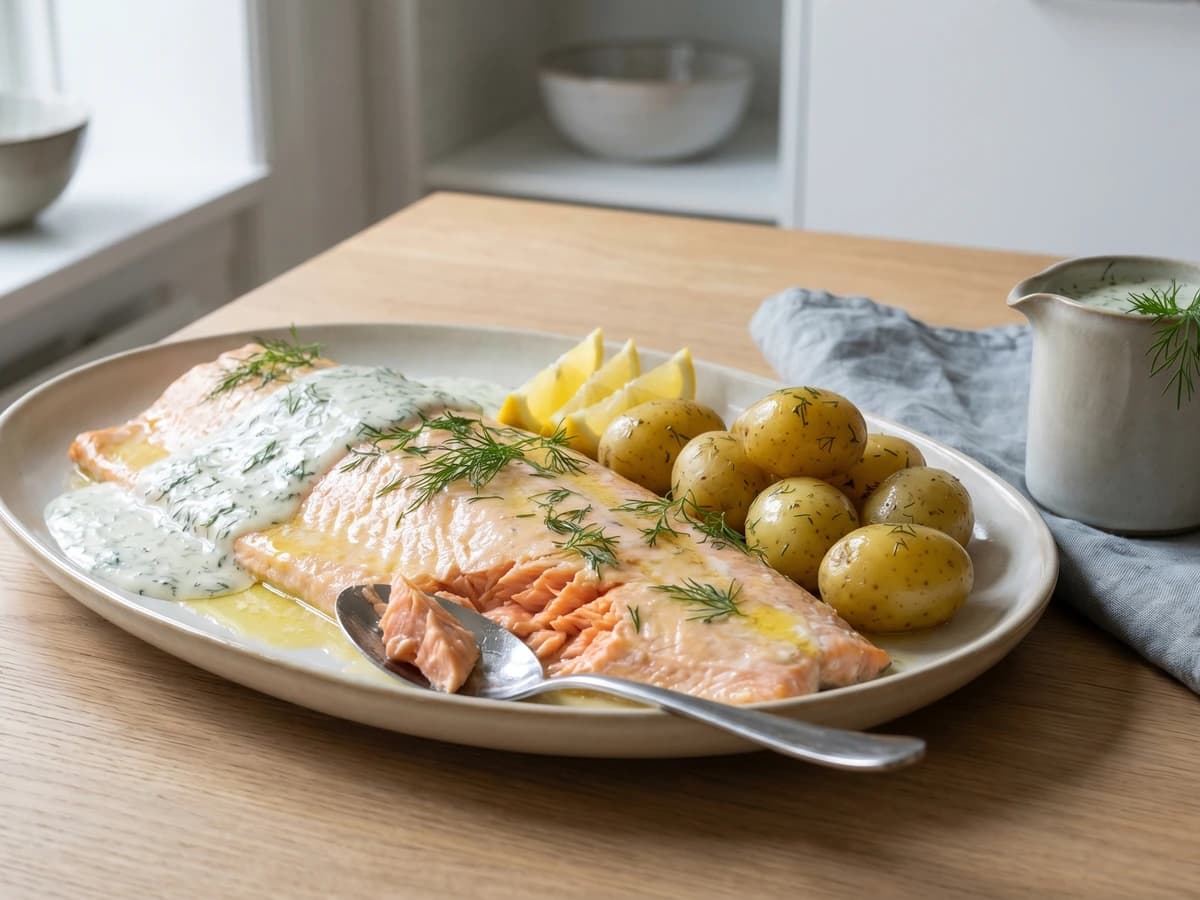
A side of salmon baked gently in butter and white wine, served warm with a bright dill cream sauce and the season's first nye kartofler. Late spring on a Danish table, cooked with love.