
Chef Lupita
Arroz Blanco Tabasqueno con Platano
Tabasco's everyday white rice, cooked loose and clean with onion and garlic, then crowned with sweet fried ripe plantain from the lowland kitchen.
A cooking platform built around craft, culture, and the stories behind what we eat.
Created by
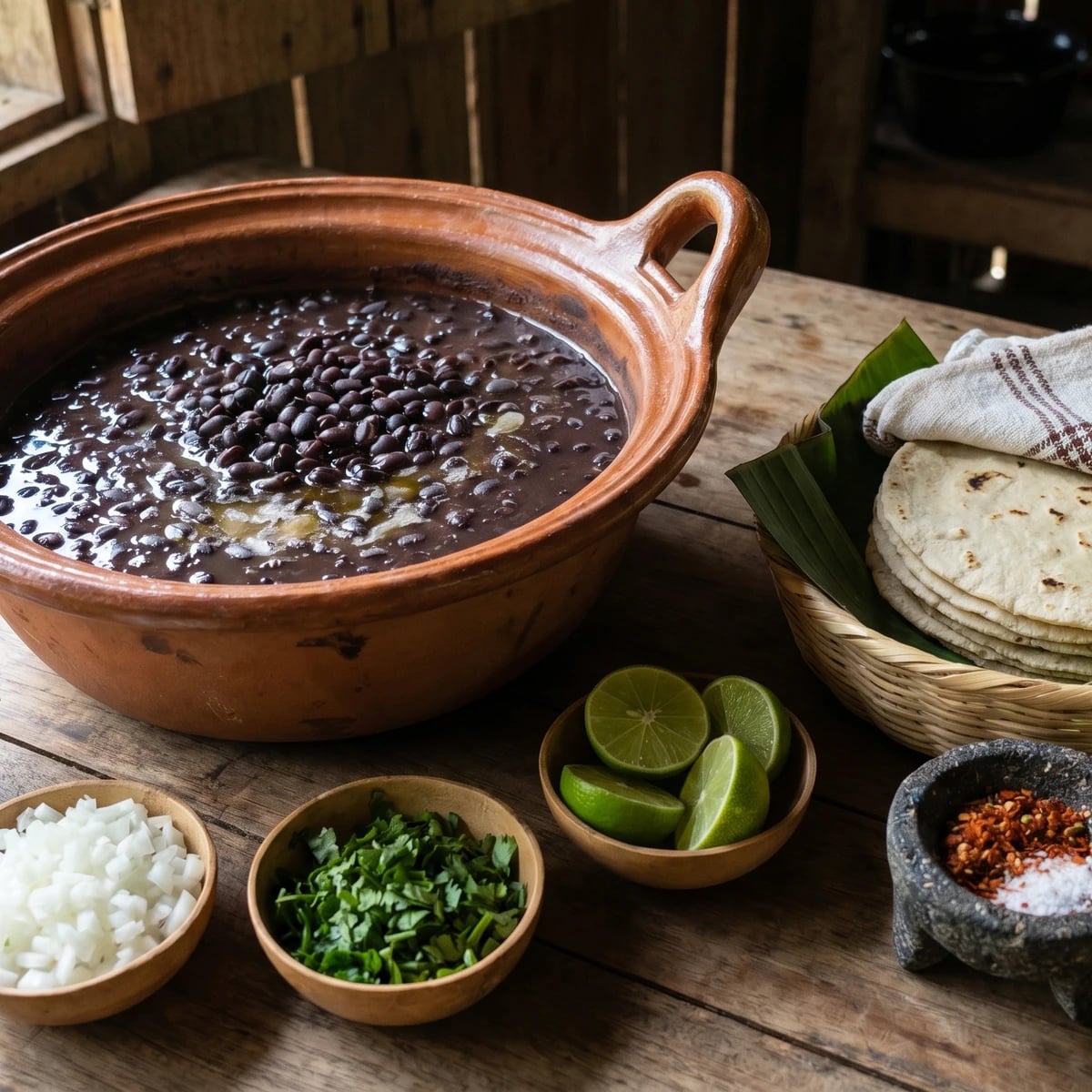
Tabasco's everyday black bean pot, loose and brothy, scented with epazote and finished at the table with radish, cilantro, lime, and the tiny green bite of chile amashito.
Tabasco lives in the wet lowland south, between the Grijalva and Usumacinta rivers, where the markets smell of cacao, plantain, fish, hoja de platano, chipilin, and chile amashito. These are the black beans of that table: soupy, dark, practical, served in their own broth, not mashed into a paste and not buried under cheese. No me vengas con atajos.
The ingredient that gives the pot its spine is epazote. Not oregano. Not bay leaf. Epazote. It goes in near the end so it perfumes the broth without turning harsh. The chile amashito does not get cooked into the whole pot unless the cook wants to punish everyone equally. In Tabasco it sits on the table, whole or crushed with salt and lime, so each person decides how much fire belongs in the spoon.
I learned this version from a woman in Nacajuca who cooked the beans in a blackened clay olla and served them with sliced radish, raw white onion, cilantro, lime, and thick hand-pressed tortillas. She kept correcting my broth. Too thick. Too dry. Too much like beans from somewhere else. Tabasco wants the spoon to carry broth. Cada estado, su propia cocina.
My mother was from Jalisco, so her beans leaned another direction. That is the point. This is a 32-state cuisine. If you cook these correctly, the pot tastes like humidity, market herbs, and a household that knows how to feed people without wasting one peso. Saber cocinar es saber vivir.
Black beans have been part of the Maya south and Gulf lowlands since before the Spanish entered the Grijalva region in 1518, cooked with maize, squash, chiles, and local herbs as the base of daily food. Tabasco's Chontal Maya, the Yokot'anob, built a cuisine around rivers, cacao, plantain, fish, beans, and wild chiles, and chile amashito remains one of the state's defining table chiles. Pork lard arrived after the conquest, but the bean pot stayed what it had always been: household economy, regional identity, and broth worth respecting.
Quantity
1 pound
picked over and rinsed
Quantity
8 cups, plus more hot water as needed
Quantity
1/2 medium
left in one piece
Quantity
4
2 smashed and 2 finely chopped
Quantity
2 tablespoons
Quantity
1/2 medium
finely chopped
Quantity
2
Quantity
1 1/2 teaspoons, plus more to taste
Quantity
1/2 cup
sliced
Quantity
1/2 cup
finely chopped, for serving
Quantity
1/2 cup
chopped
Quantity
4
halved
Quantity
12 to 16
whole or lightly crushed with salt
Quantity
for serving
warmed
| Ingredient | Quantity |
|---|---|
| dried black beanspicked over and rinsed | 1 pound |
| water | 8 cups, plus more hot water as needed |
| white onionleft in one piece | 1/2 medium |
| garlic cloves2 smashed and 2 finely chopped | 4 |
| manteca de cerdo | 2 tablespoons |
| white onionfinely chopped | 1/2 medium |
| fresh epazote sprigs | 2 |
| kosher salt | 1 1/2 teaspoons, plus more to taste |
| radishes (optional)sliced | 1/2 cup |
| white onion (optional)finely chopped, for serving | 1/2 cup |
| fresh cilantro (optional)chopped | 1/2 cup |
| limes (optional)halved | 4 |
| fresh chile amashito (optional)whole or lightly crushed with salt | 12 to 16 |
| hand-pressed thick corn tortillas tabasquenas (optional)warmed | for serving |
Spread the black beans on a tray and pick out stones, broken beans, and anything that does not belong. Rinse them under cool water until the water runs clear. If your beans are old, soak them overnight and drain them before cooking. Fresh dried beans from a busy mercado do not need soaking. Old supermarket beans do, because they have been sitting too long and no scolding will make them tender.
Put the beans in a clay olla or heavy pot with 8 cups water, the half onion, and the 2 smashed garlic cloves. Bring to a steady simmer over medium heat, then lower the heat so the beans move gently. Do not add the salt yet. Keep the water level about two fingers above the beans, adding hot water when needed. Cold water shocks the pot and slows everything down.
Simmer partially covered for 1 hour 45 minutes to 2 hours, depending on the age of the beans. Stir now and then so the bottom does not catch. The broth should turn dark purple-black and the beans should soften without splitting into mush. Bite one. If the center is chalky, it is not ready. The clock does not decide. The bean decides.
When the beans are almost tender, melt the manteca de cerdo in a small skillet over medium heat. Add the finely chopped onion and cook until glossy and soft, about 5 minutes. Add the 2 finely chopped garlic cloves and cook for 30 seconds, just until fragrant. Do not brown the garlic. La manteca es el sabor, and here it gives body to a pot that still needs to stay brothy.
Scoop 1 cup of cooked beans with a little broth into the skillet with the onion and garlic. Mash them roughly with the back of a spoon until they make a dark paste. Scrape everything back into the pot. This is not refried beans. This is how you give the broth enough body to cling to the spoon while keeping it loose, the way Tabasco serves it.
Add the epazote sprigs and 1 1/2 teaspoons salt. Simmer 20 to 30 minutes more, uncovered, until the beans are fully tender and the broth tastes round. Remove the onion piece, smashed garlic, and epazote stems if they bother you. Taste again for salt. Beans are humble, not timid. They need enough salt to make the broth speak.
Set out sliced radishes, finely chopped white onion, chopped cilantro, lime halves, and chile amashito. Leave some chiles whole and crush a few with salt in a molcajete if you want the real Tabasco bite. Serve the beans in bowls with plenty of broth and let each person finish their own. The amashito belongs alongside, not hidden in the pot. Asi se hace y punto.
1 serving (about 350g)
Culinary guides, cultural storytelling, and the editorial depth that makes cooking meaningful.
Discover Culinary Explorer
Chef Lupita
Tabasco's everyday white rice, cooked loose and clean with onion and garlic, then crowned with sweet fried ripe plantain from the lowland kitchen.

Chef Lupita
Comitán's golden rice from the Chiapas highlands, gently fried first, then steamed with saffron threads, chicken broth, onion, and garlic until each grain stays separate.

Chef Lupita
Tabasco's everyday red rice, long-grain grains fried in manteca, stained with tomato, and simmered in chicken broth until each grain stands separate.

Chef Lupita
Los Altos de Chiapas gives you tender calabacita, sweet elote, tomato, epazote, and a little chile Simojovel, cooked softly in manteca until the milpa tastes like itself.