
Chef Lupita
Arroz a la Oaxaqueña
Oaxaca's red rice, stained with tomato and fried in lard, steamed with carrots, ejotes, black beans, and epazote. The side that anchors a Oaxacan family meal and earns its place beside the main.
A cooking platform built around craft, culture, and the stories behind what we eat.

Created by
Oaxacan black beans simmered slow with chepil, the wild legume herb that grows along the milpas of the Sierra Sur, finished with lard and epazote and eaten from clay bowls with warm corn tortillas.
This is Oaxaca. Specifically the Valles Centrales and the Sierra Sur, where chepil grows wild along the edges of the milpas and women gather it in the rainy season the way other people gather mushrooms. Chepil, Crotalaria longirostrata, is a small-leafed legume herb with a flavor that is hard to describe to anyone who has not eaten it. Salty without salt. Faintly grassy. A little like raw green beans, a little like fresh peas, a little like nothing else.
Frijoles con chepil is the dish that Oaxaca eats when it wants to eat itself. The beans are frijol negro, slow-simmered in a clay olla with onion, garlic, and lard, no soaking, no shortcuts, until the broth turns nearly black and tastes like the bean itself. Then the chepil goes in at the end and changes everything. The pot smells like the milpa after a rain.
My mother did not cook this. She was from Jalisco and Jalisco does not have chepil. I learned this dish from a senora named dona Florencia in Zaachila, in the market on a Thursday, who let me sit on a plastic stool while she stemmed the leaves and explained why you never put chepil in until the very end. Boil it long and the flavor flattens. She said it like she was warning me about something more important than beans. No me vengas con atajos. Cada estado, su propia cocina, and this one belongs to Oaxaca.
Chepil (Crotalaria longirostrata) is a perennial legume native to southern Mexico and Central America that has been used as a quelite, a wild edible green, since pre-Columbian times by the Zapotec and Mixtec peoples of what is now Oaxaca. The plant fixes nitrogen in the soil and traditionally grew alongside corn and beans in the milpa system, providing both a soil amendment and a seasonal vegetable harvested during the rainy months from June through September. Frijoles con chepil is one of the dishes documented in the Codex Florentino's 16th-century descriptions of indigenous Oaxacan cooking, and the herb remains so identified with the region that fresh chepil rarely appears in markets outside Oaxaca, Chiapas, and Guerrero.
Quantity
1 pound
Quantity
1 medium
halved
Quantity
1/2 cup
finely diced
Quantity
6
lightly smashed
Quantity
2 tablespoons
Quantity
2 sprigs
Quantity
2 cups packed (about 2 large bunches)
stemmed
Quantity
1
slit lengthwise
Quantity
1 tablespoon, plus more to taste
Quantity
for serving
warmed
Quantity
for serving
Quantity
for serving
| Ingredient | Quantity |
|---|---|
| dried black beans (frijol negro de Oaxaca preferred) | 1 pound |
| white onionhalved | 1 medium |
| white onion for serving (optional)finely diced | 1/2 cup |
| garlic cloveslightly smashed | 6 |
| manteca de cerdo (pork lard) | 2 tablespoons |
| fresh epazote | 2 sprigs |
| fresh chepil leavesstemmed | 2 cups packed (about 2 large bunches) |
| fresh chile de agua or chile serrano (optional)slit lengthwise | 1 |
| kosher salt | 1 tablespoon, plus more to taste |
| hand-pressed corn tortillas (optional)warmed | for serving |
| crumbled queso fresco (optional) | for serving |
| salsa de chile pasilla mixe (optional) | for serving |
Spread the dried black beans on a sheet pan and pick out any small stones, broken beans, or shriveled ones. Rinse them under cold water in a colander. Do not soak them overnight. Oaxacan cooks do not soak. The beans cook fine without it and the broth comes out richer when the beans surrender their starch slowly into the pot.
Place the rinsed beans in a heavy clay olla or 6-quart Dutch oven. Cover with cold water by three inches. Add the halved onion, the smashed garlic, and one tablespoon of the lard. Bring to a gentle simmer over medium heat, partially covered. Skim the gray foam that rises in the first twenty minutes. La manteca es el sabor, even here, even in beans. The fat is what makes the broth feel like food and not like water with beans in it.
Reduce the heat to low. The beans should bubble lazily, never roll. Cook for one hour and forty-five minutes to two hours, stirring every so often and adding a cup of hot water if the level drops below the beans. Do not add salt yet. Salt the beans now and the skins will toughen. Asi se hace y punto.
While the beans cook, pick the chepil leaves off their thin stems. The stems are tough and stringy and you do not want them in the pot. Rinse the leaves in cold water, drain, and set aside. Two cups packed sounds like a lot. It cooks down to almost nothing. Chepil is shy in volume but loud in flavor.
Crush a bean between your thumb and finger. It should give without resistance, creamy at the center, no chalky core. If it still has bite, keep simmering and check again in fifteen minutes. Beans are done when they are done. The clock is a suggestion.
Now add the salt, the epazote sprigs, the chepil leaves, and the slit chile if using. Stir gently. The chepil will wilt into the broth within a minute and turn the pot a deeper green-black. Stir in the second tablespoon of lard. Simmer for ten more minutes, uncovered, so the flavors marry and the broth thickens slightly. Taste. Adjust salt. The broth should taste of beans first, of chepil second, of fat underneath.
Fish out the spent onion halves, the epazote stems, and the chile. Ladle the beans and their broth into deep clay bowls, generous with the liquid. Top with diced raw white onion and crumbled queso fresco at the table. Pass warm corn tortillas and a small bowl of salsa de chile pasilla mixe. This is not a side dish in Oaxaca. With a stack of tortillas it is dinner. Saber cocinar es saber vivir.
1 serving (about 285g)
Culinary guides, cultural storytelling, and the editorial depth that makes cooking meaningful.
Discover Culinary ExplorerChef Lupita
Oaxaca's red rice, stained with tomato and fried in lard, steamed with carrots, ejotes, black beans, and epazote. The side that anchors a Oaxacan family meal and earns its place beside the main.
Chef Lupita
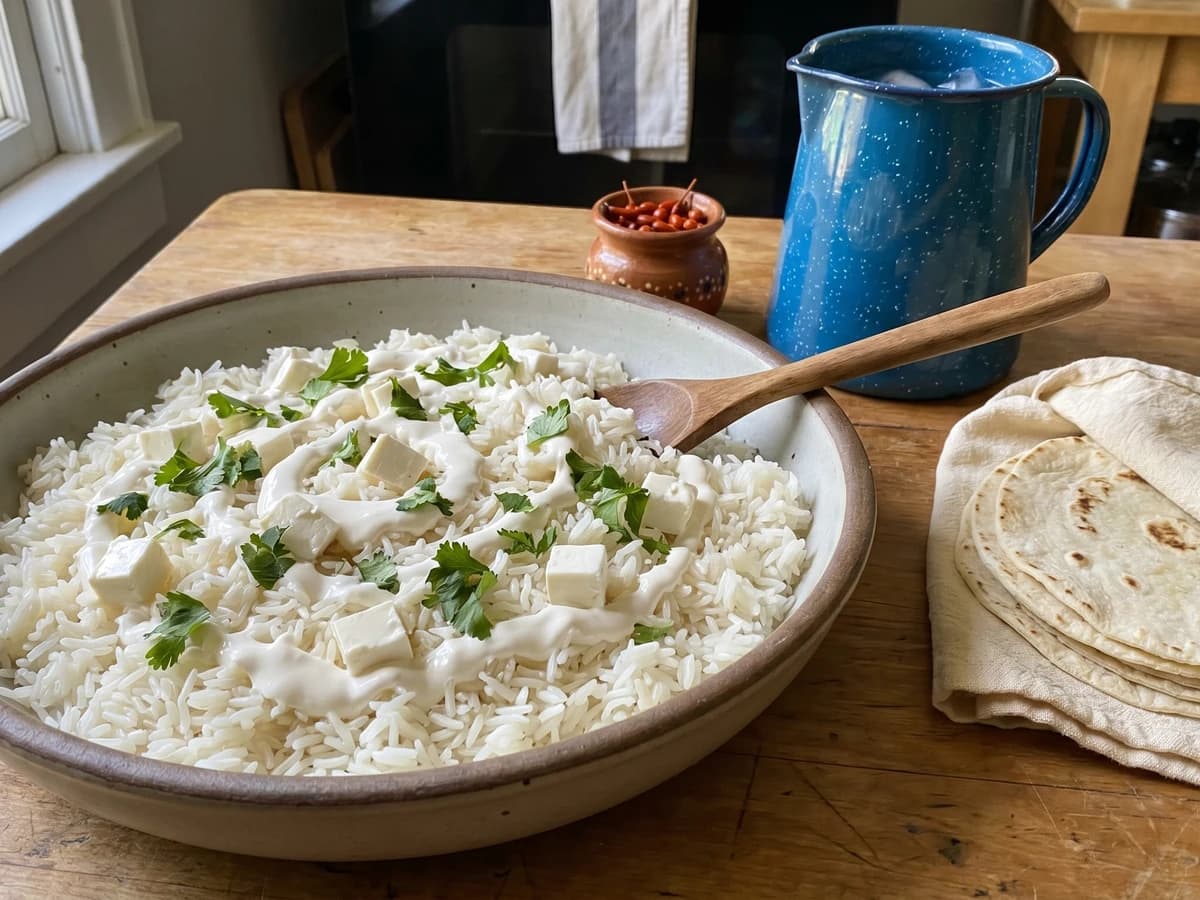
Sinaloa's home-cook white rice topped with cold cubes of cream cheese that soften into the warm grain, finished with crema and a sprinkle of chiltepin at the table. The trick that makes a side dish feel like a small luxury.
Chef Lupita
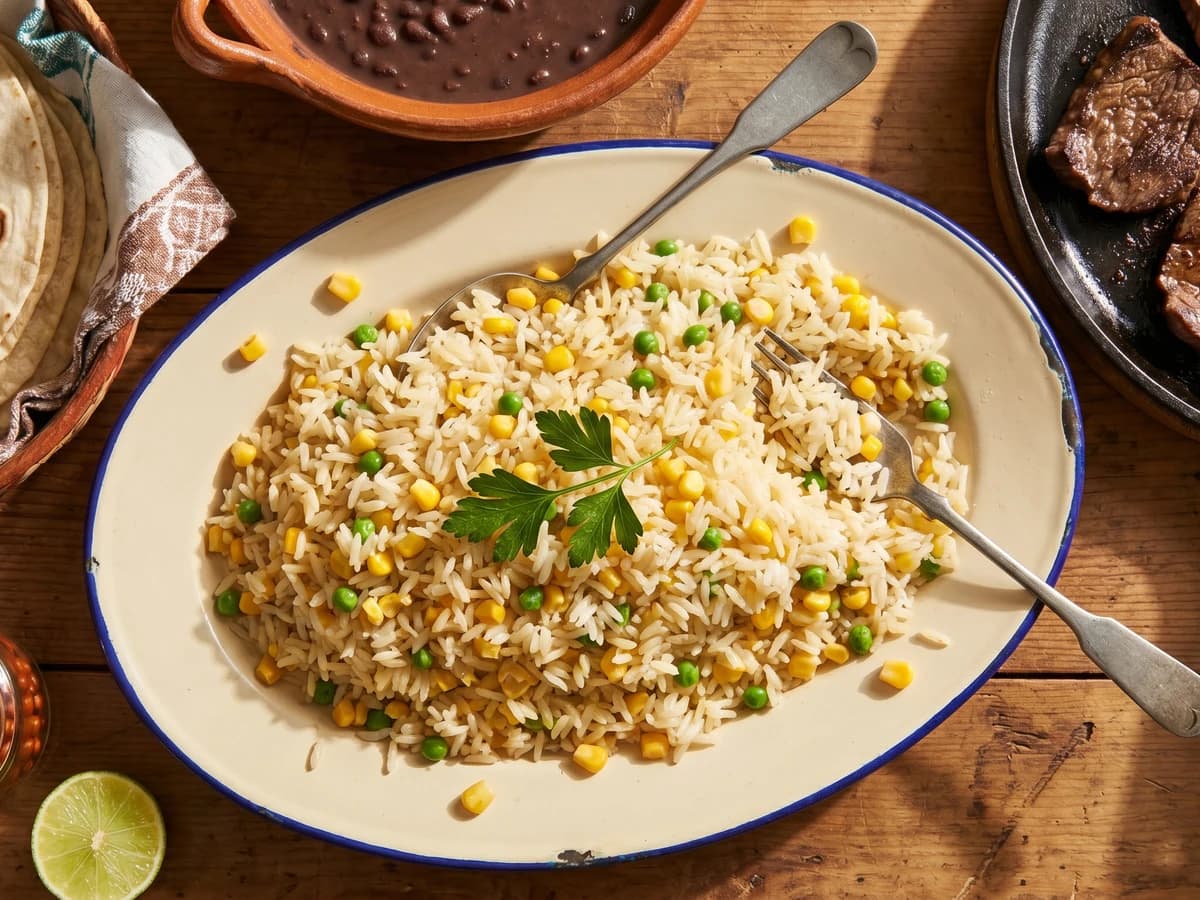
Sonora's white rice, toasted in butter and steamed with sweet corn and tender peas. The clean, quiet partner to a plate of carne asada, not the red rice of central Mexico.

Chef Lupita
Yucatán's white rice with sweet corn kernels, toasted in lard with garlic and onion. The quiet base that holds up against the peninsula's bold achiote-stained stews.