
Chef Lupita
Arroz a la Oaxaqueña
Oaxaca's red rice, stained with tomato and fried in lard, steamed with carrots, ejotes, black beans, and epazote. The side that anchors a Oaxacan family meal and earns its place beside the main.
A cooking platform built around craft, culture, and the stories behind what we eat.
Created by
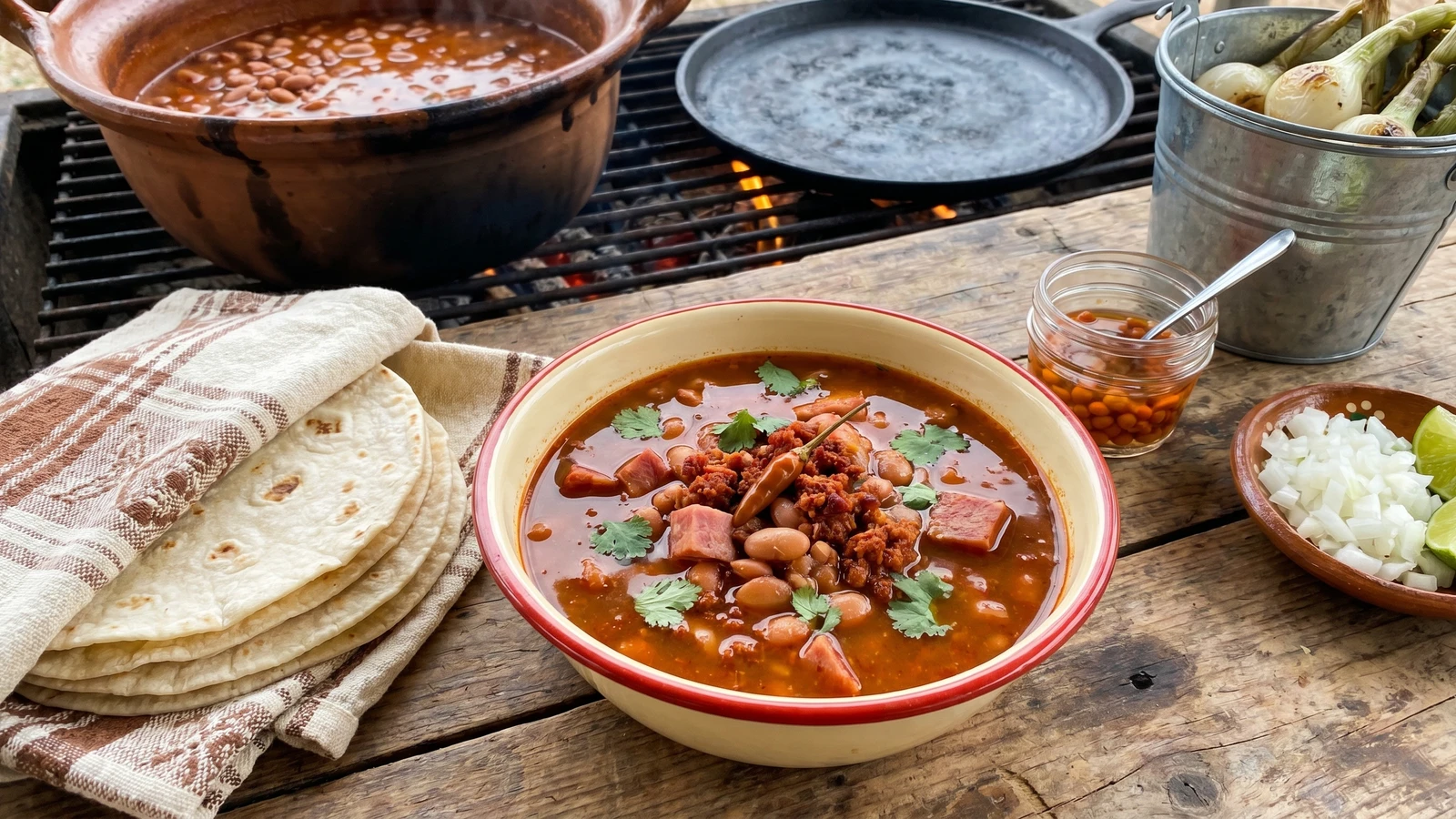
The brothy bean pot of Mexico's north, built on pintos, bacon, chorizo, ham, and tomato, simmered until the broth turns the color of brick dust and served alongside every carne asada from Hermosillo to Saltillo.
These beans belong to the north. Sonora, Chihuahua, Coahuila, Nuevo Leon, the cattle states, the wheat states, the parrilla states. This is wheat country, not corn country, which is why the tortilla on the table is flour and not maiz. Cada estado, su propia cocina, and the north has its own.
The name comes from the charros, the horsemen who worked the cattle ranches and ate from a communal pot at the end of a long day. Pinto beans, whatever pork was in the smokehouse, tomato from the kitchen garden, chile serrano or chiltepin pulled fresh off the bush. Nothing fancy. Nothing precious. A pot built to feed working people from the same ladle.
The technique is straightforward but the order matters. Cook the beans first, no salt, until they are tender. Build a sofrito of bacon, chorizo, ham, and tomato in a separate pan. Marry the two and simmer until the broth carries the smoke and the spice and the fat of all three meats. La manteca es el sabor, and in this dish you get three kinds of it.
I spent two summers cooking my way through the Noroeste, from the marisquerias of Bahia Kino to the asado pits of Monterrey. Every cook had her own pot of charros on the back burner, ready for whoever showed up. One senora in Hermosillo told me her secret was a single chiltepin crushed into the broth at the end. Another in Sabinas Hidalgo swore by half a beer. They were both right. No me vengas con atajos: this is a slow pot, but every step is honest work.
Frijoles charros take their name from the charrería tradition of northern Mexico, the equestrian culture that grew out of the Spanish hacienda system in the 17th and 18th centuries and was codified as Mexico's national sport in 1933. The dish itself is a working ranch food, evolved from the simple frijoles de la olla cooked over open mesquite fires by vaqueros who added whatever cured pork was available from the rancho's smokehouse. The pinto bean (Phaseolus vulgaris) is native to Mesoamerica and was domesticated in central Mexico over 7,000 years ago, but the variety became commercially dominant in the north because of its tolerance for the dry, alkaline soils of the Chihuahuan and Sonoran deserts. The brothy presentation distinguishes charros from the thicker, mashed frijoles refritos and from the bean-and-pork stew known as frijoles puercos common in Sinaloa.
Quantity
1 pound
picked over and rinsed
Quantity
10 cups, plus more as needed
Quantity
1 medium
half left whole, half finely diced
Quantity
1
halved crosswise, plus 4 cloves finely chopped
Quantity
2
Quantity
1 tablespoon, plus more to taste
Quantity
8 ounces
cut crosswise into 1/2-inch pieces
Quantity
8 ounces
casings removed
Quantity
8 ounces
diced into 1/2-inch cubes
Quantity
3 medium
finely diced
Quantity
2 to 3
finely chopped, seeds in for heat
Quantity
1 teaspoon
crumbled between your fingers
Quantity
1/2 teaspoon
Quantity
1/2 cup
leaves and tender stems, roughly chopped, plus more for serving
Quantity
1 bottle (12 ounces)
Quantity
for serving
warmed
Quantity
for serving
Quantity
for serving
| Ingredient | Quantity |
|---|---|
| dried pinto beanspicked over and rinsed | 1 pound |
| cold water | 10 cups, plus more as needed |
| white onionhalf left whole, half finely diced | 1 medium |
| head of garlichalved crosswise, plus 4 cloves finely chopped | 1 |
| bay leaves | 2 |
| kosher salt | 1 tablespoon, plus more to taste |
| thick-cut baconcut crosswise into 1/2-inch pieces | 8 ounces |
| Mexican pork chorizocasings removed | 8 ounces |
| thick-cut smoked hamdiced into 1/2-inch cubes | 8 ounces |
| roma tomatoesfinely diced | 3 medium |
| fresh chile serranofinely chopped, seeds in for heat | 2 to 3 |
| dried Mexican oreganocrumbled between your fingers | 1 teaspoon |
| ground cumin | 1/2 teaspoon |
| fresh cilantroleaves and tender stems, roughly chopped, plus more for serving | 1/2 cup |
| Mexican lager such as Tecate or Carta Blanca (optional) | 1 bottle (12 ounces) |
| hand-pressed flour tortillas (optional)warmed | for serving |
| lime wedges (optional) | for serving |
| pickled chiltepin or chiltepin in vinegar (optional) | for serving |
Place the pinto beans in a heavy 6-quart pot. Cover with the cold water. Add the half onion left whole, the halved head of garlic, and the bay leaves. Bring to a simmer over medium heat. Skim the gray foam in the first ten minutes. Lower the heat until the bubbles are lazy. Cover partially and cook for 90 minutes to 2 hours, until the beans are tender all the way through but still hold their shape. Add hot water as needed to keep them covered by an inch.
Once the beans are tender, fish out and discard the whole onion half, the spent garlic head, and the bay leaves. Add the tablespoon of salt to the bean broth. Stir, taste, and let it sit on low while you build the meats. The broth should taste assertively seasoned now. The pintos absorb salt as they finish, and the broth needs to push back.
In a wide heavy skillet or a small cast iron, cook the bacon over medium heat until the fat has rendered and the pieces are golden but still chewy, about 8 minutes. You want fat in the pan, not crisp shards. The rendered bacon fat is the base of the sofrito and it carries the smoke into the pot.
Add the chorizo to the bacon and break it up with a wooden spoon. Cook for 4 to 5 minutes, until it darkens and the fat turns brick red. Add the diced ham and cook another 3 minutes, just enough to crisp the edges. The pan should smell like a Sonoran ranch kitchen on a Sunday morning.
Add the diced onion to the pan with the meats. Cook for 4 minutes, until translucent. Add the chopped garlic and chile serrano and cook one minute more. Add the diced tomato, the oregano, and the cumin. Lower the heat and cook for 6 to 8 minutes, stirring, until the tomato breaks down and the mixture looks jammy. This sofrito is the second seasoning of the broth. Skip it and you have plain frijoles de la olla, which is a different dish for a different day.
Scrape every bit of the meat-and-tomato mixture into the pot of beans, including the rendered fat at the bottom of the skillet. La manteca es el sabor and that goes for bacon and chorizo fat too. Pour in the beer if using and let it bubble off for a minute. Stir gently to combine without crushing the beans.
Bring the pot back to a low simmer and cook uncovered for 25 to 30 minutes. The broth will tighten slightly and turn the color of brick dust at sunset. Taste for salt one more time. The chorizo, bacon, and ham all bring their own salt, so adjust carefully now, not in advance.
Just before serving, stir in the chopped cilantro. Ladle into deep bowls or set the whole pot on the table next to the parrilla. Charros are a spoon dish, served alongside the carne asada, not under it. Pass warm flour tortillas, lime wedges, and pickled chiltepin at the table. Each guest builds their bowl. Recetas probadas y garantizadas.
1 serving (about 280g)
Culinary guides, cultural storytelling, and the editorial depth that makes cooking meaningful.
Discover Culinary ExplorerChef Lupita
Oaxaca's red rice, stained with tomato and fried in lard, steamed with carrots, ejotes, black beans, and epazote. The side that anchors a Oaxacan family meal and earns its place beside the main.
Chef Lupita
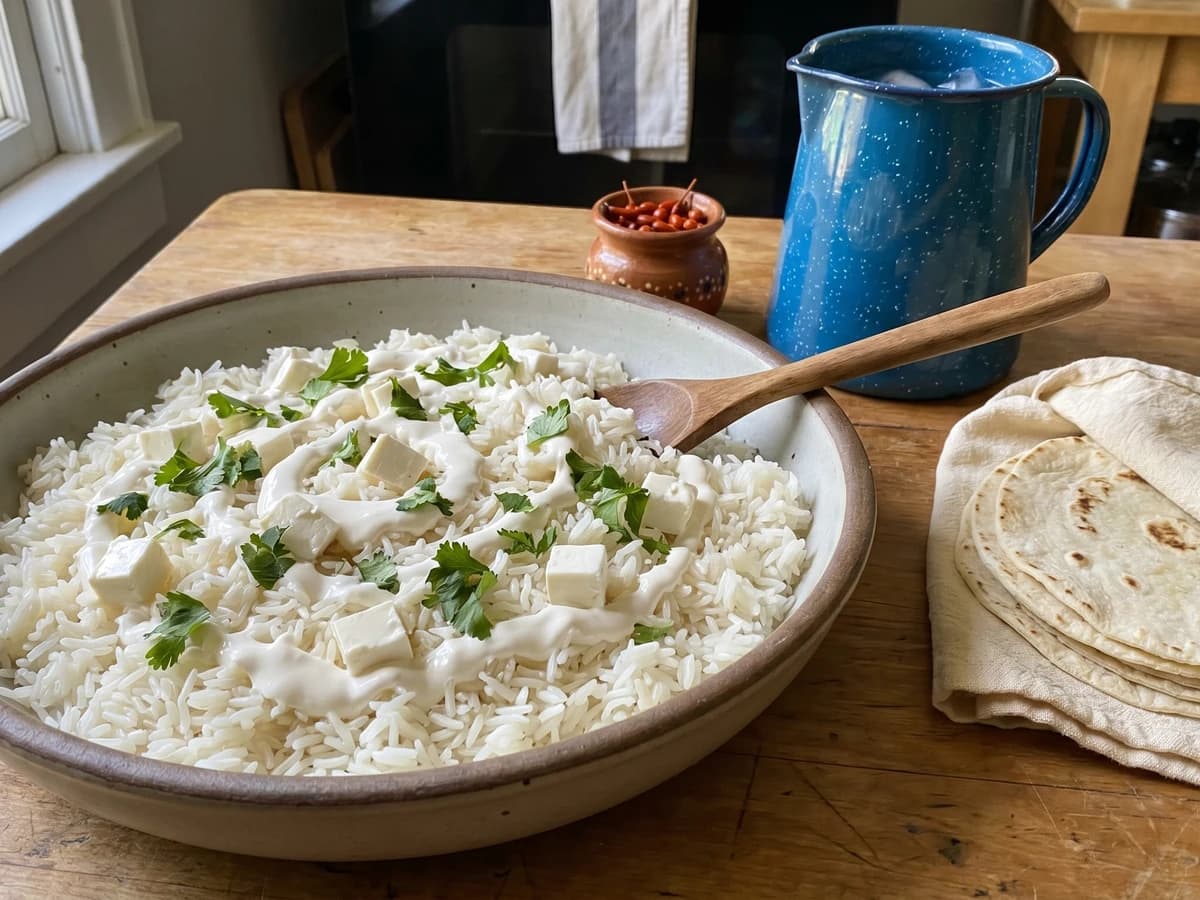
Sinaloa's home-cook white rice topped with cold cubes of cream cheese that soften into the warm grain, finished with crema and a sprinkle of chiltepin at the table. The trick that makes a side dish feel like a small luxury.
Chef Lupita
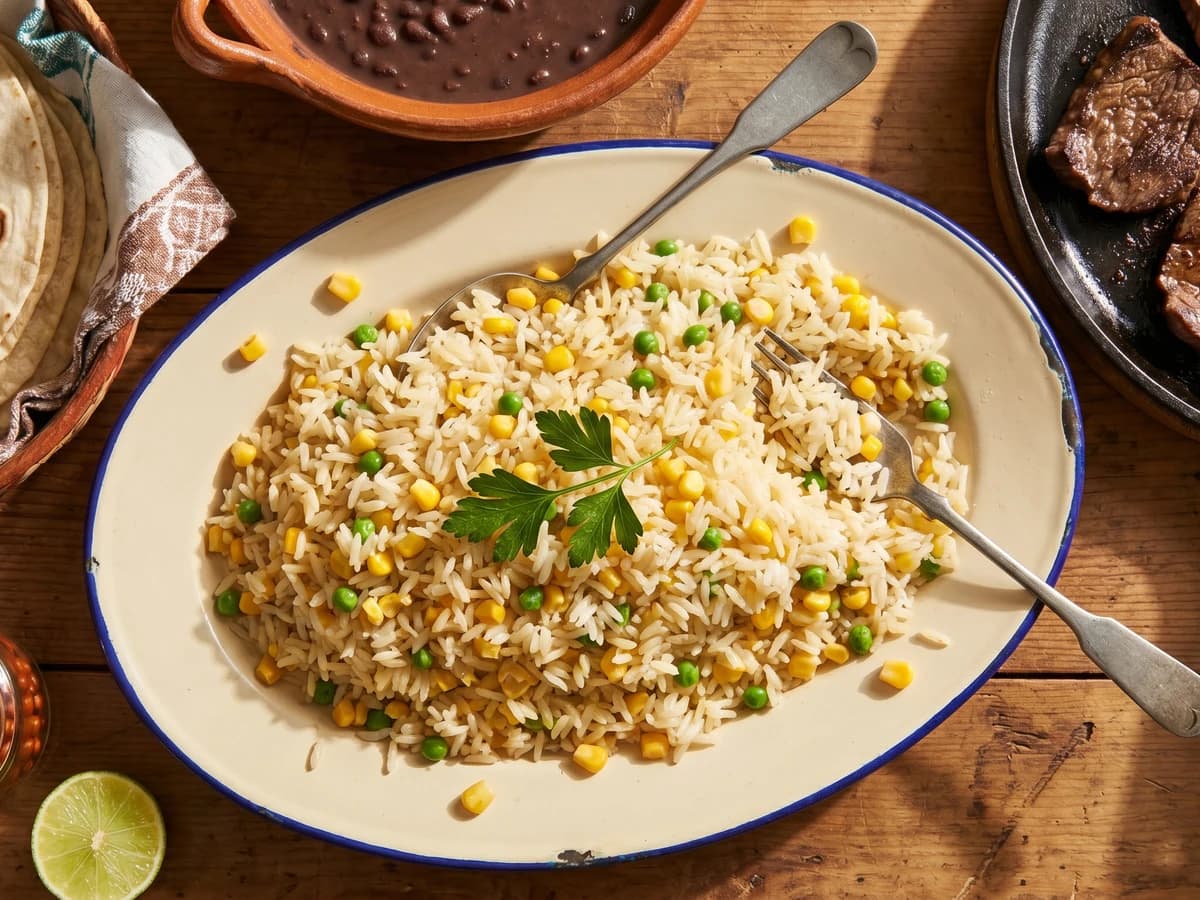
Sonora's white rice, toasted in butter and steamed with sweet corn and tender peas. The clean, quiet partner to a plate of carne asada, not the red rice of central Mexico.

Chef Lupita
Yucatán's white rice with sweet corn kernels, toasted in lard with garlic and onion. The quiet base that holds up against the peninsula's bold achiote-stained stews.