
Chef Lupita
Aguascalientes Beef Tongue Pozole (Pozole de Lengua)
Aguascalientes' Bajio pozole de lengua, built with cacahuazintle hominy, tender beef tongue, chile ancho and guajillo, with xoconostle brightness and table garnishes.
A cooking platform built around craft, culture, and the stories behind what we eat.
Created by
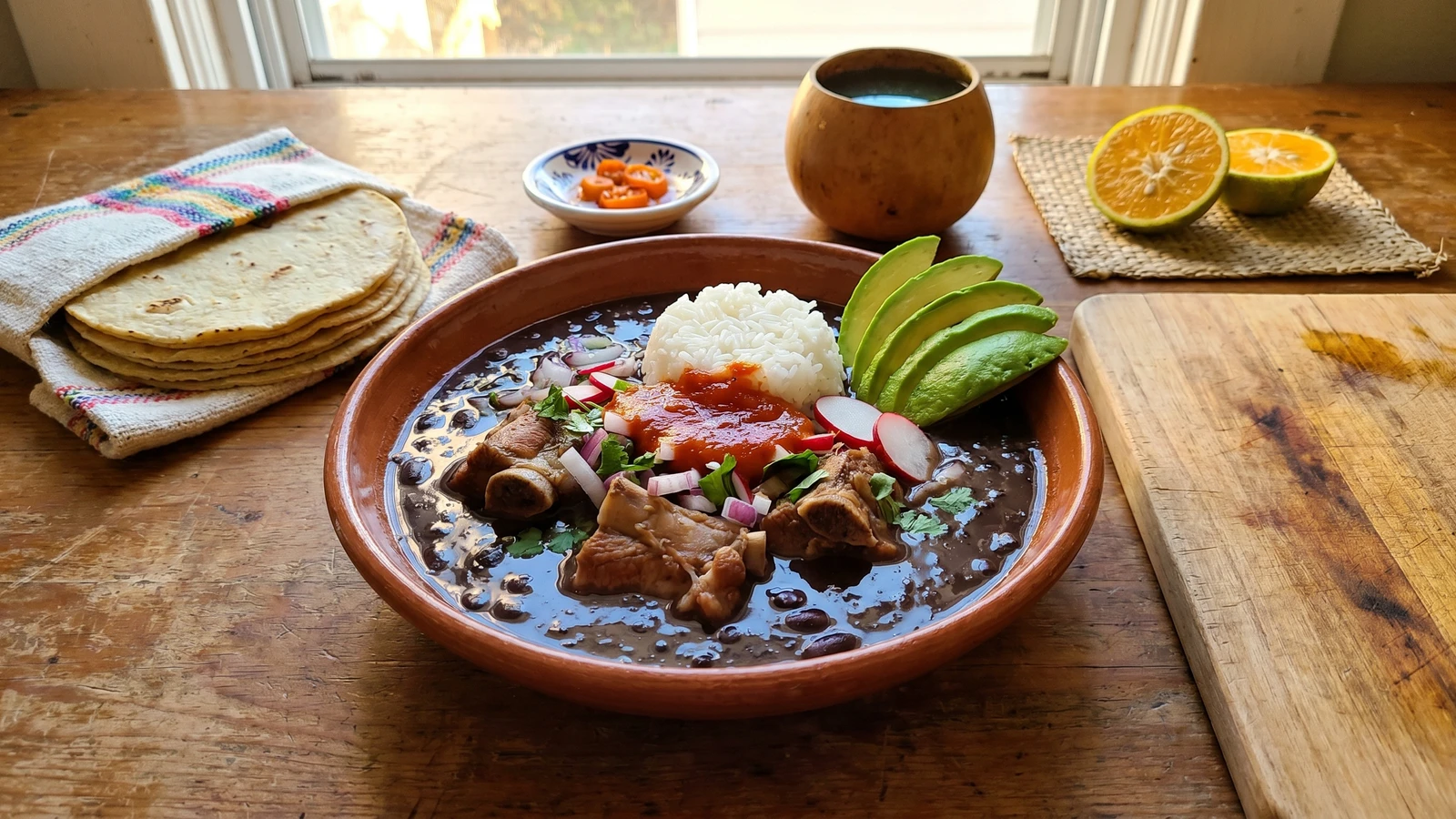
Yucatan's mandatory Monday dish. Black beans and pork shoulder slow-simmered with epazote and a whole habanero, served over white rice with chiltomate, salpicon of radish and cilantro, naranja agria, and avocado.
Frijol con puerco belongs to Yucatan. Specifically to Merida, where Monday is the day this pot goes on the stove in nearly every household, a custom so fixed that the joke is you can tell what day it is by what the neighbors are cooking. Every Lunes, frijol con puerco. Cada estado, su propia cocina, and this one carries the rhythm of an entire peninsula's week.
The beans are frijol negro yucateco, smaller and thinner-skinned than the black beans sold in the rest of the country. The pork is shoulder and ribs, on the bone, with the fat and skin left on. The herb is epazote, not bay, not oregano. The chile is a single whole habanero laid on top of the pot to perfume the broth, never broken into it. If that habanero bursts, you have lost the dish. So you treat it the way the senoras in Merida treat it: with respect, and with a spoon ready to lift it out the moment the beans are done.
What goes on top is what makes this Yucateco and not just beans with pork. Chiltomate, the cooked tomato sauce of the peninsula, smooth and savory, not a fresh salsa. Salpicon of diced radish, red onion, and cilantro dressed in naranja agria. White rice underneath. Avocado on the side. Warm corn tortillas to push the beans onto your spoon. Each component is small. Together they are the dish.
My mother did not cook Yucateco food. She was from Jalisco. The first time I ate frijol con puerco properly was in a Merida courtyard in 1998, sitting at a table with three generations of women who had been making this exact pot every Monday for sixty years. The youngest one was twelve. She knew when to add the salt. She knew not to pierce the habanero. Saber cocinar es saber vivir, and in Yucatan, they teach you young.
Frijol con puerco is a colonial-era dish born from the meeting of the indigenous Maya bean-and-corn agricultural base with the pork that Spanish settlers introduced to the Yucatan Peninsula in the 16th century, and its survival as a weekly ritual reflects the conservative culinary memory of the region. The Monday tradition is widely attributed to the practical economy of post-conquest Merida households, where Sunday's leftover pork bones and trimmings were stretched into Monday's bean pot, a pattern documented in 19th-century domestic accounts from the henequen-era haciendas. The dish's accompaniments, chiltomate and salpicon dressed in naranja agria, point directly to the peninsula's distinct ingredient geography: the bitter Seville orange brought by the Spanish and naturalized in Yucateco soil, and the cooked tomato preparation that Maya cooks adapted from pre-Columbian techniques and named with a hybrid Maya-Spanish word, chiil (chile) and tomate.
Quantity
1 pound
picked over and rinsed
Quantity
2 pounds
cut into 2-inch chunks, skin and fat left on
Quantity
1 pound
cut into individual ribs
Quantity
1 medium
halved
Quantity
1
halved crosswise
Quantity
2 large sprigs
Quantity
2 tablespoons
Quantity
1 tablespoon, plus more to taste
Quantity
2 cups
Quantity
4 medium
Quantity
1
whole and unbroken
Quantity
1/2 small
Quantity
2
Quantity
1 tablespoon
Quantity
1 teaspoon
Quantity
1 bunch
finely diced
Quantity
1/2
finely diced
Quantity
1/2 cup
chopped
Quantity
2
halved
Quantity
2
sliced
Quantity
for serving
warmed
Quantity
for serving
| Ingredient | Quantity |
|---|---|
| dried black beans, preferably frijol negro from Yucatanpicked over and rinsed | 1 pound |
| bone-in pork shouldercut into 2-inch chunks, skin and fat left on | 2 pounds |
| pork ribscut into individual ribs | 1 pound |
| white onionhalved | 1 medium |
| head of garlichalved crosswise | 1 |
| fresh epazote | 2 large sprigs |
| manteca de cerdo (pork lard) | 2 tablespoons |
| kosher salt | 1 tablespoon, plus more to taste |
| long-grain white rice | 2 cups |
| ripe tomatoes (for chiltomate) | 4 medium |
| fresh chile habanero (for the bean pot)whole and unbroken | 1 |
| white onion (for chiltomate) | 1/2 small |
| garlic cloves (for chiltomate) | 2 |
| manteca de cerdo (for chiltomate) | 1 tablespoon |
| kosher salt (for chiltomate) | 1 teaspoon |
| radishesfinely diced | 1 bunch |
| small red onionfinely diced | 1/2 |
| fresh cilantrochopped | 1/2 cup |
| naranjas agrias (sour oranges) or limas agriashalved | 2 |
| ripe Hass avocadossliced | 2 |
| hand-pressed corn tortillas (optional)warmed | for serving |
| sliced chile habanero (optional) | for serving |
Place the black beans in a large bowl and cover with cold water by four inches. Soak for at least six hours, ideally overnight. In Merida the cooks often skip the soak and just add an extra hour of simmering. Either works. What does not work is rushing a dry bean into a hot pot and expecting it to behave. Drain the beans and rinse them.
Place the soaked beans, pork shoulder, and pork ribs in a heavy 8-quart stockpot or a wide clay cazuela. Add the halved white onion, halved garlic head, the lard, and enough cold water to cover everything by three inches. Bring slowly to a simmer over medium heat. Skim the gray foam that rises in the first twenty minutes. This is the foam from the bean skins and the pork blood. Take it off or the broth tastes muddy.
Lower the heat until the surface barely moves. You want a lazy bubble every few seconds, not a rolling boil. A rolling boil splits the beans before they soften and toughens the pork. Cover partially. Cook for one hour, untouched.
After one hour, tuck the epazote sprigs into the pot and lay the whole habanero on top. The habanero stays whole. Do not pierce it, do not break it. It is there to perfume the broth, not to set fire to the pot. If it bursts, the dish becomes inedible. Pull the chile out the moment the beans are done. Continue simmering for another hour to ninety minutes, until the beans are creamy at the center and the pork falls apart at the touch of a wooden spoon.
Add the salt now, not at the start. Salting the beans before they are tender makes the skins tough. Stir gently from the bottom. Taste the broth. It should taste like pork and bean and epazote, in that order. Adjust salt. If the broth has reduced too much, add a cup of hot water. You want a soupy stew, not a paste. Remove the spent onion halves, the garlic head, the epazote stems, and the habanero before serving.
While the beans finish, rinse the rice under cold water until the water runs clear. In a heavy saucepan, heat a tablespoon of lard over medium. Add the rice and toast for two minutes, stirring, until the grains turn opaque. Add three and a half cups of water and one teaspoon of salt. Bring to a boil, then lower the heat to its lowest setting, cover, and cook for eighteen minutes. Do not lift the lid. Off the heat, rest covered for ten more minutes. Fluff with a fork. White rice is the bed for the beans, and it has to be right.
On a hot comal, char the four tomatoes whole, turning them, until the skins blacken in patches and the flesh softens, about eight minutes. In a blender, combine the charred tomatoes with the half onion and two garlic cloves. Blend until smooth but not foamy. Heat the tablespoon of lard in a small skillet over medium. Pour in the puree. It will sputter. Cook for six to eight minutes, stirring, until the sauce darkens and the fat starts to separate. Salt to taste. Chiltomate is not salsa. It is the cooked tomato sauce of Yucatan, smooth and savory, the partner to frijol con puerco at every Merida table.
Combine the diced radish, diced red onion, and chopped cilantro in a small bowl. Squeeze the juice of one naranja agria over the top and toss. If you cannot find naranja agria, mix the juice of one orange with the juice of one lime. The salpicon goes on top of every plate and gives the dish its crunch and its acid. Without it the dish is heavy. With it the dish is balanced.
Spoon a mound of white rice into the center of a wide bowl. Ladle the beans and the pork around the rice, generously, with plenty of broth. Spoon chiltomate over the meat. Top with the salpicon. Lay slices of avocado along the side. Set the remaining naranja agria halves and warm corn tortillas at the table. This is Monday in Merida. Esto no es comida de un solo Mexico. This is Yucatan, and it is its own country.
1 serving (about 585g)
Culinary guides, cultural storytelling, and the editorial depth that makes cooking meaningful.
Discover Culinary ExplorerChef Lupita
Aguascalientes' Bajio pozole de lengua, built with cacahuazintle hominy, tender beef tongue, chile ancho and guajillo, with xoconostle brightness and table garnishes.

Chef Lupita
Veracruz's Gulf coast rice from Alvarado, built with seafood stock, tomato, chile chipotle, epazote, shrimp, fish, jaiba, and pulpo, served loose and brothy in a clay cazuela.

Chef Lupita
Costa Chica's wet salt-beef stew, built from chile costeño, guajillo, tomato, manteca, yuca, plantain, and masa dumplings, the ranching pot of Cuajinicuilapa and Pinotepa.

Chef Lupita
Michoacán's P'urhépecha atápakua is a masa-thickened sauce and stew at once, built with pork, chile guajillo, and hierbabuena added only at the end.