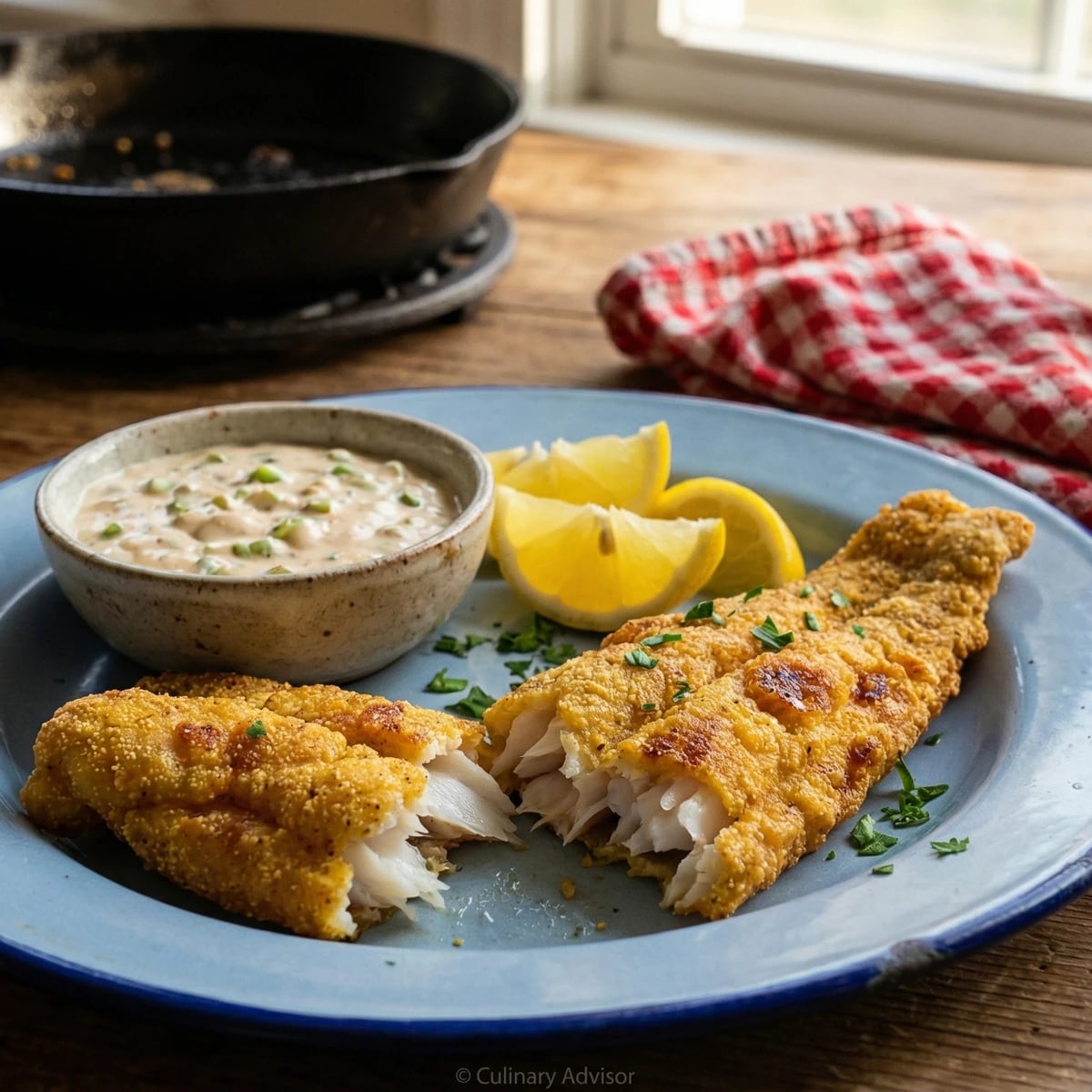
Buttermilk-soaked catfish fillets dredged in seasoned cornmeal and fried to a shatteringly crisp golden crust in cast iron, served with creamy remoulade and fresh lemon, the way every Louisiana Friday night should taste.
Main Dishes
Cajun
Weeknight
Comfort Food
Budget Friendly
30 min
Active Time
20 min cook•50 min total
Yield4 servings
Friday night in Louisiana means one thing: fish fry. Growing up in Lafayette Parish, my grandmother Evangeline would start soaking the catfish in buttermilk right after lunch. By the time the sun dropped low and the whole family gathered on the porch, that cast iron was smoking hot and ready.
The secret to great fried catfish lives in three places. First, the buttermilk soak. It tenderizes the fish and adds a subtle tang that balances the richness of the fry. Second, the cornmeal. You want yellow cornmeal, stone-ground if you can find it, seasoned properly with cayenne, black pepper, garlic powder, and a good dose of salt. Third, the heat. Your oil needs to be hot enough that the fish sizzles the moment it hits the pan. Too cool and you get greasy fish. Too hot and you burn the crust before the inside cooks through.
At Lagniappe, we serve fried catfish every Friday. It is the dish that reminds me why I cook: honest food, generous portions, and the kind of flavor that makes people close their eyes and smile. This is not fancy restaurant food. This is bayou food done right, the kind you eat with your hands, standing at the counter, too hungry to wait for a plate.
The technique, the tradition, and the story behind every dish.
Combine mayonnaise, Creole mustard, horseradish, lemon juice, hot sauce, green onion, garlic, paprika, and cayenne in a bowl. Whisk until smooth and taste for seasoning. Add salt as needed. The remoulade should have a pleasant kick that wakes up your palate without overwhelming the fish. Cover and refrigerate while you prepare everything else. The flavors will marry and improve as it sits.
Make this a day ahead if you can. The flavors deepen overnight and the sauce thickens to the perfect consistency.
2
Soak the catfish
Place catfish fillets in a shallow dish and pour buttermilk over them. Add the hot sauce to the buttermilk and turn the fillets to coat completely. Cover and refrigerate for at least 30 minutes, or up to 4 hours. The buttermilk tenderizes the fish and helps the cornmeal coating adhere. You will see the fillets turn slightly opaque at the edges. That's the buttermilk working its magic.
If your catfish smells strongly fishy, the buttermilk soak will mellow that out. Fresh catfish should smell clean, like a pond on a cool morning.
3
Season the dredge
Whisk together cornmeal, flour, salt, black pepper, cayenne, garlic powder, onion powder, and white pepper in a wide shallow bowl or pie plate. Taste a tiny pinch. It should taste well-seasoned, almost aggressively so. Remember, most of this coating stays in the bowl. The fish only takes what clings to it. This is where you build flavor, so don't be shy.
4
Heat the oil
Pour oil into a 12-inch cast iron skillet to a depth of about one inch. Heat over medium-high until it reaches 350 to 360 degrees. If you don't have a thermometer, drop a pinch of cornmeal into the oil. It should sizzle immediately and float to the top, dancing across the surface. If it sinks and sits quietly, your oil is too cool. If it burns instantly, too hot. Adjust your flame accordingly.
Peanut oil has the best flavor for frying fish and a high smoke point. Vegetable oil works fine, but I've been using peanut oil at Lagniappe for twenty-five years.
5
Dredge the fillets
Remove one fillet from the buttermilk and let excess drip off for a few seconds. Lay it in the seasoned cornmeal and press gently to coat. Flip and coat the other side, pressing again. Shake off excess and set on a wire rack. Repeat with remaining fillets. Let them rest for 5 minutes before frying. This brief rest helps the coating set and adhere better during frying.
6
Fry until golden
Carefully slide two fillets into the hot oil, laying them away from you to prevent splashing. The oil will bubble vigorously. That's steam escaping from the fish, and it means good things are happening. Fry for 3 to 4 minutes per side until the crust is deep golden brown and the fish is cooked through. The internal temperature should reach 145 degrees. You will know it is ready when the crust looks like burnished gold and the edges are darker, almost amber.
Do not crowd the pan. Two fillets at a time is plenty. Crowding drops the oil temperature and gives you soggy fish.
7
Drain and season
Transfer fried fillets to a wire rack set over a sheet pan. Season immediately with a light sprinkle of salt while the crust is still glistening. The hot oil will carry that final seasoning into every crevice. Let the oil return to temperature before frying the remaining fillets.
8
Serve immediately
Arrange catfish on a platter with lemon wedges and a generous bowl of remoulade. Fried catfish waits for no one. The crust starts losing its crunch the moment it leaves the oil. Call everyone to the table first, then plate the fish. In my family, we eat standing up at the counter, fighting over the crispiest pieces. That's the bayou way.
Chef Tips
•Farm-raised catfish has a milder, cleaner flavor than wild-caught. For this recipe, I prefer farm-raised. Save the wild stuff for grilling or blackening where the stronger flavor can shine.
•Stone-ground cornmeal makes a noticeable difference in texture. It is coarser than the degerminated stuff and creates a crunchier crust with more character. Find it at farmers markets or specialty stores.
•If your fillets are thick (over an inch), butterfly them or pound them gently to even thickness. Uneven fillets cook unevenly, and nobody wants raw fish inside a beautiful crust.
•Save the seasoned cornmeal that's left over. Store it in a jar in the freezer and use it next time. Just add a little fresh seasoning to wake it up.
•A squeeze of fresh lemon over the hot fish right before eating cuts the richness and brightens every bite. Don't skip it.
Advance Preparation
•Remoulade can be made up to 5 days ahead and refrigerated. The flavor improves with time.
•Catfish can soak in buttermilk for up to 4 hours in the refrigerator. Longer than that and the texture starts to break down.
•The cornmeal dredge can be mixed up to a week ahead and stored in an airtight container. Add it to the buttermilk-soaked fish just before frying.
•Fried catfish does not hold well. Plan to serve immediately. This is a cook-and-eat-now dish, not a make-ahead meal.
Frequently Asked Questions
Nutrition Information
1 serving (about 305g)
Calories
1125 calories
Total Fat
88 g
Saturated Fat
16 g
Trans Fat
0 g
Unsaturated Fat
68 g
Cholesterol
150 mg
Sodium
1510 mg
Total Carbohydrates
32 g
Dietary Fiber
2 g
Sugars
3 g
Protein
41 g
Where cooking meets culture.
Culinary guides, cultural storytelling, and the editorial depth that makes cooking meaningful.