
Chef Margarida
Arroz de Lingueirão
Razor clam rice from the Algarve, where the Atlantic meets the pan and the clams release their sweet liquor into every grain. Malandrinho, wet and briny, the way the fishermen's wives have always made it.
A cooking platform built around craft, culture, and the stories behind what we eat.
Created by
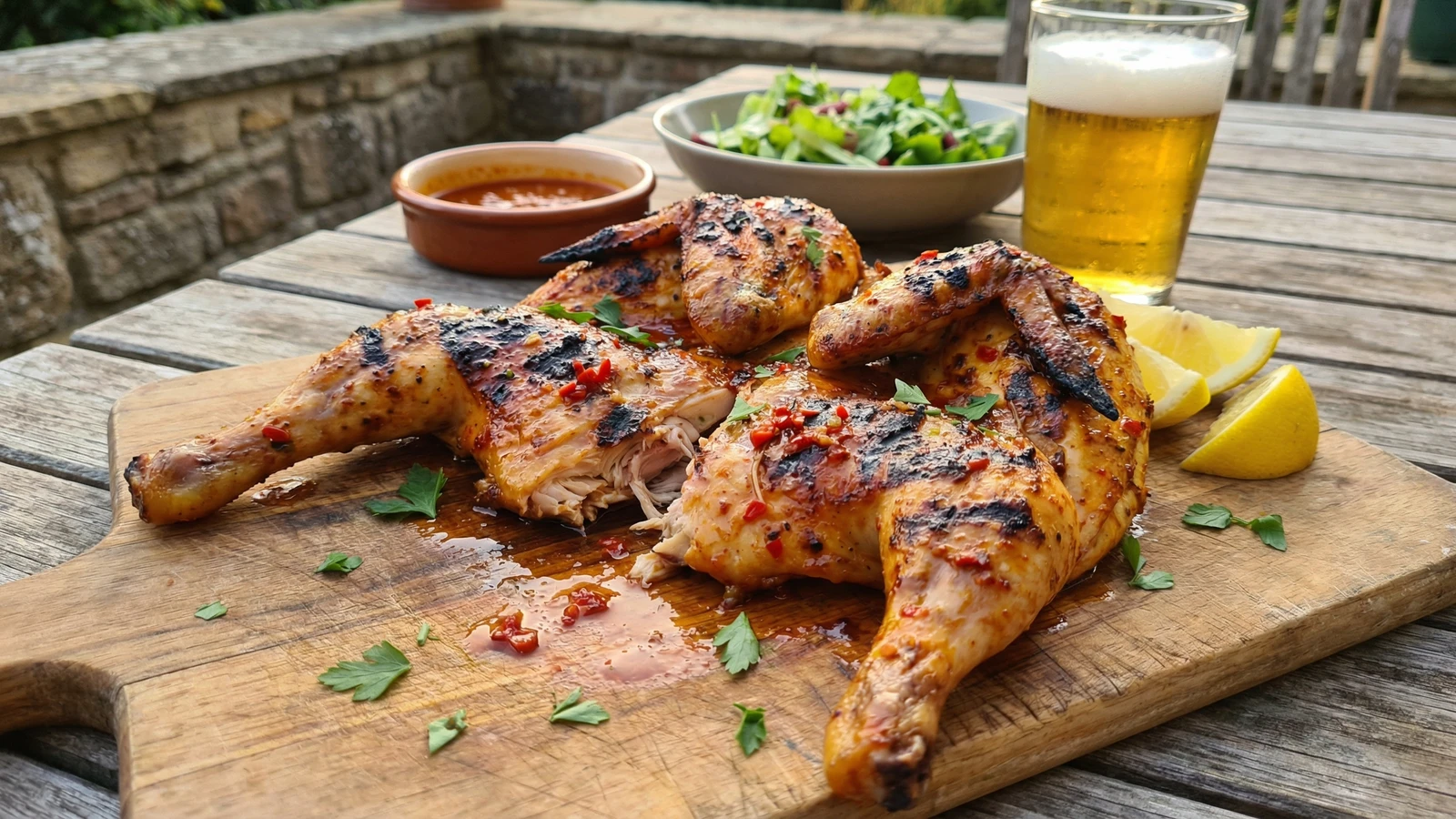
Butterflied chicken kissed by charcoal and fire, slathered in the African chili that changed Portuguese cooking forever. The heat should wake you up, not knock you out. This is the Algarve on a plate.
Ididn't grow up with this dish. Avó Leonor was Alentejana, and her chickens were braised with tomatoes and peppers, slow and gentle. But the first time I drove down to Guia and ate frango piri-piri at one of those roadside churrasqueiras with the smoke billowing out and chickens spinning on spits, I understood why people make pilgrimages for food.
Piri-piri isn't Portuguese. The chilies came from Africa, from our complicated colonial history with Mozambique and Angola. Portuguese traders brought chilies from the Americas to Africa, and African cooks made them their own. Then the flavors came back to Portugal and found their home in the Algarve, where they belong to everyone now. This is how cuisines evolve. This is how food carries history.
The technique matters here. The chicken must be butterflied so it lies flat, so the heat reaches every part evenly, so the skin crisps while the meat stays juicy. The marinade needs time to penetrate. The grill needs to be hot but not angry. And the sauce that goes on at the end? That's the soul of the dish. Bright, fiery, garlicky, with enough acid to cut through the richness.
At Mesa da Avó, when I serve this in summer, I tell people to eat with their hands. Lick their fingers. Fight over the crispy bits. This isn't polite food. This is food that demands your full attention.
Frango piri-piri emerged in the Algarve during the mid-20th century, a fusion of African flavors brought back by Portuguese returning from Mozambique and Angola. The town of Guia became its unofficial capital, with churrasqueiras lining the main road and each claiming the authentic recipe. The dish represents one of the clearest examples of how Portugal's colonial history shaped its modern cuisine.
Quantity
1 (about 1.5 kg)
butterflied (spatchcocked)
Quantity
6-8
stems removed
Quantity
6
Quantity
1 teaspoon
Quantity
1 teaspoon
Quantity
1/2 cup
Quantity
2
juiced
Quantity
2 tablespoons
Quantity
1
crumbled
Quantity
1 teaspoon
Quantity
freshly ground, to taste
Quantity
for serving
chopped
Quantity
for serving
| Ingredient | Quantity |
|---|---|
| whole chickenbutterflied (spatchcocked) | 1 (about 1.5 kg) |
| fresh piri-piri chiliesstems removed | 6-8 |
| garlic cloves | 6 |
| coarse sea salt | 1 teaspoon |
| sweet paprika (pimentão doce) | 1 teaspoon |
| extra virgin olive oil (azeite) | 1/2 cup |
| lemonsjuiced | 2 |
| red wine vinegar | 2 tablespoons |
| bay leafcrumbled | 1 |
| dried oregano | 1 teaspoon |
| black pepper | freshly ground, to taste |
| flat-leaf parsley (optional)chopped | for serving |
| lemon wedges (optional) | for serving |
Place the chicken breast-side down on a cutting board. Using sharp kitchen shears, cut along both sides of the backbone and remove it entirely. Save it for stock. Flip the chicken over and press down firmly on the breastbone until you hear it crack and the chicken lies flat. This is how every churrasqueira in the Algarve does it. Flat chicken cooks evenly. Round chicken doesn't.
In a mortar and pestle (or blender), pound the piri-piri chilies with the garlic and salt until you have a rough paste. Add the paprika, crumbled bay leaf, and oregano. Slowly work in the olive oil, lemon juice, and vinegar until everything comes together into a fiery, fragrant sauce. Taste it. It should have heat, yes, but also brightness from the lemon and depth from the garlic. The heat should wake you up, not knock you out.
Place the butterflied chicken in a large dish or resealable bag. Reserve about one third of the piri-piri sauce for basting and serving. Pour the rest over the chicken, working it under the skin and into every crevice. Cover and refrigerate for at least 4 hours, overnight if you can manage it. The longer it sits, the deeper the flavor goes.
Remove the chicken from the refrigerator 30 minutes before cooking. It needs to come to room temperature or the outside will char before the inside cooks through. If using charcoal (and you should be), light it and let it burn down until the coals are covered in white ash, glowing but not flaming. You want medium-high heat, hot enough to sear but not so hot that the skin burns before the meat cooks.
Place the chicken skin-side up on the grill first, letting the bone side get direct heat. Cook for about 20 minutes, then flip to skin-side down. Now watch it carefully. The skin should crisp and char in spots but not burn. Another 15 to 20 minutes. Baste with the reserved sauce every few minutes during the last 10 minutes of cooking. The chicken is done when the thigh reaches 75°C (165°F) and the juices run clear when you pierce the thickest part.
Transfer the chicken to a cutting board and let it rest for 10 minutes. Don't skip this. The juices need to redistribute. Cut into portions: thighs, drumsticks, breast halves. Arrange on a platter, drizzle with the remaining piri-piri sauce, scatter parsley over top, and serve with lemon wedges. Batatas fritas on the side if you're doing it properly. A simple salada if you want to pretend to be healthy. Cold beer. This is summer eating.
1 serving (about 220g)
Culinary guides, cultural storytelling, and the editorial depth that makes cooking meaningful.
Discover Culinary ExplorerChef Margarida
Razor clam rice from the Algarve, where the Atlantic meets the pan and the clams release their sweet liquor into every grain. Malandrinho, wet and briny, the way the fishermen's wives have always made it.

Chef Margarida
The copper pot that holds the soul of the Algarve, where shellfish, fish, and chouriço steam together in a tradition the Moors left behind and Portuguese grandmothers perfected.

Chef Juliette
John Dory has the delicacy of sole and the firmness of turbot. A light flouring, a quick butter sauté, and nut-brown beurre noisette show exactly why looks never mattered.

Chef Juliette
Fresh haddock proves its delicacy in the meunière pan: a fine flour crust, moist pearly flakes, and beurre noisette sharpened with lemon and parsley, ready from one skillet in half an hour.