Culinary Explorer
A cooking platform built around craft, culture, and the stories behind what we eat.
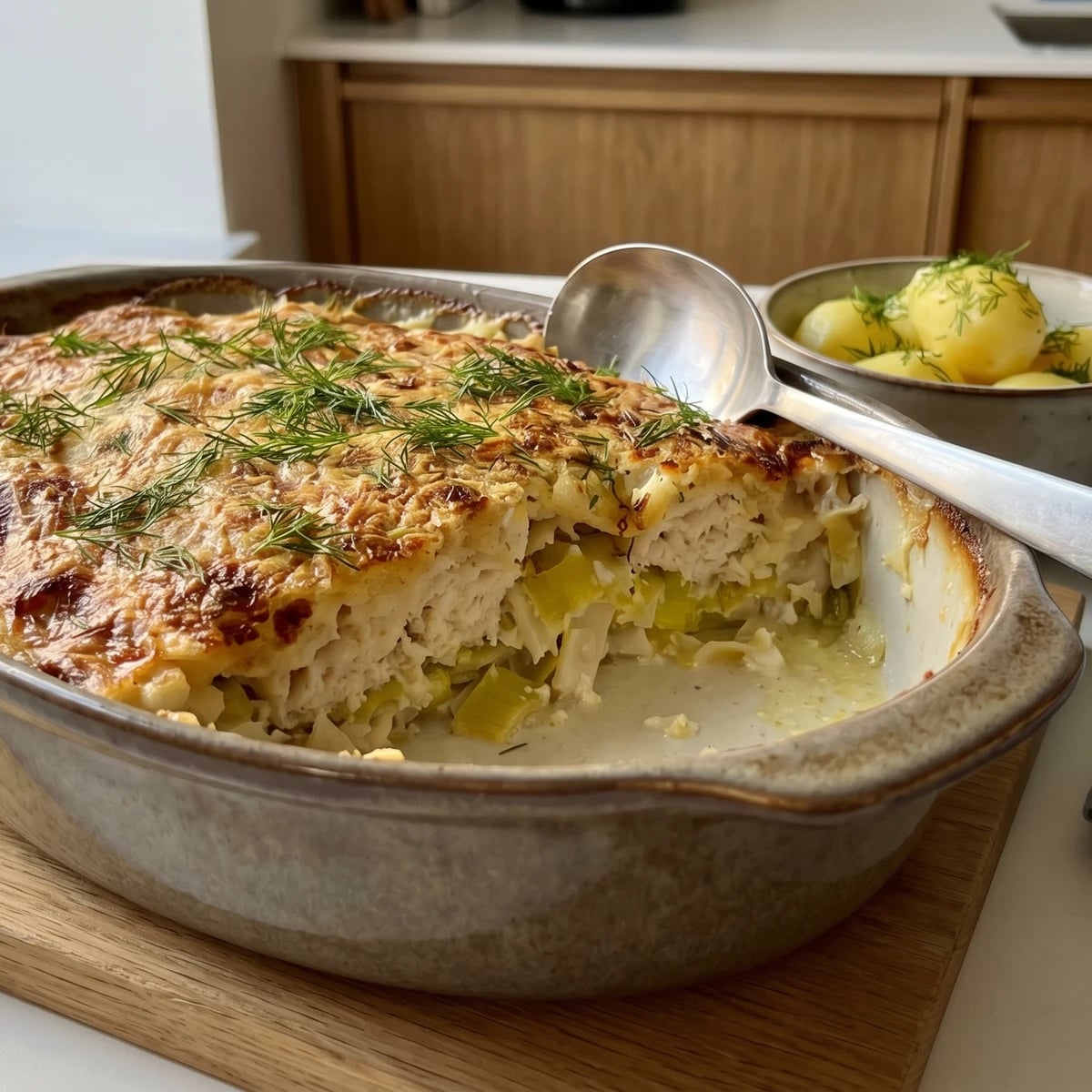
Fiskegratin med Fiskefars, Porrer og Selleri
Created by Chef Freja
Smooth fiskefars over softened leeks, celeriac, and carrots, blanketed in bechamel lifted with whisked egg whites, scattered with rasp and butter, baked until the surface cracks golden. Mormormad at its most generous.
November arrives and the root vegetables take over. Celeriac comes in heavy and pale from the fields, leeks stand thick in the market boxes, and the kitchen becomes the warmest room in the house again. This is when fiskegratin comes back to the table.
Fiskegratin med fiskefars is mormormad, grandmother's food, the kind of dish that doesn't announce itself but feeds everyone well and leaves them quiet with satisfaction. You make a smooth fiskefars from fresh white fish, spread it over a bed of softened porrer (leeks), knoldselleri (celeriac), and carrots, blanket the whole thing in a bechamel lightened with whisked egg whites, and scatter the top with rasp and dots of cold butter. Then you bake it until the surface cracks golden and the edges bubble. The house fills with fish and cream and something deeply familiar, even if you've never made it before.
Two things matter most, and I want you to understand both before you start. First: the fiskefars must be cold when you work it. Cold fish, cold cream, a cold bowl. Warmth breaks the emulsion and the texture turns grainy instead of smooth and light. Second: the egg whites folded into the bechamel are not an afterthought. They lift the sauce so it bakes into something almost souffle-like over the fish, tender and pale gold on top, creamy underneath. Get those two things right and the rest is layering and patience. You'll know when it's right.
Ingredients
firm white fish fillets (torsk or another white fish)
Quantity
500g
skinned, pin-boned
potato starch (kartoffelmel)
Quantity
2 tablespoons
egg whites (for the fiskefars)
Quantity
2 large
cold
| Ingredient | Quantity |
|---|---|
| firm white fish fillets (torsk or another white fish)skinned, pin-boned | 500g |
| potato starch (kartoffelmel) | 2 tablespoons |
| egg whites (for the fiskefars)cold | 2 large |
Where cooking meets culture.
Culinary guides, cultural storytelling, and the editorial depth that makes cooking meaningful.
Discover Culinary Explorer