
Chef Freja
Andelår med Rødkål
Slow-roasted duck legs with crisp, deeply golden skin, served with braised red cabbage and caramelized potatoes. The weeknight Danish duck that proves the best part of the bird is the one that takes its time.
A cooking platform built around craft, culture, and the stories behind what we eat.
Created by Chef Freja
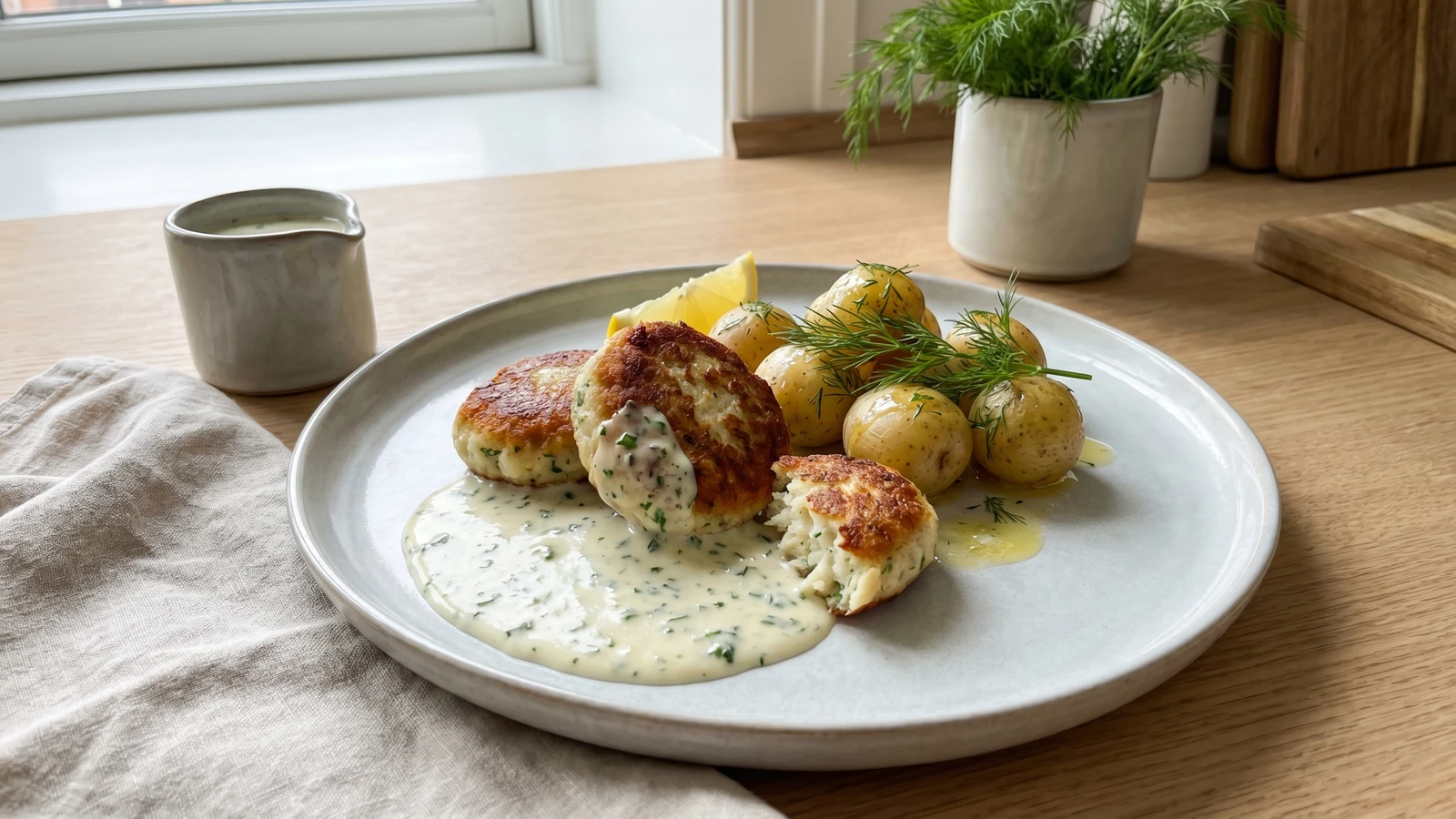
Danish fish cakes fried golden in butter, served with warm persillesovs and the first new potatoes of summer. Cod, cream, dill, and lemon, shaped by hand, cooked with love.
June in Denmark is long light and new potatoes. The first ones arrive at the market still dusty from the field, small enough to hold between two fingers, and the whole kitchen reorients around them. This is when fiskefrikadeller belong on the table, alongside a pot of those potatoes and a warm jug of persillesovs.
Fiskefrikadeller are the seafood side of the Danish frikadeller tradition. Where the pork version anchors weeknight dinners all year round, fish cakes wait for the months when fresh torsk is good and the season calls for something lighter. You pulse the cod with cream, egg, and a handful of fresh dill, shape the mixture into oval patties with wet hands, and fry them in butter until the outside goes golden and the inside stays soft, almost creamy. The parsley sauce is a simple white sauce made rich with butter and bright with a generous handful of chopped parsley stirred in at the very end so it keeps its color. Together with nye kartofler boiled in their skins, this is one of the most complete plates in Danish home cooking. Three components, each honest, each doing its part.
Two things to watch for. First, keep the fiskefars cold. If the mixture warms up, it loosens and won't hold its shape in the pan. Second, don't overcook the fish cakes. They need less time than you think. The center should give slightly when you press it with your finger, still soft, not firm. Pull them at that moment. They carry on cooking as they rest. You'll know when it's right.
Fiskefars, the smooth fish forcemeat at the heart of fiskefrikadeller, appears in Danish housekeeping manuals from the early 1800s, where it was taught as a technique for stretching expensive fresh fish across a family table. The skill was a standard part of the curriculum at Denmark's husmoderskoler, the housekeeping schools that trained young women in domestic cookery through the mid-twentieth century. Regional variations persist to this day: cooks in Jutland tend to add grated onion for depth, those on Sjaelland prefer lemon zest as a brightener, and along the North Sea coast, some families fold a spoonful of finely chopped shrimp into the mixture for sweetness.
Quantity
500g
skinned and pin-boned
Quantity
1 large
Quantity
100ml
Quantity
3 tablespoons
Quantity
1 small
finely grated
Quantity
1
zested, plus wedges for serving
Quantity
small bunch, plus extra sprigs
finely chopped
Quantity
to taste
Quantity
to taste
Quantity
30g
Quantity
1 tablespoon
Quantity
40g
Quantity
3 tablespoons
Quantity
500ml
warmed
Quantity
large bunch
finely chopped
Quantity
a squeeze
Quantity
800g
scrubbed
Quantity
30g
Quantity
to serve
| Ingredient | Quantity |
|---|---|
| fresh cod filletsskinned and pin-boned | 500g |
| egg | 1 large |
| cold heavy cream | 100ml |
| plain flour (for the fiskefars) | 3 tablespoons |
| onionfinely grated | 1 small |
| lemonzested, plus wedges for serving | 1 |
| fresh dillfinely chopped | small bunch, plus extra sprigs |
| fine sea salt | to taste |
| white pepper | to taste |
| unsalted butter (for frying) | 30g |
| neutral oil | 1 tablespoon |
| unsalted butter (for the persillesovs) | 40g |
| plain flour (for the persillesovs) | 3 tablespoons |
| whole milkwarmed | 500ml |
| fresh parsleyfinely chopped | large bunch |
| lemon juice | a squeeze |
| small new potatoesscrubbed | 800g |
| unsalted butter (for the potatoes) | 30g |
| lemon wedges (optional) | to serve |
Cut the cod into rough chunks and pulse them in a food processor until the fish is coarsely chopped but not a paste. You want texture, not baby food. Some pieces the size of a pea, some slightly larger. Add the egg, cold cream, flour, grated onion, chopped dill, lemon zest, salt, and a grind of white pepper. Pulse five or six more times until everything comes together into a soft, sticky mixture. The cream is what makes the fiskefrikadeller tender inside. The flour helps them hold their shape in the pan. Transfer to a bowl, cover, and refrigerate for at least thirty minutes. Cold fiskefars is far easier to shape and fries more evenly because it doesn't spread the instant it touches the heat.
While the fiskefars chills, put the scrubbed new potatoes in a large pot of cold salted water. Start them in cold water, not boiling. Cold water lets the heat reach the center gradually, so the outside doesn't fall apart before the middle cooks through. Bring to a gentle boil and simmer for fifteen to twenty minutes, depending on their size. They're done when a knife slides through the center without resistance at all. Don't overcook them. Nye kartofler should hold together on the plate, not crumble. Drain and set aside with the lid on to keep warm.
Take the fiskefars from the fridge. Wet your hands under cold running water. This step matters: the mixture is naturally sticky, and dry hands will pull it apart instead of shaping it. Scoop a generous tablespoon of the mixture and form it into an oval patty about the size of your palm, slightly flattened. Not round like a meatball. The flat oval gives you more surface area for the golden crust, and that crust is where most of the flavor lives. Set each one on a plate as you go. You should get about twelve.
Heat the butter and oil together in a heavy frying pan over medium heat. Butter alone burns before the fish cakes cook through. Oil alone gives no flavor. Together they give you the golden crust and the nutty richness that makes these taste like they should. When the butter foams and the foam begins to subside, lay the fiskefrikadeller in the pan without crowding them. Cook in two batches if you need to. Crowding drops the temperature and the fish cakes steam instead of frying. Give them three to four minutes on each side until deeply golden. Don't move them until they release from the pan on their own. That release tells you the crust has formed. Transfer to a warm plate and cover loosely while you make the sauce.
In a clean medium saucepan, melt the butter over a gentle heat. Add the flour and stir it into the butter with a wooden spoon. Cook this roux for one minute, stirring constantly. You want it to bubble gently and smell faintly biscuity, not browned. A browned roux changes the sauce's flavor in a direction you don't want here. Now add the warmed milk in a slow, steady stream, whisking continuously as you pour. Adding the milk too quickly creates lumps. Adding it gradually while whisking gives you a smooth sauce every time. Bring to a gentle simmer and let it cook for five minutes, stirring often, until the sauce coats the back of the spoon thickly. Season with salt, white pepper, and a squeeze of lemon juice. Now, and only now, stir in the chopped parsley. Parsley added too early turns grey and loses its brightness. Added at the last moment, it stays vivid green and tastes like a garden.
Divide the nye kartofler among four warm plates and drop a knob of butter on top. Let it melt. Arrange two or three fiskefrikadeller alongside and spoon the persillesovs generously over the fish cakes and potatoes both. Don't be timid with the sauce. It ties the whole plate together. Finish with a sprig of fresh dill and a lemon wedge on the side. This is a plate that wants to be eaten right away, while the sauce is warm and the fish cakes are still golden and crisp at the edges. Tak for mad.
1 serving (about 480g)
Culinary guides, cultural storytelling, and the editorial depth that makes cooking meaningful.
Discover Culinary ExplorerChef Freja
Slow-roasted duck legs with crisp, deeply golden skin, served with braised red cabbage and caramelized potatoes. The weeknight Danish duck that proves the best part of the bird is the one that takes its time.

Chef Freja
The whole roasted duck of juleaften, stuffed with tart apples and dark prunes, slow-roasted for four patient hours until the skin crackles like something earned and the meat underneath gives way without resistance.
Chef Freja
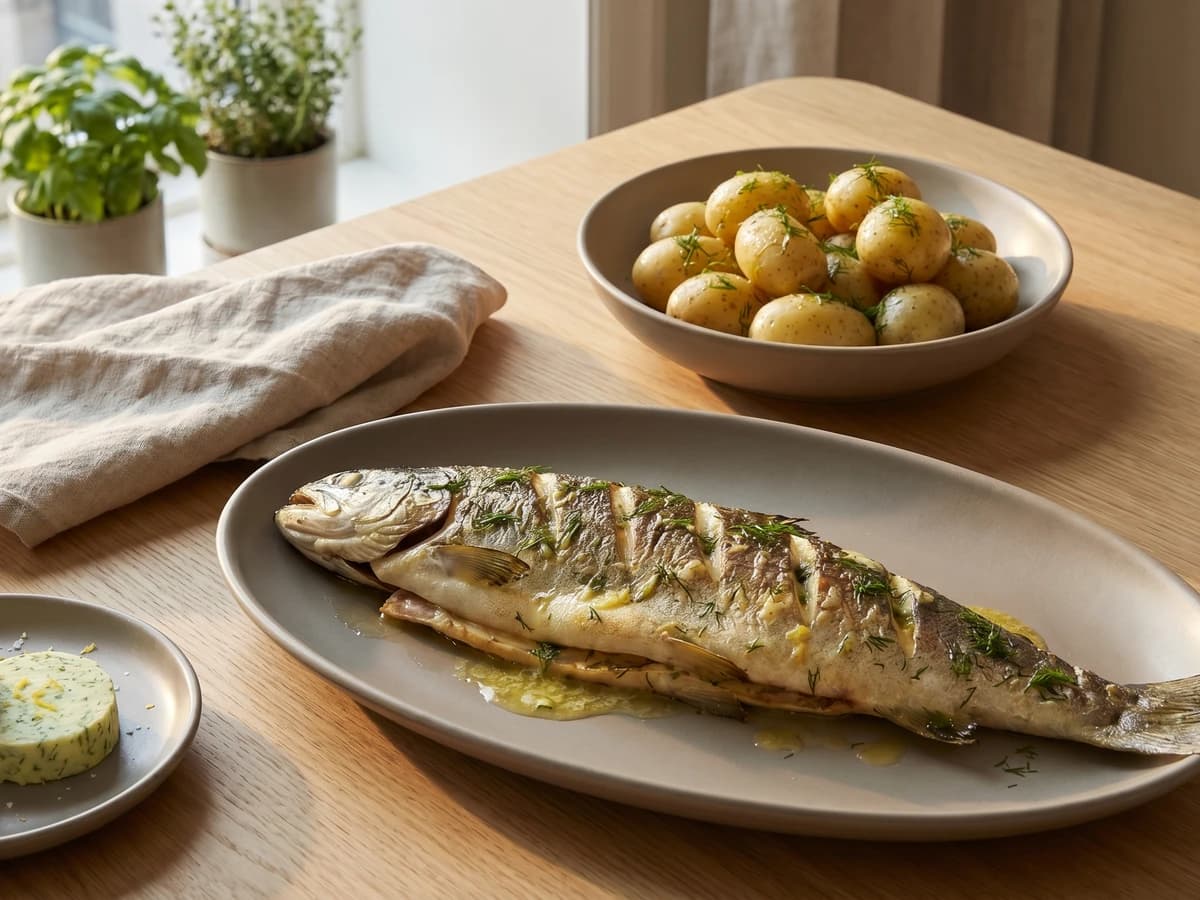
Whole sea trout baked with butter, lemon, and armfuls of dill, served beside the first nye kartofler of the season and a melting slab of dildsmor. The Danish summer table at its most generous.
Chef Freja
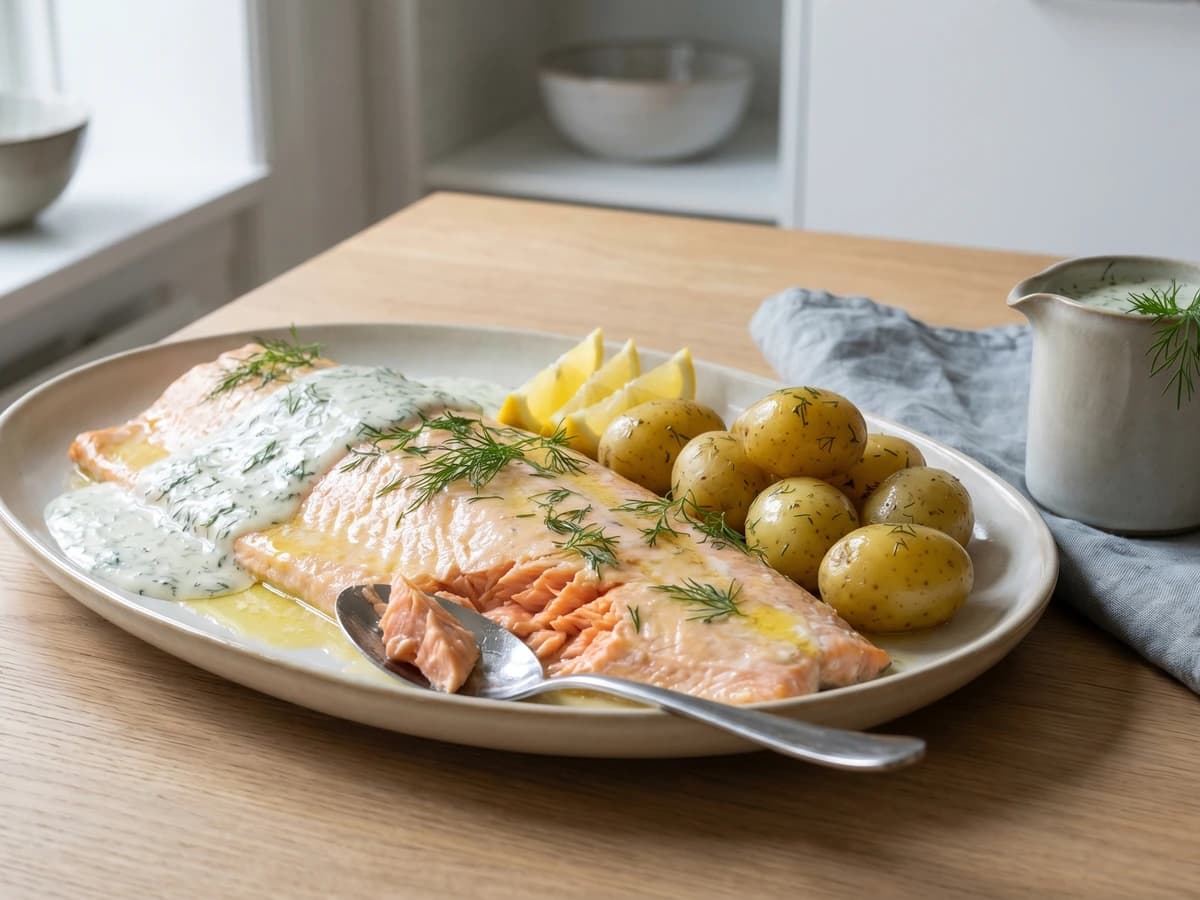
A side of salmon baked gently in butter and white wine, served warm with a bright dill cream sauce and the season's first nye kartofler. Late spring on a Danish table, cooked with love.