
Chef Ally
Braised Leeks with Mustard Vinaigrette
Leeks braised slowly in butter and stock until their layers turn silky and sweet, then dressed while still warm with a punchy Dijon vinaigrette that wakes everything up.
A cooking platform built around craft, culture, and the stories behind what we eat.
Created by
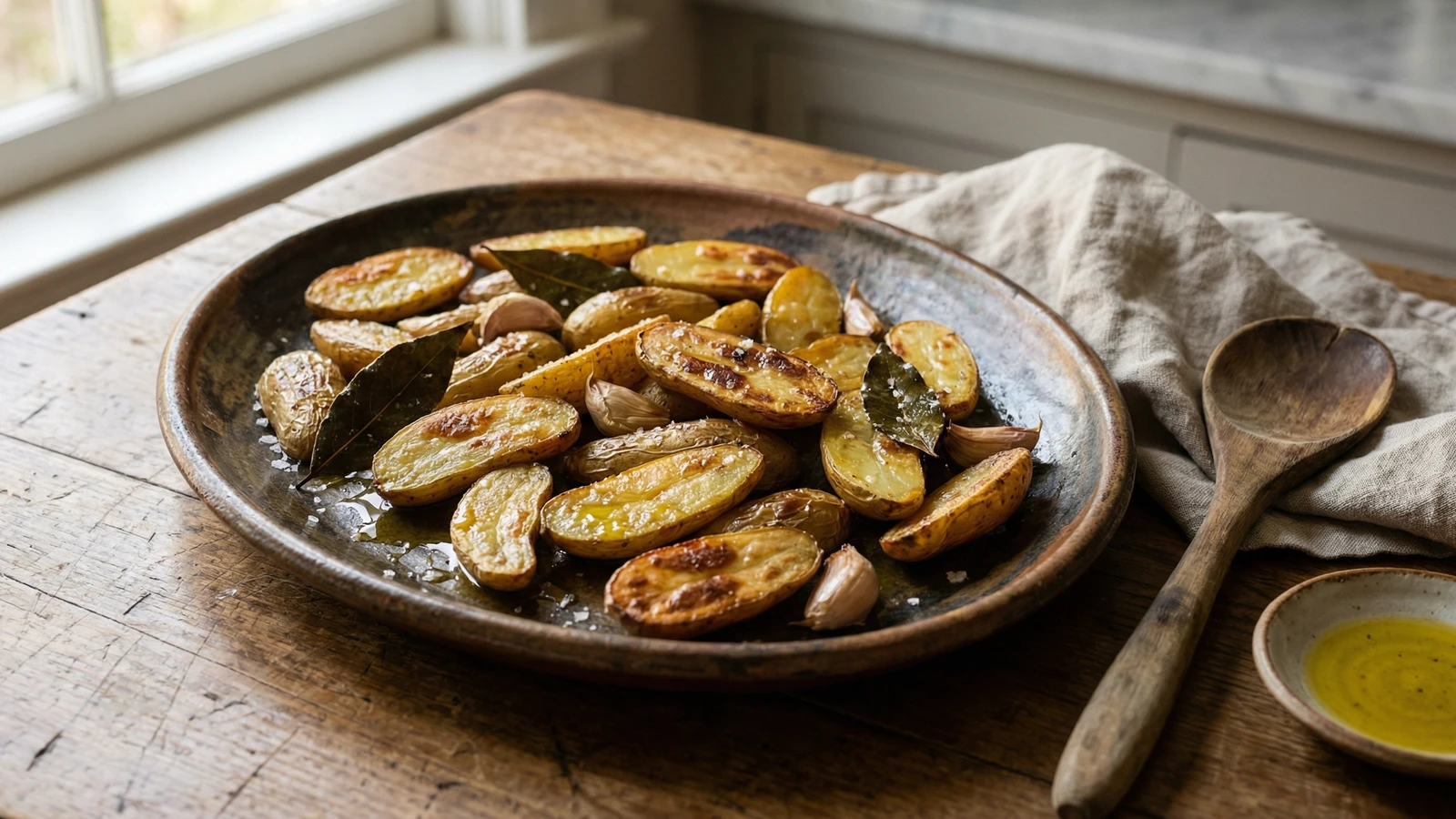
Small potatoes roasted slowly with bay leaves until they are golden and crackling outside, soft as butter within, perfumed with something ancient and green that makes guests ask what you did.
Fingerlings are the potatoes you should know by name. They are waxy, dense, and hold their shape when other varieties fall apart. At the farmers market, look for them in late summer through fall when they have just come out of the ground. They should feel firm in your hand, the skin smooth and tight, no green spots or eyes beginning to sprout. A good fingerling smells faintly of earth.
The bay leaf is doing quiet work here. As the potatoes roast, the heat releases oils from the leaves that perfume everything they touch. Fresh California bay has a stronger, more eucalyptus flavor. Turkish bay, the kind you find dried in most kitchens, is gentler and more traditional. Either works. What matters is that the leaves are not ancient. Dried bay loses its purpose after a year.
This is a dish about getting out of the way. Good potatoes, good oil, a few aromatics, and enough heat to transform them. You are not masking anything. You are letting the potato taste like itself, only more so.
Quantity
1 1/2 pounds
scrubbed clean
Quantity
3 tablespoons
Quantity
6 (or 4 dried Turkish bay leaves)
Quantity
4
unpeeled and lightly crushed
Quantity
1 teaspoon, plus more to finish
Quantity
to taste
freshly cracked
| Ingredient | Quantity |
|---|---|
| fingerling potatoesscrubbed clean | 1 1/2 pounds |
| good olive oil | 3 tablespoons |
| fresh bay leaves | 6 (or 4 dried Turkish bay leaves) |
| garlic clovesunpeeled and lightly crushed | 4 |
| flaky sea salt | 1 teaspoon, plus more to finish |
| black pepperfreshly cracked | to taste |
Preheat your oven to 400F. Halve the fingerlings lengthwise. If some are much larger than others, quarter them so everything cooks evenly. The goal is pieces roughly the same thickness, about half an inch, so they all reach that creamy center at the same moment.
Place the potatoes in a large bowl. Add the olive oil, bay leaves, crushed garlic cloves, salt, and several grinds of black pepper. Toss everything together with your hands, making sure each potato half is coated in oil and that the bay leaves are distributed throughout.
Spread the potatoes cut side down on a rimmed baking sheet in a single layer. Tuck the bay leaves and garlic between the potatoes. Cut side down is important. The flat surface caramelizes against the hot pan while the rounded skin protects the flesh from drying out.
Roast for 35 to 45 minutes without disturbing them. Resist the urge to flip or stir. The potatoes are ready when you lift one and find a deep golden crust underneath, and a paring knife slides through the thickest piece with no resistance. The bay leaves will be fragrant and slightly darkened at the edges.
Transfer to a warm serving dish, bay leaves and all. The garlic cloves can be squeezed out of their skins and eaten with the potatoes or discarded. Finish with another pinch of flaky salt. Serve while the potatoes are still hot and the aroma of bay fills the room.
1 serving (about 155g)
Culinary guides, cultural storytelling, and the editorial depth that makes cooking meaningful.
Discover Culinary ExplorerChef Ally
Leeks braised slowly in butter and stock until their layers turn silky and sweet, then dressed while still warm with a punchy Dijon vinaigrette that wakes everything up.

Chef Ally
Creamy cannellini beans, slow-simmered with aromatics until they release their starch into a silky broth, crowned with shattering fried sage and the greenest olive oil you can find.

Chef Ally
Swiss chard stems and leaves treated with equal care, layered with nutmeg-scented cream and aged gruyère, finished with breadcrumbs that shatter when you break through to the tender greens below.

Chef Ally
Thin-sliced potatoes layered in garlicky cream, baked low and slow until the top turns golden and the center yields like silk. This is the dish that needs nothing but perfect ingredients and time.