Chef Margarida
Cabrito Assado
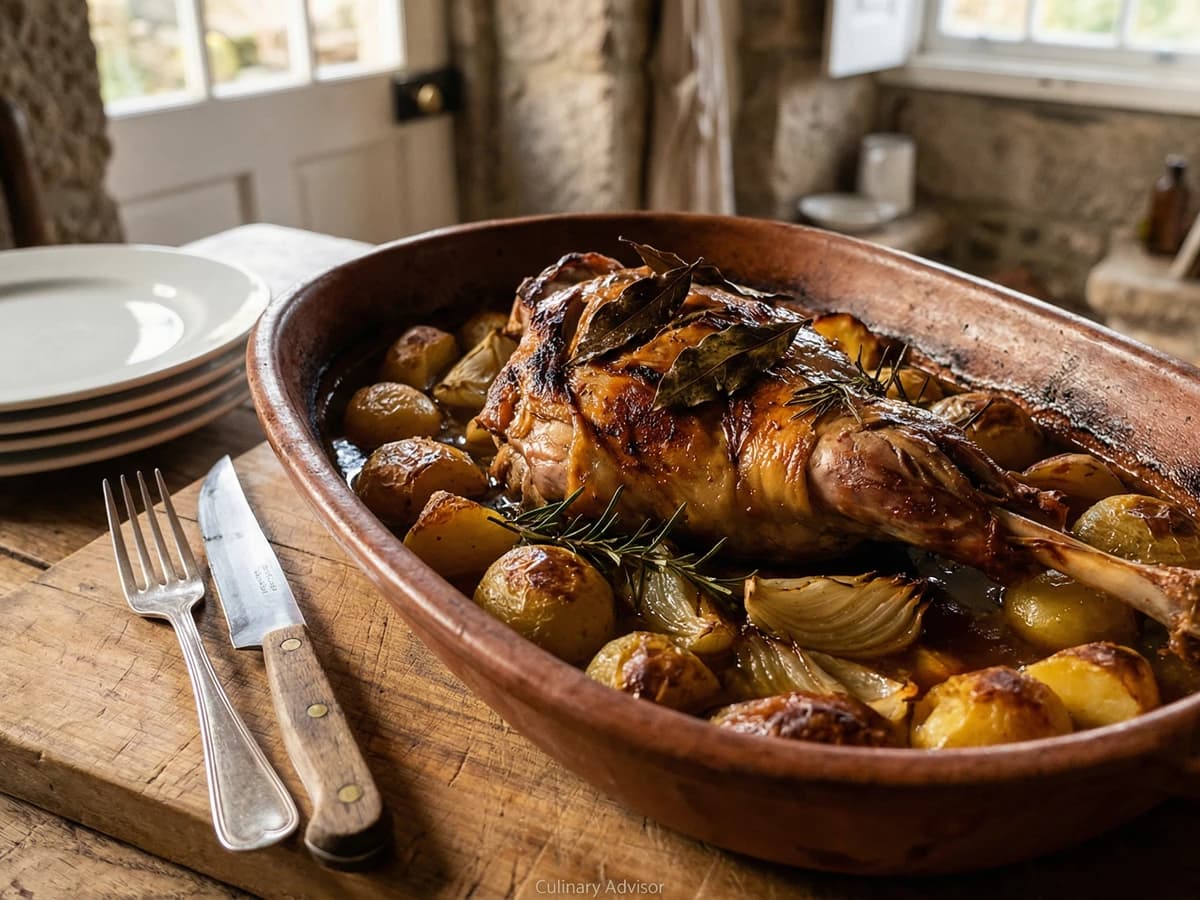
The Easter roast of mountain Portugal, where young goat meets garlic, rosemary, and slow heat. This is what celebration tastes like in Beira, carved at the table with family gathered around.
A cooking platform built around craft, culture, and the stories behind what we eat.
Created by
A flour sausage born of necessity, fried crispy and scrambled with eggs. This is what Beira workers ate before dawn, fuel for the mountains, genius disguised as simplicity.
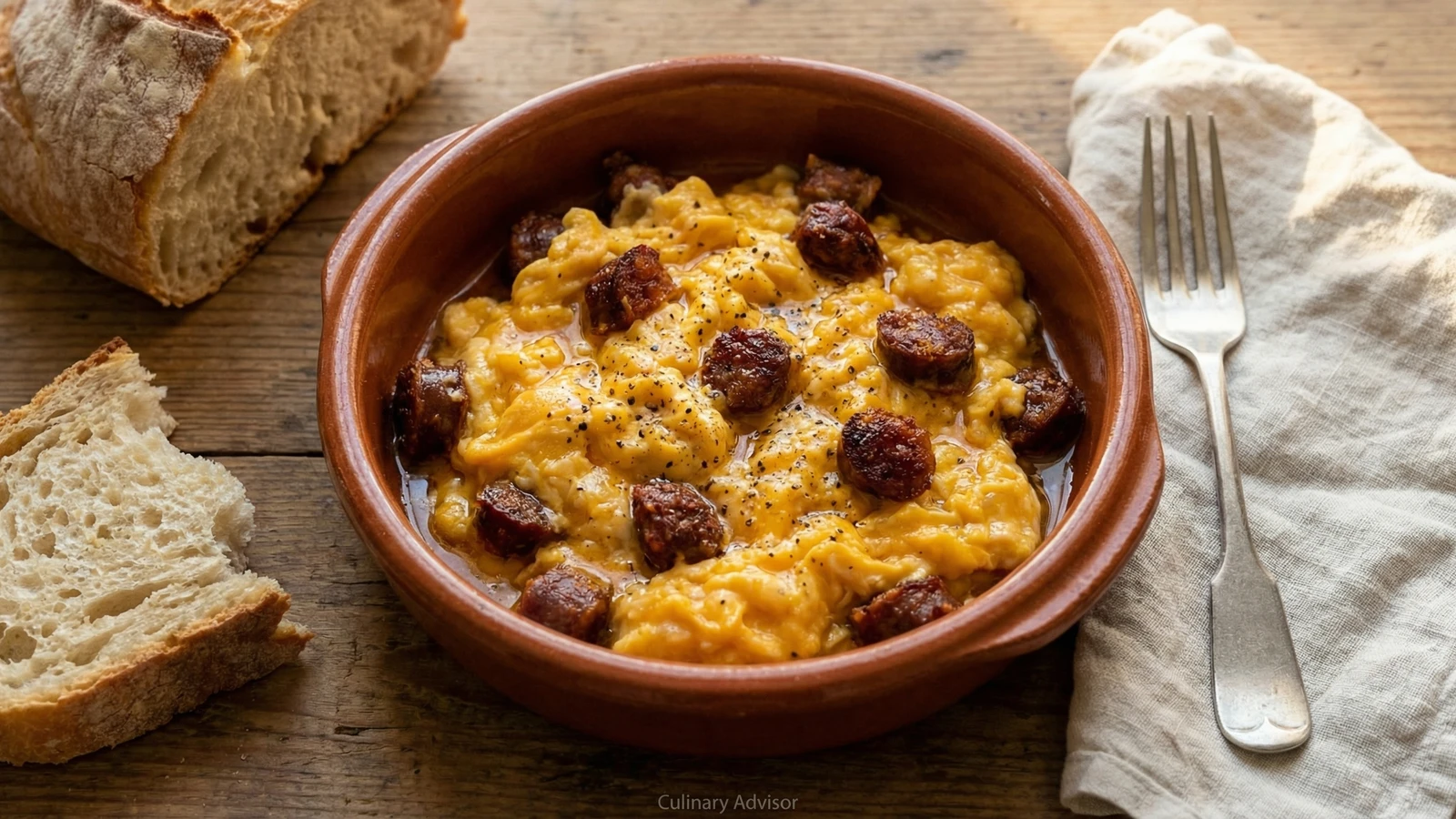
There's a sausage in Portugal that isn't really a sausage. Farinheira is mostly flour, bound with pork fat, seasoned with paprika and garlic. Soft when raw, almost like a paste. But fry it in a hot pan and it transforms into something crispy, savory, completely addictive.
This is Beira food. Mountain food. The kind of cooking that happens before sunrise when there's work to do and no time for fussing. You slice the farinheira, throw it in the pan, crack some eggs on top, and stir. Ten minutes. Maybe less. Done.
I learned this from a grandmother in Viseu who fed her family this way for sixty years. She laughed when I called it a recipe. "Recipe?" she said. "It's breakfast." But that's the thing about peasant cooking. The simplest preparations carry the most history, the most wisdom, the most flavor.
The farinheira makes the eggs something more than eggs. Its fat renders out and coats everything in that deep, smoky, pork-and-paprika richness. The crispy bits add texture. The soft eggs hold it together. It's perfect. Don't complicate it.
Farinheira emerged during the Portuguese Inquisition when Jews and Muslims, forced to convert or face persecution, needed to appear to eat pork. They created a sausage made primarily of flour and fat, hung alongside real sausages, allowing them to maintain appearances. What began as survival became tradition. Beira adopted farinheira as its own, and this breakfast scramble has fueled workers in the Serra da Estrela mountains for centuries.
Quantity
1 (about 150g)
Quantity
4 large
Quantity
2 tablespoons
Quantity
freshly ground, to taste
Quantity
for garnish
chopped
| Ingredient | Quantity |
|---|---|
| farinheira | 1 (about 150g) |
| eggs | 4 large |
| extra virgin olive oil (azeite) | 2 tablespoons |
| black pepper | freshly ground, to taste |
| fresh parsley (optional)chopped | for garnish |
Remove the casing from the farinheira and crumble or slice it into rough pieces about 1cm thick. The sausage is soft, almost paste-like inside. Don't worry about perfect shapes. This is worker food, not restaurant food.
Heat the olive oil in a wide skillet over medium heat. Add the farinheira pieces and fry, turning occasionally, until they turn golden and crispy on the outside, about 5 to 6 minutes. The kitchen will smell of paprika and rendered pork fat. That's the smell of a Beira morning.
Reduce heat to medium-low. Crack the eggs directly into the pan with the farinheira. Let them sit for just a moment, then begin stirring gently with a wooden spoon, breaking the yolks and folding the eggs through the crispy sausage. Keep the movement slow and continuous. You want soft curds, not a flat omelet.
Stop stirring when the eggs are just set but still look slightly wet. They'll finish cooking from the heat of the pan. Season with black pepper. No salt needed. The farinheira brings enough. Transfer immediately to warm plates. Scatter parsley if you like, or don't. Serve with crusty bread to mop the plate. Eat standing up if you're in a hurry. The workers did.
1 serving (about 190g)
Culinary guides, cultural storytelling, and the editorial depth that makes cooking meaningful.
Discover Culinary ExplorerChef Margarida
The Easter roast of mountain Portugal, where young goat meets garlic, rosemary, and slow heat. This is what celebration tastes like in Beira, carved at the table with family gathered around.

Chef Margarida
The mountain braise of Beira, where old goats meet robust wine and black clay pots, cooked for hours until the meat surrenders. Convent cooking, peasant wisdom, patience rewarded.

Chef Juliette
John Dory has the delicacy of sole and the firmness of turbot. A light flouring, a quick butter sauté, and nut-brown beurre noisette show exactly why looks never mattered.

Chef Juliette
Fresh haddock proves its delicacy in the meunière pan: a fine flour crust, moist pearly flakes, and beurre noisette sharpened with lemon and parsley, ready from one skillet in half an hour.