Chef Makoa
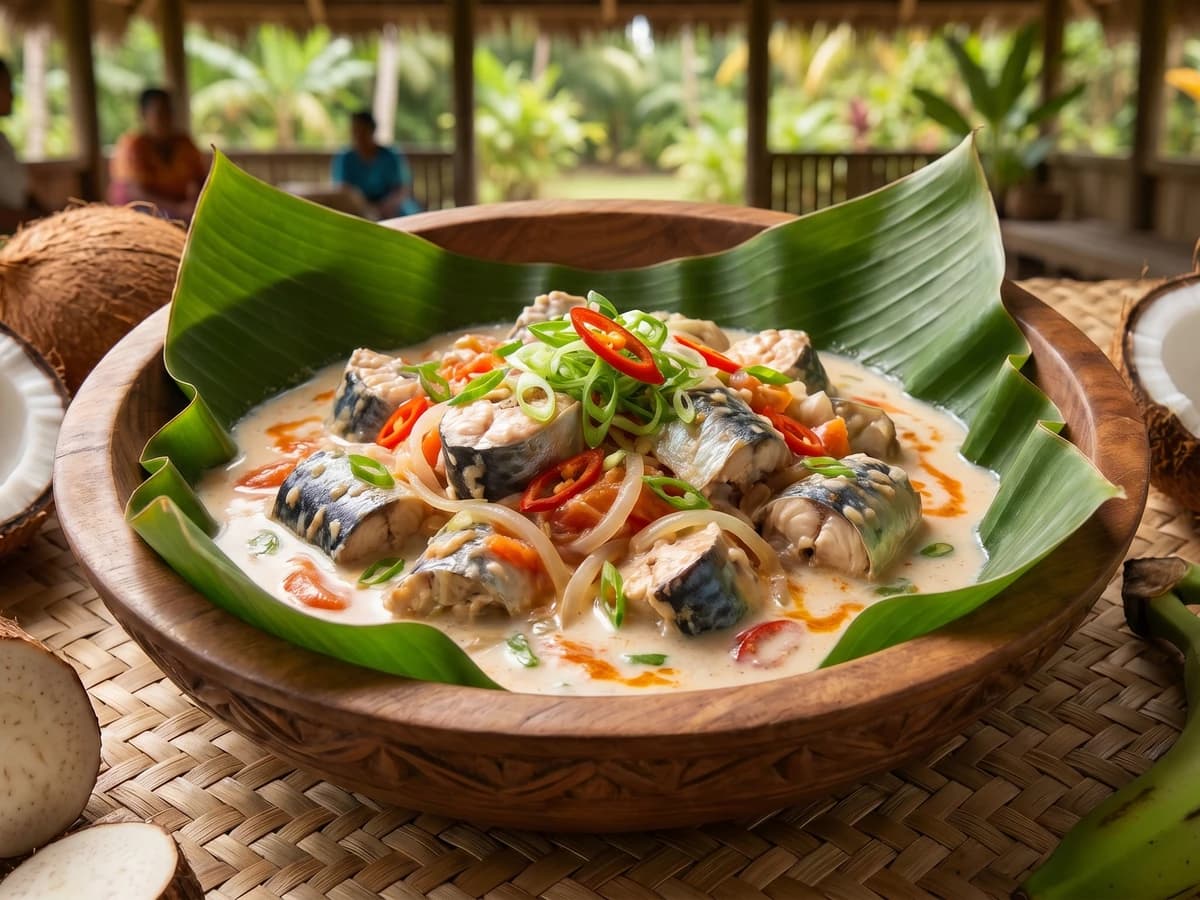
Faiʻai Eleni (Sāmoan Mackerel in Coconut Cream)
Sāmoa's faiʻai eleni turns tinned mackerel, onion, and coconut cream into a quick, generous supper, the pantry fish that feeds the whole ʻaiga beside talo, ʻulu, green banana, or rice.
A cooking platform built around craft, culture, and the stories behind what we eat.
Created by
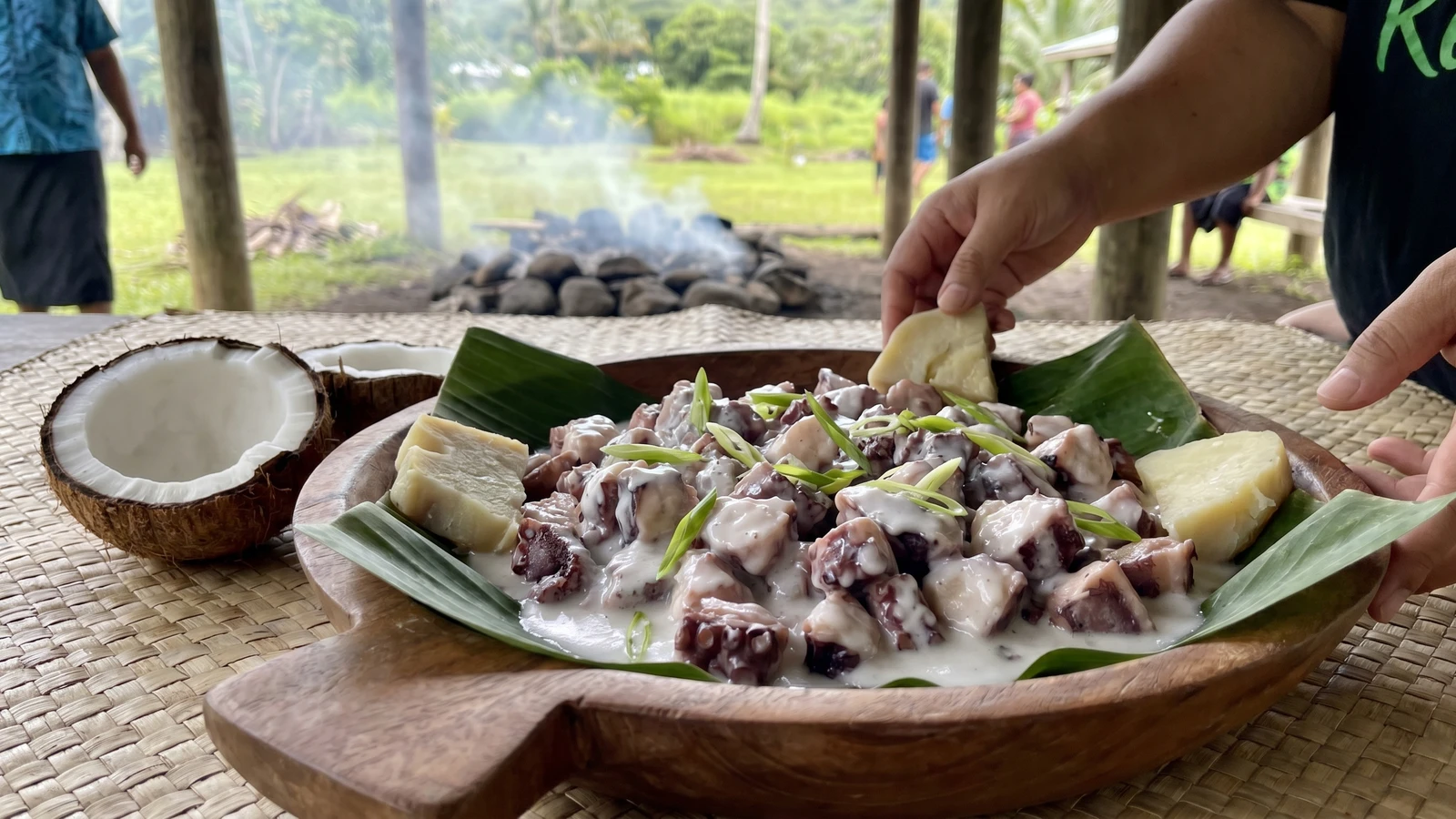
Sāmoa's faiʻai feʻe is reef octopus simmered patient in fresh coconut cream, rich and glossy enough to eat beside talo at toʻonaʻi, with the ocean feeding the whole aiga.
The ocean gives some foods like a favor, and Sāmoa's feʻe, the reef octopus, is one of those. This is my cousins' bowl, not my family's, and I cook it with my hands open. Faiʻai feʻe is octopus simmered until tender, then folded into peʻepeʻe, fresh coconut cream, until the sauce shines and clings. At a toʻonaʻi, the Sunday meal after church, it sits beside talo, taro, and the whole aiga eats from the spread.
The lesson is patience. Octopus looks tough because it is tough, all muscle from holding rock and reef, and you don't make it tender by rushing. You simmer it quiet first, then let the coconut cream finish the work. Same law as the leaf parcel, palusami in Sāmoa, lū in Tonga, rukau in the Cooks, laulau back home in Hawaiʻi. The coconut doesn't hide the food. It carries it.
Across the Triangle, the cousins speak to the sea in their own bowls: Sāmoan oka, Tongan ʻota ʻika, Tahitian ʻia ota, Cook Islands ika mata, Hawaiian poke. Same fish, different bowl. This one is Sāmoan, and the feʻe stays cooked, rich, and steady, the kind of relish that makes plain talo feel like a feast.
If you can squeeze the coconut cream fresh, do it. That's the part that tastes like somebody sat with you. If you only have a can, use it and eat what you have. No need make the table precious. Just name whose hand carried the dish, feed people well, and for the deeper stories of Sāmoan ceremony, go sit with a Sāmoan elder or auntie who owns that knowing.
Faiʻai in Sāmoa names a family of coconut-cream preparations, often seafood or tinned fish wrapped or simmered with rich peʻepeʻe and eaten with talo, breadfruit, or green banana. Feʻe, reef octopus, belongs to the nearshore food world of Sāmoan villages, where reef knowledge, tide, and family labor decide what reaches the Sunday toʻonaʻi table. The dish shows the deep-food line and the living one together: fresh reef catch and coconut cream from the old foodway, cooked today beside canned-fish faiʻai, sapasui, corned beef, and rice without shame.
Quantity
2 pounds
fresh or thawed
Quantity
1 tablespoon
plus more to taste
Quantity
1 small
finely diced
Quantity
2 cups
or 1 can thick coconut cream
Quantity
1/2 cup
as needed
Quantity
2
thinly sliced
Quantity
for serving
| Ingredient | Quantity |
|---|---|
| cleaned octopus (feʻe)fresh or thawed | 2 pounds |
| sea saltplus more to taste | 1 tablespoon |
| onionfinely diced | 1 small |
| fresh coconut cream (peʻepeʻe)or 1 can thick coconut cream | 2 cups |
| octopus cooking liquidas needed | 1/2 cup |
| green onions (optional)thinly sliced | 2 |
| cooked taro (talo), breadfruit (ʻulu), or green banana | for serving |
Rinse the feʻe, the octopus, under cool water and check that the beak, eyes, and innards are removed. Rub it with the sea salt, working over the arms and head, then rinse again. The salt helps clean the skin and wakes up that clean reef smell.
Put the octopus in a heavy pot and cover with water by an inch. Bring it just to a boil, then lower to a quiet simmer for 45 to 60 minutes, until a knife slides into the thickest arm with only a little give. Don't boil it angry. Feʻe turns tough when you bully it.
Lift the octopus out and save 1/2 cup of the cooking liquid. When it is cool enough to handle, cut the arms and head into bite-size pieces, about one inch. The pieces should feel firm and springy, not rubbery.
Set the pot back over medium-low heat and add the onion, coconut cream, and a splash of the saved cooking liquid. Stir until the cream loosens and turns glossy, then season lightly with salt. Fresh peʻepeʻe, coconut cream squeezed from mature coconut, is the soul here. A good can does the weeknight job.
Fold the octopus into the coconut cream and keep it at a low, gentle bubble for 12 to 18 minutes, stirring now and then, until the sauce thickens and clings to the feʻe in a rich white sheen. If it gets too thick, loosen it with a spoonful of cooking liquid. If it tastes flat, it wants salt.
Spoon the faiʻai feʻe into a communal bowl and scatter green onion over it if you're using it. Serve it with talo, taro, or with ʻulu, breadfruit, so the starch catches the coconut cream. This is rich food, celebration food, and the bowl should look like the aiga can reach in.
1 serving (about 340g)
Culinary guides, cultural storytelling, and the editorial depth that makes cooking meaningful.
Discover Culinary ExplorerChef Makoa
Sāmoa's faiʻai eleni turns tinned mackerel, onion, and coconut cream into a quick, generous supper, the pantry fish that feeds the whole ʻaiga beside talo, ʻulu, green banana, or rice.
Chef Makoa
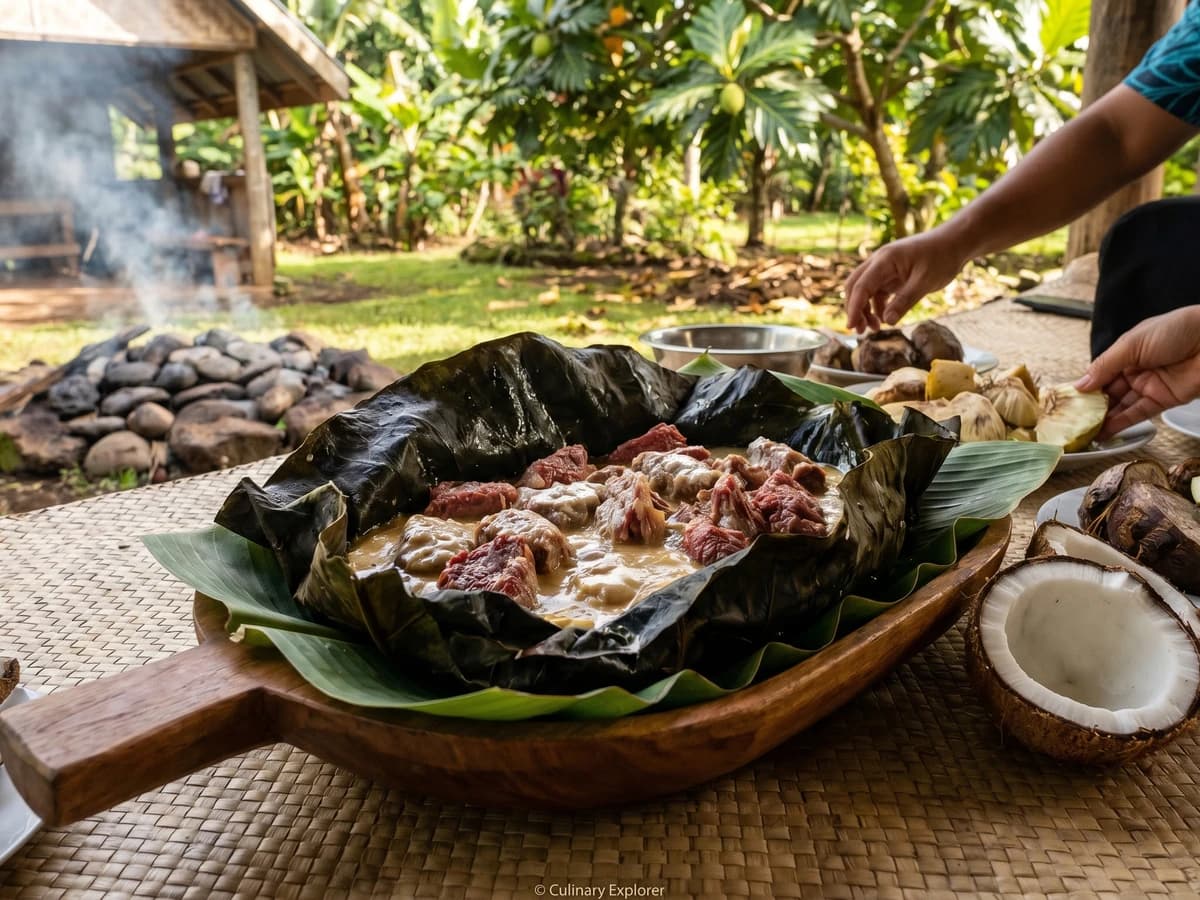
Sāmoa's taro-leaf parcel made generous with pisupo, coconut cream, and time: a toʻonaʻi kind of comfort, with Tonga's lū pulu and Hawaiʻi's laulau sitting close as cousins.
Chef Makoa
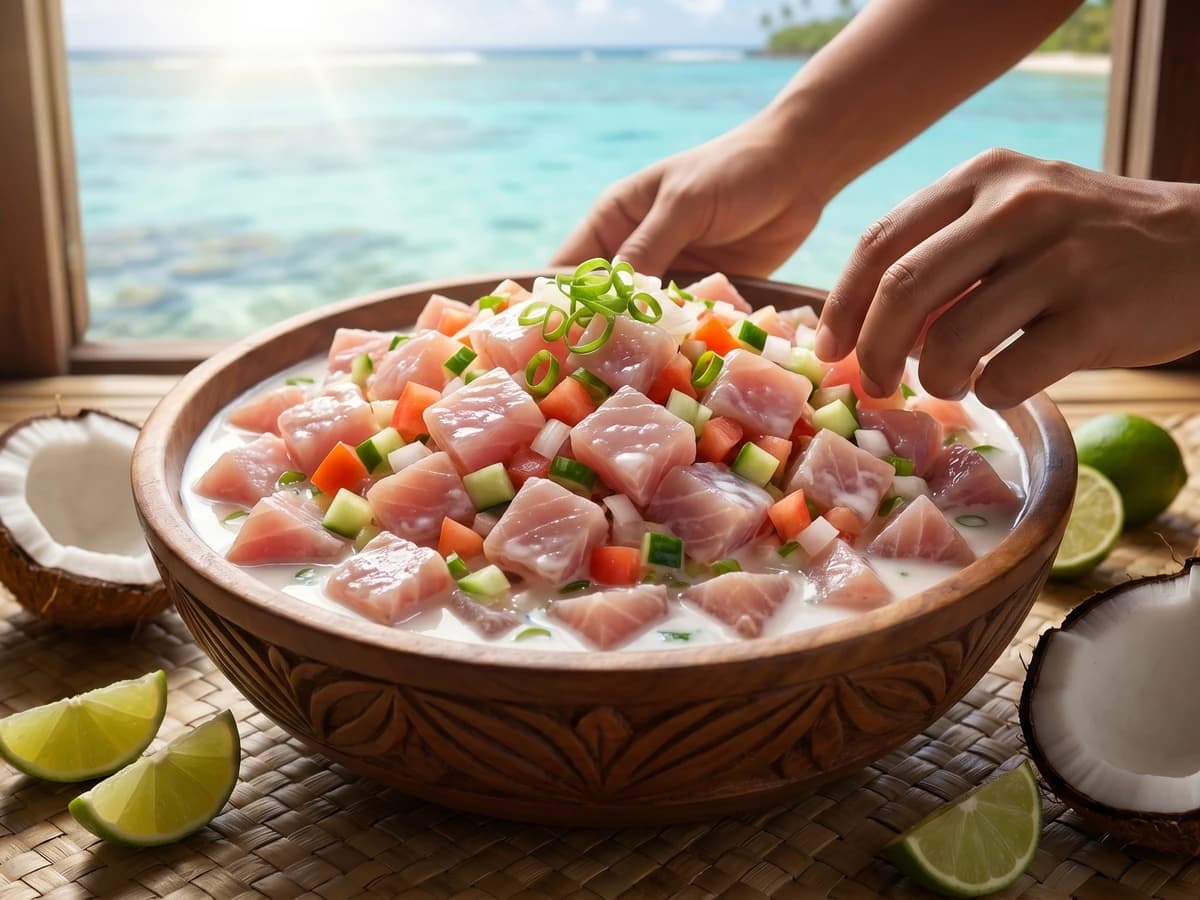
Sāmoa’s oka iʻa bathes fresh fish in citrus and peʻepeʻe, fresh coconut cream, then runs tomato, cucumber, and onion through it cold. Same fish as Tahiti’s ʻia ota, different bowl.
Chef Makoa
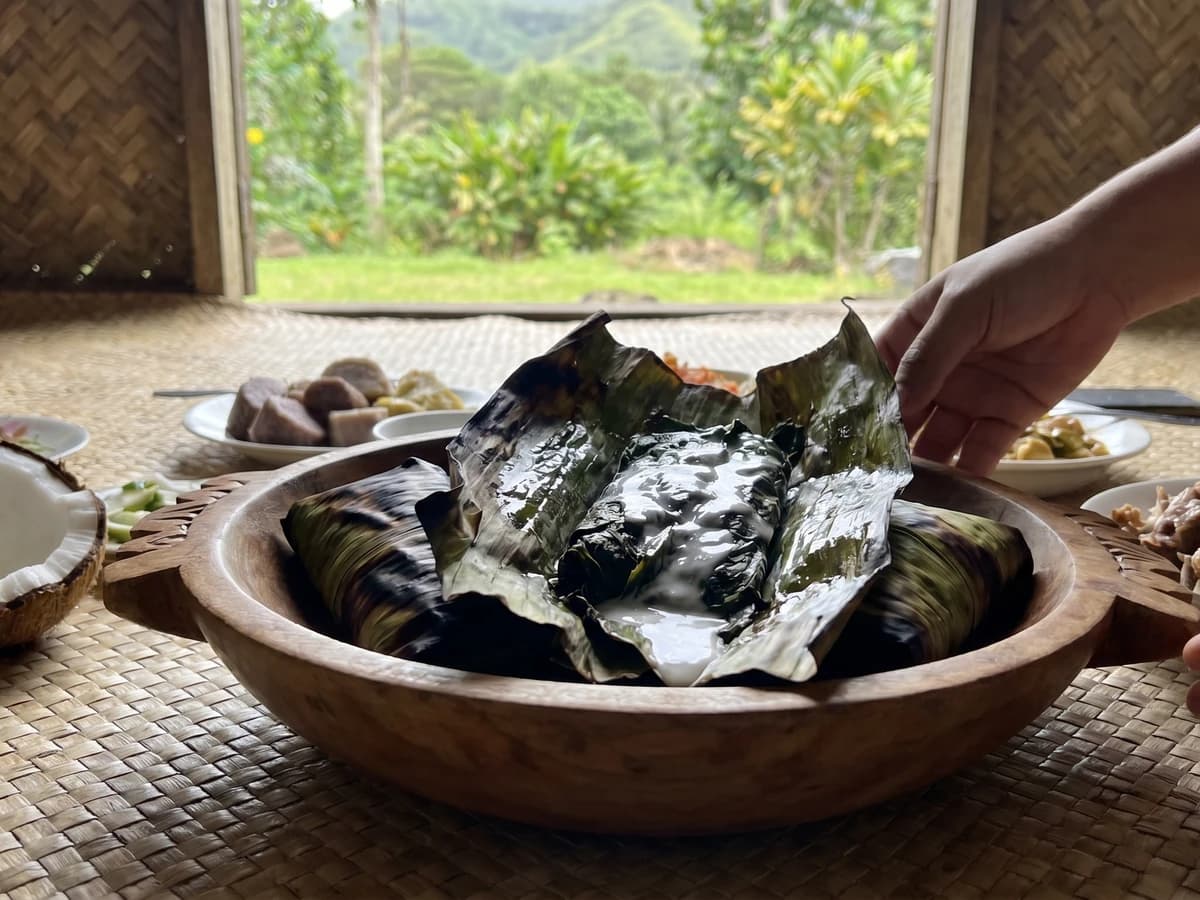
Sāmoa’s Sunday toʻonaʻi parcel: young taro leaves folded around fresh coconut cream and baked until the leaf turns dark, silky, and rich enough to feed the whole aiga.