
Chef Makoa
Ahimaʻa Puaʻa (Tahitian Earth-Oven Pork)
Tahitian puaʻa cooked in the spirit of the ahimaʻa, the earth oven of maʻa Tahiti, wrapped in banana leaf and held low and slow until the meat gives in two fingers.
A cooking platform built around craft, culture, and the stories behind what we eat.
Created by
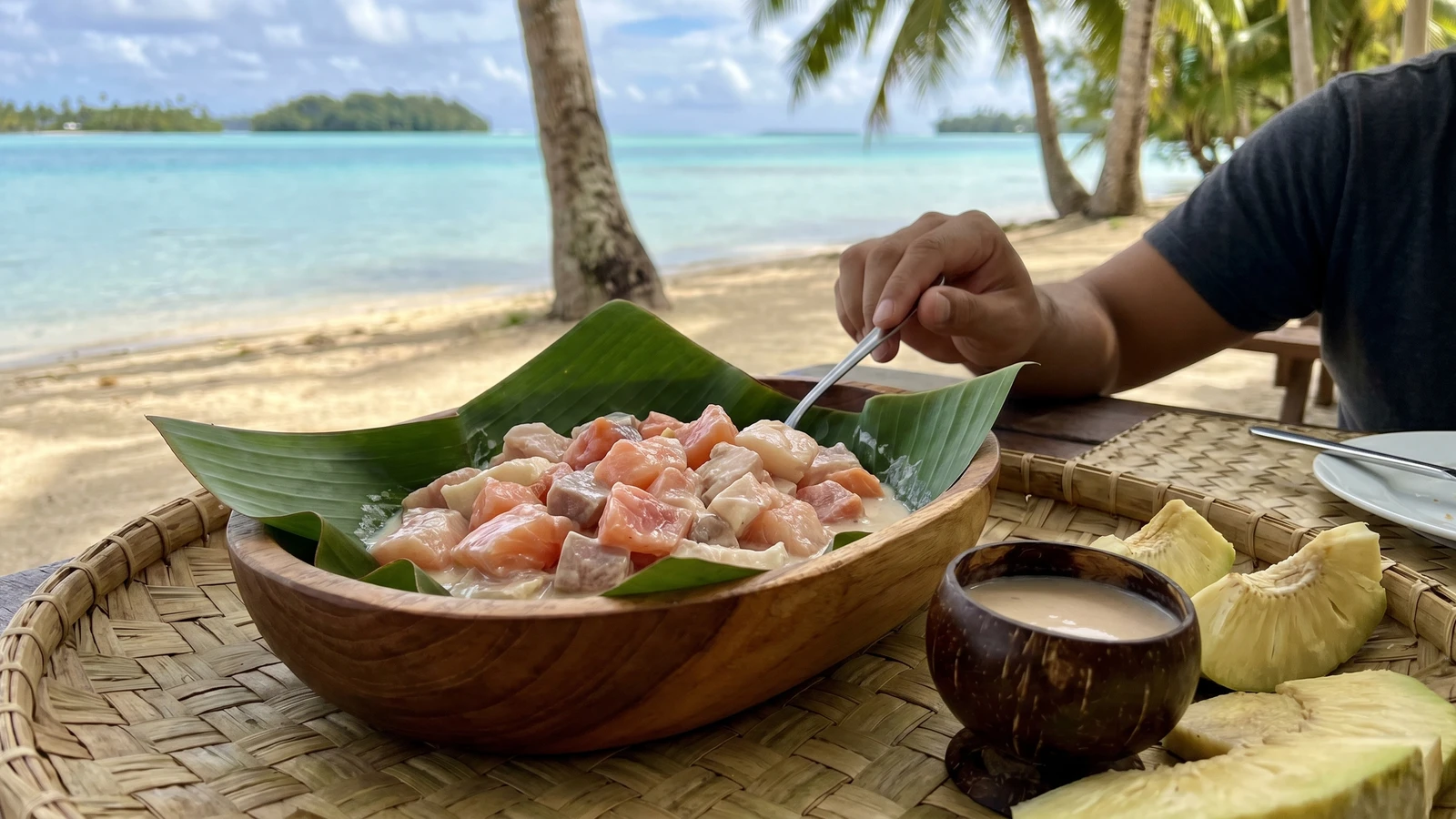
Tahiti's fāfaru takes raw ʻahi into miti fāfaru, a pungent fermented seawater brine, then brings it back to the table with mitihue, breadfruit, and the lesson that good funk is food kept alive.
The first time a Tahitian cousin set fāfaru down in front of me, he didn't warn me soft. He pointed at the lagoon and said the moana, the ocean, had already done the work. This is Tahiti's keeping dish, the fenua, the land, and the moana speaking through fish, salt water, and time. The fish is given over to miti fāfaru, fermented seawater scented by shrimp or fish heads, then brought back with mitihue, Tahitian fermented coconut sauce tied to the old hue, the gourd. I cook it open-handed because the deep brine belongs first to Tahiti's own people, and for the old ways of the lagoon and the gourd, you go sit with them.
Fāfaru sits near the raw-fish cousins, but it isn't Tahitian ʻia ota, raw fish in coconut and lime, and it isn't Sāmoan oka, Tongan ʻota ʻika, Cook Islands ika mata, or Hawaiian poke. Same fish, different bowl. This one goes where the clean funk lives. The sharp smell is not a mistake when the brine is made right; it's preservation, appetite, and memory all at once. The old people knew scarcity doesn't ask politely, so they taught the ocean to keep feeding the table after the catch was done.
In a kitchen far from a Tahitian reef, we no scoop beach water and hope. We make seawater-strength brine with clean water and weighed salt, start it with very fresh shrimp heads or a fish frame, keep it cold, strain it clean, then steep the ʻahi only close to serving. That is not fear. That is kuleana, responsibility. Food is kin, and people are kin too.
Serve it with mitihue and cooked ʻuru, breadfruit, or taro if you've got it. Rice is fine too; eat what you have. The funk is the point, but the welcome is the point too.
Fāfaru belongs to Tahiti and the Society Islands, where miti fāfaru, fermented seawater made with shrimp or fish heads, seasoned raw fish before the table and before ice made the catch easy to hold. Mitihue, the fermented coconut sauce associated with the hue, the gourd that held it, shows how coconut, salt water, and time became a keeping system, not a novelty. Across the Triangle, preservation took its own island names: Tahitian mahi and Marquesan ma kept breadfruit sour in pits, Māori preserved tītī in pōhā kelp bags, and Hawaiian families salted and dried iʻa, fish, different foods answering the same need.
Quantity
4 cups
boiled and cooled, for the miti fāfaru
Quantity
33 grams
about 2 tablespoons fine sea salt, for a 3.5 percent brine
Quantity
1/2 cup shrimp heads and shells or 4 ounces fish head or frame
gills removed if using fish head
Quantity
1 pound
cut into 1-inch pieces
Quantity
2 cups
chilled, for steeping the fish
Quantity
1 cup
Quantity
1 cup
for quick mitihue if prepared mitihue is not available
Quantity
1 to 2 tablespoons
for quick mitihue
Quantity
pinch
for quick mitihue
Quantity
for serving
| Ingredient | Quantity |
|---|---|
| filtered waterboiled and cooled, for the miti fāfaru | 4 cups |
| non-iodized sea saltabout 2 tablespoons fine sea salt, for a 3.5 percent brine | 33 grams |
| very fresh raw shrimp heads and shells, or very fresh fish head or framegills removed if using fish head | 1/2 cup shrimp heads and shells or 4 ounces fish head or frame |
| sashimi-grade ʻahi (yellowfin tuna) or other very fresh firm fishcut into 1-inch pieces | 1 pound |
| strained miti fāfaru (Tahitian fermented seawater brine)chilled, for steeping the fish | 2 cups |
| prepared mitihue (Tahitian fermented coconut sauce) (optional) | 1 cup |
| fresh coconut cream or thick canned coconut cream (optional)for quick mitihue if prepared mitihue is not available | 1 cup |
| strained miti fāfaru (optional)for quick mitihue | 1 to 2 tablespoons |
| sea salt (optional)for quick mitihue | pinch |
| cooked ʻuru (breadfruit), taro, or plain rice (optional) | for serving |
Wash a 1-quart glass jar, lid, sieve, and spoon, then sanitize the jar with boiling water or a dishwasher heat cycle and let it cool. I don't teach scooped seawater for a kitchen away from Tahiti's reef. We honor the old brine by starting clean, because the rule I learned back home as ʻāina, kānaka, meaʻai, land, people, food, still holds here: all three have to stay well.
Stir the 33 grams of sea salt into the 4 cups cooled boiled water until the brine turns clear. Add the shrimp heads and shells, or the fish head or frame with the gills removed, and keep the solids under the liquid. Set the lid on loose and refrigerate 48 hours, swirling once a day. The smell should grow strong, marine, and cheesy, not rotten or dirty.
Strain the miti fāfaru through a fine sieve lined with cheesecloth into a clean jar. Press lightly, but don't mash the solids through. Discard the shrimp or fish head pieces, keep the brine chilled, and use it within 24 hours. If you see mold, ropey slime, swelling pressure under the lid, or smell garbage-sour rot instead of clean ocean funk, discard the batch. We no throw out good food, but unsafe food stopped being good food.
Mitihue is Tahiti's fermented coconut sauce. If you have prepared mitihue from a Tahitian maker, use that and give thanks. For a home stand-in, whisk the coconut cream with 1 to 2 tablespoons of strained miti fāfaru and a pinch of sea salt. It should taste creamy, salty, and faintly funky, not sour like spoiled cream. Keep it cold until the fish is ready.
Keep the ʻahi cold and cut it into clean 1-inch pieces. The fish underneath all this is one law on every island: fresh enough you'd happily eat it plain. If it smells fishy, looks dull, or feels sticky, no make it raw. Cook it instead, and nobody loses face.
Put the fish in a nonreactive bowl and pour over 2 cups chilled miti fāfaru, enough to cover. Fold once, cover, and refrigerate 20 minutes for a gentler first bowl, or 45 to 60 minutes for a stronger Tahitian table. Taste a piece every 15 minutes. The edges should turn a little opaque, the flesh should firm slightly, and the smell should be loud but clean. Do not leave it at room temperature, and do not soak it longer than 2 hours.
Lift the fish from the brine with a slotted spoon and let it drain. If the bite is stronger than your table can carry, give the fish a quick dip in cold filtered water and drain again. No shame. Spoon mitihue over the fish or serve it in a coconut-shell cup alongside, then set out cooked ʻuru, taro, or rice to carry the salt and funk.
Serve fāfaru the same day it is steeped, cold and clean, with the used brine discarded because it has touched raw fish. Keep the bowl chilled until it reaches the table, and don't let it sit out beyond 2 hours. Deep food is not fancy. It's not pretty. It's not polite to every nose. But when it's made right, the funk is flavor, not failure.
1 serving (about 250g)
Culinary guides, cultural storytelling, and the editorial depth that makes cooking meaningful.
Discover Culinary ExplorerChef Makoa
Tahitian puaʻa cooked in the spirit of the ahimaʻa, the earth oven of maʻa Tahiti, wrapped in banana leaf and held low and slow until the meat gives in two fingers.
Chef Makoa
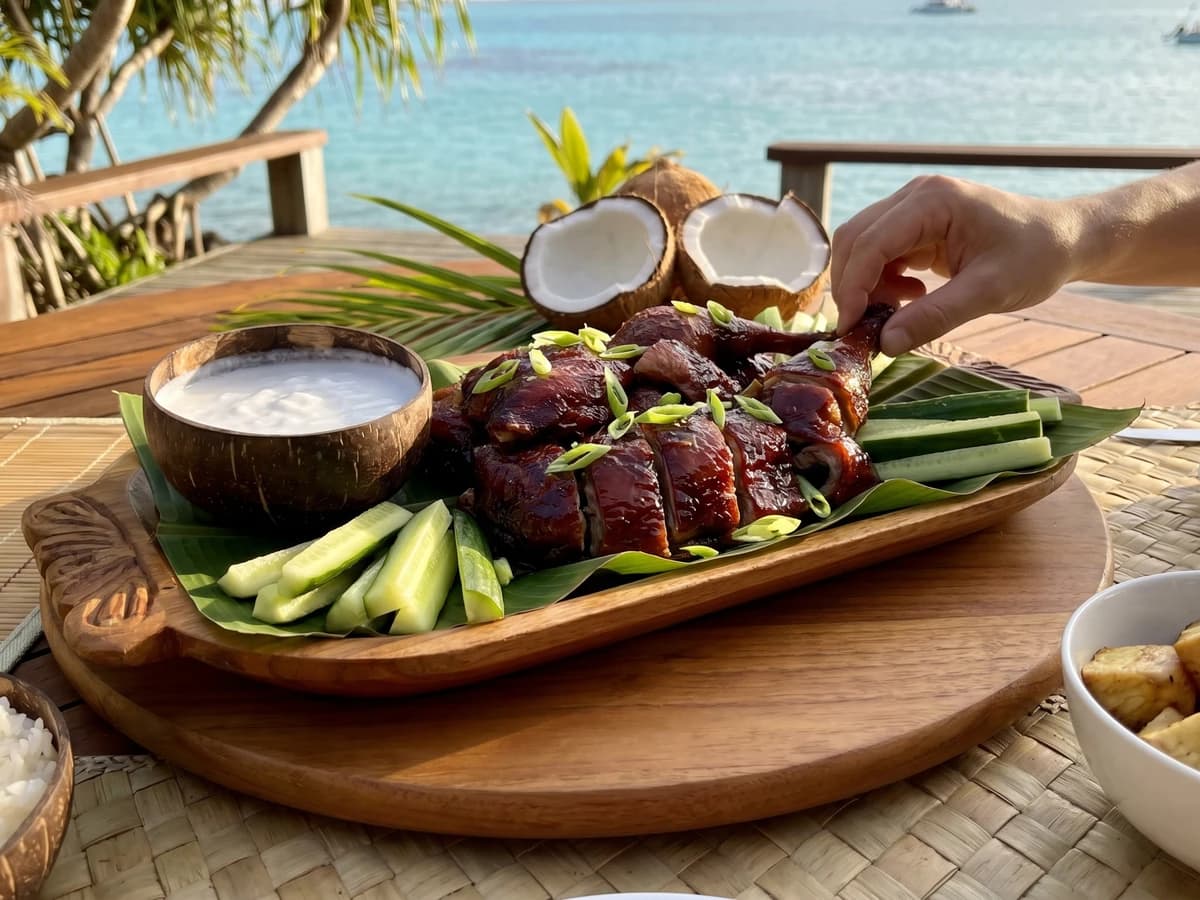
Glossy Chinese-Tahitian roast duck from Papeʻete, lacquered with soy, honey, and five-spice, carved for the lazy Susan, then dipped into thick fresh coconut milk beside rice, ʻuru, and a crowded table.
Chef Makoa
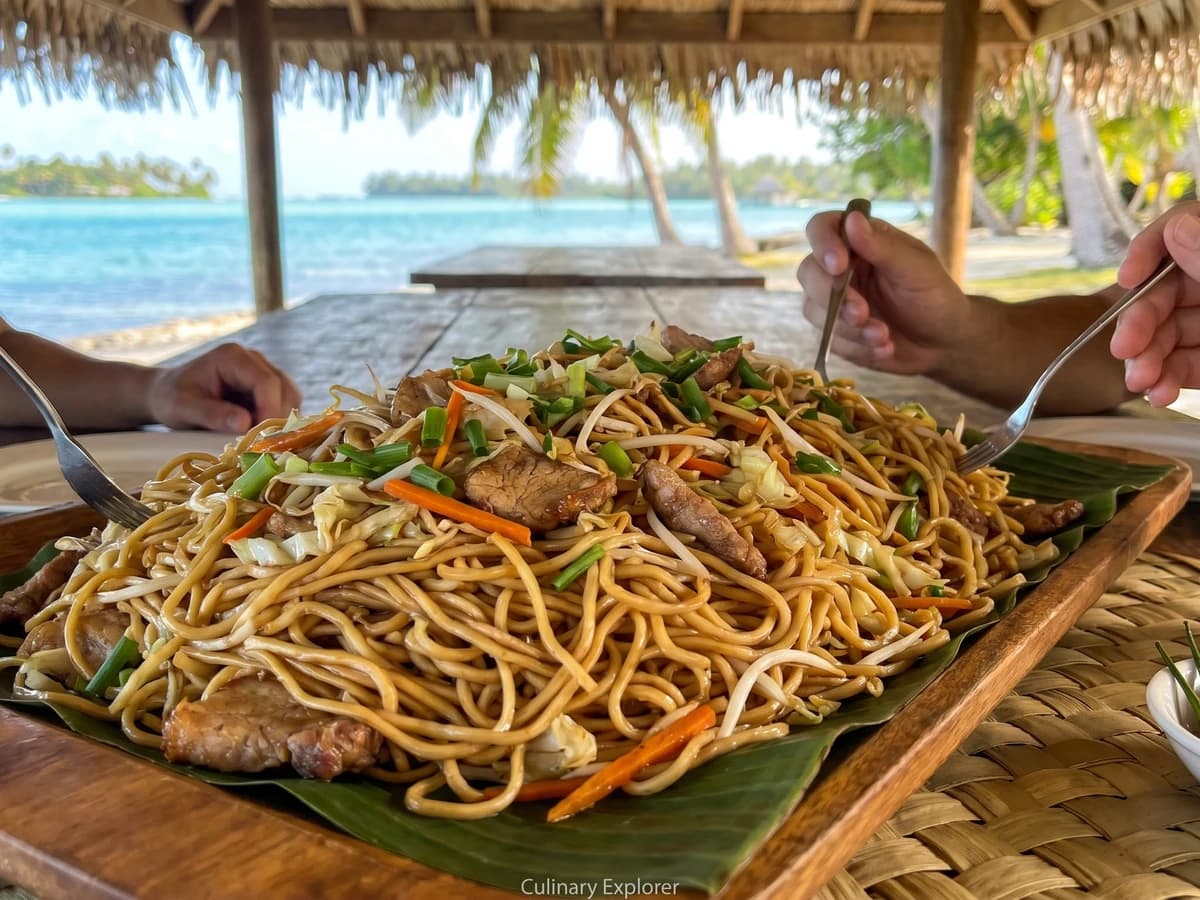
Tahiti's chao men is Hakka chow mein made fully local: glossy egg noodles, pork, cabbage, carrot, and green onion, fast from the wok and generous enough for the table.
Chef Makoa
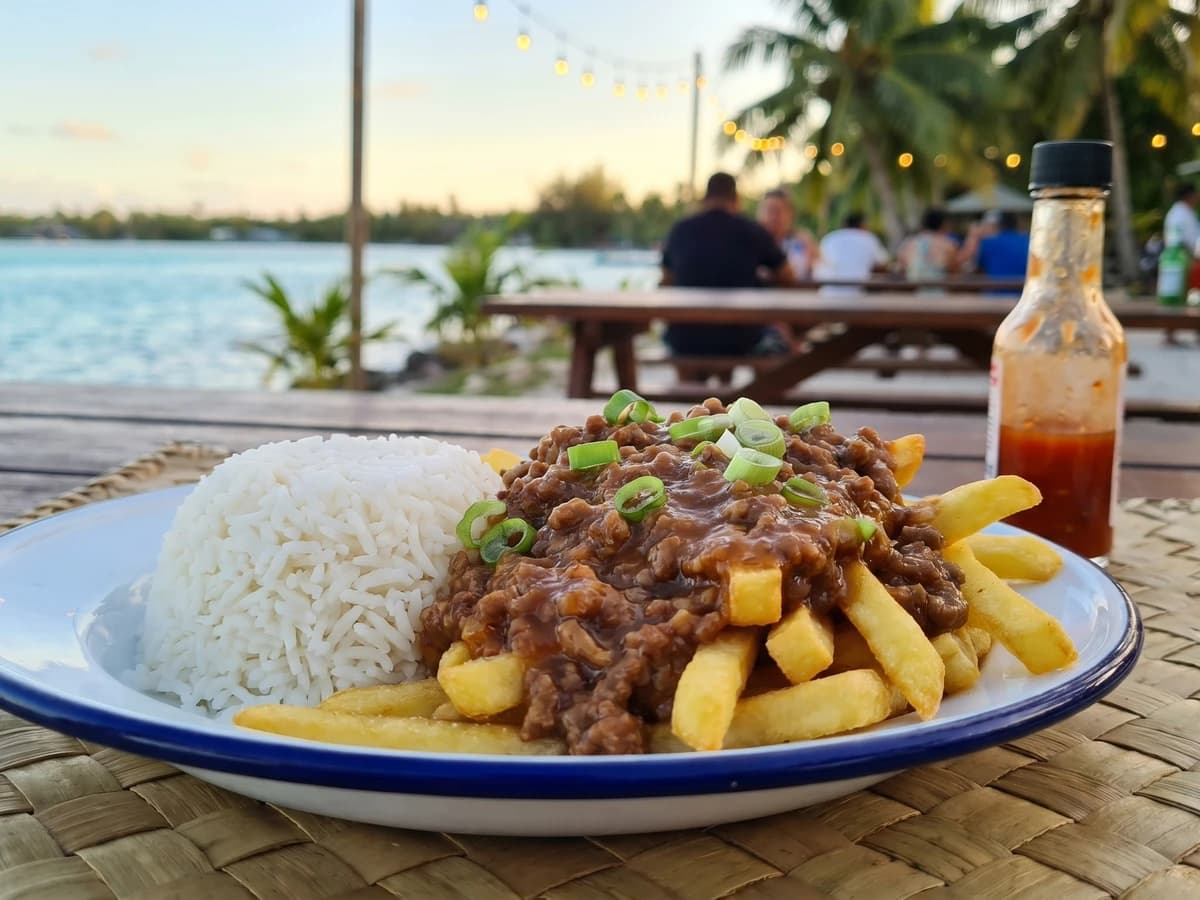
A Tahitian roulotte plate from Papeʻete nights: savory minced beef, crisp fries, and white rice piled big, French casse-croûte comfort carried into island appetite.