Culinary Explorer

A cooking platform built around craft, culture, and the stories behind what we eat.
Discover Culinary Explorer
Esrommad paa Rugbrod

Esrommad paa Rugbrod

Created by Chef Freja

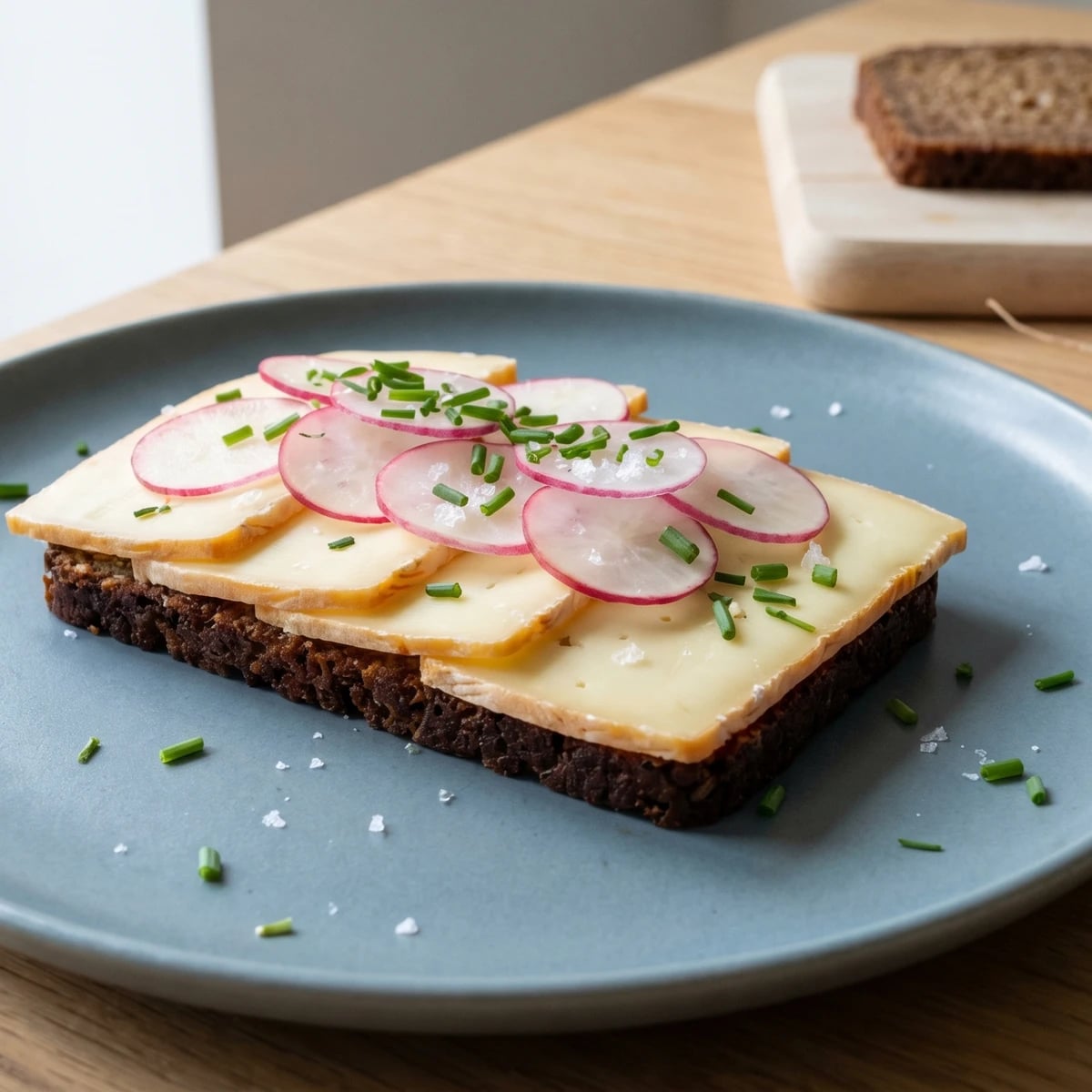
Pungent Esrom from North Zealand on dark rye with paper-thin radish and fresh chives. The cheese course that closes a proper Danish smorrebrod spread, one of the quietest, most satisfying bites in the whole tradition.

Sandwiches & Wraps
Danish
Dinner Party
Comfort Food
15 min
Active Time
0 min cook15 min total
Yield4 pieces

The first radishes at the market are how you know spring has come to stay. Small and firm, their skins tight and red, with a bite that wakes your mouth after months of root vegetables and stored cabbage. When they arrive, I buy a bunch before anything else. They mean the long table is about to change.

Esrommad paa rugbrod is the kind of smorrebrod that looks like nothing and delivers everything. A thick slice of dark rye, good butter, generous pieces of Esrom cheese brought properly to room temperature, paper-thin radish, and a scatter of chives. That's the whole list. In the Danish smorrebrod tradition, cheese closes the meal. You start with herring, move through fish and meat, and end here, with something rich and quiet and deeply satisfying. At a dinner party, this is the piece that makes people go still for a moment. It earns its place at the end.

The one thing I need you to understand is temperature. Esrom straight from the fridge is a different cheese entirely: tight, muted, forgettable. Give it forty-five minutes on the counter and it transforms. The paste softens. The flavor opens into something nutty, tangy, and full, with that unmistakable pungency from the washed rind that the monks at Esrum Abbey knew centuries ago. That patience is the whole recipe. Everything else is assembly, and you'll know when it's right.

Esrom cheese traces its origins to the Cistercian monks of Esrum Abbey in North Zealand, who are believed to have produced washed-rind cheeses as early as the 12th century. The tradition disappeared when the monastery closed during the Reformation, and the cheese was all but forgotten for nearly four hundred years. In the 1930s, the Danish Dairy Research Institute revived it using records of the old monastic methods, and Esrom has carried protected geographical indication status since 1996, ensuring it can only be produced in Denmark.

The technique, the tradition, and the story behind every dish.

Discover Culinary Explorer

Ingredients

Esrom cheese

Quantity

200g

at room temperature

dark rugbrod

Quantity

4 thick slices

unsalted butter

Quantity

30g

softened

fresh radishes

Quantity

4-6

sliced paper-thin

fresh chives

Quantity

small bunch

finely snipped

flaky sea salt

Quantity

to finish

Equipment Needed

  • Mandoline or sharp knife for the radishes
  • Cheese slicer or sharp knife for the Esrom

Instructions

  1. 1

    Temper the cheese

    Take the Esrom out of the fridge at least forty-five minutes before you plan to assemble. This is the most important step in the recipe and it asks nothing of you but patience. Cold cheese is muted, tight, forgettable. At room temperature, Esrom transforms: the paste softens, the aroma deepens, and the flavor becomes nutty, tangy, and full in a way the fridge suppresses completely. The washed rind develops that unmistakable pungency that makes this cheese worth knowing.

    Press the cheese gently with your finger. When it yields and feels supple rather than firm, it's ready. You'll also notice the aroma has strengthened. That's the sign.
  2. 2

    Prepare the radishes

    Wash the radishes and slice them paper-thin. A mandoline is ideal, but a sharp knife and a steady hand will do. You want the slices thin enough that light almost passes through them, translucent discs with a bright rose-pink edge. Thin radish gives you a clean, peppery bite that cuts through the richness of the cheese without overpowering it. Thick slices fight the Esrom instead of balancing it.

  3. 3

    Butter the rugbrod

    Spread each slice of rugbrod with a thin, even layer of softened butter, going right to the edges. The butter is not optional and it's not just for taste. It seals the surface of the bread and keeps it from going soft under the cheese. Use real butter, the good kind. You'll taste it in every bite, and it bridges the dense, sour rye and the rich Esrom in a way nothing else can.

    If your butter is too cold and tears the bread, it's not ready. Let it sit at room temperature until it spreads without resistance. The bread should never be damaged in the making.
  4. 4

    Assemble the smorrebrod

    Slice the tempered Esrom into pieces about half a centimetre thick and lay them across the buttered rugbrod, covering the bread generously. Overlap the slices slightly so there are no gaps. Arrange the radish slices over the cheese in a single layer, letting them fan and overlap just enough to look deliberate. Scatter the snipped chives over the top and finish with a few flakes of sea salt. The salt isn't seasoning the cheese. It's waking up the radish and brightening every layer underneath it.

    The grammar of smorrebrod applies here: spread first, cheese second, garnish last. Each layer should be visible when you look at the finished piece from the side. That architecture is the dish.
  5. 5

    Serve at the table

    Serve immediately on individual plates with a knife and fork. Smorrebrod is never picked up. If you're building a full smorrebrod spread for a dinner party, remember the order: herring first, then other fish, then meat, then cheese. Esrommad closes the meal. That's the tradition, and there's a reason for it. After the intensity of fish and meat, the quiet richness of good cheese on dark rye is exactly where you want to land. Tak for mad.

Chef Tips

  • The cheese must come to room temperature. This is not a suggestion. Cold Esrom tastes like half a cheese. Forty-five minutes on the counter changes everything, and it's the difference between something ordinary and something you'll want to make again.
  • Buy the best rugbrod you can find, or bake your own. The bread is doing structural work here: it has to support the cheese and the toppings without collapsing, and it has to taste of something. Thin, soft bread has no place in smorrebrod.
  • A Danish pilsner is the right drink alongside. The bitterness and carbonation cut through the richness of the cheese in a way that wine struggles to match. If you're serving this as part of a full smorrebrod lunch, aquavit is traditional with the earlier courses, but beer closes the meal as naturally as the cheese does.
  • If you can't find Esrom, look for a young Tilsit or a Port Salut. They belong to the same family of washed-rind, semi-soft cheeses. But Esrom has a particular tanginess from its Danish terroir that the others only approximate. Seek it out if you can.

Advance Preparation

  • Take the cheese out of the fridge forty-five minutes before serving. This is the only advance step that truly matters.
  • The radishes can be sliced an hour ahead and kept in cold water to stay crisp. Drain and pat them dry before assembling.
  • Assemble the smorrebrod just before serving. Rugbrod softens under the cheese if it sits, and the architecture falls apart. This is a dish that wants to be eaten the moment it's made.

Frequently Asked Questions

Nutrition Information

1 serving (about 138g)

Calories
380 calories
Total Fat
20 g
Saturated Fat
12 g
Trans Fat
0 g
Unsaturated Fat
7 g
Cholesterol
55 mg
Sodium
900 mg
Total Carbohydrates
30 g
Dietary Fiber
5 g
Sugars
1 g
Protein
17 g

Note: Chef personas and recipes are created with AI assistance. Cook with care: follow safe food-handling practices, check doneness with a thermometer when needed, and adapt for allergies and your kitchen.

Where cooking meets culture.

Culinary guides, cultural storytelling, and the editorial depth that makes cooking meaningful.

Discover Culinary Explorer

More from Smorrebrod med Ost (Cheese Smorrebrod)

Browse the full collection