Culinary Explorer

A cooking platform built around craft, culture, and the stories behind what we eat.
Discover Culinary Explorer
Ensopado de Borrego

Ensopado de Borrego

Created by

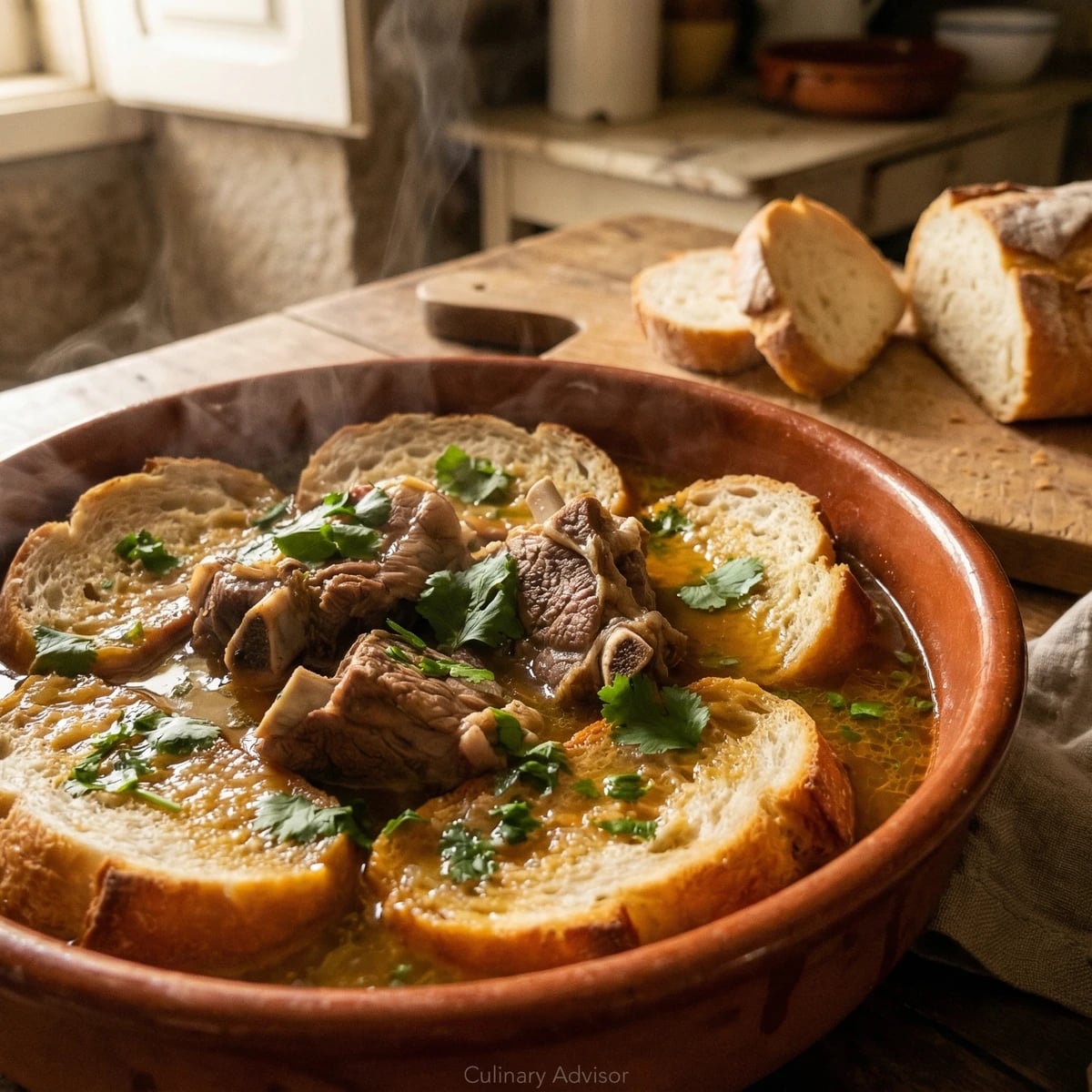
Alentejo's Easter lamb stew where the bread soaks up every drop of rich, garlicky broth. Ensopado means soaked, and that bread, drinking in two hours of slow-cooked flavor, is the whole point.

Main Dishes
Portuguese, Alentejo
Comfort Food
Easter
30 min
Active Time
2 hr 30 min cook3 hr total
Yield6 servings

There's a reason this dish appears on every table in Alentejo during Easter. It's not because it's fancy. It's because it's perfect.

Ensopado de borrego is lamb braised low and slow until it falls from the bone, then ladled over thick slices of bread that drink up the broth like they've been waiting for it all their lives. Ensopado means soaked. The name tells you everything. The bread is not a side dish. The bread is the dish. It just happens to have lamb on top.

Avó Leonor made this every Easter Sunday. The smell would fill the house by midmorning: onions softening in azeite, lamb browning, paprika blooming in the fat. By the time we sat down to eat, the anticipation was almost unbearable. She'd place the bread in each bowl with ceremony, then ladle the stew over top. That moment when the broth hit the bread and you could see it start to soak in, that was the moment. That was the whole year leading to that one moment.

This is peasant food. Shepherd food. The lamb came from flocks that grazed on the dry Alentejo plains, fed on wild herbs that flavored the meat before any seasoning touched it. The bread was what every household had. The genius was in knowing how to put them together. A cozinha é memória. Every time I make this, I'm back at her table.

Ensopado de borrego has roots in the transhumance traditions of Alentejo, where shepherds moved flocks across the vast plains and cooked what they had: lamb, bread, garlic, and wild herbs. The dish became associated with Easter during the Catholic era, when lamb symbolized sacrifice and renewal. Regional variations exist across Portugal, but Alentejo's version, with its emphasis on bread-soaking and coentros, remains the most celebrated.

The technique, the tradition, and the story behind every dish.

Discover Culinary Explorer

Ingredients

bone-in lamb shoulder or leg

Quantity

1.5 kg

cut into large chunks

extra virgin olive oil (azeite)

Quantity

1/3 cup

onions

Quantity

2 large

sliced thin

garlic cloves

Quantity

6

smashed

bay leaves

Quantity

2

sweet paprika (colorau doce)

Quantity

1 teaspoon

hot paprika or piri-piri (optional)

Quantity

1/2 teaspoon

dry white wine

Quantity

1 cup

water or light lamb stock

Quantity

3 cups

white wine vinegar

Quantity

1 tablespoon

fresh cilantro (coentros)

Quantity

1 large bunch

stems and leaves separated

day-old crusty bread

Quantity

6-8 thick slices

coarse sea salt

Quantity

to taste

black pepper

Quantity

to taste

freshly ground

Equipment Needed

  • Heavy clay pot (púcara) or 6-liter Dutch oven
  • Deep serving bowls for the bread

Instructions

  1. 1

    Season the lamb

    Pat the lamb pieces dry and season generously with coarse salt and black pepper. Let them sit at room temperature for 30 minutes. Cold meat shocks the pan. Room temperature meat browns properly.

  2. 2

    Brown the lamb

    Heat half the azeite in a heavy clay pot or Dutch oven over medium-high heat. Working in batches, brown the lamb on all sides until deeply golden, about 4 minutes per side. Don't crowd the pot. Crowding creates steam, and steam doesn't brown. Transfer to a plate as each batch finishes.

    Avó Leonor used a clay pot that had been in the family for three generations. If you don't have clay, cast iron will do. But the clay holds heat differently, more gently. It forgives you.
  3. 3

    Build the refogado

    Reduce heat to medium-low. Add the remaining azeite and the sliced onions. Cook slowly, stirring occasionally, scraping up the browned bits from the lamb. This is the foundation. The onions should turn soft and golden, almost melting into the oil, about 15 minutes. Add the smashed garlic and coentros stems in the last 2 minutes. Stir in both paprikas and let them bloom in the fat for 30 seconds. The kitchen should smell like Alentejo.

    Não tenhas pressa. Don't rush. The refogado is everything. Every grandmother I've documented across Portugal says the same thing: the onion must practically dissolve before you add anything else.
  4. 4

    Braise the lamb

    Return the lamb and any accumulated juices to the pot. Pour in the white wine and let it bubble for a minute, then add the water and bay leaves. The liquid should come about two-thirds up the meat. Bring to a gentle simmer, then reduce heat to low. Cover and cook until the lamb is falling-off-the-bone tender, about 2 hours. Check occasionally and add a splash of water if needed. The broth should be rich and flavorful, reduced but not dry.

  5. 5

    Finish the broth

    When the lamb is tender, taste the broth and adjust the seasoning. It should be bold. Add the white wine vinegar and stir. This brightness is essential. Remove and discard the bay leaves. Stir in most of the coentros leaves, reserving some for garnish.

  6. 6

    Prepare the bread

    Place thick slices of day-old bread in the bottom of each deep bowl. The bread must be sturdy, with structure. Fresh bread dissolves into nothing. Day-old bread drinks the broth and holds its shape while becoming saturated with flavor. This is why the dish is called ensopado. The bread does the heavy lifting.

  7. 7

    Serve the ensopado

    Ladle the hot stew directly over the bread, making sure each bowl gets plenty of lamb, onions, and broth. The bread should soak immediately, the edges softening while the center holds. Scatter the remaining coentros over top. Serve immediately with good wine and nowhere to be. This is a Sunday dish. This is an Easter dish. This is the kind of cooking that makes people remember why they came home.

    Some families in Alentejo add a poached egg on top. Others add sliced chouriço to the braise. Avó Leonor kept it simple. The lamb should be the star.

Chef Tips

  • The lamb must be bone-in. The bones give body to the broth. Boneless lamb makes a fine stew but not a proper ensopado.
  • Use pão alentejano if you can find it, a dense, crusty bread with a tight crumb. If not, any sturdy country bread works. Avoid anything too airy or soft. Ciabatta will fail you here.
  • The broth should be rich but not thick. You want enough liquid for the bread to truly soak. If it reduces too much during braising, add more water. The bread needs something to drink.
  • Some traditional recipes add a splash of vinegar at the end. It brightens everything. Don't skip it. That acidity cuts through the richness and makes you want another bite.
  • In Alentejo, this is often made with young spring lamb around Easter. If you can find it, the flavor is more delicate. Regular lamb works beautifully too, just with deeper, more robust flavor.

Advance Preparation

  • The stew can be made a day ahead and refrigerated. The flavors deepen overnight. Reheat gently before serving.
  • The bread must be placed in bowls and the stew ladled over just before serving. Never assemble ahead. The bread needs to soak in front of you.
  • Day-old bread is essential. If your bread is too fresh, slice it and leave it uncovered overnight to dry.

Frequently Asked Questions

Nutrition Information

1 serving (about 330g)

Calories
750 calories
Total Fat
48 g
Saturated Fat
15 g
Trans Fat
0 g
Unsaturated Fat
30 g
Cholesterol
130 mg
Sodium
680 mg
Total Carbohydrates
40 g
Dietary Fiber
3 g
Sugars
4 g
Protein
36 g

Note: Chef personas and recipes are created with AI assistance. Cook with care: follow safe food-handling practices, check doneness with a thermometer when needed, and adapt for allergies and your kitchen.

Where cooking meets culture.

Culinary guides, cultural storytelling, and the editorial depth that makes cooking meaningful.

Discover Culinary Explorer

More from Chef Margarida's Main Dishes

Browse the full collection